
Latest
-
 Instrumentation & Controls
Power Plant Automation: Where We Are and Where We’re Headed
Over the past decade, power plant control systems have evolved from DCS-centered platforms with proprietary software, to open systems using industry standard hardware and software, and then to totally integrated plant automation systems with almost unlimited connectivity and the ability to interrogate field instruments from many different manufacturers. What’s next?
-
 Instrumentation & Controls
Enhancing Plant Asset Management with Wireless Retrofits
Wireless technology is a mostly untapped resource in the power generation industry that can have a significant impact on the way business is done. It enables a greater degree of connectivity among devices for enhanced monitoring and asset utilization and has led to the development of new applications that improve productivity, uptime, and overall business performance.
-
 Instrumentation & Controls
Wireless Technology Unlocks Possibilities
Modern wireless systems improve productivity, monitoring activities, and safety at power plants by enabling the right people to be at the right place at the right time. Wireless technology can put hard-to-access process and asset information at your fingertips, wherever you are, to enable more accurate and timely decisions.
-
 Coal
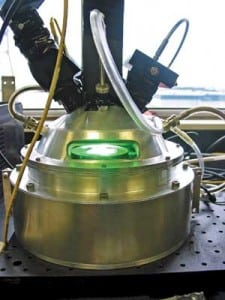
CoalNew Laser Technology Helps Reduce Coal-Slagging Headaches
Laser-induced breakdown spectroscopy is starting to light the way for power plant operators who want to reduce coal ash deposition in their boilers.
-
 Business
HTS Cables Speed up the Electric Superhighway
High-temperature superconducting cables deliver up to 10 times as much power as conventional electric power transmission cables. They are poised to help to reduce grid congestion as well as installation and operating costs.
-
 Business
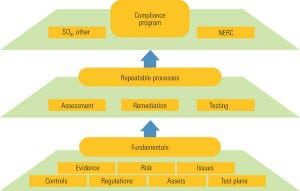
NERC Drives Development of Sustainable Compliance Programs
Compliance with reliability standards has moved beyond the "check the box" phase to one of regulations with real deliverables and fines for noncompliance. Utilities that aren’t vigorously evaluating and refining their compliance procedures today may find NERC’s 2009 audit cycle much more challenging.
-
 News
NewsUpward Mobility
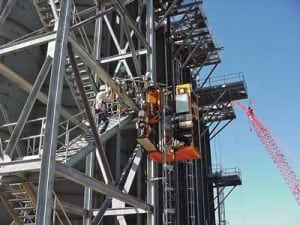
The Max Climber 2000P-IPM rack and pinion personnel and material elevator by Beta Max Inc. uses little space while providing a safe and efficient means of access for workers performing maintenance work at high levels. The Max Climber 2000P-IPM easily attaches to scaffolding or a building exterior and is designed with a base system footprint […]
-
Commentary
The Obama Administration’s Energy Challenge
As the Obama administration takes office, energy resource allocation is both the most critical national security issue and the most critical economic issue facing us. It will be difficult to sustain and improve economic growth unless we implement policies that result in the more rational use of energy resources, especially those for which there is a finite supply.
-
 Coal
CoalTVA Containment Pond Bursts, Causing Massive Coal Ash Flood
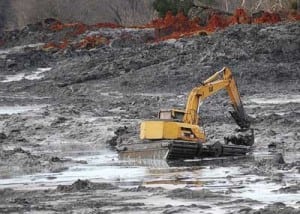
Just after midnight on Dec. 22, 2008, a 40-acre pond holding coal combustion waste for a Tennessee Valley Authority (TVA) steam power plant ruptured, sending a wave of wet ash across 300 acres of rural land in Harriman County, Tenn. It was the largest coal slurry spill in U.S. history — more than three times the size of the Martin Country, Ky., sludge spill of 2000, and about eight times that of the 1972 Buffalo Creek flood in West Virginia. Unlike that flood, which killed 125 people and injured scores others, this one, Tennessee authorities reported, resulted in no serious injuries or hospitalizations.
-
 Nuclear
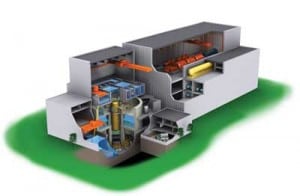
Exelon Drops ESBWR for Victoria Plant, Weighs Options
A year after Exelon Nuclear ceremoniously announced the selection of General Electric-Hitachi’s Economic & Simplified Boiling Water Reactor (ESBWR) design (Figure 2) as its preferred technology for a proposed two-unit nuclear facility in Victoria County, Texas, the operator of the largest nuclear power fleet in the U.S. — and the third-largest in the world — said it had reconsidered its decision. The company said it is now negotiating separately with Toshiba and GE-Hitachi, both vendors of the Advanced Boiling Water Reactor (ABWR), and with Mitsubishi Heavy Industries for its U.S. Advanced Pressurized Water Reactor (US APWR).