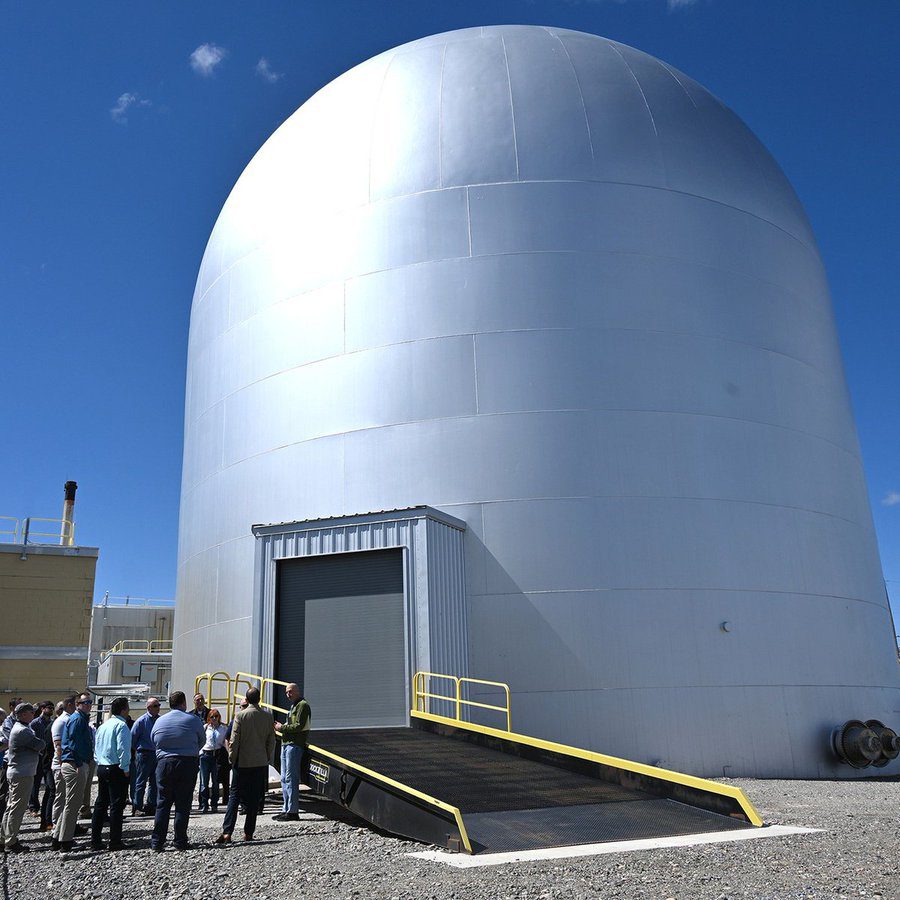
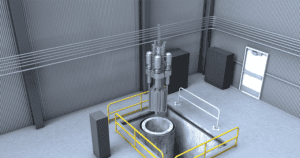
Idaho National Laboratory (INL) has selected the five commercial teams that will potentially demonstrate advanced applications—including data center integration—at its much-watched Microreactor Application Research Validation and Evaluation (MARVEL) platform, an 85-kWth/20-kWe liquid-metal-cooled test bed currently under construction at the lab.
The initial selections, unveiled on Dec. 4, mark the “first potential end users for MARVEL,” INL noted. They include Amazon Web Services (AWS), power technology giant GE Vernova, sensor specialist Radiation Detection Technologies, and two separate consortia—one led by Arizona-based data center operator DCX USA with Arizona State University, and the other, comprising oil services firm NOV, microreactor developer Shepherd Power, and energy major ConocoPhillips.
Initial experiments will target three distinct operational frontiers: demonstrating nuclear power’s ability to handle the volatile electrical loads of AI data centers, utilizing process heat to decarbonize industrial water treatment, and validating the autonomous controls necessary for remote deployment. The broad testing scope reflects a strategic intent to de-risk commercial integration before the first wave of private microreactors hits the market, INL suggested.
“With access to MARVEL, companies can explore how microreactors will potentially help us win the global AI race, solve water challenges and so much more,” said John Jackson, national technical director for the DOE Office of Nuclear Energy’s Microreactor Program. “The MARVEL testbed exemplifies how nuclear energy can open the door to a stronger, safer and more prosperous future for our country.”
The five competitively selected teams are now slated to begin a coordination phase with the Department of Energy (DOE) and INL staff to develop detailed implementation plans. Final agreements are anticipated in 2026, aligning with the test reactor’s projected operational timeline of late 2027 or early 2028.

A Big Step for MARVEL
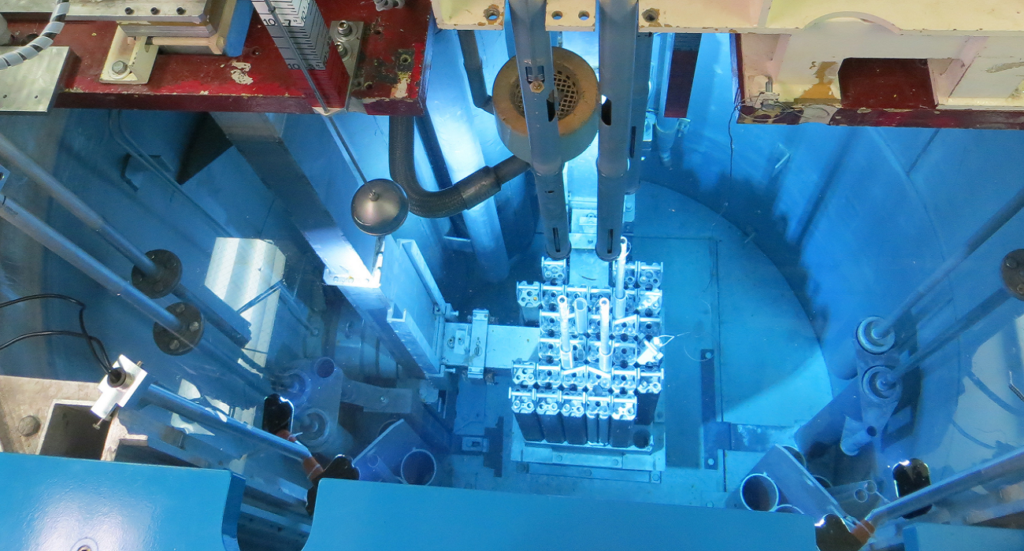
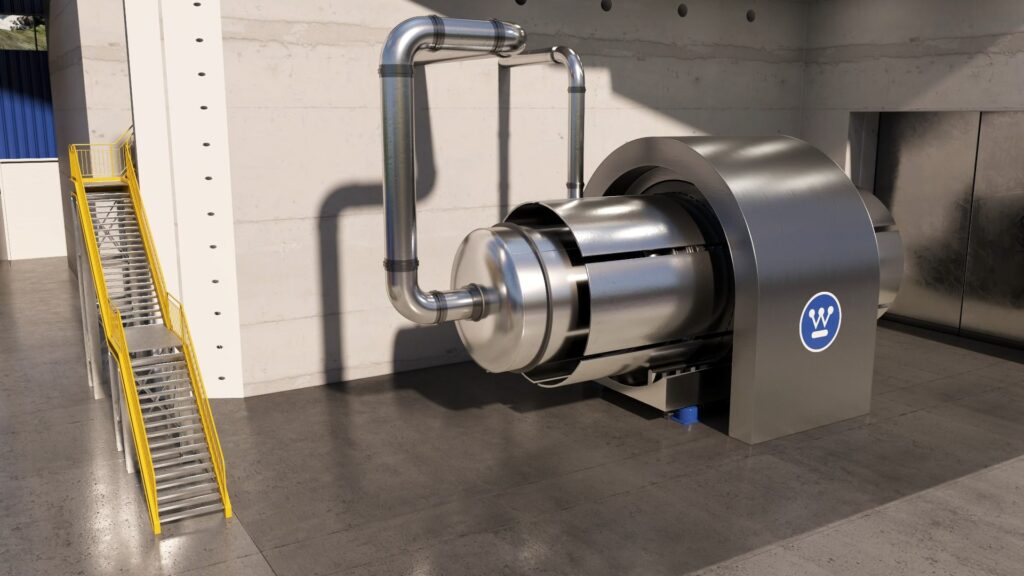
As POWER has reported, MARVEL is an 85‑kWth/20‑kWe sodium‑potassium (NaK)–cooled microreactor, whose design the DOE unveiled in 2021, soon after it established its microreactor program in 2019. The project is a first-of-its-kind test microreactor designed to serve as a physical test bed for the DOE’s advanced microreactor research and development (R&D) ecosystem. Housed at INL’s Transient Reactor Test Facility (TREAT), MARVEL is slated to enable integrated testing of reactor components, autonomous controls, microgrid interfaces, and process heat applications in a real-world nuclear environment. Its compact core consists of 36 uranium hydride fuel rods—each with five fuel meats enriched to 19.75% U-235—moderated by hydrogen and surrounded by a beryllium neutron reflector.
The test reactor is currently scheduled to operate over a brief two-year period, comprising three phases. It is already partway through the first phase, which includes finalizing the design, obtaining environmental permits, fabricating, and preparing for safety, culminating in fuel loading and initial criticality at INL’s Transient Reactor Test facility (TREAT), expected by late 2027 or early 2028.
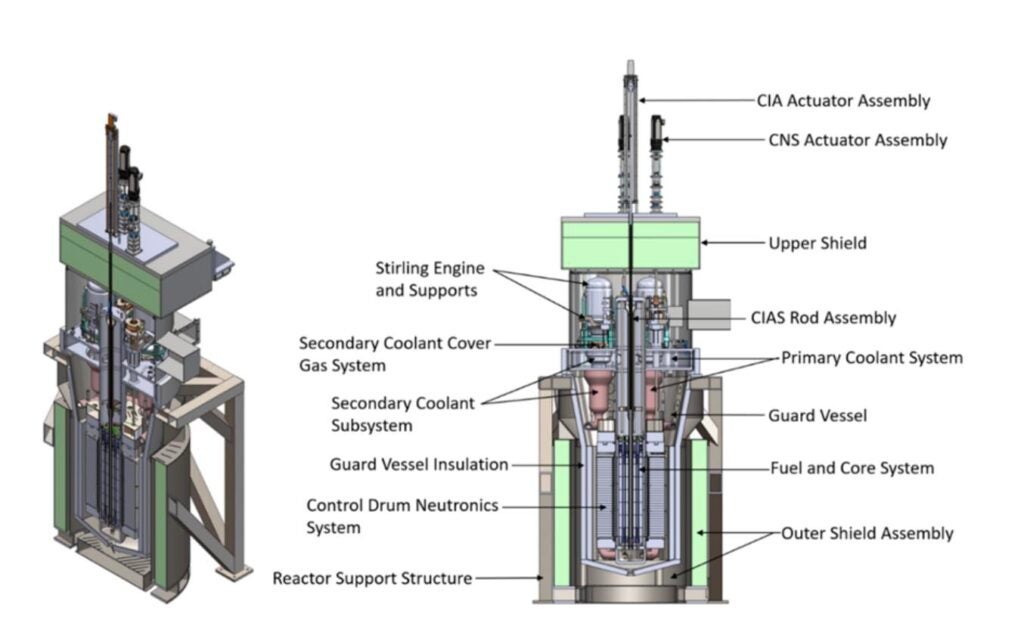
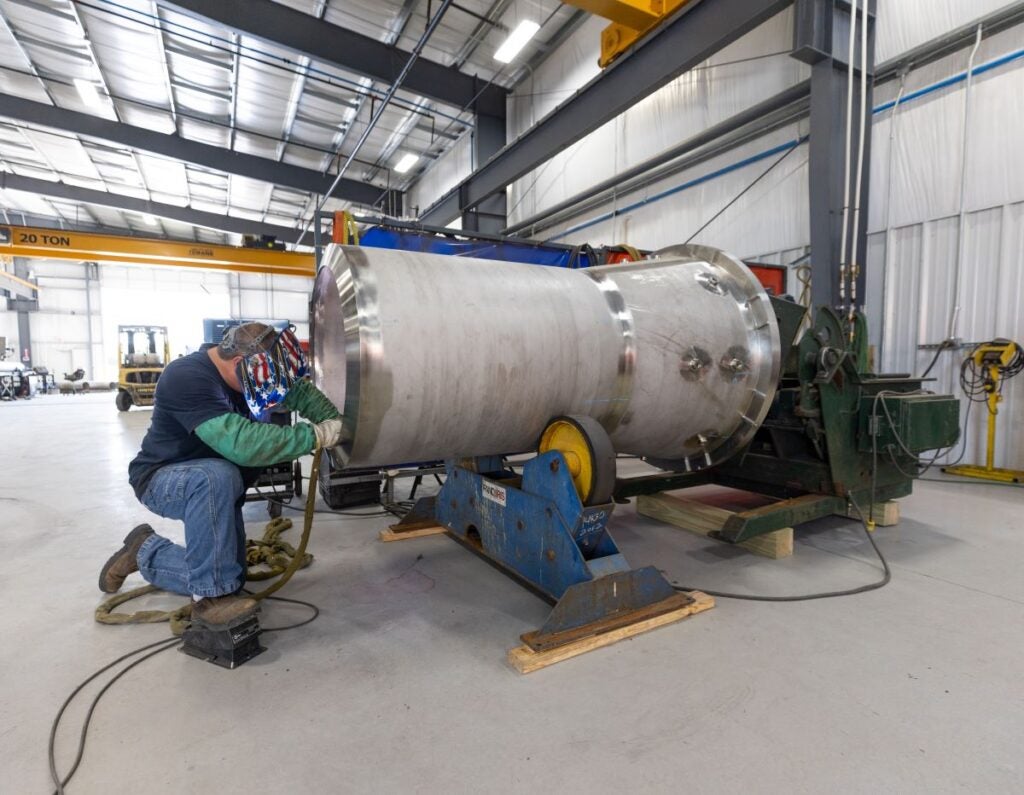
As INL noted during a July 2025 webinar, the reactor guard vessel fabrication is complete, and Carolina Fabricators Inc. has begun manufacturing the primary coolant system. The reactor support frame and reactivity control system—featuring rotating beryllium oxide drums clad with boron carbide for active control and a central insurance absorber rod for shutdown—are slated next for fabrication. According to the webinar materials, final reactor assembly was targeted for 2026, and installation in TREAT could begin in late 2026, dry initial criticality in 2027, and transition to full-power operations in 2028. Phase 2, which will run for about 2 years, will focus on electricity generation testing and industrial demonstrations, while Phase 3 will address decommissioning and post-irradiation examination.
MARVEL’s development, notably, has sparked a series of legacy achievements, and it is generally seen as a programmatic “pathfinder” for the nuclear industry. During the July webinar, officials noted that the project’s Environmental Assessment (EA) was the “first for an advanced reactor in history,” setting a precedent for streamlining the NEPA process. Similarly, its Preliminary Documented Safety Analysis (PDSA) was the “first new reactor PDSA submission to DOE in history” to use a novel risk-informed methodology, which could pave the way for subsequent projects. And, on the supply chain front, MARVEL is “broadening the supply chain by enabling non-nuclear vendors to compete,” marking the “first time in history that a nuclear vessel [was] manufactured by a non-N stamp supplier.” The project has also demonstrated successful operation of the Primary Coolant Apparatus Test (PCAT)—a full-scale, electrically heated replica of the primary system—which validated the thermal-hydraulic models for the natural circulation design, they noted.
For future experiments, INL plans to leverage dedicated test hardware, including the RAPID-MIB (Relocatable Resiliency Alternative Power Improvement for Distribution Microgrid in a Box) to de-risk controls for microgrid integration, and the MARVEL Thermal Energy Loop (MTEL), a modular secondary loop designed to deliver “85 kWth nominal heat delivery” via 400C salt or steam to industrial skids, it notes.
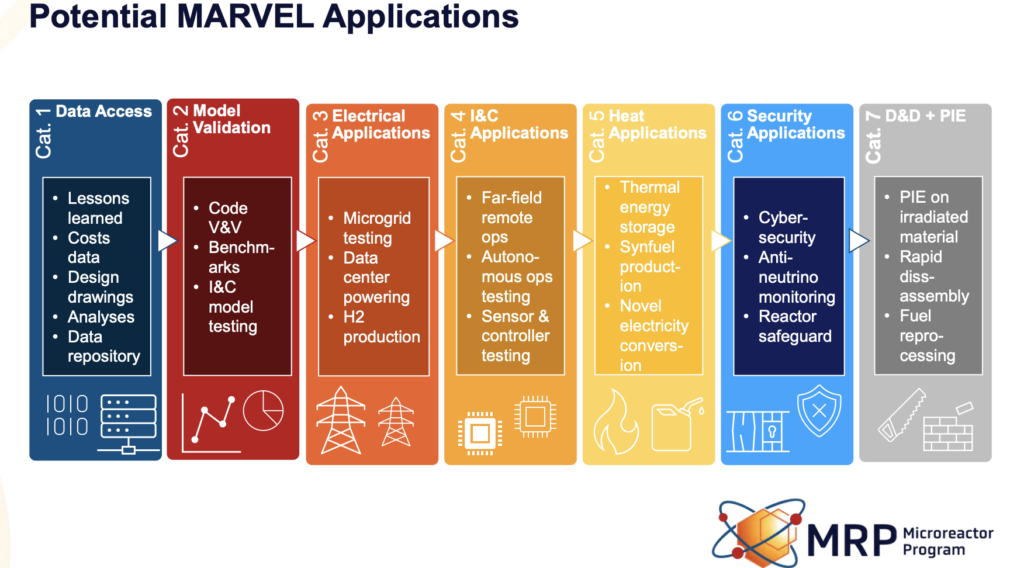
During the July 2025 webinar, notably, DOE officials stressed that MARVEL is explicitly targeting “novel applications”—“use cases that have never been previously demonstrated with a nuclear reactor or proven applications with limited data.” They noted, for example, that “nuclear energy has never been previously shown to power a data center directly, or to provide heat for chemical processes.” Eligible concepts include connecting electrical loads to the reactor, tying thermal storage or chemical skids into the process heat system, running specific transients within the safety basis, or “demonstrating novel controls paradigm.” While the DOE said it does not anticipate direct financial awards, it added that stakeholders could “greatly benefit from the demonstration of novel nuclear applications” because tests “can result in substantial experimental data” to de-risk technologies, support future scale-up, and generate protectable intellectual property.
The Selected Project Prospects: A Focus on Integration
The five teams INL unveiled on Thursday, notably, span three operational domains that represent significant prospects for microreactor deployment: data center power, thermal decarbonization, and autonomous controls.
AI and Data Center Load Following
AWS has proposed coupling the MARVEL reactor with a modular data center, which INL described as “a new service that makes it simple and cost-effective for defense and government agencies to build data centers anywhere in the world by enabling the creation of a self-sustaining, rapidly deployable system that can operate independently of traditional power infrastructure.”
AWS, a major hyperscaler, has indicated substantial interest in nuclear to meet its soaring AI infrastructure demand. In October 2024, Amazon committed $500 million to X-energy and agreed to fund deployment of up to 5 GW of X-energy Xe-100 reactors by 2039, with the first 320-MWe facility (Cascade Advanced Energy) now under development in Washington state, and in June 2025 finalized an $18 billion power purchase agreement with Talen Energy for 840 MW to 1,920 MW from Pennsylvania’s Susquehanna nuclear plant by 2032.
DCX USA and Arizona State University have also separately proposed using MARVEL to demonstrate the feasibility of a microreactor to power an AI data center, aiming to “yield valuable data on how to provide a stable, continuous power supply capable of handling the unique demands of AI processing.” DCX USA, a high-performance colocation provider, currently operates a 12-MW high-density campus in Goodyear, Arizona, designed specifically for AI and machine learning workloads. The collaboration leverages Arizona’s status as a booming data center hub and Arizona State University’s expertise in grid resilience and clean energy integration,
Industrial Heat and Desalination
A consortium comprising Shepherd Power, NOV, and ConocoPhillips have proposed to leverage MARVEL for a pilot-scale desalination project using nuclear-generated process heat to “demonstrate the viability of advanced nuclear energy for addressing produced water challenges in oil and gas operations.”
Shepherd Power, a subsidiary of Houston-based National Oilwell Varco (NOV), was established to own and operate microreactors that supply heat and power to the oil and gas industry and is targeting initial deployments for 2030. ConocoPhillips, along with Chevron, ExxonMobil, Freeport-McMoRan, Nucor, Rio Tinto, and Shell, is a founding member of the Industrial Advanced Nuclear Consortium, launched in September 2025 to standardize interfaces between nuclear suppliers and industrial end users and accelerate deployment of nuclear heat and power solutions. The energy major is notably exploring advanced desalination technologies, given that oil and gas production generates massive co-produced volumes of brackish water (forecasts show a two-fold increase in produced water volumes over the next decade), and current management practices, predominantly deepwell injection, face mounting environmental and regulatory pressure from induced seismicity concerns.
Remote Operations and Instrumentation
GE Vernova has proposed to use MARVEL to “demonstrate remote and autonomous reactor operations and establish controls standards for broader application of the technology with commercial reactors.” GE Vernova has notably presented frameworks for far-field remote monitoring and control, including multi-unit operation, automation levels, and cybersecurity protocols. The company is building its first BWRX-300 small modular reactor at Ontario Power Generation’s Darlington site near Toronto and pursuing additional units in Tennessee, Poland, Sweden, and the UK.
Radiation Detection Technologies has proposed to use MARVEL to “test advanced high-performance sensor technologies that could help monitor the performance of advanced reactors.” Advanced sensor development and validation are considered central to enabling next-generation reactor deployments. MARVEL could notably fill a critical gap in the INL Advanced Sensors and Instrumentation program’s technology maturation pathway, positioned between bench-scale development and full prototypic deployment. The facility has been designed to allow RDT and other sensor developers to test advanced instrumentation—including self-powered detectors, fission chambers, optical fibers, and acoustic sensors—under controlled reactor transient conditions, generating the operational data needed to advance sensors from research to commercial readiness.
—Sonal Patel is a POWER senior editor (@sonalcpatel, @POWERmagazine).