
Water
-
 Coal
CoalWater-Capturing Cooling Tower Technology Makes Headway at MIT
A cooling tower water recovery system designed by engineers from the Massachusetts Institute of Technology (MIT) could capture water from power plant fogs and plumes, potentially rendering them into a source
-
 O&M
O&MMirfa IWPP Doubles Water, Triples Power Capacity
In the United Arab Emirates, demand for power and water are inextricably linked. One of its newer and larger plants, the Mirfa Independent Water and Power Plant—which has a power capacity of 1.6 GW and
-
 O&M
O&MTest Your Knowledge: Monitoring and Treatment of Closed-Loop Cooling Water Systems
There are often multiple closed-loop water cooling systems installed in a power plant. Chances are good that they cool or control temperature on some very critical components. It can be easy to ignore these systems because they are usually quite reliable. By its very nature, when a closed-loop system remains closed and operates properly for an extended period of time, it is often […]
-
Press Releases
U.S. Water Plans to Appeal Recent Ruling That pHytOUT® Patents Are Invalid
St. Michael, MN (June 2018) – U.S. Water announces that on May 25, 2018, the United States District Court for the Western District of Wisconsin overturned a decision by a unanimous Federal Court jury that U.S. Patent Nos. 8,415,137 and 8,609,399 relating to U.S. Water’s pHytOUT® deposit control technology were valid. U.S. Water plans to […]
-
Press Releases
PENNSYLVANIA COAL PLANT SAVES ON REQUIRED MAINTENANCE UPGRADES AND OPERATING COSTS BY IMPLEMENTING SUEZ’S MOBILE WATER SOLUTIONS WITH INSIGHT*
Seeking to reduce its operating costs and environmental footprint, the Conemaugh Generating Station in New Florence, Pennsylvania, utilizes SUEZ’s mobile water solutions to produce boiler feedwater. By using the mobile demineralizer with InSight*, the coal-fired power plant will gain $220,000 in annual operating cost savings, reduce chemicals associated with the make-up demineralized (DI) systems and […]
-
 Commentary
Why the EPA’s Proposed Coal Ash Rule Is Concerning
Over the past decade, together with my students and colleagues at Duke University and other academic institutions, I have conducted scientific research and published 13 scientific articles on different aspects
-
Press Releases
Second installation phase at Holyhead Deep completed
Marine energy developer Minesto has completed the second offshore installation phase of its DG500 project in Wales. Having installed the tether, micro grid system buoy and umbilical, all supporting components and systems needed to deliver the power produced by Minesto’s first system of the unique Deep Green technology in Utility Scale are now in place. […]
-
Legal & Regulatory
EPA Sets Schedule for Potential ELG Rule Revision
The Environmental Protection Agency (EPA) has issued an official timeline for rulemaking that would potentially revise the Obama administration’s 2015 effluent limitations guidelines and standards (ELGs) for steam electric power plants. In its May 2-released Final 2016 Effluent Guidelines Program Plan, the EPA said it will potentially revise the stringent Best Available Technology (BAT) effluent […]
-
 Legal & Regulatory
Upheaval and Innovation in Wastewater Management
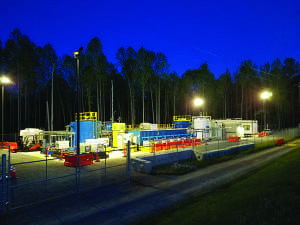
Regulatory uncertainty, changing resources, and an industrywide drive to cut costs and boost flexibility and efficiency are among a growing list of challenges that are prompting new approaches to treat power
-
 Water
WaterBringing New Life to Industrial Wastewater
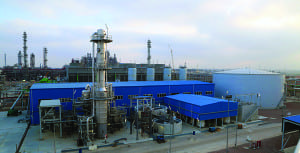
As water demand soars in every corner of the world amid widespread drought and water scarcity concerns, recovery and recycling of wastewater is increasingly becoming a valuable solution to alleviate pressures
-
 Renewables
Human Errors Contributed to Oroville Spillway Failure
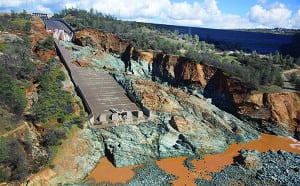
Damage to the main and emergency spillways of the Oroville Dam in California, triggered in February 2017 by heavy rain that was part of Northern California’s wettest winter in almost 100 years, has brought
-
 O&M
O&MDesign and Care of Reverse Osmosis Systems
Reverse osmosis (RO) systems offer power plant owners and operators a reliable and well-proven water treatment solution. However, designing and caring for an RO system requires a thorough understanding of a
-
 Legal & Regulatory
SCOTUS Sends Controversial WOTUS Rule into More Legal Limbo
The U.S. Supreme Court unanimously reversed and remanded a rule the Environmental Protection Agency (EPA) and the U.S. Army Corps of Engineers rolled out in 2015 that asserts federal authority over small bodies of water with a broader definition of the statutory term, “waters of the U.S.” (WOTUS). In a ruling for National Association of […]
-
 Water
WaterGE Power Sells Lucrative Water & Process Technologies Division to SUEZ in $3.4B Deal
Less than a week after GE struck a $2.6 billion deal with ABB for GE’s electrification business, GE Power completed the $3.4 billion sale of its lucrative water and process technologies division to multinational water management firm SUEZ. The sale of GE Water & Process Technologies, a systems and services provider of water, wastewater and […]
-
 Legal & Regulatory
EPA Postpones Compliance Dates for FGD, Bottom Ash Transport Requirements in ELG Rule
Steam electric power plants preparing to comply with the Environmental Protection Agency’s (EPA’s) effluent limitations guidelines (ELG) and standards as they concern bottom ash transport water and flue gas desulfurization (FGD) waste streams will get—for now—a two-year reprieve under a new rule the agency finalized on September 12. The ELG rule, which was finalized by […]
-
 O&M
O&MUpgraded Boiler Feedwater Pump Improves Efficiency and Adds Flexibility
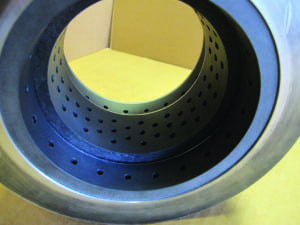
Times have changed. Not long ago, baseload units came online and went straight to full load for days on end. Now, those same units are being asked to cycle operations to accommodate for variable renewable
-
 O&M
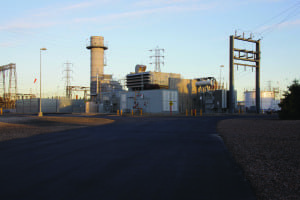
O&MClosed Circuit Reverse Osmosis System Squeezes Money Savings Out of Water Management
In water-strapped California, managing power plant water usage is more important than ever. Southern California Edison implemented novel closed circuit reverse osmosis systems at five of its gas-fired
-
 Legal & Regulatory
Dominion Ordered to Revise Plan for Coal Ash at Chesapeake
A spokesman for Dominion Energy said the company will begin working on a new plan for dealing with leaking piles of coal ash at a retired coal plant in Virginia after a federal judge ruled the company’s current remediation at the site is not acceptable. U.S. District Judge John Gibney Jr. on July 13 ordered […]
-
 Renewables
Researchers Develop Hybrid Salinity Gradient Power Technology
A hybrid technology created by researchers at Penn State University could be the breakthrough needed to advance efforts to produce power based on the salt concentrations between two water sources. Researchers
-
 Infographics
Technological Advancements in Cooling Water Treatment
Regulatory agencies are becoming more and more critical of phosphorus-based water treatment chemicals because they can have a negative impact on lakes and waterways. In the past, treating cooling water with
-
 O&M
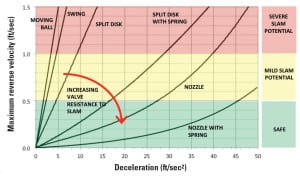
O&MHow to Prevent Circulating Water Flow Reversal
Flow reversal in piping systems can degrade equipment performance and cause significant water hammer, potentially resulting in catastrophic failure. Power plant condenser cooling water systems—or circulating
-
 Renewables
Oroville Dam Power Plant May Reopen This Week
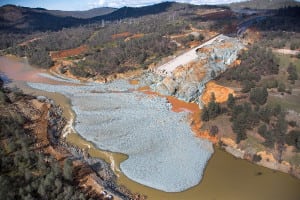
The Edward Hyatt hydroelectric plant at the damaged Oroville Dam in northern California, shut down earlier this month after its spillway nearly collapsed, may reopen soon, officials with the California Department of Water Resources (DWR) said on March 1. The plant was forced to shut down after severe erosion from the dam’s spillway deposited large […]
-
 Legal & Regulatory
Trump Orders WOTUS Rule Rewrite
An executive order signed by President Donald Trump on February 27 authorizes the Environmental Protection Agency (EPA) to rewrite a contentious rule asserting federal authority over small bodies of water. The Waters of the U.S. (WOTUS) rule, also known as the “Clean Water Rule,” finalized by the EPA and the U.S. Army Corps of Engineers […]
-
 Water
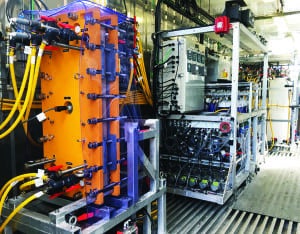
WaterLowering Cost and Waste in Flue Gas Desulfurization Wastewater Treatment
Many informative articles have been published about options for treating flue gas desulfurization wastewater, but new technologies are rapidly changing the treatment possibilities. This article reviews key economic considerations and introduces an innovative treatment solution that lowers costs and the amount of waste generated. Flue gas desulfurization (FGD) wastewater varies widely depending on the source […]
-
 O&M
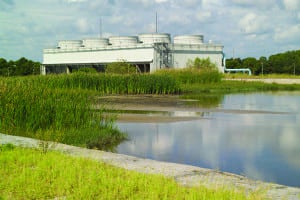
O&MCooling Towers: Efficiency Waiting to Happen
Cooling towers serve the vital role of cooling water for power plant heat exchange equipment. Sustaining excellent system performance is important because a one-degree increase in water temperature can cause a 2% increase in energy usage. Proper maintenance and a few upgrades could improve a cooling tower’s efficiency, while also saving water in the process. […]
-
 Water
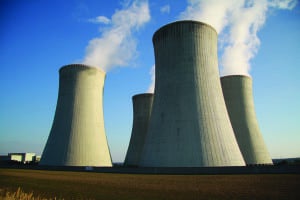
WaterUsing Reclaimed Water in Power Plant Cooling Applications
Using reclaimed water as a makeup supply for cooling tower systems has become a popular option for reducing impacts on local water resources, but it comes with its own challenges because of its unique
-
Coal
Reclaimed Water Reduces Stress on Freshwater Supplies
Power generation need not be another source of strain on diminishing freshwater resources. Well-established water reclamation technologies are enabling producers to conserve resources—and money. Meeting the
-
 Legal & Regulatory
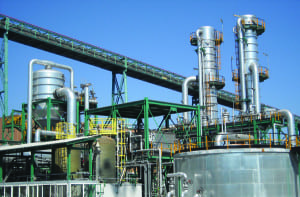
A Comparison of ELG Compliance Options for Flue Scrubber Wastewater
Meeting the requirements of the Effluent Limitations Guidelines (ELG) means careful consideration of the various options. Both biological treatment and zero liquid discharge (ZLD) approaches have their place, but ZLD may offer more flexibility for the future. On September 30, 2015, the Environmental Protection Agency (EPA) issued the final effluent limitation guidelines (ELGs) rule for […]
-
 Renewables
CHP 2.0: New Fuels and New Business Models
A variety of approaches have been used to capture new benefits from combined heat and power (CHP) facilities. Some owners have transitioned to new fuels or added renewables to the mix, while others have implemented unique business models to spur development. As district heating systems are brought into the 21st century, the CHP sector seems […]
-
 Legal & Regulatory
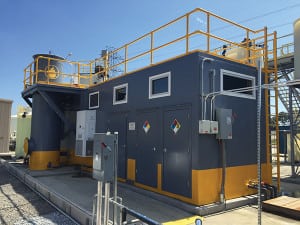
Next-Generation FGD Wastewater Bioreactor Technology Introduced for ELG Compliance
Compliance with one of the latest federal environmental regulations, the Effluent Limitations Guidelines (ELG), can be both costly and complicated. A newly available option offers features and capabilities that may make it a more attractive alternative than conventional approaches. In September 2015, the U.S. Environmental Protection Agency (EPA) finalized a new rule affecting flue gas […]