
Water
-
 Coal
CoalWater Issues Challenge Power Generators
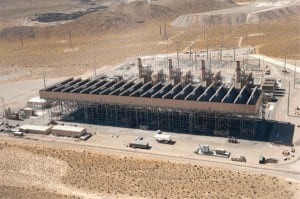
Drought and competing uses for water continue to challenge power plant operators worldwide. In response, innovative approaches for reducing water use are being explored from South Africa to China.
-
 O&M
O&MORP as a Predictor of WFGD Chemistry and Wastewater Treatment
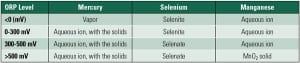
Recent studies have shown that system oxidation-reduction potential (ORP) is not only an important factor for predicting wet flue gas desulfurization (WFGD) absorber chemistry but also may be a predictor of process equipment corrosion and wastewater treatment requirements.
-
Coal
Your Guide to the White House Climate Action Plan
President Obama’s highly anticipated Climate Action Plan (CAP) released today outlines a wide variety of executive actions founded on three pillars: slashing U.S. carbon pollution through stringent rules for new and existing power plants while doubling renewables deployment and promoting fuel switching from coal to natural gas; preparing the U.S. for impacts of climate change; and leading international efforts to combat global climate change.
-
 O&M
O&MLADWP Harnesses LMS100 to Solve Once-Through Cooling Dilemma
Los Angeles sits alongside the world’s largest body of water, and naturally the city’s Department of Water & Power (LADWP) placed its generating stations along the shoreline to take advantage of that abundant resource for cooling. The LADWP built three coastal generating stations that provide the city with 2,162 MW, about 35% of the peak annual demand.
-
 O&M
O&MMicrobial Control in Cooling Water Improves Plant Performance
Microbial inhibition, as part of a robust cooling water treatment program, presents a special challenge because of the variability in makeup water sources, plant processes, and discharge permits. Failure to maintain a proper microbial inhibition program will affect your bottom line as a result of heat rate degradation.
-
 Water
WaterA Moderating Tone from the EPA on 316(b)?
Final water intake structure rules from the EPA expected this June suggest the agency may be listening to industry and even moderating its tone. Stretch goals as part of the Section 316(b) rule are likely, but overall the rule may prove more reasonable than many expected.
-
 Solar
SolarDistributed Generation: California’s Future
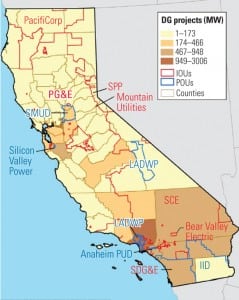
Once you synthesize all the elements of the Golden State’s clean energy strategy and extrapolate current trends, it’s easy to see that an impending break with the traditional power generation paradigm is coming, intended or not.
-
 Water
WaterResearch Center Dedicated to Power Plant Water Use Opens
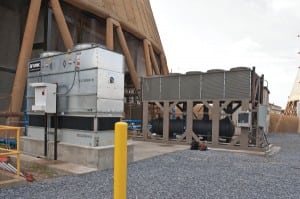
The Electric Power Research Institute and several partners—including the Southern Research Institute, Southern Co. subsidiary Georgia Power, and Southern Research—are testing a new technology that could reduce the amount of water needed for power plant cooling.
-
 Coal
CoalPotential Impacts of Closed-Cycle Cooling Retrofits at U.S. Power Plants
The Clean Water Act Section 316(b) rule changes regarding cooling water intake structures that are expected next year could affect up to 428 power plants, representing 1,156 individual units, according to the Electric Power Research Institute. Depending on plant size and the complexity of the retrofit project, retrofit capital costs could range from very low to over $500 million for large nuclear plants. The power industry total cost is projected to be over $100 billion.
-
Water
Evaluating Technologies to Address Proposed Effluent Guidelines
Upcoming revisions to U.S. federal effluent guidelines are anticipated to include new discharge limits for mercury and selenium in flue gas desulfurization wastewater, in addition to other potential revisions. Collaborative R&D is helping inform the rulemaking and is evaluating the cost and performance of technology options that might be used to meet the new targets.
-
 Water
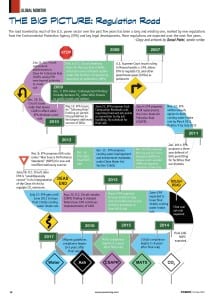
WaterTHE BIG PICTURE: Regulation Road
To view a larger version of this graphic, download the file here.
-
 Water
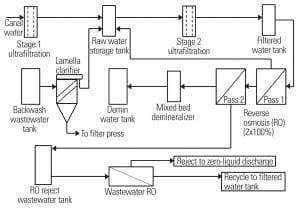
WaterDesign and Testing of a Water Treatment and ZLD System
In the following case study, Aquatech International Corp. discusses a water treatment system designed to minimize water usage and waste discharges, both liquid and solid, at a gas-fired combined cycle plant in California.
-
 Water
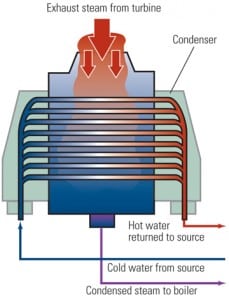
WaterWater Conservation Options for Power Generation Facilities
The electric power industry is a large water user and is dependent upon reliable water supplies. Adopting new water-conserving technologies for power production can help alleviate the impact of future water shortages. Several water use reduction technologies are available, each with different benefits and costs.
-
 Water
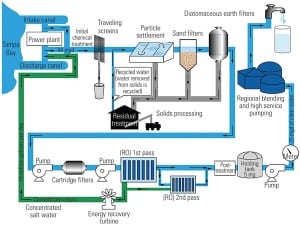
WaterWater and Power: Will Your Next Power Plant Make Both?
In much of the developing world, two essentials are often in short supply: potable water and reliable electricity. Some countries have invested heavily in desalination and combined cycle technologies to simultaneously solve both problems.
-
Legal & Regulatory
Proposed Cooling Water Rule’s Ripple Effects
The U.S. Environmental Protection Agency (EPA) has a long history of making waves with the electric power industry because of its efforts to regulate the way thermal power plants construct and operate their cooling water intake structures (CWIS). These structures divert billions of gallons of water into power plants’ cooling systems and can injure or kill billions of aquatic organisms.
-
 O&M
O&MPlant of the Year: AES Gener’s Angamos Power Plant Earns POWER’s Highest Honor
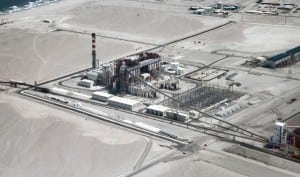
AES Gener recently completed construction of twin coal-fired, 260-MW units in the electricity-starved desert of northern Chile that may serve as models for future hybrid-fossil plant designs. For meeting an aggressive construction schedule, integrating a 20-MW battery energy storage system, embracing desalination, using the first-of-its-kind seawater cooling tower in South America, and employing innovative financing methods, the AES Gener Angamos plant has earned POWER’s 2012 Plant of the Year Award.
-
 Waste to Energy
Marmaduke Award: Combined Solar Technologies’ Hybrid Plant: Using Wastewater and Olive Pits to Produce Clean Water and Clean Energy
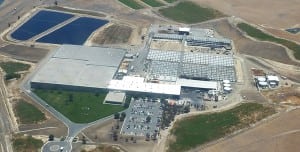
Combined Solar Technologies (CST) has designed, built, owns, and operates a water purification system located at the Musco Family Olive Co. facility in Tracy, Calif., that burns olive pits to purify highly saline wastewater through a distillation process while also producing electric power. For its pioneering approach, CST is the winner of POWER’s 2012 Marmaduke Award for excellence in plant problem-solving. The award is named for Marmaduke Surfaceblow, the fictional marine engineer and plant troubleshooter par excellence, whose exploits were chronicled in POWER beginning in 1948.
-
 Gas
GasPerformance-Based Cooling Water Treatment
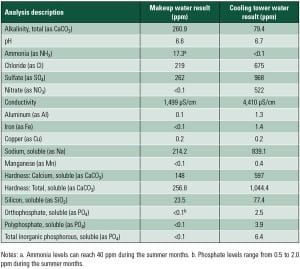
A West Coast combined cycle plant that uses reclaimed water found that cycling 300 times a year caused disruptions to the plant’s cooling water chemical treatment program. The solution was a performance-based monitoring and control system that uses available plant operating data plus algorithms to measure corrosion rates and fouling factors, which in turn allows the plant to trim chemical feed rates so they correlate with a specified corrosion rate, rather than a suggested chemical residual.
-
 Coal
CoalClean Air, Dirty Water
Efforts by power producers to meet clean air rules mean that wastewater effluent streams now face revised EPA regulations. A skirmish involving a New Hampshire power plant could set the tone for the next battle over regulations.
-
 Water
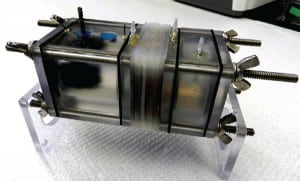
WaterTechnique Generates Salinity Gradient Power and Cleans Wastewater
Exploiting the difference in salt concentrations between the freshwater runoff from river mouths at the point where they meet saltwater reservoirs such as seas and oceans to harness power isn’t a new thing.
-
 Solar
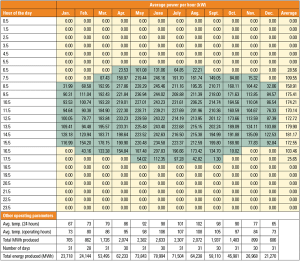
SolarThink Water When Designing CSP Plants
The operation of solar thermal power plants differs substantially from that of fossil-fired plants, as the sun determines the generation rather than market demand. However, design of the power island to minimize water usage is very similar to that of a fossil plant. This renewable technology requires renewed thinking of its water systems’ design.
-
 Water
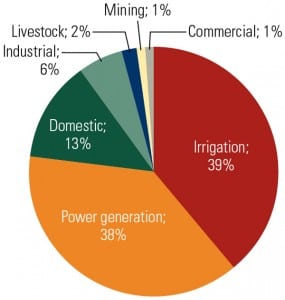
WaterPromoting Sustainable Water Usage in Power Generation
Growing concern about water usage by U.S. electric power generation is being prompted by a number of factors, including projected increases in power demand due to population growth, competing uses for water, and recent drought conditions in various parts of the country. Our overview presents diverse perspectives from industry experts about current and future challenges of balancing power generation needs with declining water availability.
-
 Water
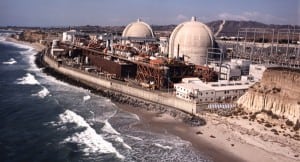
WaterClever “Helper” Tower Solves Cooling Water Dilemma
Gone are the days when ocean or river water for once-through cooling of a new power plant was assumed to be available. Today, more than 500 fossil-fueled and 38 nuclear plants use once-through cooling. However, regulators in several states are aggressively pushing what is essentially a ban on the use of once-through water cooling, forcing a conversion to closed-cycle cooling.
-
 Coal
CoalVietnam Works Hard to Power Economic Growth
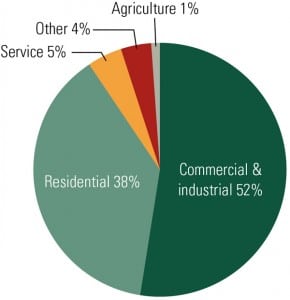
For the past 15 years, Vietnam has enjoyed enviable gross domestic product increases, averaging 7% annually. That kind of economic growth increases power demand, but financing new capacity remains a challenge. Reaching its ambitious capacity growth goals will require Vietnam to expand its financing and vendor base, attract foreign investment, and ensure future fuel supplies in a region thick with competition for those resources.
-
 O&M
O&MEPRI Bridges Industry R&D Gaps
The technologies used to generate and distribute electricity will be radically transformed during the coming decade. Amid that change, the power industry must continue to meet customer reliability, safety, and cost-of-service expectations. Achieving the right balance among these often-conflicting goals is the primary focus of every utility. The Electric Power Research Institute is helping utilities achieve that balance with R&D programs for many new and emerging technologies.
-
Coal
Editors Select Top Five Stories of 2011
The POWER editorial staff’s picks for the most significant stories of 2011.
-
Legal & Regulatory
The Water-Energy Balancing Act
Water has long been energy production’s silent partner. In the past, we Americans seemed to take it for granted that plentiful water supplies would be available for a variety of energy needs ranging from the operations of coal-fired power plants to natural gas production activities.
-
 Coal
CoalCWA 316(b) Update: Fish Guidance and Protection
The U.S. Environmental Protection Agency (EPA) has proposed new Clean Water Act section 316(b) regulations for once-through cooling water intake structures. Comments on the proposed rules closed in August, and a final rule is expected mid-2012. The EPA estimates that at least half of the power plants using once-through cooling will be required to implement a best technology available solution in coming years. That typically means barriers and screens, but you may want to consider other options.
-
 Coal
CoalFundamentals of Zero Liquid Discharge System Design
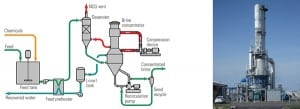
Power plants often produce wastewaters that contain salts, such as those from wet gas scrubbing, coal pile run-off, and leachate from gypsum stacks. Evaporation of those liquid wastes in a modern zero liquid discharge system produces clean water that is recycled into the plant plus a solid product suitable for landfill disposal. Here are the options to consider.
-
 O&M
O&MThe New Water Lab
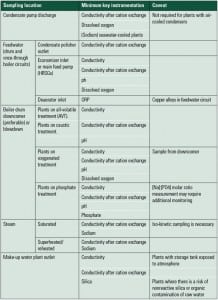
Recent advances in water laboratory instrumentation—from improved sample conditioning to advanced online instruments—have reached the market. Here’s a look at the equipment you’ll find in the best-equipped power plant laboratory this year.