Waste to Energy
-
 Gas
GasNordic Nations Provide Clean Energy Leadership
In the past few years, nuclear concerns, rising oil prices, and a growing understanding of our environmental impact has given energy issues a higher profile worldwide. In this report on the Continental Nordic countries, we look at the efforts being made in much of the Nordic region to secure a sustainable energy supply for the future and at the extent to which the innovative solutions of these countries can be exported around the globe.
-
 Hydro
HydroChart a New Course
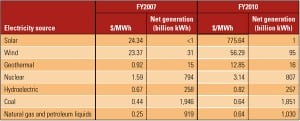
I examined the magnitude of electricity subsidies for renewables compared with conventional generation technologies in my May 2011 editorial, based on data from a 2008 report prepared by the U.S. Energy Information Administration (EIA). An updated EIA report released in July determined that federal government subsidies have risen substantially during the past three years. In fact, overall renewable energy subsidies have almost tripled, increasing from $5.1 billion to $14.7 billion. In my opinion, we aren’t getting value for the money spent.
-
 Gas
GasWho Pays for Firming Up Variable Energy Resources?
The major economic hurdle for renewable power generation technologies continues to be substantial installation costs. But another cost is associated with continuous load-balancing, made possible by backstopping that variable generation with dispatchable generators that typically consume expensive fossil fuels. Bottom line: Who pays for the capacity firming or backstopping resources?
-
 Coal
CoalConsolidation, Market Distortions Underlie Remarks by Industry Executives
If you needed additional proof that the power industry is changing, the ELECTRIC POWER keynote and panel discussions over the past few years have provided it—top-of-mind issues have been significantly different each year. For the 2011 keynote speaker and panelists, the challenges of reliability, regulatory compliance, financing, and getting the fuel mix right took center stage. In the wake of Japan’s nuclear crisis, safety also featured prominently.
-
 O&M
O&MSolid Fuels: Moving Material and Managing Emissions
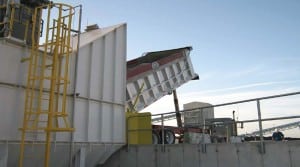
In today’s solid-fueled power plant, managing emissions and moving materials more defines the task than the traditional work of making megawatts. That’s the message that emerged from the coal and solid fuels track at this year’s ELECTRIC POWER.
-
 Solar
SolarUtilities Increase Renewable Energy Capacity
Driven by state RPS requirements and the desire to diversify their energy sources, U.S. utilities continue to add more renewable power to their generation portfolios. As a result, they must deal with a number of important issues, including resource availability that varies geographically.
-
 Coal
CoalSpain: A Renewable Kingdom
Spain has served as both exemplar and scapegoat when it comes to renewable energy policy. Though power policy must necessarily accommodate specific national resources and goals, Spain’s experience as an early and eager adopter of renewable energy technologies and subsidies is a cautionary tale of how the best intentions can have unintended consequences.
-
 Coal
CoalBiomass Cofiring: A Promising New Generation Option
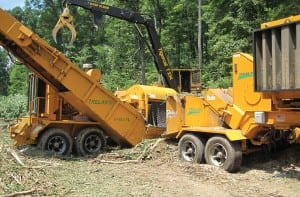
Biomass cofiring has the potential to cut emissions from coal-fueled generation without substantially increasing costs or infrastructure investments. Research shows that when implemented at relatively low biomass-to-coal ratios, energy consumption, solid waste generation, and emissions are all reduced. However, mixing biomass and coal does create some challenges that must be addressed.
-
 Coal
CoalDesigning Fuel Systems for Large Biomass Plants
Compared with other solid fuel–fired plants, the systems and components required for handling and processing biomass appear quite familiar, but important fuel differences must be considered. A successful biomass plant design must provide flexibility for handling the expected wide range of biomass fuel properties and characteristics.
-
 Coal
CoalIEA: Global Power Demand to Surge 2.2% Annually Through 2035
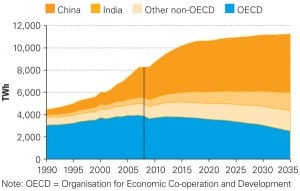
Though electricity generation has entered a key period of transition—as investment shifts to low-carbon technologies—world electricity demand is set to grow faster than any other “final form of energy,” the International Energy Agency (IEA) says in its latest annual World Energy Outlook.
-
 Waste to Energy
Top Plant: Colmac Energy Inc.’s Biomass- Fueled Power Plant, Mecca, California
The 47-MW Colmac Energy facility is the largest biomass-fueled power plant in California. Colmac operates with a capacity factor consistently in the 92% to 95% range and at a net plant heat rate comparable to waste coal facilities. Colmac Energy has demonstrated that biomass plants using urban wood wastes as fuel can generate significant environmental benefits, including reduced air pollutants from open-air burning and lowered demand for landfill space.
-
 Waste to Energy
Top Plant: Kajang Waste-to-Energy Plant, Semenyih, Malaysia
At Malaysia’s first waste-to-energy plant, municipal solid waste (MSW) is converted into refuse-derived fuel for use in an integrated steam power plant. This facility was designed to achieve the twin objectives of environmentally friendly MSW disposal and generating renewable power.
-
 Waste to Energy
Top Plant: Kaukaan Voima Oy Biomass-Fired Power Plant, Lappeenranta, Finland
Located in the heavily forested country of Finland, the Kaukaan Voima biomass-fueled power plant produces process steam and electricity for UPM’s Kaukas pulp and paper mill as well as electricity and district heating for Lappeenrannan Energia, a city-owned power company. Launched in 2009, the plant can provide 125 MW of electricity, 110 MWth of district heat, and 150 MWth of process steam thanks to one of the world’s largest wood-fired fluidized bed boilers.
-
 Solar
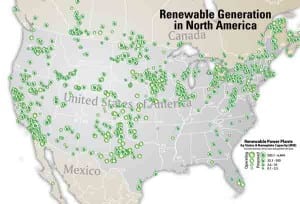
SolarMap of Renewable Power Generation in the United States
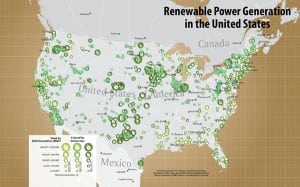
For a full-size map, contact Platts. Courtesy: Platts Data source: POWERmap All rights reserved. No reproduction allowed.
-
 Hydro
HydroThe Rush to Renewables
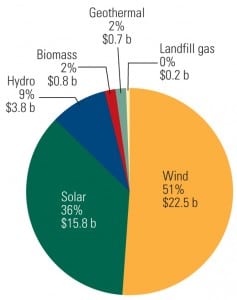
In 2010 investment in wind power continued to accelerate, particularly in California and Texas. California also entered several solar projects in the race for financing. The finish line that renewable power developers and their partners are racing to meet is a December 31 deadline to qualify for federal cash grants.
-
Commentary
Biomass Power Under Attack
Biomass energy has been an up-and-down industry for decades. As public awareness grows, it inevitably influences new tax legislation and environmental regulations. Two recent events have made the climate for development of this renewable resource even more volatile.
-
 Gas
GasSmart Power Generation at UCSD
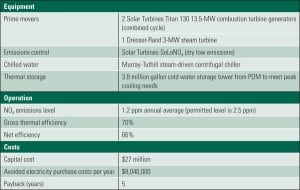
The University of California, San Diego has been accumulating awards for its savvy use of a constellation of power generation and energy-saving technologies. The campus already controls a fully functioning microgrid—including a cogeneration plant—and, as befits a research institution, is constantly looking for new ways to make its energy system smarter. This “living laboratory,” as campus leaders like to call it, demonstrates what it takes to build a smarter grid and why the effort is worth it.
-
 O&M
O&MFBC Control Strategies for Burning Biomass
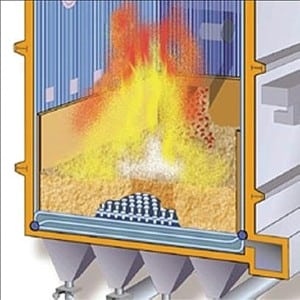
As a boiler fuel, biomass has shown great promise while suffering from a slow development history. One factor limiting its use has been the combustion system. For the most part, conventional grate-fired boilers have been the only option. Today, the most efficient approach to burning biomass to produce electricity and steam is fluidized bed combustion (FBC). Whether you choose FBC or grate, biomass presents unique challenges to control system designers.
-
 Solar
SolarThe Feed-in Tariff Factor
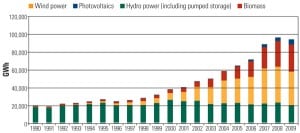
Most countries are trying to increase the percentage of their electricity supply that comes from renewable sources. But because capital costs for renewable generation still, in most cases, are higher per kilowatt-hour than for fossil-fueled power, governments are looking at all options for encouraging the development of greater renewable capacity. Feed-in tariffs (FITs) are one policy tool that has been used, most notably in Europe. Now North America is testing FITs as well.
-
 Gas
GasLocal Warming: Helsingin Energia Uses CHP to Heat a City
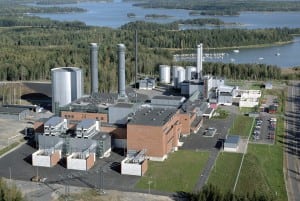
Power plant operators, especially those located in countries with enforceable carbon emissions standards, are concerned about their CO2 emissions. But for Helsingin Energia—which provides power, heating, and cooling for Helsinki, Finland’s 300,000 residents—the main concern is local warming, not global warming. In Helsinki, temperatures on midsummer afternoons only reach an average 21C, and for half the year daytime temperatures are below 10C.
-
 Hydro
HydroAustralia Gets Hydropower from Wastewater
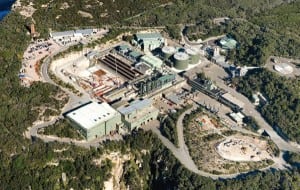
An Australian sewage plant this April began using treated wastewater falling down a 60-meter (m) shaft to produce its own power.
-
 Coal
CoalDrax Offers Model for Cofiring Biomass
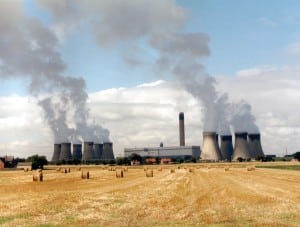
When it is completed, later this summer, the UK’s Drax Power Station biomass facility will become the largest dedicated cofiring project of its kind in the world. As U.S. coal-fired generators come under increasing pressure to cut emissions and take advantage of incentives to promote power generation from renewables, Drax offers an example of what is possible.
-
 Hydro
HydroUtility Perspectives on Using Renewable Power
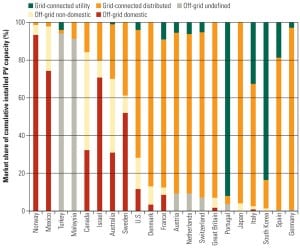
As U.S. utilities increase the percentage of renewable energy in their generation portfolio, they must deal with a number of key issues related to selecting specific technologies. Additionally, they must figure out what it will take to make renewables emerge as a mainstream generating option in the future.
-
Commentary
WTE: Next-Generation Sustainable Energy
It is clear that energy use will expand in the future as our population and society’s standard of living increase. Meanwhile, the push toward a sustainable lifestyle requires that all resources be utilized efficiently and sparingly. The National Academy of Sciences has identified paradigm shifts from current processes to an ideal vision centered on renewable energy and an atom economy—defined as maximum incorporation of starting materials into final products. These seemingly disparate paths converge if one considers energy production from municipal solid waste (MSW).
-
 Coal
CoalOPG Charts Move from Coal to Biomass
In response to Ontario’s provincial regulatory mandates to phase out the use of coal by the end of 2014, Ontario Power Generation (OPG) is exploring its capability to employ biomass feedstocks to displace coal in some units within the OPG thermal fleet. The primary fuels employed during the respective trials at its Nanticoke and Atikokan Generating Stations have been agricultural by-products and commercial grade wood pellets. The Canadian utility has learned valuable lessons about fuel supply and logistics, and the technical challenges of safely handling and firing high levels of biomass.
-
 Coal
CoalPlant Efficiency: Begin with the Right Definitions
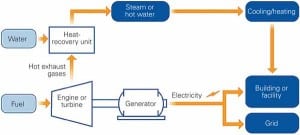
The race is on to claim the title of "most efficient coal-fired power plant" on the planet. However, it’s tricky identifying finalists because of the widespread misuse of the term "efficiency" and all those nagging assumptions. Let’s first establish clear definitions and then identify the title contenders.
-
 O&M
O&MThe U.S. Gas Rebound
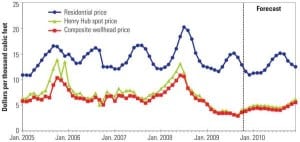
"It’s déjà vu all over again," said Yogi Berra. The Hall of Fame catcher could easily have been predicting the coming resurgence of natural gas – fired generation. Yes, a few more coal plants will be completed this year, but don’t expect any new plant announcements. A couple of nuclear plants may actually break ground, but don’t hold your breath. Many more wind turbines will dot the landscape as renewable portfolio standards dictate resource planning, but their peak generation contribution will be small. The dash for gas in the U.S. has begun, again.
-
 Waste to Energy
Top Plants: Harrisburg Resource Recovery Facility, Harrisburg, Pennsylvania
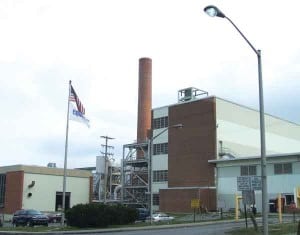
After decades of struggling with serious air contamination issues and large financial losses, this Pennsylvania waste-to-energy facility, which was built in 1972, was in need of an extreme makeover. In the wake of an unsuccessful $84 million retrofit attempt in 2005, the faltering facility’s last hope lay with a Covanta project team that took over its operation in 2007. After almost two years of hard work, the facility is now producing up to 17 MW while achieving its environmental compliance goals and earning substantial revenues.
-
 Waste to Energy
Top Plants: Rio Bravo Rocklin Power Station, Lincoln, California
By 2008, the 19-year-old wood-fired Rio Bravo Rocklin Power Station’s operating performance had been significantly degraded by boiler erosion and corrosion caused by (among many other problems) poor fuel. After much consideration, the plant owners elected to invest in a comprehensive upgrade to restore the plant to its as-built performance. Today, the plant operates very reliably. A newly implemented predictive maintenance program should continue to drive down operating costs and further reduce the number of forced outages.
-