
Sustainability
-
 Courts
The Chevron Deference Is Dead. What Does It Mean for the Power Sector?
The U.S. Supreme Court on June 28 overturned the Chevron doctrine—a forty-year-old precedent—significantly curtailing the power of federal agencies to interpret ambiguous statutory provisions, even in areas of agency expertise. The landmark 6–3 decision could have far-reaching effects on the power industry, with specific impact on sweeping energy regulations from the Environmental Protection Agency (EPA) […]
-
 Top Plant
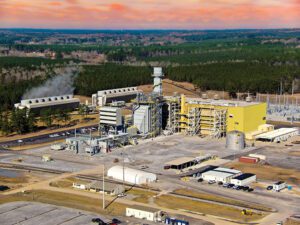
Morrow Reinvented: HL-Class Gas Turbine Powers a Coal Plant’s Rebirth
The Morrow Repower Project, winner of POWER’s 2024 Reinvention Award, exemplified a strategic coal-to-gas conversion at a brownfield site that masterfully combined cutting-edge advanced technology with a
-
 Trends
Energy Evolution: What Technologies Are Leading the Way Today
It’s not uncommon to hear people talk about the energy transition. Yet, throughout its history, the power industry has almost always been transitioning in one way or another. There are constantly new
-
 Sustainability
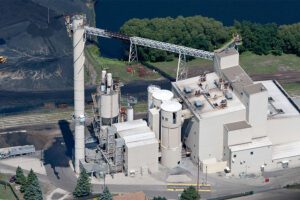
Michigan Coal Plant Eyes BECCS Retrofit: Could Become First U.S. Facility with ‘Carbon-Negative’ Power
CMS Energy’s subsidiary NorthStar Clean Energy has given Babcock & Wilcox (B&W) the green light to start initial work on converting a 73-MW coal-fired power plant in Michigan into a bioenergy with carbon capture and storage (BECCS) facility that could send “carbon-negative” power to the grid. B&W on June 3 said the limited notice to […]
-
 Interview
The POWER Interview: The Best Use of Digital Construction in Electrical Engineering and MEP Design
Engineering firms are increasingly recognizing the importance of digital construction and its transformative impact on electrical engineering and MEP (mechanical, electrical, and plumbing) design. Leveraging digital construction tools enables firms to optimize design processes, enhance collaboration, and deliver more efficient and sustainable solutions for their clients. Rahul Mittal, senior electrical engineer at Arup, has been […]
-
 Sustainability
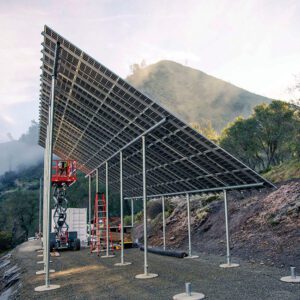
PG&E Recognized for Remote Grid Program
Pacific Gas and Electric Co. (PG&E) and its remote grid program received an honorable mention in the Energy category of Fast Company’s 2024 World Changing Ideas Awards. Winners were announced on May 14, highlighting fresh sustainability initiatives, cutting-edge artificial intelligence (AI) developments, and other creative projects that are helping mold the world. PG&E is one […]
-
 Hydrogen
Global First: JERA, IHI Launch Testing of Fuel Ammonia at Coal Power Plant
Japanese firms JERA and IHI Corp. have launched the world’s first large-volume fuel ammonia demonstration testing at JERA’s 1-GW Unit 4 of its 4.1-GW Hekinan Thermal Power Station in Aichi Prefecture
-
 Energy Security
Steps Utilities Can Take Now to Prepare for Future Extreme Weather Events
How can a utility, or any organization for that matter, prepare for the unexpected, especially when it comes to the volatility of weather? This question is increasingly coming to the forefront of risk
-
 Trends
Grids Brace for Solar Eclipse, Totality Poised to Test Ramping
Grid operators across the U.S. report they are largely prepared for the total solar eclipse that will pass over a large swath of North America on April 8, though they remain vigilant, monitoring for any unexpected shifts in power generation or demand that could test the power system’s resilience. The much-anticipated solar eclipse will begin […]
-
 Interview
ACWA Power: Crossroads for Exponential Growth in Power and Water
In 2002, the government of Saudi Arabia moved to step up the private sector’s role in the kingdom’s economy by opening the production of power and desalinated water. Saudi firms Abunayyan Trading Co., Abdulkadir Al Muhaidib & Sons Co., and MADA Group for Industrial and Commercial Development sensed a tremendous opportunity, forming ACWA Power Projects […]
-
 Trends
A Bold Beginning: GE Vernova Charts Course for Electrification and Decarbonization in Market Debut
Marking the completion of its spin-off from GE, GE Vernova began trading on the New York Stock Exchange on April 2 as an independent company “singularly focused” on accelerating the energy transition. The measure, approved by GE’s Board on Feb. 29, effectively establishes GE Vernova as a giant purpose-built firm that will leverage its technology […]
-
 Legal & Regulatory
Distributed Power, EAAS—New Ways to Join the Clean Energy Transition
The first image that likely comes to mind when the average energy consumer thinks about renewable energy is some kind of vast (utility-scale) solar or wind farm, or a massive battery project, usually pictured
-
 Legal & Regulatory
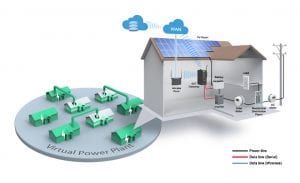
Measure Twice, Cut Once—A Roadmap for Enabling VPPs Through Policy and Program Design
Virtual power plants (VPPs), as aggregations of dispatchable distributed energy resources (DERs), can deliver grid services ranging from resource adequacy to reliability at scale—all while making energy more affordable. Yet, despite their merits, the U.S. utility industry is yet to leverage the full potential of these readily available, affordable, customer-sited resources to add flexibility to the grid. Of course, the decision to incorporate […]
-
 Sustainability
UK’s Drax Eyes U.S. for Bioenergy CCS Expansion Drive
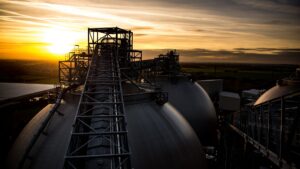
The 2.6-GW Drax Power Station in northeastern England—once Western Europe’s largest coal-fired power plant—is poised to pioneer bioenergy with carbon capture and storage (BECCS), a negative emissions
-
 Legal & Regulatory
EPA Rolls Out Final, More Stringent PM2.5 Standard
The U.S. Environmental Protection Agency (EPA) in February issued a final rule imposing tighter restrictions on fine particulate matter (PM2.5) or soot. The final rule, issued on Feb. 7, strengthens the nation’s National Ambient Air Quality Standards (NAAQS) by lowering the level of the primary (health-based) annual PM2.5 standard from 12.0 micrograms per cubic meter […]
-
 Sustainability
Clearing the Air: Is Direct Air Capture a Savior, Distraction, or a Trojan Horse?
Direct air capture (DAC) holds promise to extract carbon dioxide from the atmosphere, potentially becoming a crucial tool in the battle against climate change. Amidst heated debates over its feasibility, cost, and effectiveness, this comprehensive analysis dissects DAC’s potential through energy modeling and policy discussion. Can DAC truly fulfill its promise and play a significant […]
-
 Commentary
The Possibilities of Recycling Nuclear Fissile Waste
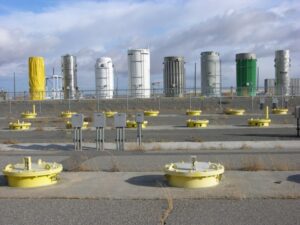
Nuclear energy has long been a topic of debate due to concerns about its environmental impact and the disposal of nuclear waste. However, a paradigm shift is underway that could revolutionize how we view nuclear waste. Not only could recycling nuclear fissile waste reduce the waste generated by current nuclear power plants, but it also […]
-
 Commentary
The Clean Energy Balancing Act
Energy is the lifeblood of our economy. It powers our phones, homes, offices, and transportation. As our energy consumption has evolved, so too has our electricity system to adapt to the demands of a changing world. Today, renewable energy from solar and wind dominates new electricity generation. Utilities are grappling with rising demand from electric […]
-
 Commentary
5 Ways to Ensure Grids Don’t Become Bottlenecks in the Energy Transition
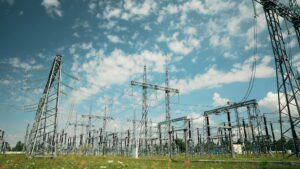
Meeting ambitious climate targets while transitioning from fossil fuels remains a key priority for businesses, policymakers, and society in general. The good news is that the grid can play a pivotal role in helping us achieve this. With less dependency on more harmful energy sources such as oil and coal, and increased electrification, we are […]
-
 Sustainability
GE Vernova, IHI Developing Novel Ammonia-Capable Gas Turbine Combustor
GE Vernova will collaborate with Japanese integrated heavy industry group IHI Corp. to develop a retrofittable 100% ammonia-capable gas turbine combustion system that would be compatible with GE’s 6F.03, 7F, and 9F models, targeting a potential commercially available product by 2030. The companies on Jan. 24 signed a joint development agreement (JDA) that formally launched […]
-
Sustainability
Responsive Economic Dispatch: Meeting a New Goal for Power
Customization is what we expect from our coffee order, not something we associate with an electricity plan. But like other industries influenced and motivated by the Internet of Things (IoT) age, the energy industry is having a renaissance that is changing customers’ relationship with power. Customers want their electricity to do more than keep the […]
-
 Sustainability
PGE Leans into an All-of-the-Above Strategy to Decarbonize Its Power System
Climate change has led many states and countries to set targets for reducing greenhouse gas (GHG) emissions from power systems. Oregon, for example, has set targets for all power sold to retail customers in the state to have GHG emissions cut by 80% by 2030, 90% by 2035, and 100% by 2040. It’s a challenging […]
-
 Partner Content
Innovative Solutions for Sustainable Power: Navigating Regulations and Enhancing Efficiency
Embrace the future of the power industry with our groundbreaking ebook, “Innovative Solutions for Sustainable Power.” Dive into the latest breakthroughs in power generation and the pivotal role of technology in steering towards an eco-conscious future. Discover how Hexagon’s Asset Lifecycle Intelligence division empowers professionals to craft facilities that are not just profitable, but also […]
-
 Commentary
Generating Employee Buy-In to Embrace Energy Innovation
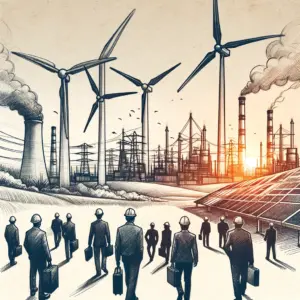
The White House’s billion-dollar investment in transitioning to and expanding clean power grids is the latest reminder of the critical window for energy companies to capitalize on the opportunities to make
-
 Commentary
Rooftop Solar Important Piece of Fight Against Climate Change
The U.S. is facing energy and climate challenges on multiple fronts. Rising energy costs, extreme weather events, and a transition away from fossil fuels have placed increasing pressure on governments and consumers. Residential solar is a compelling, multi-purpose solution that continues to experience rapid adoption among Americans. Six GW of home solar was installed in 2022, and […]
-
 Trends
Seven European Countries Set Ambitious But ‘Necessary’ Target to Decarbonize Power System by 2035
The seven European countries that make up the Pentalateral Energy Forum—Austria, Belgium, France, Germany, Luxembourg, the Netherlands, and Switzerland—will strive for the decarbonization of their interconnected electricity system by 2035. The countries, which form the Pentalateral Energy Forum—a 2005-convened voluntary framework for regional energy cooperation—in a joint statement on Dec. 18 formally concluded, “timely decarbonization […]
-
 Sustainability
Shining Light on Life Cycle Analysis for Renewable Energy Systems
Life cycle analysis or assessments (LCAs) are a quintessential tool for power and utility industry professionals and tradespeople. They determine the environmental and financial value of new technologies. Consumer products get the most attention, but LCAs for renewable energy systems (Figure 1) should be discussed more. It is time to synthesize known information to create […]
-
 Sustainability
Energy Efficiency Is Demand-Side Solution Needed to Protect the Grid and Save Businesses Money
There’s growing global recognition that a net-zero world is inevitable, with ever-increasing investments in clean technologies and strong consumer support for sustainably-minded companies. As the transition to a carbon-free future accelerates, potential costs are being scrutinized, particularly as it relates to transforming the U.S. power grid, which remains a chief source of pollution and is […]
-
 Sustainability
How Coal Fly Ash Is Reducing CO2 Emissions and Improving Concrete
Concrete is the most widely used construction material in the world. One of the key ingredients in concrete is Portland cement. The American Concrete Institute explains that Portland cement is a product obtained by pulverizing material consisting of hydraulic calcium silicates to which some calcium sulfate has usually been provided as an interground addition. When […]
-
 Sustainability
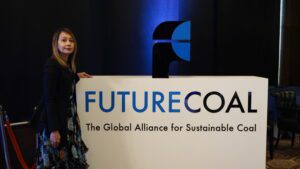
FutureCoal CEO Suggests ‘Cancel Coal’ Mantra Is Short-Sighted, Abated Coal Solutions Must Be Part of Energy Transition
Speaking at the 5th annual India Coal Conference in New Delhi, FutureCoal CEO Michelle Manook said, “Government and finance policies, which embrace a ‘cancel coal’ mantra, are short-sighted and undermine the very ambitions we seek to achieve as a global community.” Formerly known as the World Coal Association, FutureCoal: The Global Alliance for Sustainable Coal […]