
Synfuel
-
 Coal
CoalCPS Energy Reconsiders Plan to Purchase Power from Texas IGCC Project
San Antonio’s CPS Energy on Monday announced a new agreement to buy power from Summit Power’s proposed integrated combined cycle coal gasification (IGCC) plant that will include carbon capture, utilization, and storage. The municipally owned utility will buy 200 MW of power from the the Texas Clean Energy Project (TCEP), which is about half the […]
-
 Renewables
DOE to Open $4B More in Loan Guarantees for Renewables, Energy Efficiency Projects
The Department of Energy (DOE) plans to make an additional $4 billion in loan guarantees available to help commercialize U.S. renewable energy and energy efficiency technologies that avoid, reduce, or sequester greenhouse gases. The DOE on Wednesday issued a draft loan guarantee solicitation under Title XVII of the Energy Policy Act of 2005 (through Section […]
-
 Legal & Regulatory
Obama in SOTU: “All-of-the-Above” Energy Strategy Is Working
President Obama spoke briefly about energy in his State of the Union address on Tuesday night, though he declared at the outset: “The all-of-the-above energy strategy I announced a few years ago is working, and today, America is closer to energy independence than we’ve been in decades.” That statement rejected recently expressed concerns from 18 […]
-
 Renewables
Groups: EIA Renewable Energy Data Doesn’t Reflect “Real World”
Nearly 100 renewable energy and environmental groups and businesses have asked the Energy Information Administration (EIA) to reevaluate renewable energy forecasts, alleging the agency’s projections don’t reflect “the current status and recent, real-world growth rates of renewables.” In a Sept. 10 letter to EIA Administrator Adam Sieminski, the coalition says the agency’s estimates in past […]
-
Gas
IEA: Renewable Generation Could Surpass Global Natural Gas Share, Double Nuclear by 2016
Driven by the booming growth of generation from hydro, wind, and solar photovoltaics (PV), generation from renewables on a terawatt-hour basis is set to surpass that from natural gas and double nuclear’s share by 2016, becoming the world’s second-most important global electricity source after coal, according to a new report from the International Energy Agency (IEA).
-
Coal
Hearing Panelists Assess Grid Reliability Challenges Posed by Nat. Gas, Renewables
Panelists at a House hearing today refuted varied claims concerning if and how increased natural gas and renewables generation pose widespread challenges to the reliability of the electric grid. Some pointed to ineffective rules in the restructured wholesale power market and the failure of conventional power plants as being more of a threat to grid reliability.
-
Hydro
Report: Global Renewable Investments in 2012 Tumble 11% as Market Shifts from West to East
Public and private investment in solar, wind, and other renewables worldwide declined 11% in 2012 from an adjusted 2011 record of $302 billion, a new survey from Pew Charitable Trusts shows. Yet the global renewable sector still registered a record 88 GW of new nameplate capacity last year, and China reclaimed the lead in global renewables investments from the U.S., it says.
-
Coal
Lawmakers Push for Financing Parity for Renewable Projects
Bipartisan legislation introduced on Wednesday by a bicameral group of lawmakers seeks to give renewable energy project investors access to an existing corporate structure whose tax benefits are now only available to investors in fossil fuel–based energy projects.
-
Commentary
Biogas: An Alternative Energy Source
Most professionals in the energy industry know about biomass; fewer of us are conversant with biogas. This commentary explains the basics of biogas, with a focus on its current use and future potential as a source of electrical power.
-
Coal
Murkowski’s Energy Blueprint Presses All Measures for OPEC Oil Independence
An energy blueprint released on Monday by Sen. Lisa Murkowski (R-Alaska), the ranking minority member of the Senate Energy and Natural Resources Committee, calls for complete independence from OPEC oil by 2020.
-
Hydro
Report: U.S. Has Lost Edge in Global Renewables Race
Once a world leader in innovation and manufacturing of clean energy technologies, the U.S. now faces significant competitive challenges from Europe and Asia, and it lags behind other nations on measures that include renewables deployment, manufacturing, and innovation, a new report suggests.
-
Hydro
FERC Proposes Reforms to Diminish Barriers to Small Generator Interconnection
The Federal Energy Regulatory Commission (FERC) on Thursday proposed four reforms intended to reduce the time and cost to process transmission interconnection requests from generating facilities of 20 MW or smaller. The reforms would boost reliability by increasing energy supply and remove hurdles in the development of new renewable power sources, FERC said.
-
Coal
Report: Fuel for Power Generation to Lead Energy Growth Through 2040
Fuel for power generation will account for about 55% of demand-related energy growth through 2040, ExxonMobil forecasts in its freshly released annual energy forecast. Like several other forecasters, the Irving, Texas–based oil and gas company also predicts that natural gas will emerge as the leading source of electricity generation by 2040. Among key findings in […]
-
Distributed Energy
UBC Generates Heat, Power, and Buzz with Renewable CHP
Already in the midst of a drive to cut its greenhouse gas emissions, the University of British Columbia didn’t just look to clean energy for its new combined heat and power system. Instead, it decided to combine research with cutting-edge green power.
-
 Hydro
HydroUtility Perspectives on Ramping Up Renewable Power
Panelists at ELECTRIC POWER discussed how U.S. utilities choose renewable power generation technologies based on their geographic locations, state requirements, economics, and other criteria—including reliability and federal regulations.
-
 O&M
O&MThe U.S. Gas Rebound
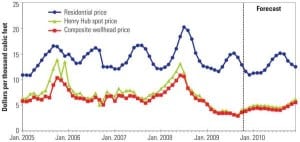
"It’s déjà vu all over again," said Yogi Berra. The Hall of Fame catcher could easily have been predicting the coming resurgence of natural gas – fired generation. Yes, a few more coal plants will be completed this year, but don’t expect any new plant announcements. A couple of nuclear plants may actually break ground, but don’t hold your breath. Many more wind turbines will dot the landscape as renewable portfolio standards dictate resource planning, but their peak generation contribution will be small. The dash for gas in the U.S. has begun, again.
-
-
 Waste to Energy
Microbe Turns Carbon Dioxide into Methane
Microbe Turns Carbon Dioxide into Methane A team of Penn State engineers say that a tiny self-perpetuating microbe can take electricity and directly convert carbon dioxide and water into methane, potentially producing a portable energy source with a carbon-neutral footprint. Methanogenic microorganisms produce methane in marshes and dumps, but scientists thought that the organisms turned […]
-
 Waste to Energy
New Biogas Plant Runs Purely on Nonedible Materials
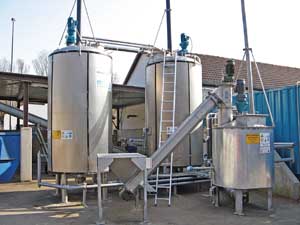
German researchers in February said they had developed the first-ever biogas plant to run purely on waste instead of edible raw materials. The team from the Fraunhofer Institute for Ceramic Technologies and Systems IKTS (Institut Keramische Technologien und Systeme) in Dresden said that the plant, which uses a fuel cell to convert the gas into electricity, exclusively uses agricultural waste such as corn stalks — and it generates 30% more biogas than conventional plants.
-
Hydro
International Organization to Push Renewable Energy
Seventy-five countries from around the world joined a new political agency dedicated to the acceleration of green energy this January, but several notable nations — including the U.S., Canada, Australia, UK, Japan, and China — were not among them.
-
Solar
President Obama Signs Orders Aimed at Energy Independence and Economic Recovery
Following a press briefing this morning, President Barack Obama signed new executive orders intended to spur “swift action” on both U.S. economic recovery and American energy independence.
-
 Synfuel
Biofuels help green up gas turbines
Ethanol and biodiesel have become mainstream fuels that are increasingly used in combination with gasoline or petroleum diesel in automobiles. Now these same versatile fuels are starting to be used to power gas turbines. LPP Combustion LLC has developed a fuel preparation and delivery system that converts liquid fuels such as No. 2 fuel oil, biodiesel, ethanol, and coal liquids into substitute natural gas, which existing natural gas hardware can burn while enjoying reduced emission rates similar to those of natural gas.
-
 Synfuel
Fueling around
Europeans didn’t know that corn existed before Columbus "discovered" America. It had been cultivated by indigenous North Americans for thousands of years before the Italian brought home what was to become a favorite food for many. The more adventuresome even figured out how to distill corn into something more to their liking. Fast-forward five hundred […]
-
 Gas
GasGlobal Monitor (August 2007)
PG&E mounts tidal power project / GE F-class turbine breaks record / Iowa welcomes ethanol-fed hog / NYPA upgrades pumped-storage plant / Bush blesses Browns Ferry 1 restart / Shearon Harris looks to live on / Nevada bets on solar thermal / Climate models questioned / POWER digest
-
 Gas
GasGlobal Monitor (February 2007)
China to buy four AP1000 reactors / Midwest Gen, Blagojevich reach pollution deal / Behold, the carpet gasifier / AREVA casks green-lighted by NRC / Brookfield Power upgrades Oswego Falls / Korea fires up 50-MW landfill gas project / Alstom lands big Russian deal / POWER digest / Correction
-
 Legal & Regulatory
Renewable contracts merit longer terms
The length of term allowed for power sales contracts is a critical determinant of the ability of states to meet their increasingly ambitious renewable power targets. Many utilities advocate limiting terms to 10 or perhaps 15 years for renewable energy contracts, emphasizing the "flexibility" that shorter terms offer. In contrast, contract terms of 20 or […]
-
 Synfuel
Combined Cycle Users’ Group completes another successful year
The third annual meeting of the Combined Cycle Users’ Group (CCUG) was held May 2–4 in Atlanta at Electric Power 2006, in cooperation with the ASME Power Division Combined Cycles Committee and other industry groups. The CCUG’s leadership (Figure 1) drives the group to address issues involving the major components of a combined-cycle plant and […]
-
 Coal
CoalGas turbine "refueling" via IGCC
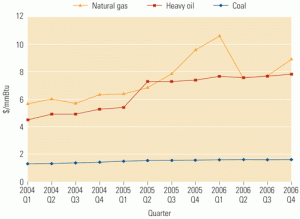
The jury is still out on the economic and technical feasibility of burning gasified coal to generate electricity. Gasification technology has yet to be proven on a utility scale, especially with Powder River Basin coal as the feedstock. And on the generation side, there are more questions than answers about the capital cost and availability of integrated gasification combined-cycle (IGCC) plants. But with natural gas prices high and rising, it’s definitely worth examining whether it would be economically and technically feasible to convert the existing U.S. fleet of gas-fired combined-cycle plants to burn gasified coal.
-
 Hydro
HydroRenewable energy’s growing share
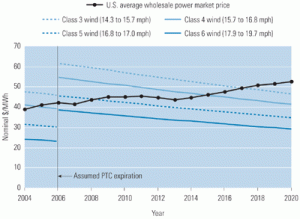
Renewable power development will continue to grow in the U.S., with the nonhydro total reaching 53,121 MW by the end of 2016. So predicts a soon-to-be-released report from Boulder, Colo.–based Platts Analytics (which, like POWER, is a part of Platts, a division of The McGraw-Hill Companies). If all that capacity goes on-line, it would […]
-
Hydro
Promoting renewable exports
Promoting renewable exports The DOE is not the only U.S. government department promoting renewable energy. Any U.S. energy firm or supplier looking to export its goods and services can tap the services of the Energy Team at the Commerce Department’s International Trade Administration (ITA), which is part of the U.S Commercial Service (USCS). The […]