
Plant Design
-
 Coal
CoalCover Story: FutureGen: Zero-Emission Power Plant of the Future
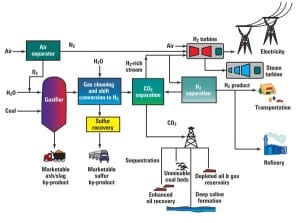
In early 2003 the United States announced its plans to build a zero-emission prototype of the fossil fuel power plant of the future called FutureGen. It is one of the boldest steps toward a pollution-free energy future ever taken by the U.S. It has the potential to be one of the most important advances in […]
-
 O&M
O&MScrubbing: Optimizing Flue Gas Desulfurization Technologies Is Essential
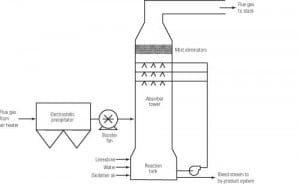
New flue gas desulfurization (FGD) units are being installed at utilities in many parts of the U.S. and a large percentage of the new scrubbers are of the wet limestone type. Although wet limestone scrubbing is a well-developed technology, it may be unfamiliar to employees at plants that have previously not required scrubbers. This article […]
-
 O&M
O&MBoiler Conversion: Converting a Boiler from Burning Bituminous Coals to PRB Coals Can Be a Challenge
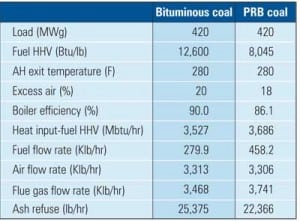
Design techniques and operating experience with Powder River Basin (PRB) coals have advanced significantly over the past 35 years for boilers that were originally designed for this fuel. Today, boiler installations looking to effectively utilize PRB coals fall into two primary categories: units that were initially designed for bituminous or other coals and units that […]
-
 O&M
O&MCase Histories: Co-Firing Coal and Oat Hulls Reduces Emissions at University Power Plant
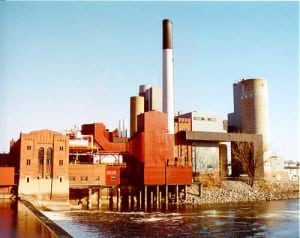
The University of Iowa (UI) Biomass Fuel Project has produced significant reductions in greenhouse gas emissions, regulated boiler stack emissions, and purchased energy costs. The project utilizes a renewable, biomass fuel source and provides an opportunity for UI to partner with a local industry. UI was approached by Quaker Oats Co., Cedar Rapids Facility in […]
-
O&M
Case Histories: Asheville Power Station’s Retrofit First to Meet North Carolina’s Clean Smokestacks Act
Asheville Power Station’s Unit 1 in Arden, North Carolina, was the first coal-fired unit to be modified with a flue gas desulphurization (FGD) system and placed in service to meet the clean air requirements of the state’s Clean Smokestacks Act. As of November 16, 2005, at least 97% of the sulfur dioxide that had been […]
-
Coal
Coal Users Community: Growth Is the Byword for Gasification
The Gasification Technologies Council (GTC, www.gasification.org) was created in 1995 with a straightforward mission: to promote the greater use of gasification as an environmentally and economically preferred alternative for the production of power, fuels, and chemicals from low-value energy sources. Those energy sources include high-sulfur coal, petroleum coke, and wastes. Since that time the GTC […]
-
O&M
Projects
Reliant Energy Commits $350 Million for Environmental Upgrades at Two Key Facilities Reliant Energy has announced plans to install state-of-the-art emission control systems at two Pennsylvania power plants, a major step in the company’s strategy for maximizing the long-term value of its power generation assets while reducing air emissions. The utility, Reliant Energy, estimated it […]
-
Coal
Editorial: Tax Credits Should Help Promote Coal-Based Power Generation Technologies
In order to promote coal-based technologies, the U.S. Department of Energy will be assisting the Internal Revenue Service (IRS) in the selection of projects to receive tax credits. According to the DOE’s Office of Fossil Energy, recent legislation has been designed to advance cleaner coal-based power generation and gasification technologies. The Energy Policy Act of […]
-
 Coal
CoalClean Coal: Clean Coal Technology Is Not an Oxymoron
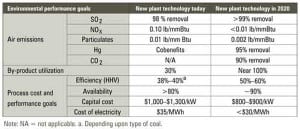
In the late 1980s, the U.S. Department of Energy (DOE), in conjunction with industry and state agencies, started the Clean Coal Technology (CCT) program. The aim of the CCT program was to develop technologies, increase efficiency, and reduce the environmental effects of burning coal in power plants. Today, pollution controls for new and existing plants […]
-
Coal
Coal Users Community: Capitalizing on Coal: The Challenges and Opportunities
Demand for energy in America continues to grow. So too does the challenge of generating it in a reliable, affordable, and an environmentally sensitive manner. Given the U.S.’s abundant coal reserves, the nation’s electric utilities are pursuing a variety of strategies to keep coal a key fuel source for generating electricity. Developing Technologies One approach […]
-
 Coal
CoalControls: Building the Digital Power Plant of the Future
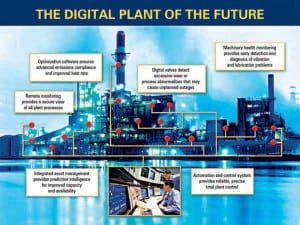
History has shown that the proper deployment of automation on new construction projects can make the difference between a moderate performer and an industry-leading unit, between average financial results and accelerated profitability. Given the magnitude of a new coal-fired plant construction project, automation is often viewed as just one of the many components essential to […]
-
 Coal
CoalCover Story: Coal-fired Electric Power Capacity Continues to Increase
In the U.S. electric power industry, coal is making a comeback as a fuel of choice for new generation projects. During the construction boom that occurred from 1999 to 2003 about 90% of new electric generation utilized natural gas – fired combustion turbines. Unfortunately, over the past few years natural gas supplies have tightened and […]
-
O&M
Projects
Kansas City Power & Light Installing SCR at La Cygne Generating Station Kansas City Power & Light (KCP&L), a subsidiary of Great Plains Energy, has awarded The Babcock & Wilcox Company (B&W) a contract for the installation of new emissions control equipment on Unit 1 at its La Cygne Generating Station. When completed, the selective […]
-
 Coal
CoalPollution-Control Technologies: Multi-Pollutant Removal Systems Are a Clean Coal Technology
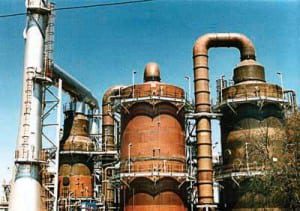
The first power plants were built about 130 years ago. Coal was then, and is still today, the major fuel used for power generation. Currently, about 1,400 pulverized coal – fired units, with an average age of more than 30 years, generate over 50% of U.S. electric power. The use of low-sulfur coal and improved […]
-
 O&M
O&MProject Planning: Repowering or Replacement: What Is the Solution?
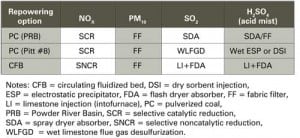
Between 1998 and 2002 the U.S. experienced an unprecedented power plant construction boom that consisted mostly of gas-fired, combustion turbine – based power plants. This surge in power plant construction had several driving forces, including electric power deregulation, the emergence of non-utility power producers, a sustained period of plentiful and inexpensive natural gas, and the […]
-
 Coal
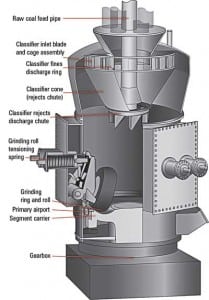
CoalCase Histories: Pulverizer Upgrades Are Reducing Fuel Costs
St. Johns River Power Park (SJRPP) is a two-boiler, 2 x 660-MW station jointly owned by JEA (formerly Jacksonville Electric Authority) and Florida Power & Light (FPL). JEA is the plant operator. The Foster Wheeler boilers went into commercial operation in 1987 and 1988. Each boiler has seven OEM vertical spindle pulverizers (mills) and 28 […]