
Physical security
-
 T&D
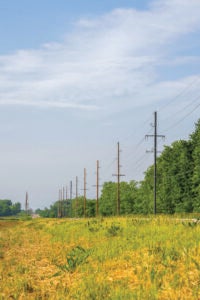
T&DEvery Fifth Pole: Ameren’s Staggered Strategy for Grid Hardening
Ameren Illinois and Ameren Missouri found a “creative” way to strengthen their utility service territory by strategically installing fiber reinforced polymer (FRP) composite utility poles by Creative
-
 Energy Security
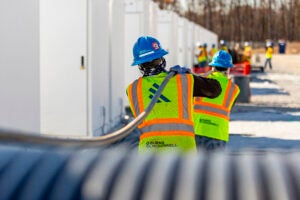
Battery Storage Is Reshaping the Grid; Integration Strategy Will Shape the Outcome
The electric sector is standing at a pivotal moment. Utilities are no longer observers in the renewable transformation but instead are becoming direct owners and operators of technologies that were once primarily developed, financed, and managed by third-party developers. Among these technologies, battery energy storage systems (BESS) are moving to the center of long-term generation […]
-
 O&M
O&MMarnie Surfaceblow: Marnie and Maya—She Spies
Critical plant control systems can be vulnerable to both physical and remote attacks. Marnie and Maya demonstrate some of these vulnerabilities as they become white-hat hackers at a biomass power plant. The
-
 Plant of the Year
A Transformative Dawn: South Fork Wind Leads America’s Offshore Reboot
Winning POWER’s highest honor, South Fork Wind—the first commercial-scale offshore wind farm in U.S. federal waters—stands as a beacon for the power sector’s ambition to forge new industries in the
-
 International
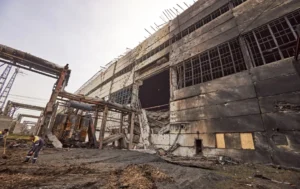
Russia Hits Ukrainian Power Stations with Christmas Day Attacks
DTEK, Ukraine’s largest private energy company, reported power outages across large areas of the country after Russia fired missiles against DTEK power stations in strikes on Christmas day. DTEK said it was the 13th massive attack on Ukrainian energy systems this year, and the 10th to target DTEK power stations. At least one long-time power […]
-
 T&D
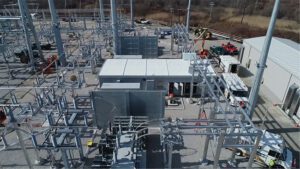
T&DTransformer Safety: Fire Barriers as Essential Protection for Electrical Infrastructure
Flammable insulating fluids and electrical faults pose significant fire and explosion risks to transformers. These hazards can result in catastrophic damage, disrupt business continuity, and cause extensive
-
 Energy Security
Next-Generation Ballistic Protection Ensures Long-Term Utility Security
In July 2014, the Department of Homeland Security mandated that utilities meet requirements and measures outlined in the North American Electric Reliability Corporation’s (NERC’s) critical infrastructure protection (CIP) standards. These standards regulate the physical safety and security of all aspects of the power grid, including energy substations and generators. They outline steps toward prioritizing which […]
-
 Energy Security
A New Strategy for EMP Protection of Critical Civilian Infrastructure
The problem of the destructive effects of high-altitude electromagnetic pulse (EMP) on electronic and electrical equipment has been well-known for more than 50 years. All military equipment and critical equipment of special governmental services are reliably protected from such influences. There are many companies on the market that manufacture numerous EMP protection means that meet […]
-
 Commentary
The Future of Substation Security: Embracing AI-Powered Solutions for Utility Companies
A modern town without power—shuttered stores, empty parking lots and useless traffic lights—can resemble an eerie, dystopian future where residents struggle to get what they need. This is the short-term reality for localities that have been victims of targeted substation attacks, which have been rising steadily for the past decade. COMMENTARY At best, these widespread […]
-
 Safety
Cameras Are an Important Security Tool for Power Plants and Substations
Physical security of plants and substations has become a real concern for power companies. In an interview with NPR, Puesh Kumar, director of the U.S. Energy Department’s Office of Cybersecurity, Energy
-
 Interview
The POWER Interview: Physical Attacks on the Grid Soared in 2022. What Can Be Done?
Physical security at power plants has received renewed concern of late, owing to a spate of gunfire vandalism events in the U.S. However, power plants have long-fielded several other physical security risks, including from terrorism, sabotage, natural disasters, insider threats, and physical breaches. Power plants have typically employed a set of physical security tools, such […]
-
 News
NewsThird North Carolina Power Substation Targeted by Gunfire as BPS Physical Security Concerns Mount
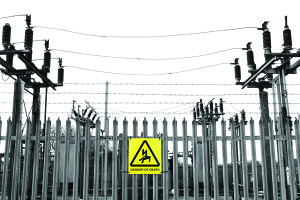
A third power substation has been damaged by gunfire in North Carolina, prompting an FBI investigation. The incident on Jan. 17 is part of a spate of gunfire vandalism that has renewed physical security concerns at a federal level. The Randolph County Sheriff’s Office in Thomasville, central North Carolina, said the latest incident, believed to […]
-
 News
NewsCovering More with Less: Securing Renewable Energy Sources
A wide range of industries fall under the umbrella of critical infrastructure, and they are all—as the name implies—critical. From energy production and water treatment to transportation and data storage, everything within critical infrastructure serves an essential purpose when it comes to the continued functioning of the nation. Unfortunately, that makes critical infrastructure sites a […]
-
 Nuclear
IAEA Embarks on Unprecedented Mission to Inspect Nuclear Power Plant in Ukrainian ‘War Zone’
An expert team from the International Atomic Energy Agency (IAEA) has arrived in Kyiv and is readying to inspect Ukraine’s Zaporizhzhya Nuclear Power Plant (ZNPP) for damage from weeks of shelling. The development marks a significant breakthrough for the agency, which has for the past month pleaded with Russia and Ukraine to allow it to […]
-
 Press Releases
Abloy unveils keyless padlock with removable shackle
The new version of the keyless ABLOY BEAT padlock, designed especially for critical infrastructure, features a removable shackle. The highly weatherproof lock is operated with a mobile app and connects to both ASSA ABLOY’s and third-party management and operational systems. JOENSUU, Finland, February 24, 2022 – Abloy Oy today unveiled a digital, keyless padlock with […]
-
 Power
PowerPower Sector Risks Loom Large Over the Energy Transition
The fog of uncertainty that hangs over the global power industry is getting larger and denser as generating companies and utilities navigate ever more complex challenges.
-
 Connected Plant
The Benefits of Explosion-Protected Cameras in High-Risk Environments
Many critical infrastructure sites contain areas that are classified as hazardous due to a high risk of explosion. What makes most of these locations dangerous is the presence of flammable materials such as liquids, gases, vapors, and dust. In these areas, the use of network cameras can significantly improve the overall health and safety posture […]
-
 Supply Chains
DOE Specifies ‘Foreign Adversaries’ for Trump BPS Equipment Ban
Taking its first major step to act on President Trump’s May 1 executive order (EO) to limit foreign bulk power equipment transactions in the U.S., the Department of Energy (DOE) has issued a definitive list of six foreign “adversaries” that pose threats to the U.S. bulk power system (BPS): China, Cuba, Iran, North Korea, Russia, […]
-
 Cybersecurity
NERC Moves to Defer Reliability Standards, Provide COVID-19 Flexibility
The North American Electric Reliability Corporation (NERC) has asked the Federal Energy Regulatory Commission (FERC) to delay the implementation of seven reliability standards that relate to cybersecurity, training, disturbance monitoring and reporting, generator relay loadability, and coordination of protection systems for performance during faults. In an April 6 filing to FERC, NERC noted the rules […]
-
 COVID-19
Live Updates: Power-Related Regulatory Responses to COVID-19
Federal regulators with oversight over U.S. power matters have issued a series of actions over recent weeks to respond to the potentially devastating impact that COVID-19, the new coronavirus, could have on North American power workforce operations and reliability. POWER will update this post regularly with COVID-19 response news and documents from federal and state […]
-
 Fuel
FuelNERC: Power Industry ‘Well-Prepared’ for COVID-19, Aggressively Confronting Pandemic Threats
Industry responses to a Level 2 alert on contingency planning issued by the North American Electric Reliability Corp. (NERC) early last month suggest the “vast majority” of registered participants in the North American bulk power system are well prepared for the COVID-19 crisis. NERC, the interconnected bulk power system’s Electric Reliability Organization (ERO), has underscored […]
-
News
FERC Approves New Cybersecurity, Transmission Reliability Standards
The Federal Energy Regulatory Commission (FERC) on Jan. 23 approved two new reliability standards related to transmission system planning performance and cybersecurity. However, it also proposed to retire 74 reliability standard requirements, which it deemed duplicative or unnecessarily burdensome. Among the spate of actions it took on Thursday, FERC also green-lighted retaining the North American […]
-
 News
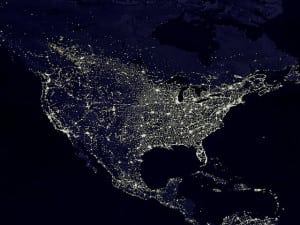
NewsEMP Threat Real but Limited, EPRI Says in Much-Anticipated Report
Depending on the hazard field, electromagnetic pulses (EMPs) resulting from detonation of a nuclear weapon at high altitude or in space could cause significant damage to electronics on the bulk power system and even prompt a regional voltage collapse, the Electric Power Research Institute (EPRI) says in much-anticipated findings from its three-year study on high-altitude […]
-
 Connected Plant
Hackers May Already be in Your Infrastructure—Now What?
Cyber-attacks on industrial control systems (ICSs) are no longer a hypothetical. As pieced together by the Wall Street Journal, in 2017, Russian hackers attacked a small construction company, exploiting the organization’s connections with utilities and government agencies. Through an integrator, the hackers accessed computer-network credentials, giving them the ability to get into computer systems that […]
-
 Connected Plant
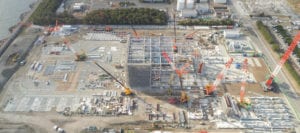
Autonomous Power Plant Takes Shape in Japan
The world’s first autonomous combined cycle power plant is currently under construction at the Takasago Machinery Works facility in Japan, and it will be operational by 2020, according to Mitsubishi Hitachi
-
 News
NewsTrump Acts on Critical Infrastructure Resiliency Against EMP Threats
President Trump has signed an executive order (EO) to boost coordination for and national resilience against electromagnetic pulse (EMP) threats—both from nuclear warfare and natural events like solar superstorms. The action suggests new federal mandates to protect critical infrastructure against EMP events and attacks may be on the horizon. Senior Trump administration officials from the National Security […]