
Nuclear
-
 Nuclear
With Fresh Election, Japan Veers Away from Nuclear Phase-Out
A landslide victory handed by Japanese voters to the Liberal Democratic Party (LDP) in mid-December saw power in the country’s Lower House shift back to the nationalist-conservative party that had governed Japan almost continuously since 1955. The LDP had been ousted in a historic defeat only three years earlier. In his first televised interview since taking office, newly elected Prime Minister Shinzo Abe (who previously served as prime minister from September 2006 to September 2007) called for review of plans to phase out nuclear power in Japan by 2030, endorsing instead the construction of new, safer nuclear power plants.
-
Nuclear
NGNP Receives $1M Award from DOE for High-Temp. Gas-Cooled Reactor
Next Generation Nuclear Plant (NGNP) Industry Alliance last week announced that it had received a $1 million award from the U.S. Department of Energy (DOE) for a 50/50 cost-shared contract to continue business and economic analysis for using high-temperature gas-cooled reactor technologies (HTGR).
-
Nuclear
German Court Deems Nuclear Fuel Tax “Unconstitutional”
A German tax court on Tuesday ruled that the country’s excise tax on nuclear fuel levied since January 2011 is unconstitutional and lacks legal competence. The matter now proceeds to the Federal Constitutional Court, which alone has the jurisdiction to rule on the invalidity of the law.
-
Nuclear
NRC Projects San Onofre Restart Decision Could Be Issued This Spring
A year after the beleaguered San Onofre Nuclear Generating Station (SONGS) was shut down owing to issues identified in the steam generator tubes of the plant’s two units, the Nuclear Regulatory Commission (NRC) announced tentative milestones for its independent review. The federal agency now projects that a possible decision regarding restart of Unit 2 could come in late April.
-
Nuclear
DOE Unveils Used Nuclear Fuel Strategy
The Department of Energy (DOE) quietly unveiled a new strategy for the management and disposal of the nation’s spent nuclear fuel on Friday. The strategy calls for a phased, consent-based approach to siting and implementing a nuclear waste management and disposal system, and it endorses building a pilot interim storage facility by 2021.
-
Nuclear
NRC Completes Environmental Impact Statement for Fermi ESBWR
The Nuclear Regulatory Commission (NRC) and the U.S. Army Corps of Engineers last week completed the final environmental impact statement (EIS) for the DTE Electric Co.’s proposed new Economic Simplified Boiling Water Reactor (ESBWR) at its Enrico Fermi Nuclear Plant.
-
Nuclear
Transformer Fire Shuts South Texas Reactor
A fire in the main transformer of the South Texas Project (STP) Electric Generating Station’s Unit 2 on Tuesday evening automatically tripped the reactor in Bay City, Texas, and powered on emergency diesel generators.
-
Nuclear
Restart Elusive for Fort Calhoun, Crystal River Nuclear Reactors
Two U.S. nuclear reactors that have long been idled—one for roughly two years and the other for three—may see even longer periods of shutdown, new reports suggest. Federal regulators said significant work remains before the Fort Calhoun nuclear power plant in Nebraska can be restarted, while Progress Energy Florida on Monday told the Florida Public Service Commission (PSC) that it was a week away from submitting a draft report evaluating repair options for its Crystal River reactor.
-
Nuclear
Toshiba Looks to Sell Stake in Westinghouse
Japanese firm Toshiba Corp. is reportedly holding discussions with three parties to sell off up to 16% of its subsidiary, U.S.-based Westinghouse Electric Co.
-
Nuclear
Too Dumb to Meter, Part 7
As the book title Too Dumb to Meter: Follies, Fiascoes, Dead Ends, and Duds on the U.S. Road to Atomic Energy implies, nuclear power has traveled a rough road. In this POWER exclusive, we present the 11th, 12th, and 13th chapters, “The Atomic Earth-Blaster,” “Chariot Swings Down to Alaska,” and “Sedan Side Trip to Nevada— the first three chapters of the “Eddie Teller’s Exploding Ambitions” section.
-
 Coal
CoalWorld Energy Outlook Foresees Distinct Generation Shift
Global generating capacity is poised to soar by more than 72%, to 9,340 GW, by 2035 from 5,429 GW in 2011, despite retirement of about 1,980 GW, the International Energy Agency (IEA) forecasts in its World Energy Outlook 2012, released in November.
-
O&M
Emerging Technologies Enable “No Regrets” Energy Strategy
Achieving a balance between affordable and sustainable electricity while improving reliability is a challenge unlike any the electricity sector has faced since its inception. Technology innovations in key areas such as energy efficiency, smart grid, renewable energy resources, hardened transmission systems, and long-term operation of the existing nuclear and fossil fleets are essential to shaping the future of electricity supplies.
-
 Coal
CoalSlow Growth Ahead—with Unexpected Flares of Activity
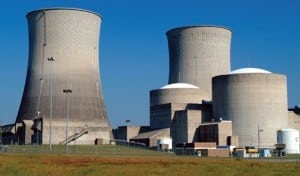
North American shale gas was supposed to realign the generation fleet here and abroad (thanks to anticipated exports) far into the future. Turns out, that’s not exactly how the near term is shaping up. Despite stagnant (and even putrid) economies and legislative bodies in the U.S. and EU, there promises to be sufficient market volatility to keep everyone alert.
-
 History
The Russian Power Revolution
Exports of natural resources have given Russia increased global political and economic clout. But domestically, the world’s fourth-largest generator of electricity has had to embark on the most ambitious reforms ever undertaken to modernize dilapidated Soviet-era power infrastructure and incentivize a massive capacity expansion to support a revived economy.
-
Nuclear
Nebraska Public Power District Board Votes to Approve Uprate at Cooper Nuclear Plant
The Nebraska Public Power District’s (NPPD’s) Board of Directors on Friday unanimously voted to increase the amount of power produced at its 800-MW Cooper Nuclear Station by 146 MW through an extended power uprate.
-
Coal
Report: Fuel for Power Generation to Lead Energy Growth Through 2040
Fuel for power generation will account for about 55% of demand-related energy growth through 2040, ExxonMobil forecasts in its freshly released annual energy forecast. Like several other forecasters, the Irving, Texas–based oil and gas company also predicts that natural gas will emerge as the leading source of electricity generation by 2040. Among key findings in […]
-
Nuclear
NRC Vets SCE’s SONGS Restart Plan, Warns Final Restart Approval Is “Months Away”
While announcing that staff would meet with Southern California Edison (SCE) representatives on Dec. 18 to discuss the utility’s proposal to restart the San Onofre Nuclear Generating Station’s (SONGS’) Unit 2, the Nuclear Regulatory Commission (NRC) warned that the meeting was "only one step in a long process," and that "a final decision on whether […]
-
Nuclear
NRC to Amend Waste Disposal Regulations
The Nuclear Regulatory Commission (NRC) on Friday announced it was proposing to amend rules that govern low-level radioactive (LLR) waste disposal facilities. The proposal, published in the Federal Register, requires new and revised site-specific analyses and would permit the development of criteria for waste acceptance based on the results of those analyses.
-
Nuclear
UK Approves Final Design Certification for AREVA/EDF EPR
After a four-year analysis, UK nuclear regulators on Thursday approved the generic nuclear design of the UK EPR proposed by France’s EDF and AREVA, confirming that it meets regulatory expectations on safety, security, and environmental impact. The decision paves the way for EDF to begin construction on two EPRs at Hinkley Point in Somerset.
-
Nuclear
Enel Drops Participation in Flamanville EPR as Project Costs Soar by $2.6B
A day after French utility EDF released a cost update for its Flamanville EPR reactor under construction in Normandy, France, claiming increases of a stunning $2.6 billion—bringing overall estimated costs for the advanced reactor to $10.5 billion—Italian power giant Enel formally withdrew its participation from that project and five other French EPR projects.
-
Coal
EIA Projects Faster Growth of Natural Gas Production, Gas Generation
Compared to projections from last year, an Early Release Overview of the Energy Information Administration’s (EIA’s) Annual Energy Outlook 2013 (AEO2013) released on Wednesday foresees higher gas production and, with it, a higher share of gas generation by 2040. The outlook also projects a growing share of renewable and nuclear power, but dampened future coal use.
-
Nuclear
Too Dumb to Meter, Part 6
As the book title Too Dumb to Meter: Follies, Fiascoes, Dead Ends, and Duds on the U.S. Road to Atomic Energy implies, nuclear power has traveled a rough road. In this POWER exclusive, we present the eighth, ninth, and 10th chapters, “Flightless Birds and Flying Elephants,” “The Devil Flies Nukes,” and “Flatulence in Space,” the concluding chapters of the “Up in the Air: Flights of Radioactive Fancy” section.
-
 Nuclear
MOX Fuel Fabrication Facility: Turning Swords into Plowshares
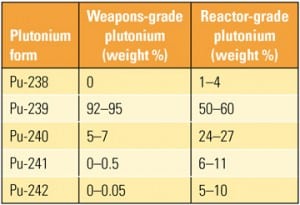
The U.S. Department of Energy contracted Shaw AREVA MOX Services LLC to design, construct, and operate a Mixed Oxide (MOX) Fuel Fabrication Facility (MFFF) at its Savannah River Site in South Carolina. The MFFF will convert depleted uranium and excess weapons-grade plutonium stockpiles, equivalent to approximately 17,000 nuclear weapons, into MOX fuel assemblies that will be used in U.S. nuclear power plants by 2018.
-
Nuclear
Note on the Oconee Top Plant
Note on the Oconee Top Plant Some of our readers may have been confused by the wording of a press release about our November issue’s nuclear Top Plants, the table of contents blurb about Duke’s Oconee plant, or a sentence in the cover story about that plant. In the interest of brevity, it seems we […]
-
Nuclear
Babcock & Wilcox Team Gets Unspecified DOE Award for SMR Development
The U.S. Department of Energy (DOE) has announced an award to support a new project to design, license, and help commercialize small modular reactors (SMR) in the U.S. The project supported by the award will be led by Babcock & Wilcox (B&W) in partnership with the Tennessee Valley Authority and Bechtel.
-
Nuclear
THE BIG PICTURE: Generation IV designs
A “who’s doing what” addendum to "THE BIG PICTURE: Advanced Fission" in our November 2012 issue.
-
Nuclear
THE BIG PICTURE: Small and Medium-Sized Reactors (SMRs)
A “who’s doing what” addendum to "THE BIG PICTURE: Advanced Fission" in our November 2012 issue.
-
Nuclear
THE BIG PICTURE: Fast-Neutron Systems
A “who’s doing what” addendum to "THE BIG PICTURE: Advanced Fission" in our November 2012 issue.
-
Nuclear
THE BIG PICTURE: Gas-Cooled Reactors
A “who’s doing what” addendum to "THE BIG PICTURE: Advanced Fission" in our November 2012 issue.
-
 Nuclear
France Considers Departure from Iconic Stance on Nuclear Energy
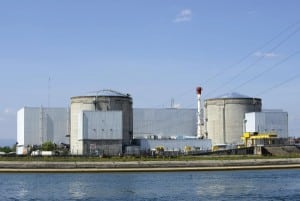
No other country has been as frequently cited as an example of exploiting the virtues of a nuclear-heavy energy policy as France. Deriving more than 75% of its electricity from 58 operational nuclear reactors with a total capacity of about 63 GW, France has one of the lowest costs of generation and is the world’s largest net exporter of power, earning €3 billion ($3.9 billion) a year from sales of surplus power to buyers beyond its borders. But that is all about to change.