
Legislative
-
 Commentary
Governor Youngkin Has Set the Precedent for Nuclear Energy in America
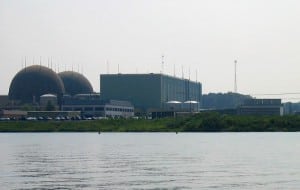
This month, Virginia Gov. Glenn Youngkin and the Commonwealth’s largest utility, Dominion Energy, announced a request for proposal (RFP) for the development and construction of an advanced nuclear small modular reactor (SMR), and the governor signed Senate Bill 454 designed to facilitate the research, design, construction, and deployment of what will be America’s first commercial […]
-
 Gas
GasLandrieu: Natural Gas Is ‘Not the Enemy, It Is Part of the Solution’ to Achieving Climate Goals
Former U.S. Sen. Mary Landrieu (D-La.), who is now a senior policy advisor for the law firm Van Ness Feldman and co-chair of the Natural Allies Leadership Council, is keen on natural gas and believes it is part of the solution to reaching both domestic and global climate goals. “Natural gas in America is not […]
-
 Legal & Regulatory
Federal Court Rejects Stay on EPA’s Carbon Pollution Standards in Setback for Power Industry
The U.S. Court of Appeals for the District of Columbia has denied motions to stay a suite of Environmental Protection Agency (EPA) regulations that champion carbon capture and storage (CCS) technology as a key pathway for reducing greenhouse gas emissions (GHGs) from fossil fuel-fired power plants. The rules face legal challenges from 24 states, eight […]
-
 Courts
The Chevron Deference Is Dead. What Does It Mean for the Power Sector?
The U.S. Supreme Court on June 28 overturned the Chevron doctrine—a forty-year-old precedent—significantly curtailing the power of federal agencies to interpret ambiguous statutory provisions, even in areas of agency expertise. The landmark 6–3 decision could have far-reaching effects on the power industry, with specific impact on sweeping energy regulations from the Environmental Protection Agency (EPA) […]
-
 Legal & Regulatory
GOP Lawmakers Aim to Protect Coal and Gas-Fired Power Plants from EPA Rules
Forty-three Republican senators (along with one Independent) introduced a Congressional Review Act (CRA) resolution of disapproval on June 5 to overturn emissions rules issued by the Environmental Protection Agency (EPA), which they say target existing coal-fired power plants and new gas-fired plants. The action was led by U.S. Sen. Shelley Moore Capito (R-W.Va.), Ranking Member […]
-
 Commentary
EPA’s No-Win Rule for the Electricity Grid
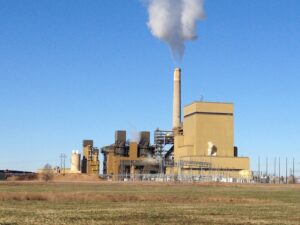
Recently, the Environmental Protection Agency (EPA) issued a 1,020-page rule to control carbon dioxide emissions from existing coal-fired power plants and new natural gas-fired power plants. The rule is part of the administration’s plan to shut down coal-fired power plants in the U.S. and impose its will on the nation’s electricity system. This is the […]
-
 Nuclear
White House Launches Initiatives to Bolster New Nuclear Deployments
The White House has unveiled a suite of new measures aimed at slashing risks associated with new nuclear reactor development and construction, underscoring its policy push to champion nuclear. At a May 29 White House summit that showcased recent policy developments and industry investments, the Biden administration announced the formation of a nuclear working group […]
-
 Commentary
Clean Hydrogen: America’s Promising Next Fuel Source for a Resilient Energy Future
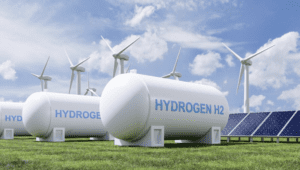
The past few years have shown that the need for cleaner energy sources is only growing, while balancing economic and infrastructure concerns remains vital to safeguard American energy dominance and security. The 2021 Bipartisan Infrastructure Law and 2022 Inflation Reduction Act are two recent examples of massive investments into American infrastructure and jobs, forging ahead […]
-
 Legal & Regulatory
How Regulatory Burdens and Misguided Incentives Are Degrading Power System Reliability
It’s no secret that the U.S. electric power system has undergone a remarkable transition that continues today. Coal-fired generation, which was the leading source of power generation during the 20th century, often providing more than half of the country’s electricity supply, fell to about 16.2% of the mix in 2023. Meanwhile, the U.S. solar market […]
-
Commentary
True Permitting Reform Requires Congressional Action
James Carville famously advised Bill Clinton that regarding elections, “it’s the economy, stupid.” This message has resonated with all presidential candidates since. So, it is no surprise that as the 2024 election approaches, President Biden appears to be banking on $1.6 trillion in new spending—much of it infrastructure spending—to stimulate economic growth. These funds have […]
-
 Hydrogen
Major Hydrogen Project Breaks Ground in Arizona, While Dispute Over Tax Credit Looms
An Australia-based global metal mining and green energy company has broken ground on a major hydrogen production project in Arizona, part of what the group’s founder said could be several planned clean energy investments in North America. Dr. Andrew Forrest, executive chair and founder of Fortescue, at the May 3 groundbreaking for the Arizona Hydrogen […]
-
 Nuclear
Congress Approves Ban on Imports of Enriched Uranium From Russia
The U.S. Senate on April 30 passed—by unanimous consent—a bill to ban imports of unirradiated low-enriched uranium (LEU) produced in Russia. The bill now heads to the president’s desk for signature into law. The Senate passed the Prohibiting Russian Uranium Imports Act (H.R. 1042), which the House of Representatives passed (also by unanimous consent) by […]
-
 Interview
The POWER Interview: The IRA’s Impact on Tax Credits, Tax Equity, and Renewable Energy
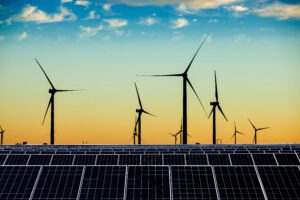
The Inflation Reduction Act (IRA) represents the largest incentive effort for clean energy in U.S. history. Its impact touches multiple sectors, including solar, wind, hydrogen, energy storage, and more. The IRA includes more than 70 investment, production, and excise credits designed to facilitate the transition to cleaner energy production. The legislation promotes advanced manufacturing, and […]
-
 Commentary
The Cobra Effect of Fly Ash from Coal Power Plants in India
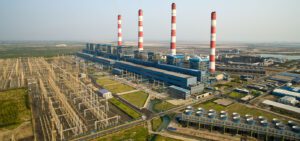
Have you heard about the cobra effect? During the colonial era, Delhi had a major cobra issue. The then-British government announced a bounty for dead cobras to reduce the number of snakes on the streets. Entrepreneurial spirits rose as people started breeding cobras and offered a dead one on the bounty. Money given on bounty […]
-
 Legal & Regulatory
Action Needed Now to Support New Power Transmission Capacity
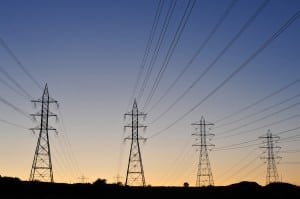
The Federal Energy Regulatory Commission (FERC) in its March 2024 open meeting made clear that successful energy transition requires immediate action. With the Inflation Reduction Act (IRA) as a benchmark, the U.S. will need to expand its electrical transmission capacity at an annual rate double that seen between 1978 and 2020, as reported by the […]
-
Solar
Clean-Energy Companies Urge Congress to Pass Siting, Permitting, and Transmission Reform
Nearly 200 solar and storage companies sent a letter to congressional leaders on April 17 calling for legislation to improve permitting, project siting, transmission, and public lands access for solar and solar plus storage projects. Market forecasts show that a range of policy and economic outcomes will determine the volume of solar deployment over the […]
-
 Nuclear
Palisades Nuclear Plant on Path to Recommissioning by 2025
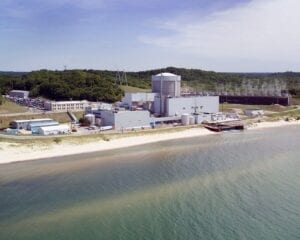
The U.S. Department of Energy’s (DOE’s) Loan Programs Office (LPO) announced a conditional commitment of up to $1.52 billion for a loan guarantee to Holtec Palisades LLC to finance the restoration and resumption of service of the Palisades Power Plant, an 800-MW nuclear generating station in Covert Township, Michigan (Figure 1). The project aims to bring […]
-
 Legal & Regulatory
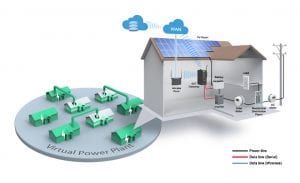
Measure Twice, Cut Once—A Roadmap for Enabling VPPs Through Policy and Program Design
Virtual power plants (VPPs), as aggregations of dispatchable distributed energy resources (DERs), can deliver grid services ranging from resource adequacy to reliability at scale—all while making energy more affordable. Yet, despite their merits, the U.S. utility industry is yet to leverage the full potential of these readily available, affordable, customer-sited resources to add flexibility to the grid. Of course, the decision to incorporate […]
-
Gas
UK Leaders Say New Gas-Fired Plants Needed for Energy Security
Officials in the UK said the country will need to build new natural gas-fired power plants beyond 2030 in order to ensure a reliable supply of energy and avoid blackouts. Energy Security Secretary Claire Coutinho on March 12 said gas-fired units able to provide baseload power generation will be needed as a backup to renewable […]
-
 Legal & Regulatory
Get Ready For California’s Three Sweeping New Climate Disclosure Laws
Can a requirement to simply disclose information truly be a big deal? Can a requirement that only applies to big companies, or companies that do business in California, actually impact your small business or your business in another state? Can a requirement that doesn’t take effect until next year or later really require thought and […]
-
 Commentary
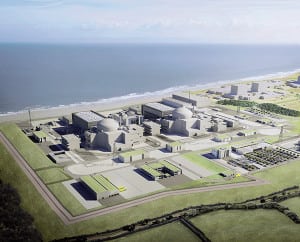
What Does the Nuclear Industry Need to Do to Scale Production Toward Net-Zero Goals?
The United Nations Climate Change Conference (COP28) proved to be a historic moment for nuclear energy, with more than 20 countries including the U.S., France, Japan, and the UK pledging to triple global
-
 Commentary
FERC Approves MISO Interconnection Queue Reforms, Rejects Overall Queue Cap
The Federal Energy Regulatory Commission on Jan. 19 approved most of the Midcontinent Independent System Operator’s (MISO) proposed revisions to its Generator Interconnection Procedures (GIP) designed to reduce the submission and negative impacts of speculative interconnection requests. The changes apply prospectively, starting with the DPP-2023 queue cycle, which has not yet entered the Definitive Planning […]
-
 Legal & Regulatory
Interconnection Cost-Causer-Pays Model: Is It Fair or Antiquated in the Era of Grid Modernization
The transition to green energy is often seen through two different lenses: a burden or an opportunity. Grid modernization refers to a comprehensive transformation of the traditional power grid to upgrade aging infrastructure to enhance reliability, resilience, efficiency, and sustainability of electricity generation, transmission, distribution, and consumption. A key element of grid modernization is designing […]
-
 Solar
SolarBrazil Oil Major Buying Renewable Energy Assets
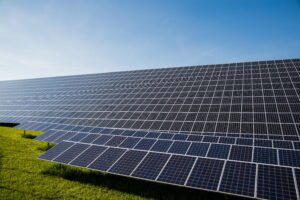
Renewable energy in Brazil will get a boost after the chief executive of Petrobras, the country’s state-run oil giant, said the company will begin buying solar power and onshore wind projects in an effort to build a clean energy portfolio. Jean Paul Prates, in an interview with the Reuters news service published Jan. 22, said […]
-
 Trends
Prodigy and Westinghouse Targeting Launch of eVinci Floating Nuclear Plant in Canada by 2030
Westinghouse has revealed it is designing a transportable nuclear power plant (TNPP) featuring an eVinci microreactor with Canadian firm Prodigy Clean Energy, aiming to deliver a first project in Canada by 2030. The project will potentially integrate a single or multiple 5-MWe eVinci microreactors within a Prodigy Microreactor Power Station—a purpose-designed floating facility that will […]
-
 Sustainability
PGE Leans into an All-of-the-Above Strategy to Decarbonize Its Power System
Climate change has led many states and countries to set targets for reducing greenhouse gas (GHG) emissions from power systems. Oregon, for example, has set targets for all power sold to retail customers in the state to have GHG emissions cut by 80% by 2030, 90% by 2035, and 100% by 2040. It’s a challenging […]
-
 Gas
GasAES Closes California Natural Gas-Fired Plant
AES Corp. has ended operations at one of the group’s four remaining natural gas-fired power plants in California. AES on Dec. 31 shut down its 1,300-MW Redondo Beach Generating Station, a facility that operated at less than full capacity in recent years, providing electricity to support the grid during periods of peak demand for power. […]
-
 Nuclear
DOE Awards Civil Nuclear Credits to Diablo Canyon
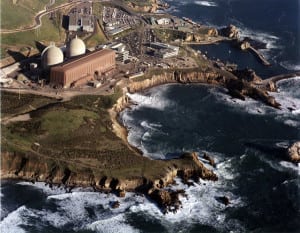
The Department of Energy (DOE) will award credits under its Civil Nuclear Credit (CNC) program to bolster the continued operation of Diablo Canyon Power Plant (DCPP) Units 1 and 2, Pacific Gas and Electric Co.’s (PG&E’s) 2,240-MW nuclear plant in San Luis Obispo County, California. A record of decision published by the agency’s Grid Deployment Office on […]
-
 Legal & Regulatory
A Review of Air Quality Rules and a Look at 2024
Federal regulators in 2023 proposed a variety of new air quality rules, and 2024 is likely to see these proposals become final and enforceable. Here’s a look at the past year, and a look ahead at the major
-
 Legal & Regulatory
California Climate Bill Targets Business, Utility Emissions
New climate legislation in California, known as the Climate Corporate Data Accountability Act (SB 253), was signed by Gov. Gavin Newsom on Oct. 7. The law—the first of its kind in the U.S.—requires the