Legislative
-
 Legal & Regulatory
Election Roundup: What Trump’s Win Means for Energy and Environment
Donald Trump’s stunning victory in the U.S. presidential election portends enormous changes in U.S. energy and environmental policy, and a nearly complete turnover of the men and women who will administer that policy for the next four years.
-
Commentary
The Surprising Ground Zero for Electricity Market Fights
Look to the East and you’ll see a major initiative to transform New York’s electric grid into a cleaner, more efficient system. Look to the West and you’ll find ambitious clean energy legislation in California. Yet utility executives and federal regulators recently gathered in the Midwest to highlight how this region is ground zero for […]
-
 Coal
CoalDuke Energy Agrees to Pay $6 Million for Dan River Coal Ash Spill
Duke Energy agreed to pay a $6 million fine under a new settlement reached with North Carolina’s Department of Environmental Quality (DEQ) for the February 2014 coal ash spill at its Dan River power plant in Eden. State regulators fined the utility $6.8 million in February, but Duke Energy challenged the decision, which was the […]
-
 Legal & Regulatory
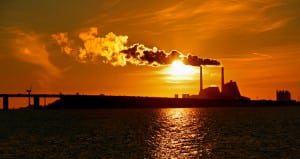
Dutch Parliament Vote Could End Coal Power Generation in the Netherlands
The Dutch parliament’s vote in favor of a motion to cut carbon emissions 55% by 2030 could spell the end of coal-fired power generation in the European nation. Although nonbinding, the measure would bring the Netherlands in line with agreements negotiated during the Paris climate talks that took place late last year. What it means […]
-
 Legal & Regulatory
Western Region Power Grid: Coming Soon?
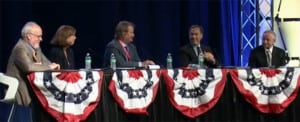
Panelists debating the pros and cons of a regionalized western power grid seemed to agree that the development of such a system is inevitable, but they disagreed on how fast the evolution should occur. The panel discussion took place during the California Independent System Operator (ISO) Stakeholder Symposium held on September 7 in Sacramento. At […]
-
 Renewables
Massachusetts Lawmakers Approve Energy Storage, Offshore Wind Mandates
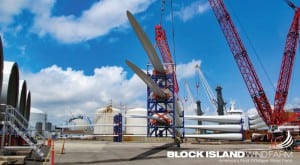
Massachusetts’ lawmakers approved an omnibus energy bill that sets down an energy storage mandate and requires utilities to solicit contracts for 1.6 GW of offshore wind. The bill also outlines clean energy procurement targets, including for 1.2 GW from hydro, onshore wind, and other renewables from within the state, from neighboring states, or from Canada. […]
-
 Legal & Regulatory
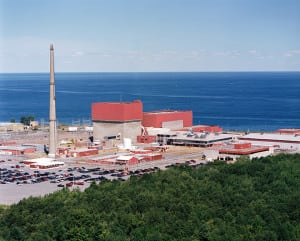
N.Y. Approves Nuclear Subsidies and Mandates 50% Renewables by 2030
The New York State Public Service Commission (PSC) approved New York’s Clean Energy Standard on August 1, likely saving three upstate nuclear power plants, while requiring 50% of the state’s electricity to come from renewable energy sources by 2030. Gov. Andrew Cuomo (D) praised the action in a statement following the announcement. “New York has […]
-
 Legal & Regulatory
Obama Administration’s Environmental Rules to Leave Lasting Legacy on Power Sector, Markets
Witnesses at a Congressional hearing raised concerns about the complexity, costs, legality, and feasibility of the 3,900 final rules published by the Environmental Protection Agency (EPA) during the Obama administration. A large portion of those rules affect the power sector, but none are more contentious than the Clean Power Plan, regulatory and citizen interest experts […]
-
 Legal & Regulatory
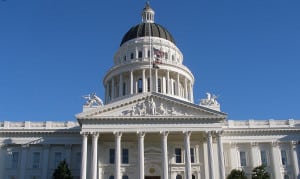
California Governor, Legislature, Agree on Major Overhaul of CPUC
California Gov. Jerry Brown and members of the California legislature have agreed on a package of “sweeping” reforms designed to overhaul the California Public Utilities Commission (CPUC), increase transparency, and change how the CPUC conducts much of its business. The changes come in the wake of repeated disclosures of illegal ex parte meetings and communications […]
-
 Legal & Regulatory
Federal Court Strikes Down Minnesota Coal Power Import Ban
A Minnesota law that bans power imports from new out-of-state coal-fired power plants is unconstitutional, a federal appeals court has deemed. The U.S. Court of Appeals for the Eighth Circuit on June 15 upheld a decision by the U.S. District Court for the District of Minnesota that found that the statute’s prohibitions had the effect […]
-
 Legal & Regulatory
How Will the Supreme Court Stay Affect the Clean Power Plan?
One of the witnesses testifying before the U.S. Senate Committee on Environment and Public Works on June 9 believes states and regulated entities will be granted additional time to comply with the Environmental Protection Agency’s (EPA’s) Clean Power Plan (CPP), if the rule is ultimately found to be lawful. Currently, the U.S. Supreme Court has […]
-
 Legal & Regulatory
How the Power Industry Is Making Sense of an Environmental Quandary
This year’s much-awaited Environmental Mega Session at the 18th annual ELECTRIC POWER Conference & Exhibition in New Orleans, La., on April 19 was titled “Navigating Clean Power Plan Compliance”
-
 Legal & Regulatory
Energy Policy Differences Between Trump and Clinton Are Black and White
The two probable major-party U.S. presidential candidates hold very different views on energy and climate. One intends to focus on expanding and developing America’s fossil-fuel industries, while the other plans to grow renewable energy and promote efficiency. Can you guess who’s who? Fossil vs. Renewable Donald Trump, the presumed Republican nominee, presented his “America-First Energy […]
-
 Coal
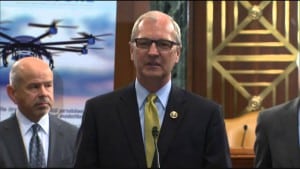
CoalTrump Picks North Dakota Lawmaker as Key Energy Advisor
Donald Trump, presumptive Republican nominee for president, has chosen a back-bench Republican congressman with a lot of experience in state energy regulation as his advisor on energy issues
-
 Legislative
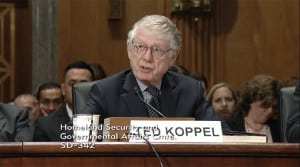
Ted Koppel Says Chinese and Russians Are in U.S. Power Grid
Experts testifying during a Senate hearing on critical infrastructure security on May 18 were at odds about how vulnerable the electric grid is to a variety of threats. “The Chinese are already in our power grid. The Russians are already inside our power grid. They may lack the motivation—because of the interrelationship that we have with […]
-
 Nuclear
Senate Passes $37.5 Billion Spending Bill for Energy and Water Programs
The U.S. Senate passed a $37.5 billion measure on May 12 to fund fiscal year 2017 Department of Energy (DOE) programs and critical infrastructure projects administered by the Army Corps of Engineers and Bureau of Reclamation. The bill would increase FY2017 spending by $355 million over FY2016 enacted levels, giving $261 million more than was […]
-
 Nuclear
Nuclear Milestones Confront Exelon, FPL, and TVA
Five nuclear projects—two old, one new, two planned—faced milestones this week as their owners confronted the realities of the U.S. nuclear market. Exelon Seeks Nuclear Support In Illinois, Exelon again warned that the long-challenged Clinton and Quad Cities plants would shut down unless the Illinois legislature passed a bill that would provide economic support for the […]
-
 Nuclear
GAO Chides DHS for Not Doing Enough to Prepare for EMP, Solar Storm Threats to Grid
The Department of Homeland Security (DHS) internally recognizes that a power grid failure resulting from an electromagnetic pulse (EMP) or a solar storm can pose great risk to the security of the nation, but it hasn’t prepared adequately, the Government Accountability Office (GAO) said in a newly released report. The GAO’s 68-page report, “Federal Agencies […]
-
Legal & Regulatory
Senate Passes Comprehensive Energy Bill, Future Uncertain
By an 85-12 vote, the U.S. Senate passed the first comprehensive energy bill in nearly a decade, bringing a successful conclusion to months of legislative effort and overcoming a series of roadblocks in the full Senate related to the water quality crisis in Flint, Mich. The product of more than a year of bipartisan work […]
-
Renewables
House, Senate Subcommittees Pass Energy Appropriations Bills
Subcommittees of the U.S House of Representatives and the U.S. Senate separately advanced appropriations bills that lay out funding priorities for the Department of Energy (DOE) and other energy-related measures for 2017. The House Energy and Water Subcommittee, a panel of the Appropriations Committee, passed a $37.4 billion bill to fund the DOE as well […]
-
 Legal & Regulatory
Is Nuclear Energy “Toast”?
“My sense as I speak to you here today is that nuclear energy is toast,” said New York Times Reporter Eduardo Porter, as he opened a panel discussion titled “Nuclear Energy and the Clean Energy Future” held at the New York University School of Law on March 23. “Despite the challenge from climate change that […]
-
 Renewables
Rise of Populist New Right Party AfD May Trump Germany’s Energiewende
On March 13, three of Germany’s 16 states held regional elections that were largely seen as a referendum on Chancellor Angela Merkel’s increasingly controversial refugee policies as well as the waning importance of energy and climate policies. Perhaps the biggest challenger and winner in this election was the far right, those against both the Energiewende […]
-
 Legal & Regulatory
Oregon Legislature Passes Bill to Eliminate Coal from State Power Supply
The Oregon Senate passed a bill on March 2 that will require electric companies in the state to eliminate coal-fired resources from their electrical supplies by January 1, 2030. The bill—which passed in the senate by a 17–12 vote—had already been passed by the Oregon House of Representatives (38–20). It now heads to Gov. Kate […]
-
 Coal
CoalNieto: Mexico’s Energy Transition Will Persevere Despite Dismal Oil Prices
Mexico’s ongoing energy reform is a “paradigm shift” in the way the country obtains, transforms, and exploits its energy resources, President Enrique Peña Nieto told attendees at IHS CERAWeek on February 22. The reform allows the state to maintain ownership of hydrocarbons underground, but it also encourages private participation in the entire hydrocarbon value chain […]
-
 Legal & Regulatory
Seventeen U.S. Governors Sign Clean Energy Accord
The governors of 17 U.S. states on February 16 signed a landmark agreement to cooperate on expanding clean energy, energy efficiency, and modernizing energy infrastructure. The Governors’ Accord For A New Energy Future makes the case that “new energy solutions” can “provide more durable and resilient infrastructure, and enable economic growth, while protecting the health […]
-
 Legal & Regulatory
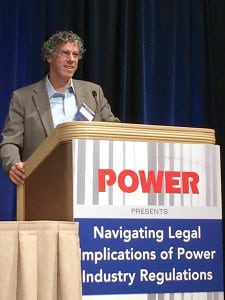
Navigating Legal Implications of Power Industry Regulations
A summary of POWER’s legal affairs conference on power industry regulations.
-
 Legal & Regulatory
Senate’s Failed Veto Override Leaves WOTUS Rule Intact
Congressional efforts to block the Environmental Protection Agency’s (EPA’s) contentious rule asserting federal authority over small bodies of water were derailed on Jan. 21. Senate Republicans voted 52–40, failing to override the president’s veto of the so-called “Clean Water Rule”—also “Waters of the United States” (or WOTUS) well short of the 60 necessary votes. Clean […]
-
 Legal & Regulatory
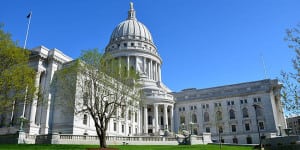
Wisconsin Assembly Votes to Lift Moratorium on New Nuclear Plants
In a voice vote on January 12, the Wisconsin Assembly passed AB 384, a bill that would repeal the statute currently preventing the state Public Service Commission (PSC) from authorizing construction of nuclear power plants in Wisconsin. Specifically, Wisconsin law states that construction of new facilities cannot commence until the PSC issues a “certificate of […]
-
 Renewables
The State of Energy, Power, Climate Change in Obama’s Past SOTU Addresses
Energy and environment issues have figured prominently in past State of the Union (SOTU) addresses. Here’s a look back at President Obama’s previous speeches. See what Obama said in his final SOTU speech on January 12. 2010: Nuclear Gets the Spotlight In his very first State of the Union address, President Obama called for incentives […]