Legal & Regulatory
-
 Legal & Regulatory
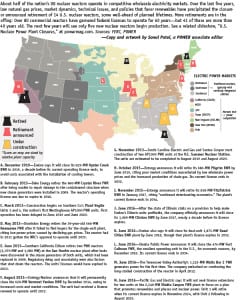
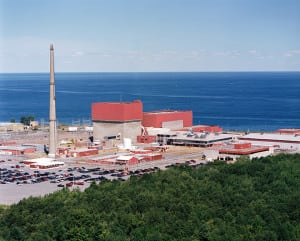
N.Y. Approves Nuclear Subsidies and Mandates 50% Renewables by 2030
The New York State Public Service Commission (PSC) approved New York’s Clean Energy Standard on August 1, likely saving three upstate nuclear power plants, while requiring 50% of the state’s electricity to come from renewable energy sources by 2030. Gov. Andrew Cuomo (D) praised the action in a statement following the announcement. “New York has […]
-
Commentary
More Communities Choose Their Own Energy Future
As the effects of climate change have increased and renewable energy is becoming cost-competitive with conventional forms of energy generation, more and more towns, cities, and counties are pushing their local utilities to increase the amount of renewables in their energy portfolios. While many utilities are embracing this shift to renewable energy, others are slow […]
-
 Legal & Regulatory
TVA Uses Advanced Technology to Store and Monitor Coal Ash
At 2:45 p.m., Nicholas McClung’s cellphone chirps during a business meeting. He doesn’t bother to look at it; the special chirp says it all. He politely excuses himself from the meeting and rushes to the Tennessee Valley Authority’s (TVA’s) Advanced Technology for Impoundment Monitoring (ATIM) center in the basement of the company’s Chattanooga headquarters. When […]
-
 Legal & Regulatory
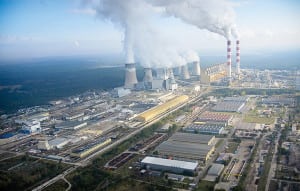
Poland Shuns Wind, Doubles Down on Coal-Reliant Future
Poland, a country where hard coal and lignite power plants currently generate about 85% of the power, has passed a law that stymies a wind power expansion and is now mulling draft legislation that will help boost investments in new coal capacity. The eastern European country has bucked the trend toward renewable power that many […]
-
Legal & Regulatory
South Korea to Partially Liberalize Power Sector
In a major shakeup of a power sector currently monopolized by a state-owned giant, South Korea has moved to partially open its electricity generation market to private companies in a bid to improve efficiency
-
 Legal & Regulatory
Abolished Nuclear Tax Is Relief for Unprofitable Nuclear Operators in Sweden
Sweden, which has been contemplating the role of its 10 nuclear reactors in its future power mix, said in June it will phase out a tax on nuclear power over the next two years and replace aging plants with new ones. The agreement by the Social Democrats, the Moderate Party, the Green Party, the Centre […]
-
 Legal & Regulatory
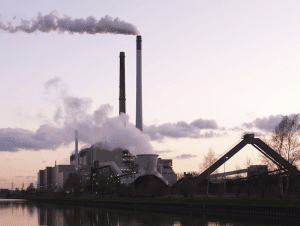
Even with Trump, America’s Coal Age Ends in 2016
Now that the political conventions are over and Americans must choose between two presidential candidates, the rhetoric around coal’s future continues to heat up. What neither candidate is telling you, however, is that no matter who is elected in November, no matter what the makeup of the next Congress is, America’s coal age is over. […]
-
 Legal & Regulatory
Federal Court Stays EPA’s Regional Haze Rule
A federal appeals court has stayed a regional haze rule finalized by the Environmental Protection Agency (EPA) earlier this year that had threatened to close up to 8.4 GW of coal-fired power capacity in Texas. In a unanimous ruling on July 15, the U.S. Court of Appeals for the Fifth Circuit granted a motion for […]
-
 Legal & Regulatory
Severe Solar Storm Could Shut Down U.S. Grid for Months, Study Says
A severe solar storm striking the continental U.S. could cause trillions of dollars in damage to the global economy and shut down portions of the U.S. grid for up to a year, according to a new study prepared by the Cambridge Centre for Risk Studies for insurance firm AIG. The study, Helios Solar Storm Scenario, […]
-
 Legal & Regulatory
Amid Scrutiny, Kemper IGCC Project Marks Big Syngas Production Milestone
Southern Co.’s Kemper County energy facility—the only carbon capture and storage (CCS) integrated gasification combined cycle (IGCC) power plant that is under construction—is producing syngas using lignite. The plant marked its most significant milestone to date on July 14, said Southern Co.’s Mississippi Power. It means that the first-of-its-kind technology to convert locally mined lignite […]
-
 Legal & Regulatory
NextEra Energy Cans Deal to Acquire Hawaiian Electric
NextEra Energy announced on July 18 that it has terminated plans to merge with Hawaiian Electric Industries (HEI). Not surprisingly, NextEra Energy said the decision was driven by the Hawaii Public Utilities Commission’s (PUC’s) 2–0 decision on July 15 to dismiss the Joint Application for the Change of Control filed by the companies. “As a […]
-
 Legal & Regulatory
Green Groups Challenge PJM’s Capacity Performance Rules
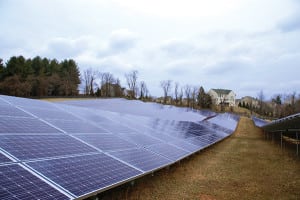
The “polar vortex” storm of January 2014 blew in big changes to PJM Interconnection’s operations. But these changes are now the subject of a lawsuit filed by environmental groups, alleging they discriminate against clean energy sources. The sub-zero temperatures froze coal piles and gearboxes. Natural gas plants, lacking firm contracts for fuel delivery, were unable […]
-
 Legal & Regulatory
EU Parliament Approves New Cybersecurity Rules
The European Union (EU) parliament on July 6 approved the first community-wide rules designed to bolster cybersecurity throughout the EU. According to the official statement, the new law “lays down security and reporting obligations for ‘operators of essential services’ in sectors such as energy, transport, health, banking and drinking water supply. EU member states will […]
-
 Legal & Regulatory
Obama Administration’s Environmental Rules to Leave Lasting Legacy on Power Sector, Markets
Witnesses at a Congressional hearing raised concerns about the complexity, costs, legality, and feasibility of the 3,900 final rules published by the Environmental Protection Agency (EPA) during the Obama administration. A large portion of those rules affect the power sector, but none are more contentious than the Clean Power Plan, regulatory and citizen interest experts […]
-
 Legal & Regulatory
Simplify MATS Compliance with Particulate Matter Continuous Emission Monitors
Now that power plant operators have some experience under their belts related to Mercury and Air Toxics Standards (MATS) compliance, it’s time to reevaluate the options for demonstrating compliance. Starting
-
 Legal & Regulatory
Real-Time Environmental Data Integration Improves Air Quality Reporting
As power plant reporting requirements for emissions regulations increase in number and complexity, yesterday’s data collection and reporting systems can make the job harder than it needs to be. The electrical power generation sector is reportedly the largest source of greenhouse gas emissions in the U.S. As such, it is the focus of the Environmental […]
-
 Legal & Regulatory
Avoiding Wildlife Impacts from Renewable Energy in Europe
Courtesy: Ad Meskens/Wikimedia Commons Europe has been in the forefront of renewable energy development, and though the scientific research on wildlife impacts is limited, European environmentalists and developers are beginning to create baseline frameworks and guidelines. Developers around the world can learn from their experience. As more renewable energy systems come online, providers hope to […]
-
 Legal & Regulatory
The Coal Refuse Dilemma: Burning Coal for Environmental Benefits
The niche alternative energy industry that generates power from hazardous piles of coal waste that litter the U.S. is facing an environmental Catch-22. The torrent of coal mined and processed in the U.S. since
-
 Legal & Regulatory
Weighing the Environmental Impacts of Wind and Solar
Renewable generation is usually characterized as more environmentally friendly than fossil fuels, and in many respects, that’s true. But there is a growing recognition that solar and wind generation have their own impacts, and an increasing number of manufacturers and generators are looking for ways to minimize them. Iceland might be about the last place […]
-
Legal & Regulatory
Securing Pipeline Infrastructure for Gas-Fired Generation in New England
Increased reliance on natural gas as a fuel for electric generation has prompted regulatory reforms by the Federal Energy Regulatory Commission (FERC) to improve coordination between the two industries. Many in the power industry believe critical constraints in gas pipeline infrastructure serving New England pose a significant threat to electric reliability and prices during periods […]
-
 Legal & Regulatory
Generators Grapple with ELG Implementation
Plant wastewater treatment is not what it once was, and changes in the Environmental Protection Agency’s effluent limitations guidelines (ELG) have added a host of new wrinkles. A panel of power plant experts discussed what plant managers are planning and doing to keep things running smoothly within the new rules. For more than three decades, […]
-
 Legal & Regulatory
TVA Submits Pioneering Application for SMR Early Site Permit
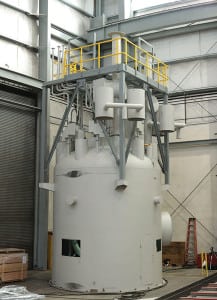
The first-ever early site permit (ESP) application for a small modular reactor (SMR) was submitted to the U.S. Nuclear Regulatory Commission (NRC) this May, marking a resurgence for the fledgling nuclear energy technology that has seen a number of setbacks in recent years. The Tennessee Valley Authority (TVA) submitted an ESP application for a potential […]
-
 Legal & Regulatory
Nuclear Regulatory Commission Down to Three Active Commissioners
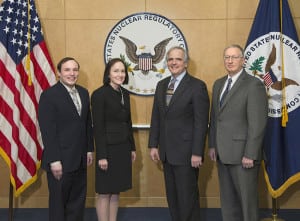
Following the end of William C. Ostendorff’s term on June 30, the Nuclear Regulatory Commission (NRC) is now down to only three active commissioners on staff. Ostendorff became a commissioner on April 1, 2010, following a distinguished career as a U.S. naval officer, engineer, lawyer, and policy advisor. His departure adds another vacancy to the […]
-
 Legal & Regulatory
PG&E Secures Key Lease Extension for Diablo Canyon
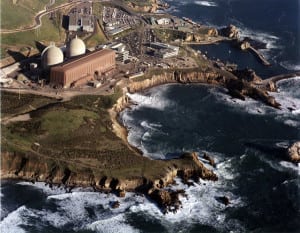
California’s State Lands Commission has approved a lease extension that Pacific Gas and Electric (PG&E) needed to operate its two Diablo Canyon Power Plant nuclear reactors until 2025. The three-member commission unanimously approved extending the lease for the power plant’s cooling water infrastructure through the end of its current federal licensing period. Without those extensions, […]
-
 Legal & Regulatory
B&W to Restructure Power Business, Cites Dismal Coal Projections
Projections that coal utilization will decline faster than previously forecast have spurred Babcock & Wilcox Enterprises (B&W) to shed 200 jobs and restructure its traditional power business that serves coal-fired power generation in a bid to reduce overhead and improve efficiency. The Charlotte, N.C.–based energy and environmental technology and service company said on June 28 […]
-
 Legal & Regulatory
IEA: World’s Power Sector Trails Others in Air Emissions
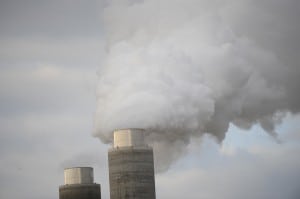
The world’s power sector last year emitted a third of global sulfur dioxide (SO2) emissions, 14% of nitrogen oxides (NOx), and 5% of total particulate emissions (PM2.5), but those emission values have fallen drastically over the last decade even though coal power generation has seen a surge, the International Energy Agency (IEA) said in a […]
-
 Legal & Regulatory
U.S., Canada, Mexico Commit to 50% Carbon-Free Power by 2025
The U.S., Mexico, and Canada today announced an unprecedented goal to procure 50% of North America’s total power generation from renewables, nuclear, carbon capture and storage (CCS), and energy efficiency technologies by 2025. President Obama, Prime Minister of Canada Justin Trudeau, and the President of Mexico Enrique Peña Nieto, announced the continental goal, part of […]
-
 Legal & Regulatory
California Governor, Legislature, Agree on Major Overhaul of CPUC
California Gov. Jerry Brown and members of the California legislature have agreed on a package of “sweeping” reforms designed to overhaul the California Public Utilities Commission (CPUC), increase transparency, and change how the CPUC conducts much of its business. The changes come in the wake of repeated disclosures of illegal ex parte meetings and communications […]
-
 Legal & Regulatory
How the FAA’s First-Ever Commercial Drone Rules Could Affect Power Companies
The first operational rules finalized by the Federal Aviation Administration (FAA) for routine commercial use of drones could have major implications for utilities and power companies, which are increasingly using them for operations and maintenance. The new rules (Part 107 of the Federal Aviation Regulations) that apply to unmanned aircraft systems (UAS)—or drones—weighing less than […]