The utilities industry is facing aging infrastructure, increased outages, and pressure to maintain or modernize the grid to keep up with rising demand. An estimated 70% of transmission lines are more than 25 years old and approaching the end of their typical 50-to-80-year lifecycle. In response to this challenge, electric utilities are expected to invest more than $1.1 trillion between 2025 and 2029 to expand capacity, modernize infrastructure, and scale renewable energy and battery storage.
However, to successfully power the future, it’s important to consider the people doing the work, and their task of installing, managing, monitoring, inspecting, and maintaining these electrical systems. As grid investments ramp up, demand is rising for field technicians, inspectors, and contractors. More specifically, a 2025 study estimates that the global power sector will need between 450,000 and 1.5 million more engineers by 2030 to build, implement, and operate energy infrastructure.
To keep crews connected, safe, and productive during this transition, the utilities industry must invest in the right tools. For these professionals working out in the field, their laptops and tablets have become more than just computing devices. They become essential companion tools that boost productivity, reduce downtime, and cut hidden costs tied to risk, repairs, and customer satisfaction.
Understanding the Role of Rugged Mobile Computers in the Field
To thrive amid increasing demand, companies must digitally transform and integrate advanced technologies into their daily operations. Almost every job across utility operations leverages a laptop or tablet as part of their workflow. It is an important part of communication, collaboration, and completing work, while also being a resource to those who are installing, building, repairing, and servicing critical infrastructure.
However, consumer-grade devices and non-rugged office computers that many of us are familiar with aren’t designed to withstand the daily rigors of field work, causing them to shut down after just minutes of being exposed to elements like high or low temperatures. They lack durability, networking, security, and functionality needed in the field. If a worker’s computer or tablet stops working while on-site, they are forced to switch to pen-and-paper methods which can lead to inefficiencies and time draining workarounds or cause them to wait for the devices to be replaced, leading to hours of downtime.
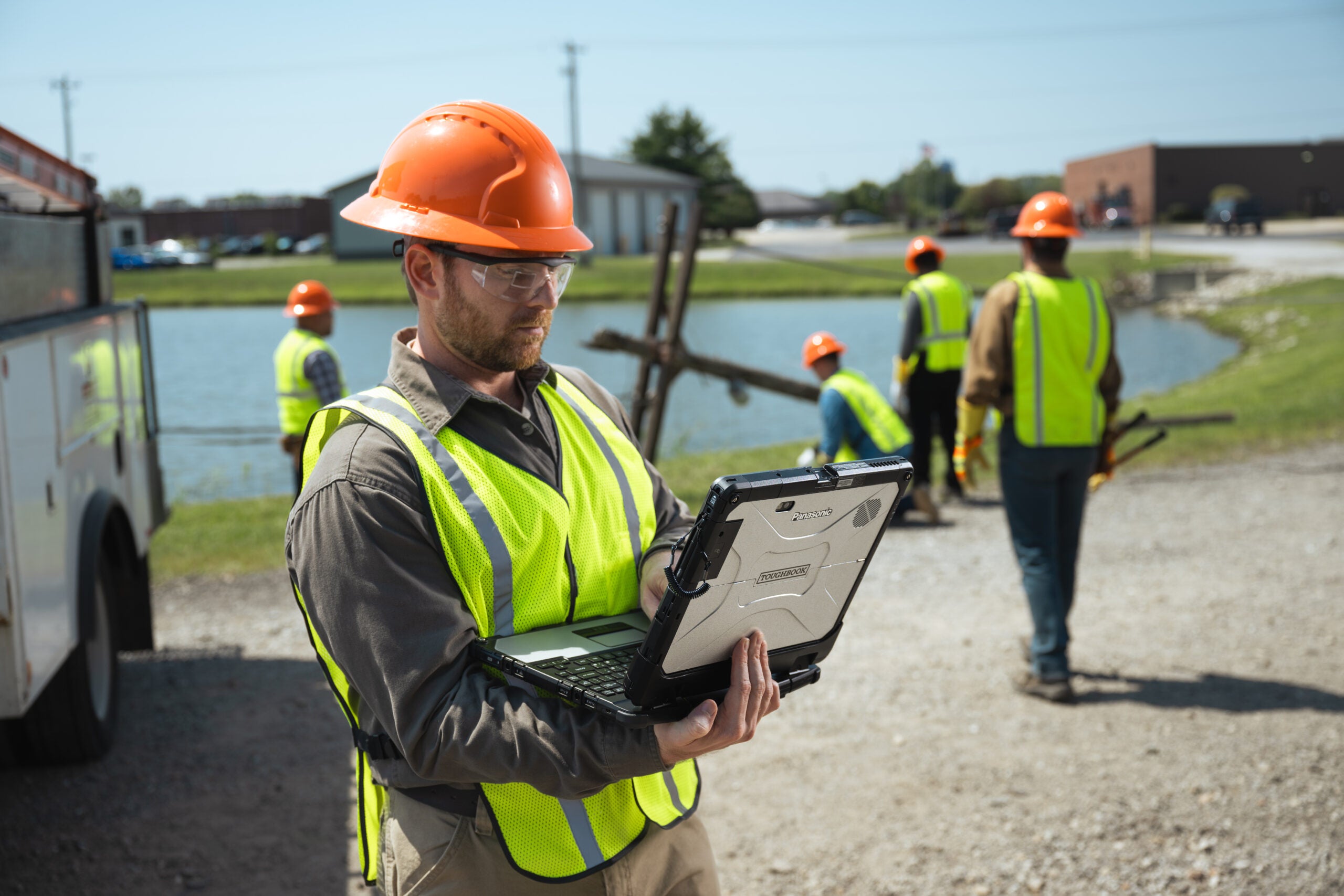
Rugged mobile laptops and tablets are built with these field workers in mind. They offer utility workers a reliable and efficient way to better manage their jobs and tasks, and position companies to attract new talent, as workers increasingly seek roles where they can leverage modern tools to do their jobs better and increase their skill sets. Rugged devices act as the central hub for everything a utility worker may need, no matter what conditions they’re working in. From location information to work orders and data collection, these rugged devices can be relied on to perform tasks quickly and without delaying work to be done and/or breaking down in the middle of a shift because of common outdoor conditions.
Reliable Functionality for Everyday Work
It’s no secret that utility crews sometimes operate in tough conditions like hurricanes, snowstorms, and heatwaves. Rugged devices are designed to withstand these environments, significantly reducing the need for device repairs or replacements in the field, which minimizes downtime and interruptions to critical work. Utility field technicians may need to operate in sweltering heat, freezing cold, pouring rain, wind, dust, dirt, and other environmental conditions less-than-ideal for electronics. Where consumer-grade devices will likely fail in these circumstances, rugged devices are built to handle them.
Rugged laptops and tablets tout military-grade durability that ensures they can withstand drops, impacts, vibration, dust, dirt, moisture, and more. They also feature sunlight-readable displays and glove-compatible screens, enabling technicians to work efficiently even under direct sunlight, bright emergency lighting, heavy rain, or freezing conditions.
These devices are also designed to support the growing use of AI within utility operations. It’s estimated that by 2027, nearly 40% of utility control rooms will use AI to help prioritize work, reduce failures, improve crew productivity, enable predictive maintenance, support proactive weather monitoring, and ensure faster outage restoration. These insights help utilities plan energy generation and distribution more effectively and are even more valuable when accessed in real time by technicians in the field. With connected AI-enabled rugged laptops and tablets, technicians can receive live updates and recommendations based on the latest data, helping ensure sufficient supply during peak demand while reducing waste during periods of lower use. For example, AI systems can analyze weather forecasts and historical usage patterns to predict spikes in electricity demand during events like heatwaves, when air conditioning use rises quickly. This advanced notice helps utilities prepare crews and resources in advance, keeping the grid more stable and reducing the risk of outages.
Rugged Can Also Mean Modular, Customizable
There are also rugged devices that are modular, which means they are customizable and upgradable to keep pace with worker needs. These modular devices provide the flexibility required to meet the demands of the grid, providing added benefits like additional serial ports so workers can connect to legacy systems seamlessly. Also, hot-swappable batteries power reliable, continuous operation for the duration of an entire shift, and modular accessories allow for biometric security, additional connectivity options, and extra storage.
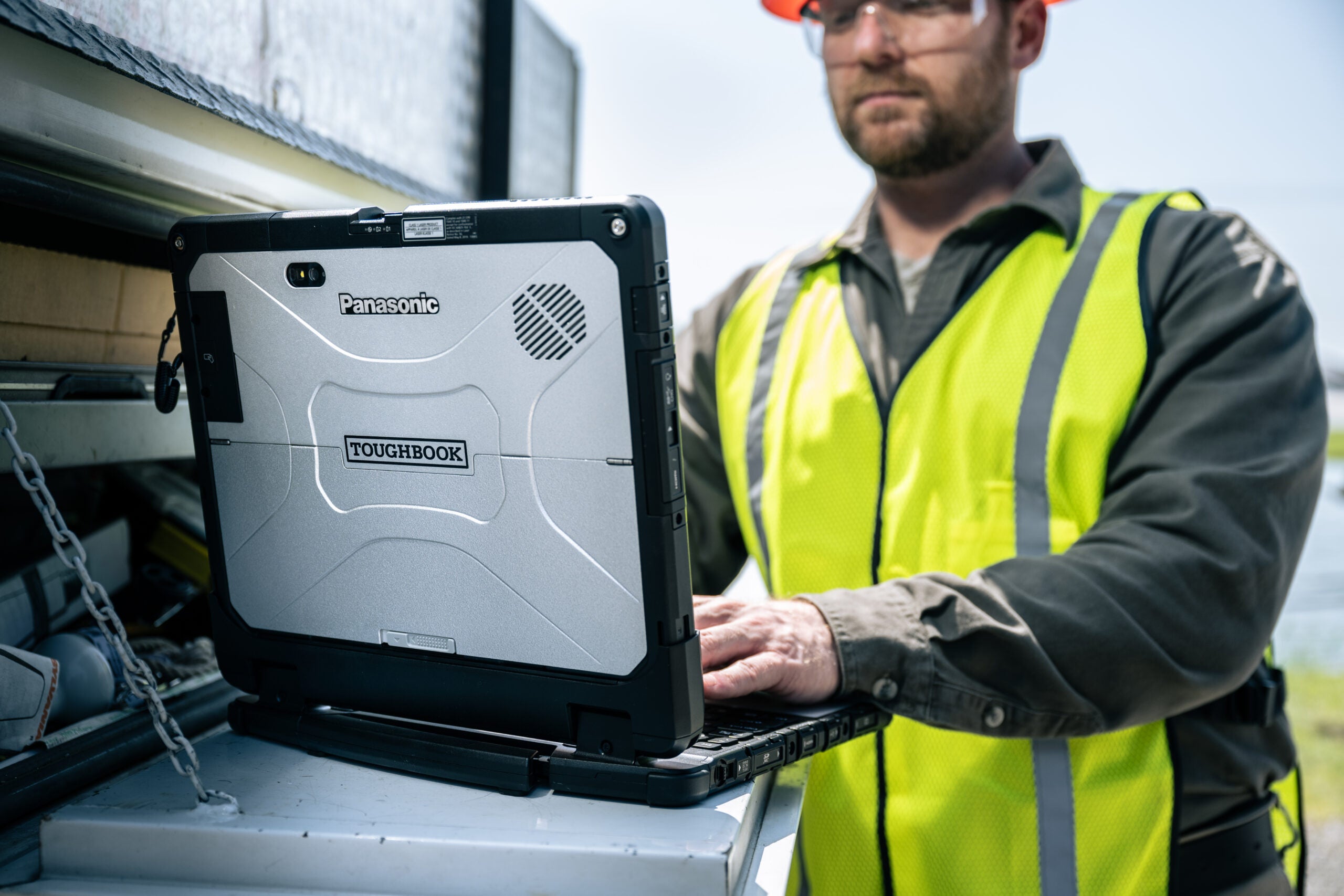
Not to mention, purpose-built rugged devices have added computing performance which means workers can capitalize on the advancements of AI-powered tools and software programs. These tools help with asset management, scheduling, route optimization, and repair recommendations, helping boost productivity.
Real-time Data for Accurate Assessments, Accelerated Response Times
To respond in the most effective and efficient manner possible, utility crews rely on real-time data such as what is damaged and where. Digitally transforming utility operations is critical to avoiding situations where, for example, a storm cuts power to thousands of homes and no one knows when power will be restored or what caused the outage.
Rugged computing devices enable field crews to accelerate response times and ultimately improve customer satisfaction. While responding to outages, field teams can collect real-time data and communicate with the central office to provide updates on what the issue is and estimates on when it will be fixed, which can then be relayed to customers. In 2025, 63% of utilities proactively reached out to customers to alert them after their power was restored. This type of communication is increasingly important as utilities work to provide clear and proactive updates to increase customer satisfaction.
Rugged technology also serves as a critical tool for diagnosing problems, initiating repairs, and communicating updates in real time. The ability to access and analyze data on the go enables utility companies to anticipate potential issues, optimize resource allocation, and proactively maintain critical infrastructure. For example, if a field worker encounters a recurring issue with a particular piece of equipment, they can quickly pull up past maintenance records or use predictive analytics to identify potential future problems and address them while they’re on-site instead of waiting for a full-blown failure to occur.
Staying Connected When it Counts
During emergency situations like severe storms, utility crews have to deal with damaged power lines, widespread power outages, equipment failures, and other situations that require immediate response. During these events, reliable communication is paramount. Utility field teams require secure and continuous connectivity to ensure they can coordinate operations effectively, whether over large geographic areas or within dense urban settings. Rugged laptops and tablets with multiple connectivity options like 4G, 5G, and Private Networks enable these crews to stay connected with other field teams, first responders, and the central office to optimize recovery efforts and keep technicians and the public safe.
Maintaining accurate location data is also an essential part of responding to outages and other grid disruptions. GNSS enables operation managers to see the location of field teams, while also allowing field technicians to report exact locations of damaged assets. In a worst-case scenario, such as a very remote or highly damaged area, rugged laptops can also continue operating offline, collecting critical data to send back to the central system as soon as connections have been restored.
Facing Industry Challenges Head-On
As utilities face mounting pressure to modernize aging infrastructure while keeping the lights on and power flowing for their customers, the tools field teams rely on matter. Rugged mobile solutions are more than just durable devices. They are the backbone of a connected, data-driven utility workforce. By combining resilient hardware with integrated software, connectivity, and support services, these solutions ensure that technicians can access critical information, run diagnostics, and collaborate in real-time no matter where the job takes them.
The result is faster response times, fewer device failures, lower maintenance and replacement costs, and greater visibility across field operations. These tools are opening new possibilities for more efficient grid management. In an industry where every minute of downtime matters, the right technology partner and solutions can help utilities move from reactive problem-solving to proactive, resilient operations.
—Chad Hall serves as Executive Business Development Manager at Panasonic Connect, overseeing the development of rugged mobile solutions to support the utilities sector.