
Articles By

-
 Legal & Regulatory
Regulators and Emissions Trading Experts Tackle Intricacies of Clean Power Plan Multi-State Solutions
One of the “flexibility” measures built into the Environmental Protection Agency’s (EPA’s) final Clean Power Plan (CPP) is the option for states to join multi-state emissions trading programs for carbon dioxide. Panelists in a session focused on this issue at the National Association of Regulatory Utility Commissioners (NARUC) annual meeting in Austin largely agreed on […]
-
 Legal & Regulatory
EPA’s Gina McCarthy Responds to Regulators’ Clean Power Plan Questions
Comments made at the annual meeting of the National Association of Regulatory Utility Commissioners (NARUC) suggest that the regulatory group and the Environmental Protection Agency (EPA) have been in regular dialog throughout the process of developing the Clean Power Plan (CPP), arguably the most complex environmental regulation affecting the power generation sector and electric utilities. […]
-
Ansaldo Energia to acquire technology and other important Alstom assets from General Electric
The operation will allow the company to increase its turnover twofold in the coming five years, becoming an international leader in the gas turbine sector with an integrated business model, and expanding its markets in Europe, the Middle East and the United States Following the EU Commission approval on the 8th September 2015 of General Electric’s acquisition […]
-
 Coal
CoalIndia Refocuses Coal Future
India, the world’s most coal-dependent nation, has over the last few months very publicly shifted its stance on coal power. In October, the country announced its commitment for the upcoming COP21 global
-
 O&M
O&MSmart Access Planning Enables Efficient Cooling Tower Maintenance
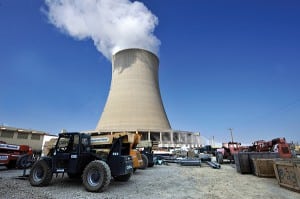
Two hyperbolic cooling towers rise 495 feet over Exelon Corp.’s Byron Generating Station about 110 miles west of Chicago, Ill. The towers help cool the two Westinghouse pressurized water reactors that are capable of generating up to 2,346 MW at the site. Like all classic wet transfer hyperbolic cooling towers (Figure 1), the Byron Generating […]
-
 Nuclear
TOP PLANTS: Central Nuclear Néstor Kirchner (Atucha II), Lima, Argentina
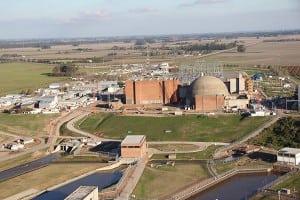
Begun with grand ambitions in the early 1980s, the second unit at Argentina’s Atucha site ran smack into the country’s economic crises in the following decade. But a determined crew brought the project to completion after a 13-year hiatus through a focus on rebuilding the nation’s nuclear labor force. As with many other nations in […]
-
 Nuclear
TOP PLANTS: Palo Verde Nuclear Generating Station, Wintersburg, Arizona
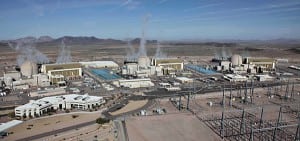
The nearly 4-GW, three-unit Palo Verde Nuclear Generating Station remains the largest generator of electricity in the U.S. for the 23rd consecutive year, producing more than 30 million MWh in 2014, for the 10th time (the only plant in the U.S. to do so), all while using only treated wastewater for cooling. Palo Verde Nuclear […]
-
 O&M
O&MLoad Cycling and Boiler Metals: How to Save Your Power Plant
As many coal-fired power plants designed for baseload service are asked to cycle, unforeseen stresses have been introduced to boiler pressure parts. Understanding the effects and implementing mitigation strategies could prevent premature component failure and keep facilities operating reliably. On August 3, 2015, the U.S. Environmental Protection Agency finalized the Clean Power Plan, which calls […]
-
 O&M
O&MEnsuring Reliable Boiler Operation Through Proper Material Analysis
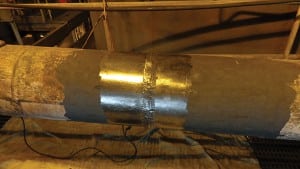
Creeped out and fatigued—that’s the state of many coal-fired boilers these days. Understanding failure mechanisms and suitable testing methods for identifying potential trouble can help you find problems before the problems find you. Even as the current regulatory environment pushes new power generation to utilize natural gas over other fuel sources, a significant amount of […]
-
 Commentary
Fuel Guidelines, Fuel Consumption, and Climate Change
See if you can fill in the blanks: “A debate has been created after a paper was published in the BLANK Journal, suggesting the new BLANK Guidelines… are biased and based on an incomplete survey of current studies.” That quote from Digital Journal, referring to the British Medical Journal and the U.S. Dietary Guidelines, could […]
-
 O&M
O&MMinimizing Coal Dust Combustion Hazards: Lessons from Laramie River Station
Coal dust combustion events injured employees and damaged equipment at Laramie River Station in May 2013. Any dust-filled facility could consider implementing some of the plant’s corrective actions to reduce the risk of experiencing a similar incident. When Laramie River Station (LRS), near Wheatland, Wyo., was built nearly 35 years ago, it was state-of-the-art. Constructed […]
-
 Legal & Regulatory
FERC’s Enforcement Priorities After 10 Years Under the EPAct
On August 8, 2005, the Energy Policy Act of 2005 (EPAct) was signed into law. It remains, arguably, the last significant piece of energy legislation to be enacted in the U.S. The changes wrought by EPAct are far-reaching and controversial, and for the gas and electric industry, perhaps no change has been more significant than […]
-
 Renewables
Marooned: How Island Power Systems Keep the Lights On
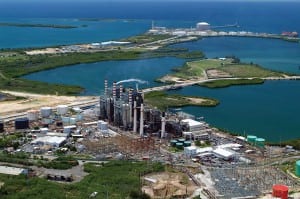
Largely dependent on imported fuel oil, many island systems must grapple with soaring electricity costs and reliability issues, in part because they are isolated and they don’t benefit from economies of scale. But some nations are seeking alternatives. It’s the same story all over the world. To fuel their economies and support growing populations, geographically […]
-
Commentary
Reduce Ozone When and Where It Matters Most
Just as we were drafting this commentary, the U.S. Environmental Protection Agency (EPA) issued a new ground-level ozone rule, tightening the standard from 75 to 70 ppb. The projected human health and environmental benefits are substantial. Yet there has been significant concern about tightening the ozone standards because of compliance cost. As it happens, our […]
-
 Renewables
Turning Brownfields into Greenfields: From Coal to Clean Energy
As the coal industry declines in many places around the world, can the mines it leaves behind be repurposed for cleaner energy projects that benefit multiple stakeholders, including local economies? Several existing and planned projects demonstrate that there may be multiple paths toward that transition. No question, the coal industry in Appalachia, the rest of […]
-
 Nuclear
On the Nuclear Frontier: New Designs Aim to Replace LWRs
Generation III nuclear reactors have not shown much ability to overcome the weaknesses of conventional Gen-II light-water reactor technology, offering at best evolutionary approaches. Is there room for a more revolutionary approach? Many parties are exploring new technologies, but it’s impossible to tell which, if any, will succeed. Last August, Andy Revkin, The New York […]
-
 Coal
CoalPower Giants to Get Federal Funds to Develop Large-Scale Carbon Capture Pilots
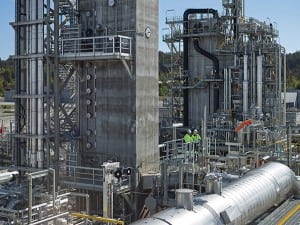
The U.S. Department of Energy (DOE) wants GE to plan and propose a large-scale pilot test of a carbon dioxide capture solution that uses a class of amino silicone compounds used to soften hair or clothing. The
-
 Renewables
New Options for Solar PV
The global market for solar photovoltaic (PV) panels shows no signs of slowing down, with cumulative installed capacity expected to reach 700 GW and annual demand to pass 100 GW by 2020, according to GTM Research. This booming market has spurred manufacturers to introduce a variety of innovations intended to increase panel efficiency and reduce […]
-
 Nuclear
AREVA’s Next-Gen BWR Fuel Is Tested in the U.S.
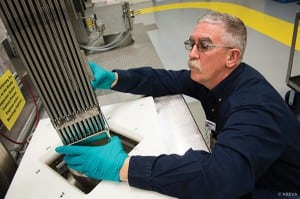
AREVA has installed the first-ever boiling water reactor (BWR) assemblies in the U.S. that features an 11×11 fuel rod array, the French nuclear giant revealed this September. The new fuel design, the ATRIUM 11, has been used to produce power at two nuclear plants since April, though AREVA declined to name the reactors. However, the […]
-
 Gas
GasSouth Africa Puts First Large IPP Project Online
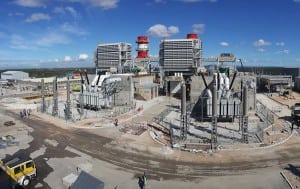
South Africa reached a milestone this September when it put online its first large-scale project owned by an independent power producer (IPP). The inauguration of the 335-MW Dedisa Peaking Power plant located
-
Business
POWER Digest
Dutch Court Clears Eemshaven Coal Plant for Operation. A Dutch court on Sept. 9 rejected claims that an environmental license issued for RWE’s 1.6-GW Eemshaven coal-fired power plant was issued improperly, clearing the way for the $3.36 billion plant to begin operations at full capacity. Environmental groups have opposed the plant’s location near nature reserves. […]
-
 Coal
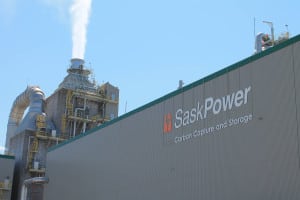
CoalSaskPower Admits to Problems at First “Full-Scale” Carbon Capture Project at Boundary Dam Plant
Once again, a first-of-a-kind technology at a coal-fired power plant that is designed to reduce its greenhouse gas footprint has run into design, operational, and cost problems. This time, it’s Saskatchewan, Canada utility SaskPower’s Boundary Dam Carbon Capture project that’s facing scrutiny. (Earlier this week, an overdue precombustion carbon capture project, Mississippi Power’s Kemper County […]
-
 Legal & Regulatory
The Solar PV Economics Conundrum
Will rooftop solar photovoltaics be the most economical way to deploy today’s hottest new generating technology, or will central utility solar PV systems be the best economic bet? Is there a third way? The answer appears to be “yes.” Solar photovoltaic (PV) power has emerged as the hottest new trend in renewable energy generation, primarily […]
-
 Environmental
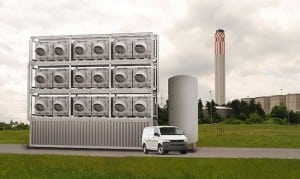
Swiss Company Aims to Build Commercial Scale Direct Air Carbon Capture Plant
The ETH spin-off company Climeworks AG has announced plans to construct and operate an industrial scale CO2 capture plant to be operational by mid-2016. The Oct. 21 announcement said the plant in Hinwil (Canton of Zurich, Switzerland) “has the capacity to capture 900 tons of CO2 from the atmosphere per year.” For comparison, The Carbon […]
-
 Legal & Regulatory
Clean Power Plan in Federal Register Oct. 23, Clock Starts Ticking
In a media briefing this morning on the Clean Power Plan, Janet McCabe, acting assistant administrator for the Environmental Protection Agency’s (EPA’s) Office of Air and Radiation made no announcement of major changes but did note that the final rule will be published in the Federal Register tomorrow, Friday, October 23. That publication starts the […]
-
 Renewables
Carbon Engineering Launches Novel Carbon Capture Pilot Project in Canada
Alberta-based Carbon Engineering is inaugurating a pilot project today in Squamish, British Columbia, that will capture carbon dioxide (CO2) directly from the atmosphere. The company, funded by private investors, including Microsoft founder Bill Gates and oil sands financier Murray Edwards, has developed technology based on research conducted by Harvard University–based Professor David Keith’s research groups […]
-
Legal & Regulatory
Europeans Praise the Clean Power Plan While Yawning in Reaction
By now, power industry watchers are familiar with how U.S. interests are reacting to the Environmental Protection Agency’s final release on August 3 of the Clean Power Plan. But what about the rest of the world—especially Europe, which has long been seen as taking a stronger stand on greenhouse gas emissions? Some key European officials […]
-
 Renewables
Largest OTEC Facility Inaugurated in Hawaii
One of the world’s largest facilities that harvests energy from ocean temperature gradients began operation this August in Hawaii. The 100-kW ocean thermal energy conversion (OTEC) facility’s inauguration at the Natural Energy Laboratory of Hawaii Authority (NELHA) marks a significant milestone for the technology (Figure 1). One key aspect being tested at the facility is […]
-
 Renewables
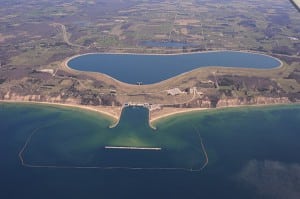
Ludington Pumped Storage Plant Increases Efficiency to Provide Greater Grid Support
Utility-scale energy storage in the form of pumped water storage has a long history. One of the oldest U.S. plants found itself in need of an upgrade after 40 years of service. Having the right equipment for the job is proving to be essential. With the current power market challenges and increasing amounts of variable […]
-
 Renewables
Plans for Giant UK Offshore Wind Farms Reconsidered
In the UK this August, two massive offshore wind developments were thrown into tumult. A consortium that secured the UK government’s approval in early August to build an array of offshore wind farms in the Dogger Bank development off the east coast of Yorkshire said it would proceed with only four projects instead of the […]