
Articles By

-
News
Top CEOs Drive the Launch of New Electrification Coalition
On Monday, a number of leading U.S. business executives ─ including Carlos Ghosn, president and CEO of Nissan Motor Company; David W. Crane, president and CEO of NRG Energy; and Frederick W. Smith, chairman, president, and CEO of FedEx Corporation ─ convened to announce the formation of the Electrification Coalition. The coalition describes itself as a nonpartisan, not-for-profit organization committed to promoting policies and actions that will facilitate the deployment of electric vehicles on a mass scale in order to combat the economic, environmental, and national security vulnerabilities caused by our nation’s dependence on petroleum.
-
General
Kick the Can on Energy Policy: Bravo
By Kennedy Maize WASHINGTON, Nov. 16, 2009 — Call it “kick the can.” The Obama administration, according to the New York Times, has persuaded (does than mean big-footed?) the rest of the world attending the upcoming Copenhagen climate change confab to adopt a policy duck. It walks like a duck, quacks like a duck, and […]
-
News
UK Identifies 10 Next-Gen Nuclear Sites, New Clean Coal Policy
Six draft policy statements unveiled by the UK’s Energy and Climate Change Secretary Ed Miliband on Monday map out an energy future that focuses on a “trinity” of fuels: nuclear, renewables, and “clean” fossil fuels. Miliband also identified 10 suitable sites for the nation’s next generation of nuclear plants and a new policy for the transition to clean coal.
-
News
DOE Sequestration Project First in U.S. to Reach 1 Million Ton Carbon Injection Milestone
A federally sponsored large-scale project in Mississippi has become the first in the nation to inject more than 1 million tons of carbon dioxide in an underground formation, the Department of Energy (DOE) announced last week. Only four other projects—in Norway, Canada, and Algeria—have reached the milestone.
-
News
U.S. Offshore Wind Sector Sees Major Developments
Key developments for U.S. offshore wind this week could give that sector a much-needed boost: On Monday, NRG Energy acquired offshore wind developer Bluewater Wind, and on Tuesday, the governors of Maryland, Virginia, and Delaware formed a tri-state partnership for the deployment of offshore wind energy in the Mid-Atlantic coastal region.
-
News
Mississippi PSC: New Generation Capacity Needed by 2014
Mississippi’s Public Service Commission (PSC) on Monday unanimously agreed to continue hearings for a $2.4 billion integrated gasification combined cycle (IGCC) coal plant in Kempner County, saying that the Mississippi Power Co. (MPCO) had aptly demonstrated that the region would need new generating capacity as early as 2014.
-
News
Climate Bill Faces Finance Committee, Long Haul Ahead
Potential climate change and energy legislation could wreak havoc on industry growth, witnesses said in testimony before the Senate Finance Committee on Tuesday. The hearings follow the 11–1 passage of the Kerry-Boxer bill (The Clean Energy Jobs and American Power Act) through the Senate Environment and Public Works Committee on Thursday. Sen. Max Baucus (D-Mont.)—chair of the Finance Committee, which is currently reviewing the bill—was the sole nay vote.
-
News
DOE to Cooperate in Construction, Demonstration of IGCC Hydrogen Power Plant
The U.S. Department of Energy (DOE) last week signed a cooperative agreement with Hydrogen Energy California (HECA) to build and demonstrate a $2.3 billion hydrogen-powered electric generating facility, complete with carbon capture and storage, in Kern County, Calif.
-
News
Markey: No Nuclear Loan Guarantees Without COLs
Loan guarantees for new nuclear power plants in the U.S. should not be awarded until the Nuclear Regulatory Commission (NRC) has fully reviewed plans for a proposed project and granted it a combined construction and operating license (COL), Rep. Ed Markey (D-Mass.) told Energy Secretary Steven Chu last week.
-
General
Yucca Mountain is Dead and Gone
By Kennedy Maize I come not to praise Yucca Mountain as a final repository for spent nuclear fuel, but to bury it. The lid on the Yucca coffin has long been in place, but now the Obama administration is nailing it down, according to a report in The Energy Daily. That’s good news. The newsletter […]
-
News
Firm Created to Generate 15% of Europe’s Power Through Sahara Solar by 2050
Twelve companies and the Desertec Foundation on Friday formally launched a joint venture to manage a project that seeks to generate up to 15% of Europe’s power by 2050 with giant solar and wind farms installed in North African and Middle Eastern deserts. Firms include energy giants E.ON, RWE, and Siemens Energy, and investment companies Deutsche Bank and Munich Re.
-
News
House Hearing on Cybersecurity Regulations Highlights Debate over FERC Authority
Utility industry representatives opposed legislation at a House subcommittee hearing last week that could authorize the Federal Energy Regulatory Commission (FERC) to enforce cyber security standards on all plants connected to the bulk power system.
-
News
AEP, Alstom Formally Commission Mountaineer CCS Validation
American Electric Power’s (AEP’s) long-awaited validation of advanced carbon dioxide capture and storage (CCS) technologies at its Mountaineer Plant in New Haven, W.Va., was formally kicked off on Friday. The project is being watched closely around the world because it will be the first to capture carbon dioxide from a pulverized coal-fired power plant as well as inject it into a permanent storage site more than 7,800 feet underground.
-
News
Utilities Forced to Drop Plans for Big Stone II Coal-Fired Project in S.D.
Participating utilities pulled the plug on a fully permitted project to build the $1.6 billion Big Stone II coal-fired power plant near Millbank, S.D., on Monday, saying they could not find new backers necessary to build the 500-to-600-MW facility.
-
News
Maryland Regulators Approve Constellation-EDF Nuclear Buyout Deal
The Maryland Public Service Commission (PSC) said on Friday it would permit Constellation Energy’s sale of 49.99% of its nuclear business to French group Electricité de France (EDF) for $4.5 billion if Constellation subsidiary Baltimore Gas and Electric Co. agreed to pay $100 rebates to its customers and invested $250 million to control power rate increases.
-
News
Entergy CEO: Possibility of New Entergy Nuclear Builds in Southeast Is Faint
Entergy Corp. reportedly won’t pursue new nuclear builds in the U.S. Southeast because of lower demand seen after Hurricanes Katrina and Ike, the recession, and abundant but unused independent power generation in the region, the company’s CEO J. Wayne Leonard told reporters at this week’s Edison Electric Institute financial conference.
-
News
$338M Federal Geothermal Grants to Boost Exploration, Drilling, EGS Demos
The Department of Energy on Thursday announced up to $338 million in Recovery Act funding for the exploration and development of new geothermal fields and research into advanced geothermal technologies. The grants, which will be matched more than one-for-one with an additional $353 million in private and nonfederal cost-share funds, back 123 projects in 39 states.
-
General
Smart Grid Grants May be Stupid
By Kennedy Maize President Obama in late October announced that the Department of Energy would award $3.4 billion in grants to allegedly “smart grid” technologies. As I parse the awards, my reaction is that they are fundamentally stupid. Most of the money – to be matched by the private sector (those matches presumably are tax deductible […]
-
Legal & Regulatory
Talking Smart Grid Talk
What is the smart grid all about? A new book—a dictionary—attempts to define and demystify the jargon and bafflegab surrounding the buzzing smart grid. It’s a somewhat flawed but worthwhile first attempt at unraveling the often bizarre and sometimes baloney-filled smart grid nomenclature.
-
Legal & Regulatory
Pushmepullyou: Disputes and Discussions on Grid Politics
While industry interests were trying to get on board the smart grid gravy train last fall in Washington, D.C., in rural West Virginia folks were dealing with the force of a political locomotive pushing a high-voltage interstate grid, with property owners opposed and labor in favor.
-
HR
Today, Time Management Knows No Boundaries
It’s no longer a 9-to-5 world. Management gurus Peter Stark and Jane Flaherty offer advice on how to manage time in today’s multi-tasking environment.
-
 Legal & Regulatory
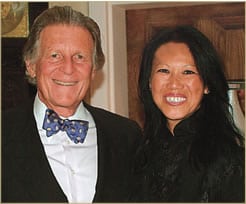
The Natural Gas Glut and the Doctrine According to Hefner
Natural gas is back, says gas guru Bobby Hefner, and in a big way. New technologies, new discoveries, low prices, and new optimism characterize a natural gas industry that just three years ago was bemoaning its future and looking to foreign LNG imports as the industry’s salvation. Today, the gloom is gone, and the gas folks are clicking their gaseous heels in glee.
-
Legal & Regulatory
NRC Withholds “Waste Confidence” Finding, Citing Yucca Decision
In a series of ironies, the U.S. Nuclear Regulatory Commission has voted to reject an early finding that the U.S. can adequately manage nuclear reactor spent fuel, in the wake of the Obama administration’s decision to pull the radioactive plug on Nevada’s Yucca Mountain. The vote by the majority Republicans on the commission effectively puts a temporary ban on new nuclear reactor construction in the U.S.
-
 Commentary
The Beat the Copenhagen Clock Game
U.S. Democrats in the White House and Congress are in an unseemly race to get something, anything, enacted into law before the December climate gab fest in Copenhagen. But it’s a fools’ game and unlikely to succeed.
-
Commentary
Is Learning to Regulate Like Learning to Cook?
What’s to learn about regulation from Julia Child and Michael Pollan, gurus of the food world? Plenty, says Scott Hempling of the National Regulatory Research Institute.
-
Commentary
Belt Out Your Best and Overcome Your Doubts
Don’t let your fears of inadequacy limit your ability to succeed in your life and career.
-
Legal & Regulatory
TREND: Coal in a Hole
While pundits opine that the U.S. economy is in recovery, that doesn’t show up in the world of coal-fired electric power plants (perhaps lagging economic indicators). For proof, see these recent stories.
-
Commentary
Pay Attention to the Health Care Debate: It Can Restructure Your Company
The ongoing congressional debate over national health care policy, regardless of the outcome, has important implications for employers who today provide health benefits to their employees. Company management must pay close attention to Washington discussions of health care and to the implications for their companies of what is eventually adopted.
-
HR
Social Media in the Workforce: Tweet, Tweet, Tweet, Tweedly-Deet
Social media have emerged as an important force in the workplace, both as new ways of doing business and as challenges to organization management. Among those challenges is defining acceptable employee behavior on and off the job.
-
 News
NewsPneumatic Torque Limiter
Nexen has launched the TL Series, a pneumatically engaged, single-position torque limiter for improved overload protection for industrial machinery. The TL Series uses a ball/detent interface and proximity sensor to immediately disengage the machine shaft when excessive torque or a machine jam occurs, effectively protecting downstream equipment and product from damage and decreasing downtime. Upon […]