
Articles By

-
News
EPA: Power Plant Sulfur Dioxide Emissions Plunged 52% from 1990 Levels
Sulfur dioxide emissions from power plants across the U.S. fell 52% compared with 1990 levels, and they are already below the statutory annual emission cap of 8.95 million tons set for compliance in 2010 under the Acid Rain Program, the Environmental Protection Agency (EPA) reported last week. The EPA’s annual national analysis of the Toxics Release Inventory showed similar decreases by electric utilities for chemicals released into the air, land, and water.
-
News
Alberta Ambivalent About Nuclear Power
Alberta will not stand in the way of new nuclear builds, but it will not invest public dollars in power proposals, the province’s Energy Minister Mel Knight said on Monday after a government-sponsored consultation showed that 45% of Albertans prefer that nuclear power plants be considered on a case-by-case basis.
-
News
GE Wins $1.4 Billion Contract to Supply Turbines to World’s Largest Wind Farm
General Electric last week won a $1.4 billion contract to supply wind turbines for the 845-MW Shepherds Flat wind farm proposed by independent power producer Caithness Energy. If built, the 338-turbine Oregon wind farm would be the largest in the world.
-
General
Energy roundup
By Kennedy Maize Having just returned from three weeks of vacation, where I paid no attention to power issues, here are some items I’ve discovered since my return. I hope my take will spark some conversations. First, “Climategate.” This flap of major proportions, threatening to unravel the alleged scientific consensus behind global warming, blew up […]
-
Commentary
No ‘Cash For Clunkers’ In Climate Bill
Certain small utilities with some of the nation’s highest carbon dioxide emission rates want to change the climate bill pending before Congress to give themselves more allowances to emit carbon dioxide (CO2). This would be the ultimate “cash for clunkers” program for dirty power plants, with one key difference: Unlike the real program, in this case the clunkers would get to stay on the road. The Senate should reject this change.
-
Commentary
Cap and Trade Allowances: Windfalls or Wind Farms?
The commentary "No ‘Cash for Clunkers’ in Climate Bill" creates a fictitious history of climate change and seriously harms good faith efforts within the industry to address the legitimate issues many utilities have raised with the Waxman-Markey bill.
-
Coal
EPA Tightens Emissions Rules for Coal Processing, Preparation Plants
The U.S. Environmental Protection Agency has adopted final rules tightening emissions limits for coal preparation and processing plants and imposing new reporting requirements on those facilities.
-
Coal
Expect New Mercury Rules by 2011
In a major air regulatory development, the Environmental Protection Agency has agreed to issue rules by November 2011 to reduce mercury and other hazardous air pollution from coal- and oil-fired power plants under a settlement agreement resolving a lawsuit filed by a host of environmental organizations.
-
Coal
EPA Signals Move to Toughen Ozone Standard
The Environmental Protection Agency has decided it will reconsider the 2008 ozone standards issued by the Bush administration, with the agency suggesting in a court that it would toughen the standards because it has concerns about whether standards “satisfy the requirements of the Clean Air Act.”
-
 O&M
O&MFour Methods of Fly Ash Sampling
There are four approaches to measuring fly ash content and, therefore, the quality of fuel combustion in a boiler. Before choosing one, you should understand their relative levels of complexity and accuracy.
-
 O&M
O&MCeramics Win the War on Erosion
Erosion can significantly reduce the operational life of boiler components. Abrasion-resistant ceramic parts can be a sound alternative to expensive metallic parts when replacing boiler components.
-
Commentary
Time Out!
If the basic science related to man’s contribution to a warming planet is based on flawed fundamental science, a conscious circumventing of the peer review process, political expediency, and refusing to release the fundamental data used by a computer program that has yet to replicate actual ambient temperatures, then it’s time to pause, take a breath, and regroup.
-
 O&M
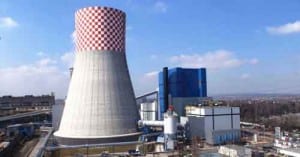
O&MWorld’s Largest Circulating Fluidized Bed Boiler Begins Commercial Operation
When the Åagisza power plant began commercial operation in late June 2009, it marked the beginning of a new era in the evolution of circulating fluidized bed (CFB) technology. At the heart of this 460-MW plant is the world’s largest CFB boiler, which is also the world’s first once-through unit supercritical CFB boiler.
-
News
Interest in India’s Nuclear Business Heightens with Deal for 4 Rosatom Reactors
India and Russia signed another key nuclear cooperation deal on Monday in Moscow, opening the way for Russian state-owned nuclear company Rosatom to play a major role in the subcontinent’s plans to expand its nuclear capacity tenfold by 2020.
-
News
EPA Issues Endangerment Finding
The Environmental Protection Agency (EPA) on Monday—opening day of the 12-day international climate change talks in Copenhagen—formally declared carbon dioxide and other greenhouse gases (GHGs) threats to public health and welfare. The move responds to the Massachusetts v. EPA U.S. Supreme Court decision in 2007 that found that GHGs fit within the Clean Air Act definition of air pollutants.
-
News
Idaho Coal-Fired Plant Gets Permit with CO2 Limits
A permit issued by Idaho’s Department of Environmental Quality (DEQ) last week to Southeast Idaho Energy to operate a clean coal gasification fertilizer plant near American Falls is the first in the state and the nation to set enforceable greenhouse gas emission limits.
-
News
CPS Energy Asks Court to Define STP Expansion Nuclear Pact
San Antonio’s CPS Energy on Sunday filed a petition with a Bexar County court to define the liability faced by the utility and NINA (Nuclear Innovation North America), a Toshiba-NRG Energy consortium, if both parties pulled out of a project to expand the South Texas Project (STP) nuclear plant near Bay City, Texas.
-
News
European Commission Pledges €1.5 Billion for CCS, Offshore Wind Projects
In a “push” to the economy and employment, the European Commission today granted €1 billion to six carbon capture and storage (CCS) projects and €565 million to nine offshore wind energy projects.
-
News
AEP, Southern Co., Summit Texas to Get $3B in Federal Funding for CCS Demos
The U.S. Energy Department last week said it would fund three carbon capture and storage (CCS) projects with a value of $3.18 billion to accelerate their development: American Electric Power’s (AEP’s) proposed Mountaineer demonstration project; Southern Co.’s Plant Barry demonstration in Alabama; and Summit’s Texas Clean Energy Project in Midland-Odessa.
-
News
U.S., China Set Targets for Cutting Greenhouse Gas Emissions
Last week, President Barack Obama set a U.S. target for reducing greenhouse gas (GHG) emissions to 17% below 2005 levels by 2020 and 83% by 2050, while China separately said it would reduce the intensity of its carbon dioxide emissions by 40% to 45% by 2020. The announcements come weeks before the 12-day international climate meeting at Copenhagen, Denmark, which will begin on Dec. 9.
-
News
Australia’s Parliament Votes Down Carbon Trading Bill a Second Time
Australia’s parliament today rejected—for a second time—a climate change bill that would effect a carbon trading program. The world’s biggest coal exporter was proposing to reduce greenhouse gases by 5% to 15% of 2000 levels via a carbon trading system similar to Europe’s within the next decade.
-
News
AREVA to Sell Lucrative T&D Division to Alstom and Schneider Electric
French nuclear giant AREVA on Monday announced it would sell its lucrative transmission and distribution (T&D) division to Alstom and Schneider Electric—both French firms—for €4.09 billion, rejecting bids from U.S.-based General Electric and Japan’s Toshiba Corp.
-
News
Exelon, Progress to Shutter More Than 2,400-MW of Coal-Fired Generation; AMP Pulls Plug on Ohio Project
The week brought news of more closures or cancellations related to coal-fired generation. Exelon Corp. said it would permanently shut down four older units—a total capacity of 933 MW—in Pennsylvania; Progress Energy announced the closure of 11 North Carolina units in a shift to burning natural gas; and cost increases for an Ohio plant are prompting American Municipal Power to consider a combined-cycle gas plant instead.
-
News
USCAP Releases Economic Analysis of Promoted Climate Blueprint
An analysis released today by the U.S. Climate Action Partnership (USCAP) projects that if Congress adopts climate change legislation based on a blueprint released by the organization earlier this year, the nation’s economy would grow about 70% through 2030 despite adopting carbon emission–curbing measures.
-
-
 News
NewsAutomated Tube Bundle Water Jet System
The ATL-5000 — a new, fully automated water jet system from NLB Corp. — cleans tube bundles three times faster than manual methods and features an adjustable lance stroke that allows the system to be configured for bundles of various lengths, up to 30 feet. The diesel-powered system has five rigid lances, each with a […]
-
 Solar
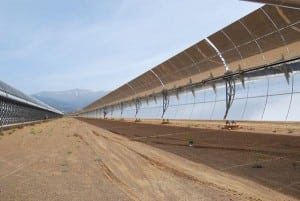
SolarThe Power of Light: U.S. Solar Energy Trends
For decades, the solar energy industry has struggled to become cost-competitive with other sources of power generation. Recent technology innovations and creative ways of installing solar generation are beginning to enable solar power to increase its share of the electricity market.
-
 News
NewsScavenger Conveyor System
Martin Engineering introduced the Carryback Capture System, a scavenger conveyor system that transfers belt-cleaning residue back into the material stream, avoiding cleanup labor, injury potential, and dust hazards associated with buildup. The 13-inch-high system’s modular design uses an electrically driven hydraulic cylinder to push a steel cleaning blade — or, in a longer scavenger, a […]
-
 Geothermal
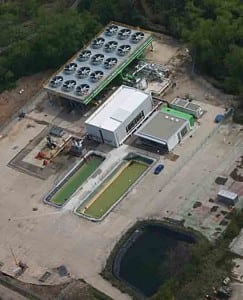
Assessing the Earthquake Risk of Enhanced Geothermal Systems
Enhanced geothermal systems (EGS) deliberately induce seismicity — earthquakes — in order to access hot, subsurface rocks for use in geothermal power generation. Recent quakes around the world have frightened those living near EGS sites and sparked controversy over the technique. We asked experts to provide EGS technical details and to evaluate the seismic risk the process poses.
-
 News
NewsPortable Combustion Analyzer
The updated E2200 Portable Combustion Analyzer from E Instruments is an all-in-one unit for boiler, burner, engine, turbine, furnace, and other combustion applications. Precalibrated and field-replaceable sensors allow for easy diagnostics and replacements to reduce downtime and costly repair charges. The analyzer includes sensors for oxygen (0% – 25%), carbon monoxide (0 – 8,000 ppm), […]