
Articles By

-
 Coal
CoalTurning Flue Gas Carbon into a Raw Material for Manufacturing
Bayer in February brought online a pilot plant at Chempark Leverkusen, Germany, to recycle carbon dioxide (CO2) scrubbed from the flue gas of a 1,000-MW RWE lignite-fired unit and convert it into a raw material and petroleum substitute for plastic manufacturing. The Bayer facility (Figure 4) essentially produces a chemical precursor into which CO2 is incorporated and then processed into polyurethanes that are used for many everyday items.
-
 News
NewsNew Digital Pressure Gauges and Calibration Pumps
Palmer Wahl Instruments Inc. has introduced a new line of digital pressure test gauges that includes the Palmer 3PC Auto Ranging Digital Pressure Test Gauge (shown here), which spans a pressure range of vacuum to 3,000 psi. Featuring an accuracy of 0.1%, and with the capacity to read nine different units of measure, the 3PC […]
-
 Business
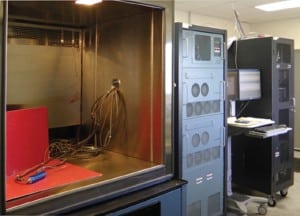
KEMA Opens Lab to Test Energy Storage Performance
Dutch energy consulting firm KEMA in February opened a new laboratory in Chalfont, Pa., to test and verify emerging utility-scale energy storage systems.
-
 News
NewsMiniature Triaxial Accelerometer
Kistler announced the North American market introduction of the Type 8763B, a miniature IEPE triaxial accelerometer with voltage output. The accelerometer offers simultaneous shock and vibration measurements on three mutually perpendicular axes with optional TEDS capabilities (per IEEE 1451.4) to meet high-performance requirements. Available in six unique models with measurement ranges from ±50 g to […]
-
Business
POWER Digest (April 2011)
China Inaugurates 660-kV DC Line. The China Power Grid Co. on Feb. 28 began transmitting power through a 660-kV direct current power transmission link that runs from northwest China’s Ningxia Hui Autonomous Region. Part of China’s west-east power transmission program, the 10.4 billion yuan (US$1.58 billion) project runs 1,333 kilometers through five provinces and regions […]
-
 News
NewsHigh-Level Construction Glove
Ergodyne has launched the ProFlex 750 At-Heights Construction Glove. The glove delivers the comfort, durability, and protection required for climbing as well as the fit and dexterity needed to get the job done right in the world’s highest work zones, the company claims. Designed to reduce fatigue and discomfort while climbing, the 750 At-Heights Construction […]
-
O&M
Predictive Maintenance That Works, Part I
This year’s series will focus on predictive maintenance (PdM), also known as condition-based maintenance.
-
 News
NewsEnhanced Compact Loaders
Bobcat’s launch of the new 700 Series compact loaders adds three new models to the company’s family of new-generation loaders. The new loaders, all with vertical lift path design, offer several new features and enhancements that significantly extend the range of applications for compact loaders, Bobcats says. The 700 Series comprises a new skid-steer loader […]
-
Wind
Horizontal or Vertical? The Question for Wind Turbine Axis Orientation
This web supplement to "Changing Winds: The Evolving Wind Turbine" examines the debate over the merits of the two most common wind turbine axis orientations.
-
O&M
Plan for the Worst: Insurance Insights
Imagine this scenario: Two separate power plants experience a bowing problem greater than 18 mils with a steam-turbine rotor. The turbines are from the same manufacturer and several repair options are reviewed. Management at both plants selects an innovative approach involving removal of a substantial amount of material, which is replaced with weld overlay and then machined to correct diameters and centerline of the balance piston area. One plant’s insurance company covers the repair, the other plant’s doesn’t. Why?
-
Commentary
Electricity: A Fuel of the Future
The recent tensions in the Middle East and their impact on oil and gasoline prices remind us that the U.S. remains heavily dependent on foreign nations—some of them unstable—to meet many of our energy needs. Of course, oil will continue to have an important place in our energy mix, and expanding our domestic reserves makes sense.
-
News
EPA Proposes Cooling Water Intake Rules
Rules proposed by the Environmental Protection Agency (EPA) under Section 316(b) of the Clean Water Act on Monday call for flexible technology standards, determined on a case-by-case basis, for more than 670 power plants across the nation that pull in at least 2 million gallons per day of cooling water. The EPA said the proposal, which seeks to protect aquatic life, establishes a “common sense framework, putting a premium on public input and flexibility.”
-
News
Senate to Vote on Amendment to Block EPA Climate Rules
The Senate is expected to vote on Thursday on an amendment introduced by Senate Republican Leader Mitch McConnell (R-Ky.) to small business legislation that could permanently block the Environmental Protection Agency (EPA) from promulgating climate change rules.
-
News
Lawmakers Urge President to Act on EPA Rulemaking
Nearly 20 Senate Democrats asked President Obama in a letter today not to agree to spending plans passed by the GOP-controlled House last month that would block funding for the Environmental Protection Agency’s (EPA’s) implementation of greenhouse gas rules.
-
News
Bipartisan Policy Center: Grants for Wind, Solar More Effective Than Tax Credits
As chief executives of 34 renewable energy companies urged congressional Republican and Democratic leaders to support the Department of Energy’s loan guarantee program, a study released by the Bipartisan Policy Center (BPC) suggests grants are a simpler and more effective way to help finance projects than tax credits.
-
News
GEA: 12% Geothermal Projects Under Development in 2011
With geothermal power being produced in nine states—and with 123 projects across 15 states under development—the U.S. leads the world in geothermal energy production, a new report from the Geothermal Energy Association (GEA) shows.
-
News
DOI Determines No Competitive Interest, Starts Offshore Wind Lease Process for Delaware Waters
The Department of the Interior (DOI) and the Bureau of Ocean Energy Management, Regulation and Enforcement (BOEMRE) on Thursday said they had begun a process to offer Bluewater Wind Delaware the first commercial wind lease off the coast of Delaware under the “Smart from the Start” Atlantic Offshore Wind program.
-
News
California Assembly Passes 33% by 2020 RPS
California’s Assembly on Tuesday passed a renewable energy mandate that would require the state’s power companies to generate 33%—up from the current 20%—of their power from renewable sources by 2020. The mandate is the most ambitious in the U.S.
-
News
New Vogtle Units Inch Closer to NRC Approval of COLs
The Nuclear Regulatory Commission (NRC) last week completed a Final Supplemental Environmental Impact Statement (FSEIS) for a limited work authorization (LWA) and the combined construction and operating licenses (COLs) for Southern Co.’s Vogtle Units 3 and 4 proposed for construction near Waynesboro, Ga.
-
News
Daiichi Prompts Renewed Scrutiny of Existing, New Reactors
Incidents unfolding at the quake-stricken Fukushima Daiichi reactors in Japan has led governments to take extraordinary safety measures around the world. Last week, European Union (EU) ministers agreed to re-check the safety of Europe’s 143 reactors, and in the U.S., regulators are expected to conduct seismic assessments on 27 reactors at 17 plants.
-
News
EPA Sets New GHG Reporting Deadline, Delays Water Intake System Rules
Sept. 30, 2011, is the revised final deadline for reporting 2010 data under the Environmental Protection Agency’s (EPA’s) Greenhouse Gas (GHG) Reporting Program. The agency also last week delayed the release of proposed rules that would govern cooling water intake systems at nuclear and coal plants until March 28.
-
News
Inhofe, Johanns Introduce Bill to Conduct Economic Analysis of EPA Rules
A week after a U.S. House committee passed a bill sponsored by Rep. Fred Upton (R-Mich.) in the House and Sen. James Inhofe (R-Okla.) in the Senate, Sens. Inhofe and Sen. Mike Johanns (R-Neb.) introduced a bill that would require an interagency federal panel to undertake a “cumulative economic analysis” of Environmental Protection Agency (EPA) regulations.
-
News
BLM to Hold First of Several Lease Sales of Wyo. PRB Coal Tracts
Interior Secretary Ken Salazar on Tuesday said the Bureau of Land Management (BLM) would hold four competitive lease sales from May through August for Powder River Basin coal tracts in Wyoming. The tracts, covering 7,441.25 acres, hold an estimated 758 million tons of low-sulfur coal.
-
News
IAEA: Power Restored to Most Reactors at Fukushima Daiichi
AC power is now available at Units 1, 2, and 4 of the six-reactor quake- and tsunami-hit Fukushima Daiichi nuclear plant in Japan, according to recent updates; however, the International Atomic Energy Agency (IAEA) still believes “the overall situation remains of serious concern.”
-
News
Georgia Power to Decertify Coal Units, Says Continued Operation “Uneconomical”
Georgia Power last week said it would seek the Georgia Public Service Commission’s approval to decertify two coal-generating units totaling 569 MW. The decision was based on “a need to install environmental controls to meet a variety of existing and expected environmental regulations,” the company said.
-
News
Sempra Opens 48-MW Solar Photovoltaic Facility in Nev.
Sempra Generation last week officially dedicated the 48-MW Copper Mountain Solar facility, a project located adjacent to the company’s 10-MW El Dorado Solar installation in Boulder City, Nev., about 40 miles southeast of Las Vegas. Sempra is calling the facility “the largest photovoltaic solar plant in the U.S.”
-
News
EPA’s Proposed “Toxic Air” Rules Could Cost Sector $10.9B a Year
The U.S. Environmental Protection Agency (EPA) today proposed what it described as the “first-ever” national standards for “toxic air pollution” from power plants. The new rules—which will replace the court-vacated Clean Air Mercury Rule (CAMR)—will require new and existing coal- and oil-fired plants to install pollution control technologies to curb emissions of mercury, arsenic, chromium, nickel, and acid gases.
-
News
Federal Judge Dismisses Coal Facility NSR Lawsuit
A federal judge in Birmingham, Ala., on Monday dismissed all claims in an Environmental Protection Agency (EPA) lawsuit that alleged Southern Co. subsidiary Alabama Power built or made modifications to existing coal-fired power plants in Alabama that were in violation of New Source Review (NSR) regulations under Prevention of Significant Deterioration provisions of the Clean Air Act.
-
News
FERC: Negawatts on a Par with Megawatts
The Federal Energy Regulatory Commission (FERC) yesterday established a new rule that puts demand response (DR) on a par with power generation. The rule requires organized wholesale energy market operators to pay DR resources the market price for energy, known as the locational marginal price (LMP), when those resources have the capability to balance supply and demand as an alternative to a generation resource and when dispatch of those resources is cost-effective.
-
News
Xcel to Repower Black Dog Coal-Fired Units with Natural Gas
Xcel Energy wants to retire its last two coal-fired power plants (Units 3 and 4) at the Black Dog power plant in Burnsville, Minn., and replace them with natural gas–fired units. Black Dog Units 1 and 2 were converted to natural gas combined-cycle operation in 2002. Xcel says the conversion would be “more economical” than alternatives.