
Articles By

-
News
RWE, E.ON Scrap Key Plans to Develop New Reactors in the UK
German utilities RWE and E.ON, parent companies of the Horizon joint venture, last week said they would not proceed with key plans to develop two new reactors in the UK. The decision could put the UK’s plans to stake its energy future on nuclear power in disarray.
-
News
Miss. PSC Votes to Allow Continued Construction of Kemper IGCC
Days after the Mississippi Supreme Court reversed an order by the Mississippi Public Service Commission (PSC) granting a key permit to Mississippi Power’s 582-MW integrated gasification combined cycle (IGCC) Kemper power plant, the PSC voted to temporarily allow the Southern Co. subsidiary to continue construction of the plant in Kemper County, Miss.
-
News
Great Lakes States, Federal Agencies Sign MOU for Orderly Evaluation of Offshore Wind Proposals
A memorandum of understanding (MOU) signed by 10 federal agencies and the governors of Illinois, Michigan, Minnesota, New York, and Pennsylvania on Friday seeks to promote the efficient and orderly evaluation of offshore wind proposals for the Great Lakes.
-
News
India Directs Coal India to Sign Fuel Supply Agreements with Coal-Strapped Generators
A rare presidential directive issued on Tuesday by India’s government orders national coal supplier Coal India to sign fuel supply agreements (FSAs) with power producers, imposing penalties if supplies dip below 80% of the commitments. The directive responds to concerns from the nation’s coal generators, which say chronic coal shortages are stalling plans to build new plants.
-
 Waste to Energy
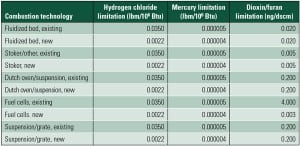
Has Boiler MACT Improved the Future for Biomass Power?
The impact of recently released air emissions regulations has stirred heated debate about forced coal plant closures and the possibility of reduced grid reliability in some regions. Biomass power may be an unexpected beneficiary of the new rules.
-
 Nuclear
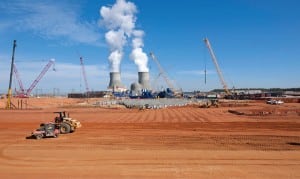
Happy Days for Nuclear Power?
The first license to construct a new nuclear power plant in the U.S. in 34 years was granted by the Nuclear Regulatory Commission on Feb. 9. Has the elusive nuclear renaissance finally begun?
-
 O&M
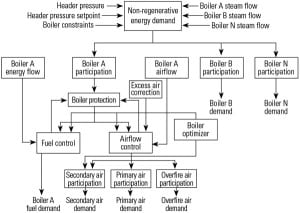
O&MIntelligent Control of FBC Boilers
Optimizing combustion control is critical to reducing emissions and increasing plant operating efficiency, particularly for fluidized bed combustion (FBC) boiler plants burning biomass fuel that has unpredictable moisture content. The secret: measuring actual energy flow.
-
 Water
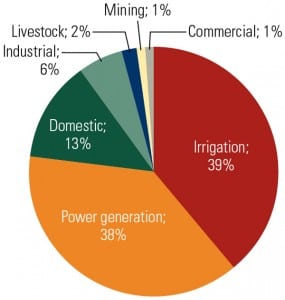
WaterPromoting Sustainable Water Usage in Power Generation
Growing concern about water usage by U.S. electric power generation is being prompted by a number of factors, including projected increases in power demand due to population growth, competing uses for water, and recent drought conditions in various parts of the country. Our overview presents diverse perspectives from industry experts about current and future challenges of balancing power generation needs with declining water availability.
-
 Water
WaterClever “Helper” Tower Solves Cooling Water Dilemma
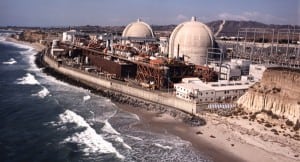
Gone are the days when ocean or river water for once-through cooling of a new power plant was assumed to be available. Today, more than 500 fossil-fueled and 38 nuclear plants use once-through cooling. However, regulators in several states are aggressively pushing what is essentially a ban on the use of once-through water cooling, forcing a conversion to closed-cycle cooling.
-
 Business
POWER Gets Social
Do you have professional insights to share with others in the industry—or questions for those with a particular expertise? Do you want to get news and information from POWER more than monthly or weekly? Then join POWER on these social media platforms.
-
 Nuclear
THE BIG PICTURE: Nuclear Aftershocks
In the year following the Fukushima accident in Japan, the nuclear sector has seen several setbacks (text in orange) as well as major milestones (white).
-
 News
NewsRust-Preventative Weldable Primer
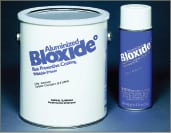
Tempil introduced BLOXIDE°, a rust-preventive weldable primer that provides protection from rust formation on edges prepared for welding. It also acts as an oxygen/oxide scavenger in the weld pool. This results in a clean X-ray quality weld. Steel sections having their prepared edges coated with BLOXIDE° can be stored outside in open yards for extended […]
-
 Nuclear
Less-Familiar Generation III+ Reactors Make Inroads
Following key regulatory approvals in the UK and U.S. of Westinghouse’s AP1000 and AREVA’s EPR Generation III+ reactor designs, France’s nuclear safety authority in February determined that the little-known ATMEA 1 reactor design met international safety criteria for Generation III+ reactors. The reactor is a 1,100-MW pressurized water reactor (PWR) developed and marketed by ATMEA, a 2007-created joint venture between France’s AREVA and Japan’s Mitsubishi Heavy Industries (MHI).
-
 News
NewsPatented Filter Medium for Core Cooling
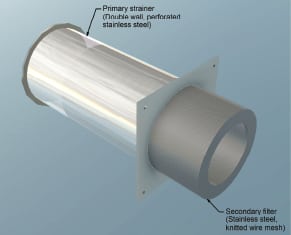
Multi-disciplined engineering and consulting firm ENERCON received patents for a filter medium for strainers used in nuclear reactor emergency core cooling systems (ECCS). ENERCON’s Debris Bypass Eliminator was developed in response to the Nuclear Regulatory Commission’s Generic Safety Issue, GSI-191, “Assessment of Debris Accumulation on PWR Sump Performance.” During long-term recirculation for cooling of the […]
-
 Gas
GasAn “Exploding Lake” Becomes a Power Source
Rwanda’s Lake Kivu has a nickname: “Killer Lake.” The shimmering 1,040–square mile body of freshwater on the western branch of the Great East African Rift that straddles the Democratic Republic of Congo and Rwanda has had a bloody history. Not only was it the site of atrocity during the 1994 Rwandan genocide, but scientists say that it is also one of three known “exploding lakes.”
-
 News
NewsTrue Machine Train Alignment
Ascertaining the alignment of all machines in a multiple machine train has always been a cumbersome and time-consuming process. The new ROTALIGN ULTRA MultiCoupling feature allows the alignment of up to seven machines in a train to be measured simultaneously, with a single quarter rotation (or less) of the shafts. This saves time and resources […]
-
 Nuclear
New South Korean and Russian Reactors Go Online
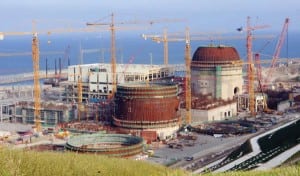
Three nuclear reactors under construction in the Eastern Hemisphere reached major milestones over the past few months. South Korea’s Korea Hydro and Nuclear Power Co. connected its 960-MW Shin-Wolsong 1 reactor near Nae-ri to the grid on Jan. 27 and, a day later, its sister plant, the 960-MW Shin Kori 2 (Figure 5) in the southwest city of Gori. Both units are expected to become commercially operational this summer. And last December, Russia began commercial operation of its 950-MW Kalinin 4 plant, a V-320 model VVER 1000.
-
Commentary
Natural Gas: Secure Supply for Today and the Future
Ten years ago, I could not have written this column. The natural gas industry was different—limited domestic supply resulted in unstable prices. However, recent advancements in drilling technology have enabled the industry to discover, access, and produce abundant sources of natural gas in America. Because the industry has changed, the country’s energy future is now […]
-
 Wind
WindTwo New Offshore Farms Turning Despite Stagnant Global Wind Market
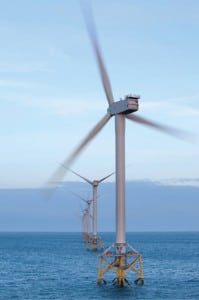
The UK opened two massive offshore wind farms this February on the Irish Sea off the UK’s Cumbrian coast. DONG Energy, SSE, OPW, and a consortium of Dutch pension fund service provider PGGM and Ampere Equity Fund began commercially operating the 367-MW Walney wind farm, estimated to cost $1.58 billion, and Danish wind firm Vattenfall inaugurated the Ormonde Offshore Wind Farm.
-
 Coal
CoalIndia’s Chronic Coal Shortages Threaten Coal Power Ambitions
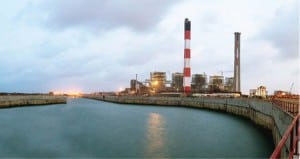
India has been besieged by a coal shortage of unprecedented severity that has forced privately owned and money-strapped state-owned coal-fired power plants alike to rely on expensive imports from Indonesia and South Africa to replenish woefully inadequate stocks.
-
Legal & Regulatory
Suing for (Pipeline) Safety
As a Valentine’s Day present to federal regulators, San Francisco City Attorney Dennis Herrera took the unusual step of suing the U.S. Pipeline and Hazardous Materials Safety Administration (PHMSA). The complaint alleges that the PHMSA has “abjectly failed to oversee the [California Public Utilities Commission’s (CPUC’s)] pipeline safety program or to ensure that federal pipeline safety standards are enforced.” The complaint chastises the PHMSA for “shirking that duty for over a decade, if not longer.”
-
Business
POWER Digest (April 2012)
CSP Giants Form Alliance. Concentrating solar power companies Abengoa, BrightSource Energy, and Torresol Energy in early March formed the Concentrating Solar Power Alliance, an organization dedicated to educating U.S. regulators, utilities, and grid operators about the unique benefits of concentrating solar power (CSP) and of thermal energy storage. The U.S. has more than 500 MW […]
-
 News
NewsTechnology Trumps Policy
An energy policy should be the result of inclusive debate and a consensus approach to the means to leverage all of a country’s energy assets, including innovation and technology, to the advantage of its citizens. Current U.S. energy policy fails on all counts.
-
 O&M
O&MSafe Work Practices in Confined Spaces at Power Plants
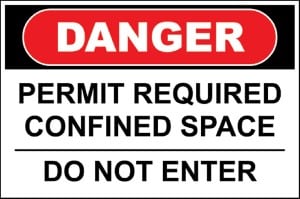
Confined space work is often considered to be one of the most dangerous types of work performed in power generation settings. Confined spaces may contain hazardous atmospheres, they can trap entrants, and they generally can increase the hazards associated with otherwise common tasks. When the risks are not recognized, workers all too often regard incidents as surprises, but the hazards of working in confined space can be predicted, monitored, and mitigated. These “accidents” are caused by unsafe conditions, unsafe acts, or both; all accidents are preventable.
-
 O&M
O&MPreventing Downtime by Picking the Best Switch Technology
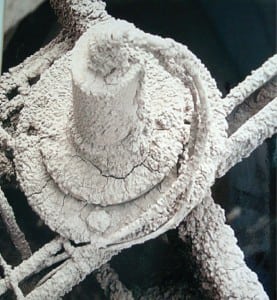
Common fuel-handling problems in the power industry often result in production downtime, costing the owner perhaps up to $200,000 per hour. There are many areas within a coal-fired power plant where mishaps can cause stoppage of material flow. Here we discuss how to select the best switch technology to reduce the possibility of coal flow stoppages.
-
 Waste to Energy
Waste-to-Energy Technology Options Increase but Remain Underutilized
WTE technologies offer cost-effective, near-term solutions for producing baseload electric power, meeting renewable energy targets, and reducing greenhouse gas emissions in the U.S. and other countries. They also present opportunities for improving resource management practices, increasing energy security, enhancing environmental quality, and supporting climate policy goals around the world.
-
News
EPA Banks on CCS Technologies, Sets Carbon Standards for New Coal Units
The Environmental Protection Agency (EPA) on Tuesday proposed its first-ever carbon pollution standard for new power plants, limiting carbon dioxide (CO2) emissions from new fossil fuel-fired power plants to 1,000 pounds/MWh. The standard is achievable for new natural gas combined cycle units without add-on controls, but it would force new coal or petroleum coke units to install carbon capture and storage (CCS) technology, which is currently commercially unavailable, the agency acknowledged.
-
News
NRC: SCE Must Address Unusual Tube Wear at San Onofre Before Restarting
Southern California Edison (SCE), operator of the San Onofre Nuclear Generating Station near San Clemente, Calif., must understand and address unusual wear on steam generator tubes before it can be allowed to restart the beleaguered two-reactor nuclear plant, the Nuclear Regulatory Commission (NRC) said on Tuesday. California officials are meanwhile preparing contingency plans to prevent power outages this summer that could result from the plant’s indefinite shutdown.
-
News
NRC to Decide on SCANA COL on Friday
The Nuclear Regulatory Commission (NRC) will decide on Friday whether to award a combined construction and operation license (COL) to SCANA Corp.’s proposed project for two 1,117-MW reactors at the site of the V.C. Summer Nuclear Station near Jenkinsville, S.C. If the SCANA Corp. project receives the NRC’s approval, it will be the second project in nearly 30 years to receive such approval.
-
News
AEP’s Planned Retirements Less Than Initially Anticipated
Official notifications to regional reliability organizations PJM Interconnection and Southwest Power Pool (SPP) made last week by American Electric Power (AEP) show that the company will retire about 4,600 MW of coal-fired capacity to comply with a series of Environmental Protection Agency (EPA) rules. The plan differs markedly from the 6,000 MW of anticipated retirements AEP announced in June 2011.