
NOx
-
 Press Releases
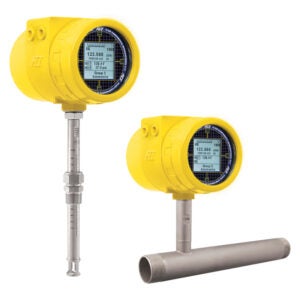
Thermal Flow Meter Offers Precise NH3 Injection for NOx Control in Coal-Fired Power Plants
Ideal for Pollution Control & Monitoring Systems’ Stack or Flue NOx Scrubbers San Marcos, CA—November 6, 2025—Process and pollution control engineers will find that the FCI ST100A Flow Meter helps them more accurately control the application of ammonia (NH3) for nitrous oxide (NOx) removal under harsh operating conditions in large flue stacks at cleaner coal […]
-
 Legal & Regulatory
Supreme Court Halts EPA’s ‘Good Neighbor Plan’
The U.S. Supreme Court in a 5–4 vote blocked enforcement of the Environmental Protection Agency’s (EPA’s) final “Good Neighbor Plan,” a rule intended to significantly cut smog-forming nitrogen oxide (NOx) pollution from power plants and other industrial facilities in 23 states. In the meantime, the applicants, which include the states of Ohio, Indiana, and West […]
-
 Legal & Regulatory
EPA Denies Industry Petition to Delist Stationary Combustion Turbines as Hazardous Pollutants
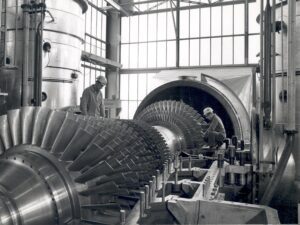
The U.S. Environmental Protection Agency (EPA) has denied an industry petition seeking to delist stationary combustion turbines from the agency’s list of hazardous air pollutants (HAP) major source categories regulated under section 112 of the Clean Air Act (CAA). The agency’s final action on April 11 responds to an August 2019 petition filed by several […]
-
 Infographics
The Big Picture: Coal Controls [Infographic]
U.S. coal power plant emissions in 2023 showed dramatic reductions in air pollutants, owing mainly to coal plant closures. According to the U.S. Environmental Protection Agency (EPA), compared to 2022, sulfur dioxide emissions fell by 24%, nitrogen oxides (NOx) by 15%, carbon dioxide by 7%, and mercury by 17%. Over the years, coal plants have […]
-
 Sustainability
GE Vernova, IHI Developing Novel Ammonia-Capable Gas Turbine Combustor
GE Vernova will collaborate with Japanese integrated heavy industry group IHI Corp. to develop a retrofittable 100% ammonia-capable gas turbine combustion system that would be compatible with GE’s 6F.03, 7F, and 9F models, targeting a potential commercially available product by 2030. The companies on Jan. 24 signed a joint development agreement (JDA) that formally launched […]
-
 O&M
O&MUnderstanding Selective Catalytic Reduction Systems and SCR Design Considerations
Selective catalytic reduction (SCR) is an important emissions control technology utilized at many coal, biomass, waste-to-energy, and gas-fired power plants. Many items must be considered when designing SCR
-
 Gas
GasSouth Korea’s First ‘K-Gas Turbine’ Begins Commercial Operation
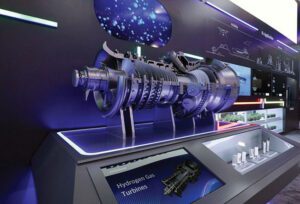
Marking a significant inroad to establish a South Korean foothold in the world’s gas turbine technology market, heavy industrial company Doosan Enerbility this summer began commercial operation of its first
-
 Gas
GasCould SCR Catalyst Technology Adoption Be a Roadmap for Power Plants Seeking Economical and Efficient CO2 Point-Source Solutions?
As the quest to develop a net-zero carbon emissions electricity grid marches on, global entities like the International Energy Agency (IEA) increasingly point to a big role for carbon capture, utilization, and storage (CCUS). The IEA goes so far as to say reaching net-zero will be nearly impossible without CCUS. Proposed governmental greenhouse gas emissions […]
-
 Legal & Regulatory
EPA Projects Final ‘Good Neighbor Plan’ Will Result in 14 GW of Coal Retirements
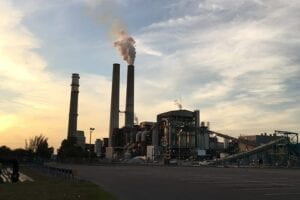
The Environmental Protection Agency (EPA) on March 15 issued the final “Good Neighbor Plan,” its latest iteration of the Cross-State Air Pollution Rule (CSAPR) that could require coal, oil, or gas steam power plants in 22 states to reduce their nitrogen oxide (NOx) emissions levels by 50% by 2027 compared to the 2021 ozone season. […]
-
 Power
PowerGE Releases New Option to Cut Emissions on Its Mobile Gas Turbines
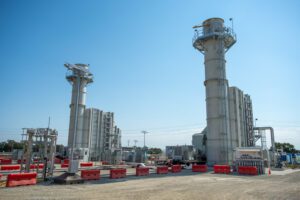
GE Gas Power announced on Dec. 6 that it has deployed an “innovative technical solution” on four TM2500 aeroderivative gas turbines at the California Department of Water Resources’ (DWR’s) sites in Yuba City and Roseville, California (Figure 1). The solution reportedly reduced nitrogen oxide (NOx) and carbon monoxide (CO) emissions by more than 90%, surpassing […]
-
 Power
PowerNew Study Finds Electrification Reduces Emissions and Improves Air Quality
A group of researchers found that “Adopting electric end-use technologies instead of fossil-fueled alternatives, known as electrification, is an important economy-wide decarbonization strategy that also reduces criteria pollutant emissions and improves air quality.” Findings from the study conducted by nine researchers—four from EPRI, four from Ramboll, and one from the Oak Ridge National Laboratory—were published […]
-
 Legal & Regulatory
Supreme Court Limits EPA Authority to Regulate Power Plant Emissions
The U.S. Supreme Court has curbed the Environmental Protection Agency’s (EPA’s) options for limiting emissions of greenhouse gases (GHG) from power plants, an important environmental decision that could impact the federal government’s authority to enforce other regulations. The court in a 6-3 vote, with conservatives in the majority, on June 30 said the EPA does […]
-
 Legal & Regulatory
EPA Proposes Tighter Controls on NOx Emissions from Power Plants, Industrial Sources
A sweeping new proposed rule published in the Federal Register by the Environmental Protection Agency (EPA) on April 6 establishes new nitrogen oxide (NOx) emissions budgets that will require fossil fuel–fired power plants in 25 states to participate in an allowance-based ozone season trading program starting in 2023. The proposal, which builds on the agency’s […]
-
 Gas
GasSCR Design Considerations: Retrofit Challenges and Ratcheting Emissions Level Requirements
Selective catalytic reduction (SCR) projects often focus on the final NOx emissions levels achieved, but a successful project is about much more than that. Facility owners must consider the complete scope associated with an SCR installation, from supply chain issues and ultra-low NOx emissions levels to customization requirements associated with a given application’s pressure drop […]
-
 News
NewsEPA Finalizes Rule to Curb Cross-State Pollution
The U.S. Environmental Protection Agency (EPA) has issued an update and finalized a pollution rule that will require reductions in ozone emissions from power plants in 12 states this year. The update to the Cross-State Air Pollution Rule (CSAPR), issued March 15, is designed to curb emissions of nitrogen oxide (NOx)—primarily from coal-fired power plants—ahead […]
-
 Hydrogen
Siemens’ Roadmap to 100% Hydrogen Gas Turbines
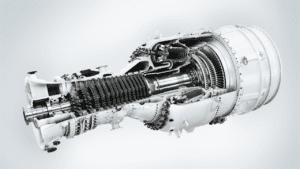
Aligning with a target set by European industry association EUTurbines, Siemens Gas and Power in January 2019 rolled out an ambitious roadmap to ramp up the hydrogen capability in all its gas turbine models to
-
 News
NewsEPA to Withdraw Federal Regional Haze Plan for Utah Based on New Analysis
Citing new technical information gleaned from a more modern modeling analysis, the Environmental Protection Agency (EPA) has proposed to withdraw a federal implementation plan (FIP) to control regional haze from four PacifiCorp coal-fired units in Utah and allow the state to revert to conditions set out in a 2015-submitted state implementation plan (SIP). The agency’s […]
-
 News
NewsAnsaldo, Equinor Partner to Validate 100% Hydrogen Gas Turbine
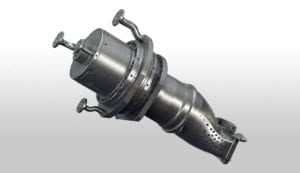
Italian turbine maker Ansaldo Energia and carbon capture specialist Equinor are collaborating on the validation of a 100% hydrogen gas turbine combustor. Under an agreement announced on Oct. 24, Equinor (formerly Statoil) will co-fund tests that could show Ansaldo’s GT36 H-class gas turbine combustor can be operated purely with hydrogen. “The purpose of this collaboration […]
-
 O&M
O&MCombustion Optimization to Improve Heat Rate and Lower NOx
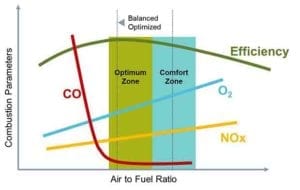
Power plant operators are always looking for ways to boost performance. A combustion optimizer designed to improve efficiency and lower emissions could help. It supports more flexible operation of boilers by
-
 News
NewsVistra May Close 2 GW of Illinois Coal Power By Year’s End
Vistra Energy will shutter four coal-fired power plants—a total 2 GW—as required by Illinois’ recently revised Multi-Pollutant Standard (MPS) rule, but CEO Curtis Morgan noted the move was “inevitable” due to the changing regulatory environment and unfavorable economic conditions in the MISO market. The company on Aug. 21 said it will close the 54-year-old 915-MW […]
-
News
EPA’s Final Regional Haze Guidance Highlights State Discretion, Flexibility
New guidance issued by the Environmental Protection Agency (EPA) on Aug. 20 to help states prepare for the second implementation period of the federal regional haze program puts emphasis on “discretion and flexibilities” they can use to comply with long-standing mandates to protect visibility in federal areas. While it is not binding, the EPA’s […]
-
 History
A Brief History of GE Gas Turbines
July marks two important milestones that set gas-fired generation on its course to becoming a dominant form of power generation: commercial operation of the world’s first industrial gas turbine in Neuchâtel, Switzerland, in 1939, and commercial operation of the first gas turbine in the U.S. used to generate electric power—a 3.5-MW General Electric (GE) unit […]
-
 News
NewsPower Plant Emissions Down Substantially in U.S. Since 1990
Power plant SO2 and NOx emissions have decreased 92% and 84%, respectively, since Congress passed major amendments to the Clean Air Act in 1990. Meanwhile, mercury air emissions from power plants have decreased 90% since 2000, as federal limits on mercury and other hazardous air pollutants from coal-fired power plants went into effect in 2015. […]
-
 Gas
GasThe POWER Interview: GE Unleashing a Hydrogen Gas Power Future
Since the 1940s, when General Electric (GE), launched its gas turbine operations, the company has pioneered and commercialized a lengthy list of gas turbine technologies, large and small. As the decarbonization movement gains pace and more renewables flood the landscape, the company’s gas turbines have taken on new crucial roles to provide dispatchability and flexibility. […]
-
 News
NewsEPA to Retain Primary NAAQS for Sulfur Dioxide
The Environmental Protection Agency (EPA) will refrain from amending the National Ambient Air Quality Standards (NAAQS) for sulfur dioxide (SO2), retaining a 2010 rule, which it said adequately protects public health. The agency on Feb. 25 said in a notice that a periodically required review of the primary—or health-based—rule concluded no revision was necessary. The […]
-
 Environmental
The Impact of Environmental Regulations on Power Generation
For many years, air pollution control (APC) rules and regulations have governed the design and economics of the world’s power generation fleet. These rules have had a tremendous impact, improving air quality
-
 Coal
CoalIndia’s Power Industry Struggles to Solve Pollution Problems
In a bid to tamp down pollution, India’s government in December 2015 notified the country’s coal generators they would need to meet—for the first time—new emissions limits for nitrogen oxides (NOx), sulfur dioxide (SO2), and mercury, as well as tightened limits for particulate matter (PM) and water consumption. The gazetted notification gave new plants until […]
-
Legal & Regulatory
Eight States Sue EPA, Arguing Ozone Transport Region Decision Is “Unlawful”
Eight northeastern states are again suing the Environmental Protection Agency (EPA) to force the agency to slash emissions of nitrogen oxides (NOx) and volatile organic compounds (VOCs) blowing in from power plants and other sources in nine “upwind” Midwestern and southern states. The Ozone Transport Region, which was established by Congress under Section 184 of […]
-
 Legal & Regulatory
IEA: World’s Power Sector Trails Others in Air Emissions
The world’s power sector last year emitted a third of global sulfur dioxide (SO2) emissions, 14% of nitrogen oxides (NOx), and 5% of total particulate emissions (PM2.5), but those emission values have fallen drastically over the last decade even though coal power generation has seen a surge, the International Energy Agency (IEA) said in a […]
-
Press Releases
Fuel Tech Licenses SNCR Technology to India’s ISGEC Heavy Engineering Ltd.
WARRENVILLE, Ill.–(BUSINESS WIRE)–Fuel Tech, Inc. (NASDAQ: FTEK), a world leader in advanced engineering solutions for the optimization of combustion systems and emissions control in utility and industrial applications, today announced the signing of an exclusive agreement under which Fuel Tech has licensed its Selective Non-Catalytic Reduction (SNCR) technology to ISGEC Heavy Engineering Ltd. (ISGEC), one […]