MATS
-
 Commentary
Trump Administration Moves to Allow Unlimited Pollution from Power Plants
Former EPA employees at the Environmental Protection Network (EPN) strongly oppose the Environmental Protection Agency’s (EPA) proposal to repeal all federal limits on greenhouse gas (GHG) emissions from fossil fuel-fired power plants and to rescind the most recent update to the Mercury and Air Toxics Standards (MATS). These proposals represent a sweeping dismantling of critical […]
-
 Legal & Regulatory
EPA Unleashes Four-Pronged Assault on Fossil Fuel Power Pollution
In an unprecedented move, the U.S. Environmental Protection Agency (EPA) on April 25 simultaneously finalized four major environmental rules covering greenhouse gases (GHG), air toxics, wastewater discharges, and coal combustion residuals from fossil fuel-fired power plants. Among the rules is the EPA’s final Carbon Pollution Standards, which marks the agency’s third attempt to broadly curb […]
-
 Legal & Regulatory
EPA Moves to Significantly Tighten Mercury and Air Toxics Standards
A proposed rule unveiled by the Environmental Protection Agency (EPA) on April 5 could considerably tighten the Mercury and Air Toxics Standards (MATS) for power plants, with specific repercussions for coal- and oil-fired generation. The proposed rule seeks to significantly update the 2012–finalized National Emission Standards for Hazardous Air Pollutants (NESHAP) for Coal- and Oil-Fired […]
-
 Coal
CoalGroup: EPA’s Coordinated Regulatory Assault on Coal Power Could Push Retirements Beyond 86 GW by 2030
The Environmental Protection Agency (EPA) is readying a regulatory sweep targeting more stringent limits on traditional pollutants that could accelerate coal power plant closures. A coal trade group estimates that even without new rules, 86 GW of coal generation is slated to retire by 2030. While the U.S. Supreme Court in June curtailed the EPA’s […]
-
 Coal
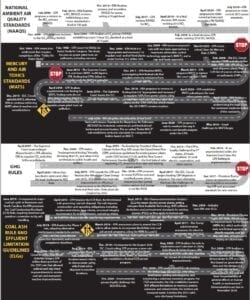
CoalTHE BIG PICTURE: EPA Regulatory Roundup
Over its 50-year history, several rules issued by the U.S. Environmental Protection Agency (EPA) have reshaped the power sector. But for at least a few modern rules, the road has been full of turns. Notes: CAA = Clean Air Act; BSER = best system of emission reduction; CO2 = carbon dioxide; GHG = greenhouse gases; […]
-
 News
NewsEPA Nixes Legal Justification for MATS Rule
The Environmental Protection Agency (EPA) on April 16 withdrew the legal justification for an Obama-era rule that required coal-fired power plants to reduce their emissions of mercury. The Mercury and Air Toxic Standards (MATS) remains in place, but Thursday’s action by the Trump administration could prevent similar regulations from being implemented in the future. EPA […]
-
 News
News[UPDATED] EPA Sets Schedules for Long List of Power Plant Regulatory Actions
The U.S. Environmental Protection Agency (EPA) will act on a spate of power plant rules over the next year, its newly released agenda of regulatory and deregulatory actions shows. The May 23-released “Spring 2019 Agenda of Regulatory and Deregulatory Actions” lists 35 new actions, along with 57 actions that it considers “deregulatory.” The list includes new […]
-
News
Bipartisan Senators Urge EPA to Drop Proposed Changes to Mercury Rule
A bipartisan group of U.S. senators are urging the Environmental Protection Agency (EPA) to withdraw a proposed rule that they said could “lead to the undoing” of the Obama administration’s Mercury and Air Toxics Standards (MATS). In a March 18 letter to newly appointed EPA administrator Andrew Wheeler, the group led by Sens. Lamar Alexander […]
-
 News
NewsAndrew Wheeler Confirmed as EPA Administrator
The Senate on February 28 officially confirmed Andrew Wheeler to be administrator at the Environmental Protection Agency (EPA) on a 52–47 vote, mostly along party lines. The nomination of Wheeler, a former coal lobbyist, was controversial, with many lawmakers and environmentalists criticizing his ties to the coal industry. Wheeler has held the role in an acting […]
-
 News
NewsClean Air Act Issues Congress Could Grapple With in New Session
While the Republican-led U.S. House and Senate in the 115th Congress was mainly focused on reviewing, for modification or repeal, several environmental rules issued under the Clean Air Act (CAA), the new Democrat majority in the House could focus on a slew of different measures, a new report from the Congressional Research Service (CRS) suggests. […]
-
News
EPA: Mercury Rules for Coal, Oil Power Units Not ‘Appropriate and Necessary’
Because compliance costs to coal- and oil-fired power plants for the Mercury and Air Toxics Standards (MATS) far exceed quantifiable benefits to regulating hazardous air pollutant (HAP) emissions, the Trump administration has proposed it is not “appropriate and necessary” to regulate HAP emissions from power plants under Section 112 of the Clean Air Act (CAA), […]
-
 Environmental
The Impact of Environmental Regulations on Power Generation
For many years, air pollution control (APC) rules and regulations have governed the design and economics of the world’s power generation fleet. These rules have had a tremendous impact, improving air quality
-
 Renewables
How Did MATS Affect U.S. Coal Generation?
Industry aggressively fought the Mercury and Air Toxics Standards (MATS) when the Obama administration proposed it in 2011 and finalized it in February 2012, warning it would precipitate the closure of a swathe of coal capacity nationwide. Six years later, the rule appears to have had a sizable impact on the power sector, but not […]
-
Legal & Regulatory
EPA Advances Proposed Changes to Mercury Rule
The Environmental Protection Agency (EPA) confirmed it has submitted proposed changes to the Mercury and Air Toxics Standards (MATS) to the White House for review, despite urging by the industry to let the rule stand. EPA spokesperson John Konkus told POWERon October 2 that the agency does not intend to withdraw the existing MATS. It […]
-
 Legal & Regulatory
THE BIG PICTURE: Trump’s Regulatory Targets
President Trump campaigned on a promise to reduce regulation and control regulatory costs. One of his first actions after taking office was to issue an executive order calling for the elimination of two existing regulations for every one new regulation issued. Toward that end, the Trump administration has acted or sought to reverse more than […]
-
 Legal & Regulatory
Dominion Will Restart Virginia Coal Units After DOE Emergency Order
The U.S. Department of Energy (DOE) said PJM can restart two coal-fired units at Dominion Energy’s Yorktown, Va., power plant, two months after the aging units were shut down because they could not meet federal emissions standards. The emergency order from the DOE, issued June 16, allows the units to run during the hot summer […]
-
 Legal & Regulatory
D.C. Circuit Halts Clean Power Plan, Mercury Rule Litigation
In two separate actions over the past 24 hours, the D.C. Circuit granted the Environmental Protection Agency’s (EPA’s) request to suspend cases challenging the Clean Power Plan and the Mercury and Air Toxics Standards (MATS). The orders are the latest in a series of similar actions over the past month by the D.C. Circuit that […]
-
 Legal & Regulatory
Trump’s EPA Signals Changes for Power Plant Mercury Rule
The Trump administration is “closely” reviewing the Environmental Protection Agency’s (EPA’s) final cost consideration finding for its Mercury and Air Toxics Standards (MATS) to determine whether it should reconsider the rule or some part of it, it said in an April 18 federal court filing. The EPA filed a motion with the D.C. Circuit urging […]
-
 Legal & Regulatory
DOE Issues First-Ever Emergency Order to Keep Open a Unit That Is Noncompliant with MATS
The Department of Energy (DOE) issued an unprecedented emergency order on April 14 to keep open a power plant that had been slated for shutdown under the Mercury and Air Toxics Standards (MATS) in a bid to secure electric reliability. The DOE’s order was issued under the Federal Power Act Section 202(c). It inaugurates the […]
-
Press Releases
Fuel Tech Announces New Marketing and Supply Agreements for Boiler Cleaning and Mercury Control Technologies
WARRENVILLE, Ill.–(BUSINESS WIRE)–Fuel Tech, Inc. (NASDAQ:FTEK), a world leader in advanced engineering solutions for the optimization of combustion systems and emissions control in utility and industrial applications, today announced it has entered into separate marketing and supply agreements with Redox Solutions and PowerPlus Cleaning Systems. These agreements allow the Company to serve as an exclusive […]
-
 Legal & Regulatory
Supreme Court Leaves Revised MATS in Place for Now
The Environmental Protection Agency’s (EPA’s) controversial Mercury and Air Toxics Standards (MATS) survived another day as the U.S. Supreme Court on June 13 declined to review the D.C. Circuit’s decision to leave the rule in place while the EPA revises it to comply with a 2015 Supreme Court ruling. The 2015 decision sent MATS back […]
-
Legal & Regulatory
[UPDATED] EPA Stands Ground on MATS with Final Cost Consideration
Public benefits offered by the Mercury and Air Toxics Standards (MATS) far outweigh the costs, the Environmental Protection Agency (EPA) said as it released a review of the 2012-finalized rule’s cost implications. The final cost consideration—released just days before power plants that received a one-year extension must come into compliance with the rule—was prompted by […]
-
Coal
Coal Refuse Emissions Bill Passes House, Garners Veto Threat
The U.S. House of Representatives has passed, with bipartisan support, a bill that slackens emissions limits for power plants that burn coal refuse. The Satisfying Energy Needs and Saving the Environment (SENSE) Act passed the House with a 231–183 vote on March 15. However, the White House has said it strongly opposes the bill (H.R. […]
-
 Coal
CoalEIA: 13.7 GW of Coal Capacity Was Retired in 2015
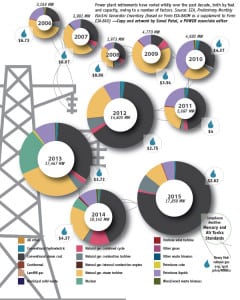
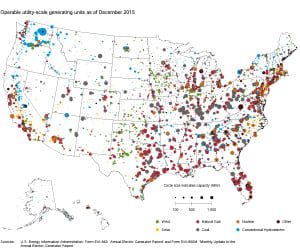
Of nearly 18 GW of U.S. generating capacity permanently shuttered in 2015, 77% was conventional steam coal–fired. About 30% of that 13.7 GW in coal capacity was retired in April 2015, when the Environmental Protection Agency’s (EPA’s) Mercury and Air Toxics Standards (MATS) rule went into effect, said the Energy Information Administration (EIA) on March […]
-
 Legal & Regulatory
Chief Justice Roberts Rejects Bid to Suspend MATS Rule
U.S. Supreme Court Chief Justice John Roberts rejected the plea of 20 states to stay the Environmental Protection Agency’s (EPA’s) Mercury and Air Toxics Standards (MATS) rule while the agency works to comply with a previous ruling. Michigan Attorney General Bill Schuette had requested the stay to pause any further action to implement the rule […]
-
Legal & Regulatory
Twenty States Call on Supreme Court to Stay EPA Mercury Rule
Rallied by the Supreme Court’s unprecedented stay of the Environmental Protection Agency’s (EPA) Clean Power Plan, a coalition of 20 states has asked the high court to stay another disputed agency rule: the Mercury and Air Toxics Standards (MATS). The states are: Alabama, Alaska, Arizona, Arkansas, Idaho, Iowa, Kansas, Kentucky, Michigan, Mississippi, Missouri, Nebraska, North […]
-
 Legal & Regulatory
EPA Chief: Clean Power Plan to Win on Merits
Despite the unprecedented stay by the Supreme Court, the Environmental Protection Agency’s (EPA’s) Clean Power Plan will withstand legal challenges “based on its merits,” predicted the agency’s head, Gina McCarthy, at the IHS CERAWeek conference in Houston. McCarthy discussed the plan and other recent initiatives to stem greenhouse gas emissions—including recently announced rules to curb […]
-
 Legal & Regulatory
EPA, DOE Experts Upbeat on Regulatory Agenda
The Environmental Protection Agency’s (EPA’s) acting administrator of the Office of Air and Radiation, and the Department of Energy’s (DOE’s) head of clean coal and carbon management gave upbeat assessments of the Obama administration’s regulatory agenda and power sector priorities speaking at the EUEC 2016 conference in San Diego on February 3. Janet McCabe of […]
-
 Legal & Regulatory
D.C. Circuit Leaves MATS Rule In Place as EPA Tackles Cost Consideration
The Mercury and Air Toxics Standards (MATS) will remain in effect as the Environmental Protection Agency (EPA) works on a final cost finding, the U.S. Court of Appeals for the D.C. Circuit ordered on Dec. 15. The court noted in a two-page order that the EPA “has represented that it is on track to issue […]