
commentary
-
 Commentary
Utilities Need Proven Partners, Solutions to Accelerate Digital Transformation
Utilities need to modernize their grid infrastructure but face a unique challenge: change is tricky when the stakes are high. Technology is changing faster than ever, from the latest smartphones and devices to automated tools being introduced across industries to ease workloads. For essential mission-critical services such as electric power, failure is not an option. […]
-
 Interview
The POWER Interview: Harnessing the Energy Potential of American Agriculture
Much of the innovation in the power generation and energy sectors revolves around efficiency, with companies working to ensure a reliable and resilient supply of electricity while also reducing emissions. Those efficiency measures also include technologies to enhance sustainability, including recycling, cleaner fuels, and providing alternative modes of electric power. Companies such as Clean Energy […]
-
 Commentary
Leveraging the Digital Transformation in Solar O&M
We are currently witnessing the most dizzying pace of technological innovation in our lifetimes, if not ever. Our lives are becoming increasingly more digital, cutting out archaic and inefficient processes and saving time and resources in an impressive fashion. COMMENTARY In solar photovoltaic (PV), this digital shift is also occurring, albeit in a less obvious […]
-
 Gas
GasThree Ways Natural Gas Will Bolster Decarbonization Efforts
In the global effort to reduce greenhouse gas emissions, natural gas has emerged as an important but underappreciated energy source to help transition to a lower carbon world. Combining affordability
-
 Commentary
What’s Really Driving the Lithium Crisis in North America
The conversation around lithium demand in the U.S. has been highly focused on surging sales of electric vehicles (EVs), but as we look ahead to the coming years, the real driver will be energy storage systems. COMMENTARY Last year was reported as a record year for battery storage and its rapid growth in the market […]
-
 Hydrogen
U.S. DOE Releases Report for Clean Hydrogen Strategy and Roadmap
The U.S. recently took another important step in implementing a comprehensive strategy to advance the production, processing, delivery, storage, and use of clean hydrogen. The Biden-Harris administration on June 5 released the U.S. National Clean Hydrogen Strategy and Roadmap (Hydrogen Roadmap), which serves as a summary of the current state of U.S. hydrogen production, transport, […]
-
 Commentary
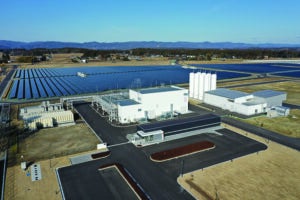
Hydrogen Horizon: The Need for Responsible Production as Demand Rises
As we witness global energy demands becoming progressively complex and decentralized, decarbonization stands as one of the biggest challenges of the current generation. Addressing the issues surrounding the
-
 Commentary
A Tipping Point for America’s Grid
COMMENTARY The American grid is reaching a tipping point. With electric vehicles (EVs) making up 5% of all new vehicle sales last year, there is an urgent need to prepare for the unprecedented strain that will be placed on the U.S. power grid as adoption continues to ramp up—and this is to say nothing of […]
-
 Commentary
Financing the Energy Transition: Forging Ahead in the Wake of Silicon Valley Bank
Considering the unfathomable costs of unabated climate change, it stands to reason that even the most elementary investment thesis for the energy transition merits sincere consideration. And with the enormous sums of public and private capital committed these last few years toward the companies, technologies, and projects that promise to drive climate change mitigation and adaptation, it would appear […]
-
 Solar
SolarSolar Energy Caught in Crosshairs of New Legislation
The solar power industry seems to be caught in the crosshairs of competing legislative agendas. The U.S. Inflation Reduction Act (IRA) created incentives to increase solar capacity via tax credits, but the Uyghur Forced Labor Prevention Act (UFLPA) limits the effectiveness of those credits by restricting the importation of any goods that were mined, produced, […]
-
 Commentary
Clean Energy Innovation, Not Burdensome Red Tape, Is the Answer for America’s Future
A problematic hurdle imposed by the federal government has long plagued businesses looking to deploy their capital into the American economy: permitting. And while a deal last year between Democrats and Republicans to reform overly burdensome federal rules that delay the development of next generation infrastructure could not be reached, there is still hope on the horizon. The prospect […]
-
 Commentary
IRA’s Impact on Power Generation: Clock Is Ticking to Maximize New Tax Credits
The Inflation Reduction Act of 2022 (IRA) includes the largest clean energy incentive effort in U.S. history. It builds on the energy initiatives included in 2009’s American Reinvestment Recovery Act
-
 Interview
The POWER Interview: A Renewed Shift in Energy Investing
Companies involved in energy production continually look to maximize their investments, and today are tasked with navigating increasingly volatile energy markets. These companies must choose where and how to compete as the world transitions to a low-carbon future. Where are the best opportunities for investment? How important is seeking out positions that reduce exposure to […]
-
 Commentary
Investing Green: Driving a Higher ROI through the Green Hydrogen Boom and Wasted Energy
The recently passed Inflation Reduction Act (IRA) is the largest clean energy investment by the federal government in U.S. history. The passing of this $430 billion bill shows that the American government recognizes it is time for businesses to make crucial, sustainable changes in order to combat global warming. This historic bill further demonstrates that […]
-
 Electric Vehicles
Can the Power Grid Handle More EVs?
Only about 1% of the 250 million cars, SUVs, and light-duty trucks on American roads are electric vehicles (EVs). But that’s about to change. While it’s difficult to estimate future sales, an analysis by IHS Markit projects that up to 30% of new car sales could be electric by 2030, rising to up to 45% […]
-
 Point-Counterpoint
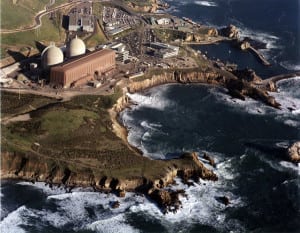
Even California’s Governor Realizes Nuclear Power Is Key to a Clean Energy Future
California in the not-so-distant past was a consistent top 10 state for nuclear power in terms of net generation. It was even known as “a pioneer in harnessing nuclear energy.” Today, though, the state has
-
 Point-Counterpoint
Keeping Diablo Canyon Running Past 2025 Is Not the Answer to California’s Energy Future
The 2018 agreement to close the Diablo Canyon nuclear plant by 2025 is being undermined by California Gov. Gavin Newsom, Sen. Dianne Feinstein, and the pro-nuclear community. They falsely claim the energy
-
 IIOT Power
Putting AI to Work for Better ESG Data
Environment, social, and governance (ESG) reporting has never been easy—and with pressures rising from investors, corporate leaders, and the government, organizations are struggling to meet the needs of all stakeholders. Facility managers must grapple with reaching and documenting progress toward ESG goals that align with the desires of sustainability-minded investors while boards and corporate leaders […]
-
 Commentary
The Law of Resource Availability
The variety of battery-powered, and battery-assisted (hybrid) motor vehicles available today is the widest ever. But the total number of such vehicles that can be built in the West is limited by the availability of the lithium required to manufacture and power the storage batteries necessary for their electric (motor) powertrains and the lack of […]
-
 Commentary
Reaction Swift After Supreme Court Strips EPA’s Authority Over Emissions
Reaction on both sides of the issue was swift after the U.S. Supreme Court in a 6-3 vote said the U.S. Environmental Protection Agency (EPA) should not have the authority to broadly regulate emissions of greenhouse gases (GHG) from the nation’s power plants. The case, West Virginia vs. EPA, could have ramifications for federal government […]
-
 Legal & Regulatory
The Regulatory Structures or Economic Opportunities that are Driving—or Hindering—Building Electrification
Although the electricity generation and transportation sectors account for a far greater share of greenhouse gas emissions than the residential and commercial building sector, policy makers are targeting building electrification as a means for making a significant contribution to economy-wide emission reductions. Federal, state, and local governments are using various policy levers toward this goal, […]
-
 Carbon Capture
Is Carbon Management the Key to Reaching Net Zero?
Iowa-based Summit Carbon Solutions last year announced plans to develop a new carbon capture and storage project across the Midwest. The project seeks to capture carbon dioxide emissions that otherwise would be emitted into the atmosphere from biorefineries, such as ethanol plants, compress the captured carbon dioxide, and transport it through a pipeline to North […]
-
 Commentary
How to Protect the Corporate Bottom Line When Energy Prices Soar
Oil, gas and power prices are increasing on a daily basis. From weather to world events, inflation has skyrocketed and energy prices are soaring. This has created a market volatility that is directly impacting the wallets of consumers and the bottom lines of all size businesses. Yet some companies are having little to no economic […]
-
Point-Counterpoint
Natural Gas Bans Expensive, and Would Impact Electric Grid Reliability
Major cities including San Francisco, Seattle, Denver, and New York have either enacted or proposed measures to ban or discourage the use of natural gas in new homes and buildings, just a few years after
-
 Point-Counterpoint
Electrification Is the Sustainable Choice, but the Transition Is Not Just Technical
Energy powers everything we do. Where and how we create it—and how we store and distribute it—is constantly evolving. One of the most likely evolutions is electrification, which promises to have a huge
-
 Nuclear
How Does Nuclear Power Fit into a Country’s Energy Policy?
Reliable energy forms a fundamental building block of industrial and modern society. When a country examines its energy profile and determines its energy policy, it considers three main pillars: energy equity
-
Renewables
Competition Is More Important Than Ever to Tackle Today’s Energy Challenges
As we commemorate another Earth Day this April, the challenges facing our energy systems and the environment seem more pressing than ever. Americans face continued economic uncertainty following the COVID-19
-
Interview
The POWER Interview: Energy Experts Discuss Electrification
Electrification is changing global energy use, as entities worldwide replace technologies that use fossil fuels such as natural gas, oil, and coal, with processes that electricity as the source of energy. Proponents of electrification tout it as a way to reduce emissions of carbon dioxide (CO2) from the industrial, transportation, building and other sectors, which […]
-
Hydrogen
The Hydrogen Rainbow Is So 2021—It’s Time to Get Over It
When it comes to hydrogen energy, the industry typically differentiates the final product in classes that correspond to the carbon intensity with a focus on “the colors of the rainbow,” such as gray, green, purple, and blue. According to The New York Times, the oil and gas industries are promoting blue hydrogen because (at the […]
-
 Point-Counterpoint
We Need Nuclear Energy as Part of the Energy Transition
Many people who believe we need a “Green New Deal” will say that Earth faces an existential catastrophe that could cut short the lives of young people who are living now. But if nuclear energy is mentioned