
POWER
-
 Coal
CoalCoping with Coal Dust
Plants can no longer sweep coal dust under the rug and ignore the health and safety hazard it presents, because a single spark can cause a dust explosion that could put a plant out of service, perhaps permanently. Managing dust in a power plant begins with good housekeeping, followed by retrofits using properly designed equipment.
-
 O&M
O&MRegional Service Organization Provides Supplemental Maintenance Support
American Electric Power’s Field Services Regional Service Organization augments resident power plant maintenance teams to provide outage support and non-outage balance-of-plant support. The augmentation approach adds significant value to the maintenance process, with the greatest benefits coming in the areas of expertise, cost, productivity, and ownership.
-
News
Abundance of Energy
President Obama’s Jan. 24 State of the Union address did not convince me that the nation should, in his words, “double down” on future clean energy investment. America’s abundance of oil and gas should be the foundation upon which to build a comprehensive national energy policy, not subsidies for government-favored energy technologies and overreaching energy regulations.
-
 O&M
O&MAchieving Sustainable Performance Improvement
Well-organized operations and maintenance (O&M) and outage efforts enable power plants to reduce overall operating costs, improve equipment reliability, and increase long-term productivity. Experienced contractors can help plant staff maximize the success of their outages and O&M endeavors.
-
 Hydro
HydroTHE BIG PICTURE: Dammed Dams
New coal and nuclear power plants aren’t the only ones facing opposition. Several countries that are struggling to alleviate chronic power shortages are facing hurdles as they attempt to build new hydropower plants. Here are some massive projects riddled with setbacks caused by everything from social and environmental protests to funding collapses.
-
O&M
Optimizing Outages with Outage Readiness Analysis
In order to ramp up the success of planned outages at its power plants and lower the risk of unexpected and costly problems, OG&E management has begun using the outage readiness index process. This method identifies and defines the scope of the work needed prior to the commencement of an outage and quantifies the amount of preparedness needed to implement the outage in the most cost-effective manner.
-
 Solar
SolarLarge China Energy Storage Project Begins Operation
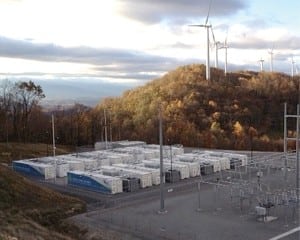
Chinese state entity State Grid Corp. of China (SGCC) and battery maker BYD in January said they had finished construction on what they call “the world’s largest battery energy storage station”—a project in Zhangbei, Hebei Province that combines 100 MW of wind and 40 MW of solar capacity, a smart power transmission system, and 36 MWh of energy storage in arrays “larger than a football field.”
-
 O&M
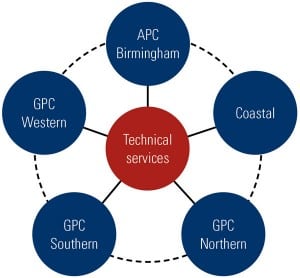
O&MEnhancing Plant Performance Through Formal Outage Planning and Execution
By thoroughly planning their outage strategies well in advance, Southern Company personnel are better able to achieve a number of important objectives, including improving unit economic performance, reducing unplanned maintenance outage hours, completing outages on time and within budget, and ensuring that outage workmanship is of the highest quality.
-
 Gas
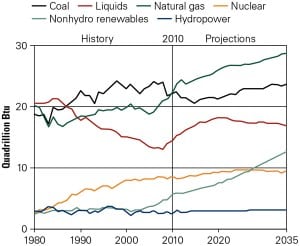
GasMeeting LNG Demand with Floating Liquefaction Facilities
The past two years have seen a dramatic escalation of global natural gas liquefaction capacity.
-
 Coal
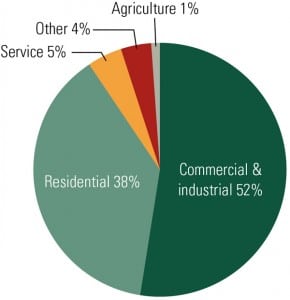
CoalVietnam Works Hard to Power Economic Growth
For the past 15 years, Vietnam has enjoyed enviable gross domestic product increases, averaging 7% annually. That kind of economic growth increases power demand, but financing new capacity remains a challenge. Reaching its ambitious capacity growth goals will require Vietnam to expand its financing and vendor base, attract foreign investment, and ensure future fuel supplies in a region thick with competition for those resources.
-
 Business
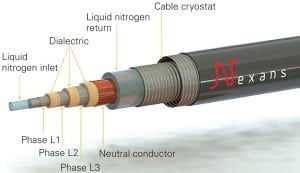
High-Temperature Superconductor Technology Stepped Up
A new project planned by RWE and partners Nexans, the Karlsruhe Institute for Technology (KIT), and Jülich is poised to mark another milestone for high-temperature superconductor (HTS) cable technology, which transports electricity without losses when cooled down to about –200C (–392F).
-
 Business
Ensuring Resource Adequacy in Competitive Electricity Markets
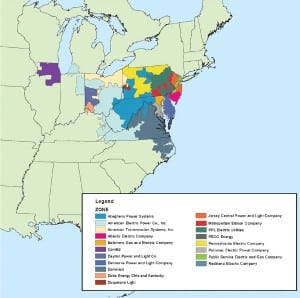
Planning for resource adequacy—something that was relatively simple in the context of vertically integrated utilities—continues to be a difficult issue in competitive electricity markets. Whereas state public utility commissions used to have exclusive authority to determine what generation needed to be built and when it was to be available, this responsibility has been assumed by RTO/ISOs in regions with competitive markets. Each region approaches resource planning differently, and each region faces unique problems.
-
 Gas
GasMHI Ships First Commercial J-Series Turbine
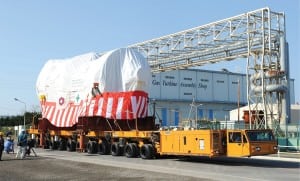
The first unit of Mitsubishi Heavy Industries’ (MHI’s) much-watched J-Series gas turbine, a technology MHI has been testing for a year, was shipped this December from its Takasago Machinery Works in Hyogo Prefecture, Japan, for commercial use at Himeji Unit 2, also in Hyogo, owned by Kansai Electric Power Co.
-
 Smart Grid
EEI Proposes Road Map for Electric Vehicle Integration
Several new models of plug-in electric vehicles will enter the market in 2012, joining the Nissan LEAF and Chevrolet Volt. The Edison Electric Institute has prepared four suggestions to help utilities smoothly handle the introduction of these vehicles to roads and grids.
-
 Wind
WindEuropean Firms Complete Wind-to-Hydrogen Power Plant
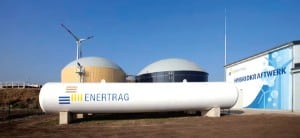
A consortium of European developers, with funding from the German federal government, have completed a power plant in Prenzlau, near Berlin, Germany, that uses excess wind energy to convert water into oxygen and hydrogen in a process called hydrolysis, and then uses hydrogen and biogas to generate power and heat.
-
 Coal
CoalColstrip’s Cure for Mercury
In January 2012 a new mercury control system at the Colstrip power plant in Montana reached its first major milestone: two years of operation with mercury emissions below the state regulatory limit. The plant uses Alstom’s unique Mer-Cure technology to capture up to 90% of the mercury leaving the stack.
-
 News
NewsCost-Cutting Nanoparticle Electrode for Batteries
Using nanoparticles of a copper compound to develop an inexpensive and durable high-powered battery electrode could be the breakthrough solution to the problem of sharp drop-offs in the output of wind and solar systems, scientists at Stanford University say.
-
 O&M
O&MCondenser Backpressure High? Check Vacuum System Sizing
In a power plant, the primary use of vacuum systems is to remove air and other noncondensable gases from the shell side of the condenser in order to maintain design heat transfer and thus design vacuum. If holding condenser vacuum is a persistent problem, one often-overlooked cause is an inadequately sized vacuum system.
-
 Wind
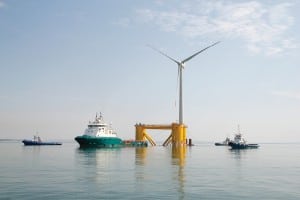
WindNovel Floating Wind Turbine Deployed in the Atlantic
A semi-submersible structure supporting a 2-MW wind turbine was towed nearly 350 kilometers (217.5 miles) to water depths of about 35 meters (114.8 feet) into open Atlantic waters and deployed off the coast of Aguçadoura, Portugal, last November.
-
 O&M
O&MAvoiding Flow-Induced Sympathetic Vibration in Control Valves
Compressible fluid flow through control valves will inevitably cause some form of flow-induced vibration in the fluid system. Identifying the type and cause of the vibration requires detective work. Determining the design changes required in the valve and fluid system to prevent the vibration from occurring requires advanced analytical techniques.
-
 Coal
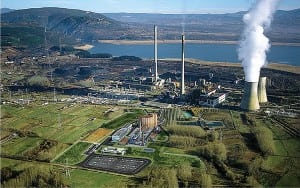
CoalOne Step Forward, Two Steps Back for CCS Projects
Last December, as Spain’s national carbon capture and storage (CCS) research laboratory Fundación Ciudad de la Energía (CIUDEN) began a much-watched testing phase of oxycombustion in its 30-MWth circulating fluidized bed (CFB) boiler in Cubillos del Sil, Vattenfall scrapped the €1.5 billion ($2 billion) Jänschwalde CCS demonstration project that it had planned to build and begin operating by 2015 in the German federal state of Brandenburg.
-
 News
NewsHandheld Fluorometer
Turner Designs has introduced the Opti-Check Handheld Fluorometer for performing system verifications for industrial water process control applications. The Opti-Check is a small, lightweight, highly durable handheld fluorometer that is ideal for quick measurements in the field. Configurable for either PTSA or Fluorescein as well as both dyes, the Opti-Check enables monitoring of either cooling […]
-
 Coal
CoalIndonesia Inaugurates Three Coal Plants
Indonesian state-owned utility Perusahaan Listrik Negara (PLN) formally launched operations at three new coal-fired power plants on Dec. 28.
-
 News
NewsHandheld Vibration Meter
Columbia Research Laboratories’s Model VM-300 is a general purpose vibration measuring instrument designed for periodic routine checks of industrial equipment where portability and ease of use are required. Acceleration, velocity, and displacement measurement modes are provided, along with a number of value-enhancing features. Dual power allows the VM-300 to be powered from its internal battery […]
-
Business
POWER Digest (February 2012)
ANDRITZ to Rebuild Oldest Egyptian Nile Dam. Austrian firm ANDRITZ HYDRO on Dec. 22 won a $138.4 million contract from the Egyptian Ministries of Energy and Water Resources for the supply and installation of four bulb turbines, generators, and the electrical and hydro-mechanical equipment to rebuild the Assiut barrage—the oldest dam in the Egyptian section […]
-
 News
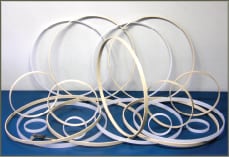
NewsDuctile and Flexible Seal Rings
Milan-based ATO S.r.l. has introduced a series of flexible seal rings made of KetaSpire polyetheretherketone (PEEK) resin, which is made by Solvay Specialty Polymers. KetaSpire KT-820 PEEK provides greater flexibility and elasticity than competitive PEEK grades, the company says. The parts can be folded or twisted in half and then twisted again into three or […]
-
 Gas
GasIndustry Shift in Gas Line Cleaning Practice
The National Fire Protection Association has issued a new standard for gas line cleaning in response to the urgent recommendations prepared by the U.S. Chemical Safety Board.
-
 News
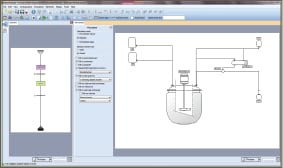
NewsBatch Chemical Reactor Simulation Software
French company ProSim, which provides process simulation and optimization software to the process industries, released a new version of BatchReactor, its software for batch chemical reactors simulation. The new software combines detailed equipment modeling, reaction engineering, and advanced numerical methods to create a state-of-the art simulation environment for chemists and chemical engineers, providing a complete […]
-
 O&M
O&MVirtual Co-Driver to Improve Truck Safety
POWER recently talked with Erika Jakobsson, a project manager at Volvo Technology in Gothenburg, Sweden, who is responsible for developing intelligent trucks in response to European Union (EU) directives.
-
 News
NewsHigh-Performance Air Pressure Regulator Series
The Precision Controls Division of Marsh Bellofram Corp. launched the Type 41 high-performance air pressure regulator series, which is designed to support a variety of demanding industrial and original equipment manufacturer flow-monitoring requirements. Available in two different packages with identical performance characteristics, both with ¼-inch NPT BSPT port size, the Type 41 incorporates a patented […]