POWER
-
Business
POWER Digest (December 2012)
Georgia Power Completes 2,500-MW Coal-to-Gas Conversion. Southern Co. subsidiary Georgia Power on Oct. 28 put online the third and final 840-MW natural gas combined cycle unit at Plant McDonough-Atkinson in Smyrna, Ga. The first gas plant went online in December 2011 and the second on April 26. Bringing the plant’s capacity to 2,500 MW, the […]
-
 Coal
CoalChina Leads the Global Race to Cleaner Coal
Coal used for power generation has been the cornerstone of economic development, social progress, and a higher quality of life around the globe and is now fueling the 21st-century economic miracle rapidly unfolding in China. Meanwhile, China is leading the world in coal-fired plant efficiency and the deployment of clean coal technologies.
-
Smart Grid
Conference Report: 12th ICS Cyber Security Conference
The 12th ICS Cyber Security Conference was held at Old Dominion University’s Virginia Modeling Analysis and Simulation Center (VMASC) October 22–25, 2012. There were approximately 150 attendees from multiple industries, universities, government, and vendors as well as consultants from the U.S., South America, Europe, and Asia.
-
 News
NewsPipe Clamp for Vibration Sensing
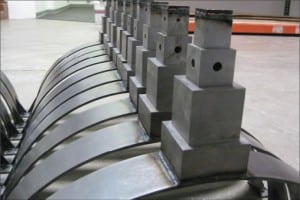
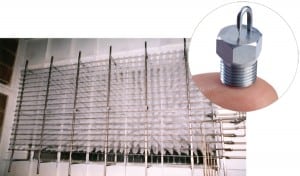
Fauske & Associates LLC (FAI) recently patented a specialized pipe clamp to seat vibration-sensing equipment. A beam attached to the clamp protrudes through the pipe insulation. The beam is partially hollow and vented to promote cooling so that accelerometers can be installed on the tip of the beam outside the high-temperature and/or radiation area for […]
-
 O&M
O&MUsers Return to Fogging on Frame 7FAs
It has been a decade since an R0 compressor blade was liberated on one of the eight Frame 9FA combustion turbines at CLP Power Hong Kong’s Black Point Power Station. This catastrophic failure eventually led to GE’s recommendation that operators severely limit or cease using online water wash (OLWW), inlet fogging, wet compression, and evaporative coolers on F-Class turbines.
-
 News
NewsRotary Peristaltic Pump
The new portable, nonmetallic Flex-I-Liner rotary peristaltic pump from Vanton Pump and Equipment Corp. evacuates drums and totes containing acids, caustics, salts, chlorides, and reagent grade chemicals, without corrosion of the pump or contamination of the fluid. The self-priming design has no seals to leak or valves to clog and can run dry for extended […]
-
Legal & Regulatory
CleanPowerSF: Political Correctness Trumps Energy Policy
In 2002, California enacted legislation authorizing municipalities to establish Community Choice Aggregation (CCA) programs. In September 2012, the San Francisco Board of Supervisors adopted “CleanPowerSF” to be the CCA program available for city residents. Its supporters describe CleanPowerSF as “a 100% renewable energy alternative.” Supervisor David Campos exalted that CleanPowerSF “will stimulate the local economy, create jobs and most importantly secure our independent, clean energy future.”
-
 News
NewsElectric Screen Vibrators
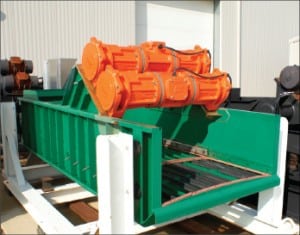
Martin Engineering introduced a new family of electric screen vibrators for regular duty and hazardous environments. Designed to deliver up to 16,500 pounds of centrifugal force for efficient material separation, Martin screen vibrators are built to withstand the rigors of industrial applications and continuous use, and can run 24/7, as needed. With a traditional screen […]
-
 Solar
SolarTOP PLANT: Alamosa Solar Project, San Luis Valley, Colorado
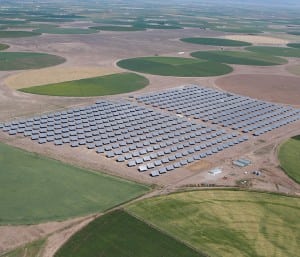
As the largest solar plant of its type in the world, the 30-MW Alamosa Solar Project is currently enjoying its place in the sun. The innovative project consists of 504 concentrating photovoltaic (CPV) solar trackers, each featuring a CPV solar cell panel assembly mounted on a support column. The modular design of the assembly allows the project to easily accommodate future improvements in cell technology.
-
Nuclear
Note on the Oconee Top Plant
Note on the Oconee Top Plant Some of our readers may have been confused by the wording of a press release about our November issue’s nuclear Top Plants, the table of contents blurb about Duke’s Oconee plant, or a sentence in the cover story about that plant. In the interest of brevity, it seems we […]
-
 Waste to Energy
TOP PLANT: Coca-Cola/Mas Energy Trigeneration Facility, Atlanta, Georgia
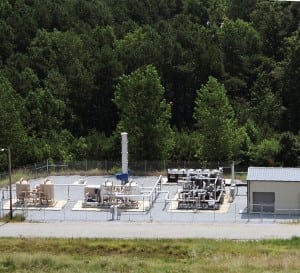
By taking a waste product and converting it into a fuel source, the 6.5-MW Coca-Cola/Mas Energy Facility became the first U.S. operational trigeneration project fueled by landfill gas. Since March, the new system has provided electricity, steam, and chilled water to the adjacent Coca-Cola Syrup Plant, satisfying most of the plant’s energy requirements and reducing its long-term energy costs.
-
Commentary
Navigating a Sea of New Regulations
A convergence of new environmental regulations and practical realities is creating a boatload of challenges for power producers.
-
 Solar
SolarTOP PLANT: Gujarat Solar Park, State of Gujarat, India
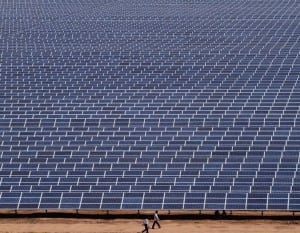
Set up by the Gujarat government, the Gujarat Solar Park is actually a group of solar parks that provide dedicated common infrastructure for photovoltaic-powered projects owned and operated by numerous individual companies. When construction at all the parks is completed by the end of 2013, the Gujarat Solar Park is projected to reach a combined capacity of almost 1,000 MW, which will make it the world’s largest solar energy generation installation.
-
 Solar
SolarTOP PLANT: Stillwater Solar-Geothermal Hybrid Plant, Churchill County, Nevada
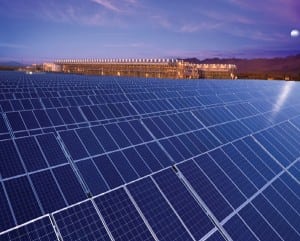
The Stillwater hybrid facility is the world’s first renewable energy project that pairs geothermal power’s baseload generation capacity with solar power’s peak capacity. Inaugurated in May, the 26-MW solar plant is integrated with the adjacent 33-MW geothermal plant, which began operations in 2009, and provides energy to run the geothermal plant’s auxiliary loads.
-
Nuclear
Too Dumb to Meter, Part 6
As the book title Too Dumb to Meter: Follies, Fiascoes, Dead Ends, and Duds on the U.S. Road to Atomic Energy implies, nuclear power has traveled a rough road. In this POWER exclusive, we present the eighth, ninth, and 10th chapters, “Flightless Birds and Flying Elephants,” “The Devil Flies Nukes,” and “Flatulence in Space,” the concluding chapters of the “Up in the Air: Flights of Radioactive Fancy” section.
-
 Hydro
HydroTOP PLANT: Three Gorges Dam, Yangtze River, Hubei Province, China
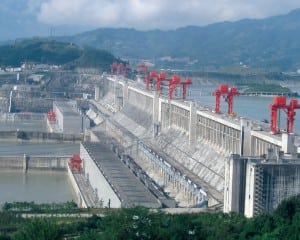
After nine years of construction, installation, and testing, the Three Gorges Dam is now complete. On May 23, 2012, the last main generator finished its final test, increasing the facility’s capacity to 22.5 GW and making it the world’s largest capacity hydroelectric power plant.
-
News
Under Siege
As I write this column on Election Day 2012, the polls are still open and both presidential candidates are predicting victory. The next dozen hours or so will prove only one candidate correct. Regardless of the outcome, wind power remains a loser.
-
 Wind
WindTOP PLANT: Walney Offshore Windfarms, Irish Sea, UK
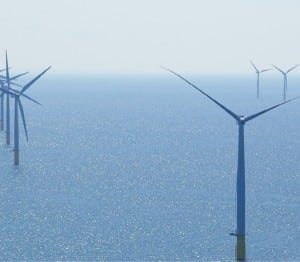
Officially commissioned in February 2012, the two Walney Offshore Windfarms—Walney 1 and Walney 2—together have 102 wind turbines with a total capacity of 367.2 MW. With their combined capacity, the windfarms qualify as one of the world’s largest offshore wind energy facilities and provide clean electricity to approximately 320,000 UK households.
-
 Solar
SolarDistributed Solar Challenges Utilities, Markets, and Regulation
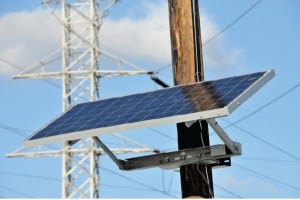
Electricity produced from solar energy is being added to the grid—before and after the meter—in greater amounts each year. The uniqueness of this resource is pushing utilities, developers, users, and regulators to develop new and innovative interconnection rules and to rewrite some old rules that balance the costs and rewards among stakeholders.
-
 Waste to Energy
Vanadium Flow Battery Juices Onion Plant
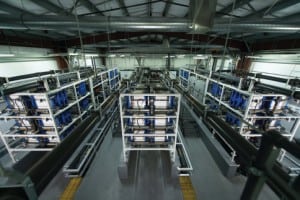
An emerging flow battery technology got a major boost earlier this year when Gills Onions, one of the largest fresh-cut onion processing plants in the world—began operating a 3.6-MWh vanadium redox battery (VRB) energy storage system (ESS).
-
 Hydro
HydroRenewable Energy Development Thrives During China’s 12th Five-Year Plan
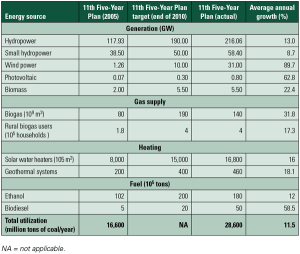
China’s 12th Five-Year Plan calls for expanding the use of renewable energy in all forms throughout the country. From solar and wind to biomass gas and briquettes, China has a true “all of the above” renewable energy policy.
-
Nuclear
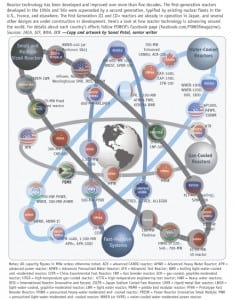
THE BIG PICTURE: Generation IV designs
A “who’s doing what” addendum to "THE BIG PICTURE: Advanced Fission" in our November 2012 issue.
-
Nuclear
THE BIG PICTURE: Small and Medium-Sized Reactors (SMRs)
A “who’s doing what” addendum to "THE BIG PICTURE: Advanced Fission" in our November 2012 issue.
-
Nuclear
THE BIG PICTURE: Fast-Neutron Systems
A “who’s doing what” addendum to "THE BIG PICTURE: Advanced Fission" in our November 2012 issue.
-
Nuclear
THE BIG PICTURE: Gas-Cooled Reactors
A “who’s doing what” addendum to "THE BIG PICTURE: Advanced Fission" in our November 2012 issue.
-
Hydro
Trend Shows Growth of Renewables on Contaminated Lands
Renewable energy projects installed on potentially contaminated lands, landfills, and mine sites have increased by 40% since 2008, a new list released last week by the Environmental Protection Agency (EPA) shows. Solar photovoltaic (PV) systems make up the bulk of about 184.7 MW installed at 60 sites in 25 U.S. states.
-
 Water
WaterResearch Center Dedicated to Power Plant Water Use Opens
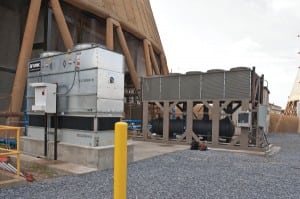
The Electric Power Research Institute and several partners—including the Southern Research Institute, Southern Co. subsidiary Georgia Power, and Southern Research—are testing a new technology that could reduce the amount of water needed for power plant cooling.
-
Business
POWER Digest (November 2012)
Global Companies Take on Nigeria’s Newly Privatized Plants. Nigeria’s $1 billion liquidation of five government-owned thermal and hydropower generation companies—part of a wider privatization effort that includes transmission and distribution assets to encourage investment in the power shortage–stricken country’s electricity sector—has attracted a number of global companies and investors. Eight firms bid a total of […]