
Focus on O&M
-
 Business
Measuring On-Time Completion to Improve Your EHS Audit Program
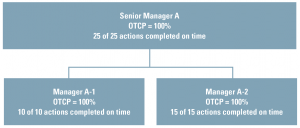
A number of factors promote effective and responsible completion of EHS audit action plans, with the most important being the proper alignment of responsibility and authority for developing and implementing the audit action plan.
-
O&M
Predictive Maintenance That Works
This is the sixth in a series of predictive maintenance (PdM) articles that began in the April 2011 “Focus on O&M” in which the essentials of PdM were introduced. In this occasional segment, we have explored specific PdM techniques, such as motor-current signature analysis, oil analysis and thermographic analysis and their routine use, and ultrasonic and vibration analysis. In this issue we look at lubricating oil wear-particle analysis.
-
 O&M
O&MFly Ash Erosion Control and Prevention
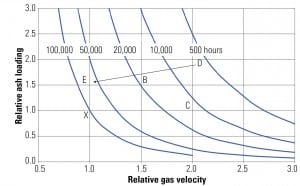
Boiler tube failures (BTFs) are responsible for the largest portion of availability loss (about 4%) in the fossil boiler industry, and approximately 25% of all tube failures are due to fly ash erosion (FAE). An Electric Power Research Institute report indicated that the problem was being managed in U.S. utilities by maintenance activities that were put into effect each time a boiler was taken off-line. The cost of an individual repair was a small fraction of the forced outage cost, and therefore has been considered justified in the past. However, many forced outages continue to be experienced each year due to FAE, and in many cases, these occur at identical locations, indicating that applied solutions relieve, but do not cure, the problem.
-
 Solar
SolarMaintaining Grid Reliability with a High Renewables Portfolio
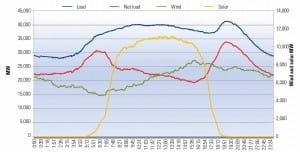
The first problem with high renewable penetration is that wind and solar are not dispatchable.
-
 Water
WaterDesign and Testing of a Water Treatment and ZLD System
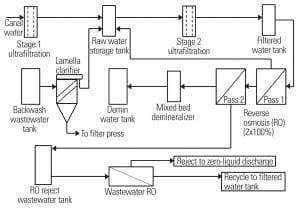
In the following case study, Aquatech International Corp. discusses a water treatment system designed to minimize water usage and waste discharges, both liquid and solid, at a gas-fired combined cycle plant in California.
-
 O&M
O&MBreaking the Cycle of Reactive Maintenance
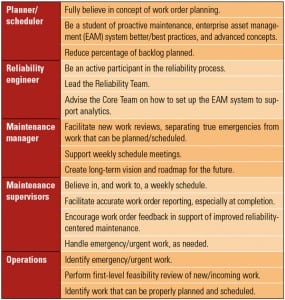
Nobody can schedule unplanned events that will affect power generation. And no one wants to start a day expecting an emergency to occur. But when critical systems fail in the power supply system, it’s time to respond. That’s a given of power plant maintenance.
-
 Business
Safety Measurement: Culture Shaping or Failure Avoidance?
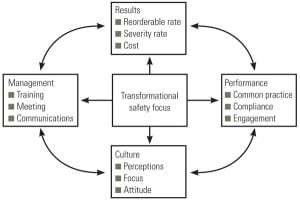
“It is a new month. I want you all to work very hard to fail less than previous months. I’ll be measuring. Failures will not be tolerated. Anyone caught doing so will be disciplined by his or her peers and/or leadership.”
-
 Business
Women in Power Event Provides Networking Opportunities
From success stories to war stories, members of the Women in Power Panel Discussion shared their insights about working as women professionals in the U.S. electric power industry at the 2012 ELECTRIC POWER Conference in Baltimore on May 16. The gathering featured lively exchanges between panelists and a large number of attendees (Figure 4). The panel discussion was organized by co-chairs Angela Neville, JD, senior editor of POWER, and Colleen Campbell, business development director at CH2M HILL.
-
Hydro
FERC Rule 1000: What Does It Mean?
The Federal Energy Regulatory Commission (FERC) has the responsibility for ensuring just and reasonable rates and preventing undue discrimination by public utility transmission providers. Last year FERC defined a new framework for public utilities and regional transmission organizations planning new transmission networks. The framework is provided in Order No. 1000—Transmission Planning and Allocation by Transmission Owning and Operating Public Utilities. The Final Rule was issued on July 21, 2011, and reaffirmed by Order No. 1000-A on May 17, 2012.
-
 Coal
CoalSafety Implications of Coal and Biomass Fuel Mixes
Practically everyone would agree that the energy policy of the U.S. is in a great state of flux. Not since the introduction of commercial nuclear power some five decades ago has our country come to such an energy crossroads. No matter what your political ideology, no one can refute that conventional coal-fired power plants are being paralyzed by recent and potential U.S. Environmental Protection Agency (EPA) regulations designed to cut the nation’s reliance on coal.
-
 O&M
O&MImproving Slurry Knife Gate Valves in FGD Applications
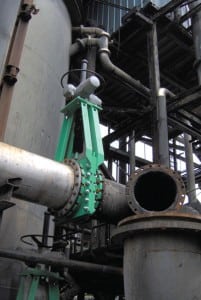
The primary considerations in slurry valve selection are reliability in function and design, abrasion resistance, and ease of maintenance. In addition, valves with a straight-through, unobstructed flow minimize the effect of abrasion and therefore reduce the need for maintenance.
-
 Gas
GasThe Quest at CERAWeek 2012
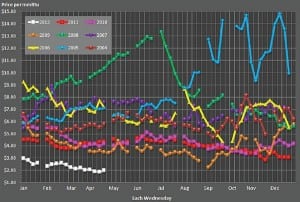
In March, Cambridge Energy Research Associates hosted its 30th annual CERAWeek, a conference that is renowned for high-profile attendees from around the world.
-
 O&M
O&MCombustible Dust Management Training: Rely on Best Practices, Not Shifting Regulatory Winds
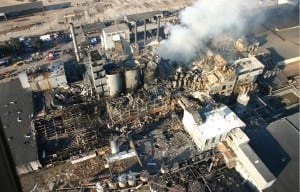
None of you reading this magazine needs an article—or new governmental regulations—to tell you that flash fires and explosions involving coal dust can cause catastrophic incidents, fatalities, facility damage, and financial consequences.
-
 Coal
CoalPartnership Develops Innovative CCP Project
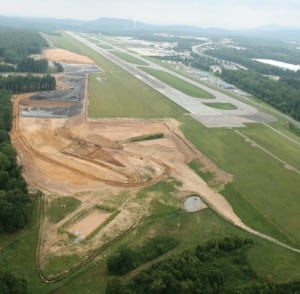
In 2009, the North Carolina Asheville Regional Airport Authority (Airport), with partners Progress Energy Carolinas Inc. and Charah Inc., began development of the Westside Development Fill Project (Westside Project), a long-term infrastructure strategy located in the southwest quadrant of the Airport’s property. The project included phased construction of a developable pad for general aviation and commercial use, a new taxiway running parallel to the existing runway, and a major expansion of the existing runway.
-
 O&M
O&MWhat Are the Safety Rules for Anyway?
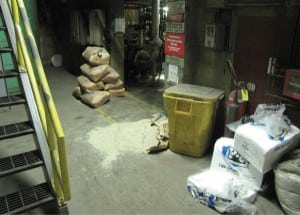
Following safety rules is the foundation to eliminating injuries. Commonly, a safety presenter will say that safety rules are “written in blood.” At one time, such dramatic statements were a way to get attention and illustrated the seriousness of following safety rules. Today, more highly educated workers demand less drama and more facts.
-
 O&M
O&MPredictive Maintenance That Works
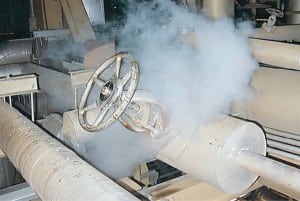
This is the fifth in a series of predictive maintenance (PdM) articles that began in the April 2011 “Focus on O&M” in which the essentials of PdM were introduced. In the May and June 2011 issues, we explored specific PdM techniques, such as motor-current signature analysis and oil analysis. In the November 2011 issue, we introduced the value of thermographic analysis and its routine use. This installment focuses on ultrasonic and vibration analysis.
-
 O&M
O&MSafe Work Practices in Confined Spaces at Power Plants
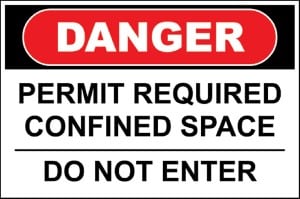
Confined space work is often considered to be one of the most dangerous types of work performed in power generation settings. Confined spaces may contain hazardous atmospheres, they can trap entrants, and they generally can increase the hazards associated with otherwise common tasks. When the risks are not recognized, workers all too often regard incidents as surprises, but the hazards of working in confined space can be predicted, monitored, and mitigated. These “accidents” are caused by unsafe conditions, unsafe acts, or both; all accidents are preventable.
-
 O&M
O&MPreventing Downtime by Picking the Best Switch Technology
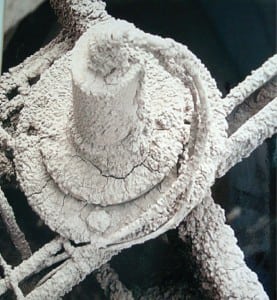
Common fuel-handling problems in the power industry often result in production downtime, costing the owner perhaps up to $200,000 per hour. There are many areas within a coal-fired power plant where mishaps can cause stoppage of material flow. Here we discuss how to select the best switch technology to reduce the possibility of coal flow stoppages.
-
 O&M
O&M7EA Conversion Saves Time and Money
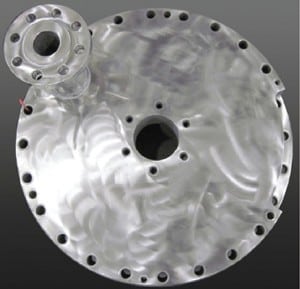
ProEnergy Services (PES) was recently contracted to install six Frame 7 DLN1.0 dual-fuel assemblies in Venezuela. The problem: The lead time to purchase the conversion hardware from the original equipment manufacturer (OEM) would not meet the customer’s schedule. The only option was for PES to convert the fuel nozzles removed from a gas-only unit to a dual-fuel configuration, a process that had never before been attempted.
-
O&M
Inlet Fogging Boosts Power in High-Humidity Environments
Turbine inlet fogging has been in use now for 20 years in combustion turbine plants. It is an obvious choice for boosting power in hot, dry areas such as Nevada or Arizona, where plants have long used fogging, but it has also proven effective in many other climates.
-
 O&M
O&MUser Group Profile: Philippine Coal Plant Users’ Group
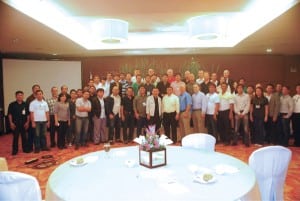
The Philippine Coal Plant Users’ Group (PCPUG), the leading nonprofit organization involved in generating electricity in the Philippines, recently held a conference introducing its mission and vision.
-
 Coal
CoalPlant of the Year Trophy Presented
The POWER Plant of the Year for 2011 was Kansas City Power & Light’s 850-MW Iatan 2, located about 30 miles northwest of Kansas City.
-
 Gas
GasIndustry Shift in Gas Line Cleaning Practice
The National Fire Protection Association has issued a new standard for gas line cleaning in response to the urgent recommendations prepared by the U.S. Chemical Safety Board.
-
 O&M
O&MVirtual Co-Driver to Improve Truck Safety
POWER recently talked with Erika Jakobsson, a project manager at Volvo Technology in Gothenburg, Sweden, who is responsible for developing intelligent trucks in response to European Union (EU) directives.
-
 Business
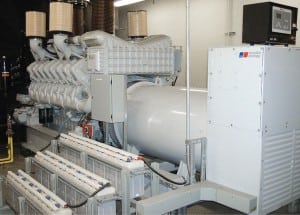
Data Center’s Standby Power System Is “Money in the Bank”
Synovus relies on emergency standby generator sets to prevent any loss of services or data in the event of a utility outage.
-
 O&M
O&MLevel Switches Keep Electrostatic Precipitators Online
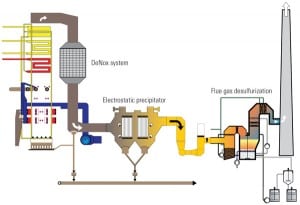
Measuring the level of dust and fly ash collected in electrostatic precipitators (ESPs) is a very difficult technical problem. At one utility, level switches were so unreliable that operators could not trust their readings because failures were so frequent. When a switch did fail, the precipitator would often clog up, costing the utility up to $100,000 in downtime and repair costs.
-
 Coal
CoalAsian Sub-Bituminous Coal Users’ Group Formed
Over the past 11 years, the Powder River Basin Coal Users’ Group (PRBCUG) has grown to become the voice of North American generating companies that are dedicated to the safe and efficient use of PRB coal. POWER, the group’s media sponsor, has reported on the PRBCUG’s annual meetings, which are colocated with the ELECTRIC POWER Conference & Exhibition each year. POWER also reports annually on the group’s coal plant of the year award. For 2011, in the large plant category the award went to Kansas City Power & Light’s Iatan Unit 2 (see our August 2011 issue); the small plant category winner, Muscatine Power & Water, is profiled in this issue, beginning on page 56.
-
 O&M
O&MMarmaduke Award Trophy Presented
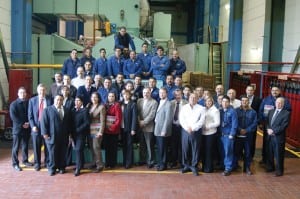
The 2011 Marmaduke Award winner was CTG Universidad, a two-unit combustion turbine plant built in the early 1970s in Monterrey, Mexico. The award was made to the plant in recognition of its upgrade of one 14-MW unit to operate as a synchronous condenser, thus relaxing power restrictions caused by a lack of sufficient reactive power production in the north of the city. More reactive power production by this urban plant also allows delivery of more power produced by efficient combined cycle plants located outside the city, because it reduces the amount of reactive power that must be moved over transmission lines.
-
News
Correction
In “Siemens Releases ‘ShapingPower’ Option for Renewables Integration” (December 2011), the Figure 3 callouts for wind and solar were reversed. POWER regrets the error. A corrected version can be found in the online version of the article. â–
-
News
Condenser Life Cycle Seminar
The November issue of POWER featured a special section titled “Condenser Life Cycle.” That set of four articles covered topics including condenser performance, operation and maintenance (O&M), failure mechanisms, and retubing—topics you will surely find useful at some time in your career. The authors of those four articles work for companies that are part of […]