
Latest
-
O&M
Competitive Maintenance Strategies, Part II
Nearly every combined-cycle operator recognizes that cycling reduces the life expectancy of hot-gas-path components in combustion turbines. Often overlooked, however, is that the same phenomenon affects the heat-recovery steam generator (HRSG).
-
Legal & Regulatory
Gridlock Continues for Grid Policy
Early last year, there were promising signs that electric transmission line construction would be facilitated by the convergence of the new administration’s emphasis on developing remote renewable generation resources, proposed legislative provisions expanding federal siting authority, and the granting by the Federal Energy Regulatory Commission (FERC) of generous cost-of-service returns on such investments. However, the stars did not align for transmission policy in 2009 as had been hoped, and the forecast is cloudy.
-
 Wind
WindWind Destroyed and Now Powers Greensburg, Kansas
Greensburg was destroyed by an EF5 tornado on May 4, 2007. Instead of abandoning the Kansas town, the community quickly embraced the task of rebuilding it from the ground up, maximizing the use of renewable energy sources and energy efficient building techniques. Rebuilding continues, but the future of Greensburg has never been stronger.
-
 Coal
CoalOPG Charts Move from Coal to Biomass
In response to Ontario’s provincial regulatory mandates to phase out the use of coal by the end of 2014, Ontario Power Generation (OPG) is exploring its capability to employ biomass feedstocks to displace coal in some units within the OPG thermal fleet. The primary fuels employed during the respective trials at its Nanticoke and Atikokan Generating Stations have been agricultural by-products and commercial grade wood pellets. The Canadian utility has learned valuable lessons about fuel supply and logistics, and the technical challenges of safely handling and firing high levels of biomass.
-
 Nuclear
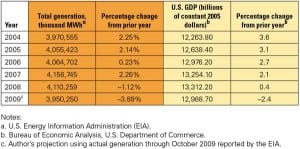
Benchmarking Nuclear Plant Staffing
The EUCG Nuclear Committee has collected benchmarking data of U.S. nuclear plant staffing for many years. A summary of this highly desirable data was gleaned from EUCG databases and is now, for the first time, made public through an exclusive agreement with POWER.
-
 O&M
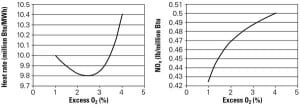
O&MA Primer on Optimizing Fleet Operations
The power industry needs a straightforward definition of "fleet optimization" and a game plan to achieve the promised economic gains of optimizing. This need has become more urgent because integrating nondispatchable renewable resources requires more complex optimization strategies. The bottom-up approach presented here applies well-understood optimization principles and techniques that will help power producers minimize their fleetwide cost of production, independent of the technologies used to generate electricity.
-
 O&M
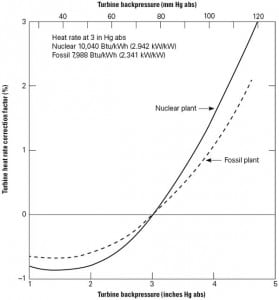
O&MEnhanced Condenser Tube Designs Improve Plant Performance
Enhanced condenser tube designs can significantly improve the heat rate and performance of fossil and nuclear plants. Using the optimum number of tubes and replacement tube sheets will cost more than simply replacing plain tubes. However, the investment’s simple payback is measured in only weeks, which builds a strong case for using an enhanced tube design as part of your next condenser overhaul.
-
 Water
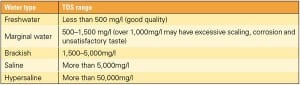
WaterSub-Sea Water Treatment System Provides Reliable Supply for the Huarun Power Plant
River deltas experience extreme seasonal changes in water quality that perplex conventional water treatment systems. Industrial development in China, including new power plants, has spurred the development of desalination processes that have tamed these brackish water sources to provide a virtually unlimited supply of boiler-quality water.
-
 Smart Grid
Smart Grid: On the Money
How much will a smart grid cost? It’s a question that has gained importance in light of massive cost overruns for one highly touted U.S. project.
-
Commentary
Rethinking the Power Industry’s Dash to Gas
During a recent meeting of state utility commissioners, the CEO of a Fortune 500 electric power company said natural gas prices promise reliability but "always break your heart." What breaks my heart is the electric power industry’s ongoing love affair with natural gas. Using natural gas for generating electricity is not the best or highest use for this clean, green, and domestically abundant resource.