
Latest
-
 Solar
SolarMIT Researchers Invent Self-Renewing PV Technology
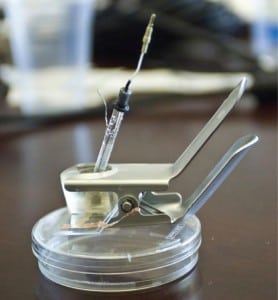
Scientists at the Massachusetts Institute of Technology (MIT) have a created a set of self-assembling molecules that can turn sunlight into power, and which can repeatedly be broken down and reassembled by adding or removing solution. The scientific breakthrough—inspired by a natural process used by plants to renew light-capturing molecules that have been degraded by the sun—could mean that researchers are closer to creating a self-healing photovoltaic (PV) technology that can keep repairing itself to avoid loss in performance.
-
 Gas
GasGE Launches 9.5-MW Engine for Distributed Generation
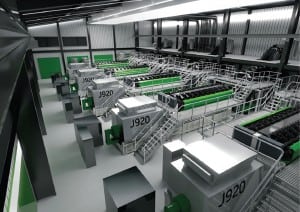
A 9.5-MW gas engine unveiled by GE this October for decentralized, independent power producers in remote, hot, or high-altitude regions features a 48.7% electrical efficiency and promises to reduce lifecycle costs by lowering fuel consumption.
-
 Hydro
HydroUK Cancels Tidal Barrage Plans, Approves Key Nuclear Sites
The UK government in late October shelved plans to build the Severn barrage—a project that would have involved building a 10-mile dam across the mouth of the Severn River—after a two-year-long feasibility study failed to convince ministers to use public funds to build it. The Department of Energy and Climate Change instead gave its long-awaited approval to eight sites for new nuclear reactors, saying that private companies could begin building the country’s new fleet of reactors, provided no public subsidy is involved.
-
Hydro
Massive Energy Storage Facility Planned for Mexico-U.S. Border
Dubai-based energy firm Rubenius in October proposed to build a $4 billion energy storage facility based on sodium sulfur (NaS) technology on a 345-acre site in the Mexican state of Baja California, close to the U.S. border. If it comes to fruition, the facility—dubbed a “mega region energy warehouse” by Mexico’s President Felipe Calderon—will feature 1,000 MW of battery storage and offer “storage space” to energy companies and utilities in both Mexico and the U.S.
-
Smart Grid
How the U.S. Grid’s Unpredictability Increases Its Security
Experts have decried congressional and academic reliance on a mathematical model for understanding complex systems that suggests an attack on a small part of the U.S. power grid could disrupt the entire power system network.
-
Business
POWER Digest (December 2010)
Iberdrola Renovables Starts Up National Wind Turbine Control Center. Iberdrola Renovables, a company that owns 41 operating wind farms (3,900 MW in nameplate capacity) in the U.S., on Sept. 26 began operating its National Control Center (NCC), a facility based in Portland, Ore., that has operational control over some 800,000 inputs from 2,500 wind turbines […]
-
 Wind
WindFinding Fault: Improving Wind Farm Availability
Survey wind turbine manufacturers about how to calculate wind farm availability and you will get countless different definitions and exceptions to the rule.
-
 O&M
O&MKeeping Condensers Clean
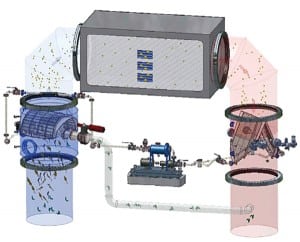
The quality of the cooling water intake and the amount of debris in that water affects the operation and performance of the condenser and therefore the thermal performance of the typical steam plant.
-
 O&M
O&MExpanding the Use of Predictive Maintenance as a Business Strategy
The Linde Group is a world-leading gases and engineering company operating in more than 100 countries. It’s no surprise that the company uses a variety of advanced monitoring techniques and equipment to keep its plants operating reliably. In the U.S. and UK particularly, Linde plants have used online machine condition monitoring for a number of years. At its Shanghai headquarters, Linde has formed a large and impressive remote operations center where it monitors and tracks the process operations of all its major gas plants in China 24 hours a day.
-
Legal & Regulatory
Regulatory Options for Feed-in Tariffs
Feed-in tariffs (FITs) have been used by European countries to foster the growth of renewable generation resources, notably solar. These tariffs generally require electric distribution companies to purchase power produced by a specified class of generators at above-market rates. The object of the tariffs is to encourage development of the favored generation resources by ensuring the existence of a profitable market for their power production.