
Latest
-
 News
NewsPreventing Dust Accumulation on Beams
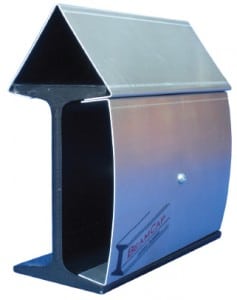
BeamCap’s signature product, the BeamCap, prevents dust accumulation on I-beams, structural steel members, pipes, cable trays, and other difficult-to-clean areas. BeamCap pieces completely enclose the structures, eliminating horizontal surfaces where dust consistently builds up. This eliminates the need for cleaning in hard-to-reach places and greatly reduces the potential for fires and secondary explosions. The aluminum […]
-
 News
NewsRobotic Underwater Debris Remover
Aqua-Vu, a provider of portable underwater viewing systems, introduced the Claw 360, a device designed for the detection and removal of objects in an underwater environment. The Claw 360 incorporates a Sharp 520 color camera that can rotate 360 degrees to scan the environment. Lighting is provided by high-intensity LEDs that rotate with the camera. […]
-
 News
NewsNut, Bolt, and Flange Face Corrosion Protection
Advance Products & Systems’ new Kleerband Flange Protectors and Radolid Protection caps protect bolts, nuts, and flange faces on raised-face or full-face flanges in conditions where extreme corrosion occurs, such as at gas plants, pump stations, and above- and below- ground installations. Kleerband is a patented transparent polymer band with grease injection fittings and a […]
-
Commentary
Shaping America’s Energy Policy
America’s energy and environmental policies have been dysfunctional for decades. Obsessively moving toward “green” has made America weaker and has damaged our economy. During POWER’ s first 100 years (1882–1982), the magazine chronicled the U.S. growing into the strongest industrialized economy in the world. America designed and built products for the world using raw materials and energy from within our own borders. Now we are in a recession and the U.S. Environmental Protection Agency’s (EPA) “War on Coal” continues. Does anyone get the connection? Ever-worsening regulations are killing jobs by the thousands.
-
Coal
U.S. Coal-Fired Power Development: Full Employment for the Lawyers
The EPA began rolling out its long-anticipated power plant regulations this year, causing some utilities to shutter some older coal-fired plants. Other utilities paused, perhaps hoping that a neighbor’s closure decisions would allow continued operation of some of their own older, smaller, less-efficient plants. As the nation sweated through a scorching summer, air conditioners hummed thanks to coal-fired power plants built 50 or more years ago. How many of them will be retired, and over what timeframe?
-
 O&M
O&MEnhanced Capture of Mercury Using Unique Baghouse Filter Media
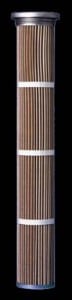
Several states have already instituted mercury emission limits in expectation of tightening mercury emission rules that will require reductions of up to 91%. Coal-fired plants searching for an economical way to meet the new limits may need to look no further than replacing their baghouse filter elements.
-
 Commentary
Not a Clue
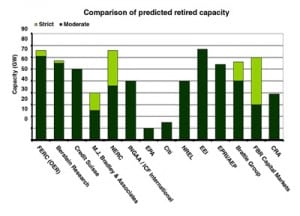
U.S. Environmental Protection Agency (EPA) rules are being processed at a furious pace in 2011. Unexpectedly, the new greenhouse gas and ozone rules were stayed by President Obama. However, it’s the Utility MACT Rule and the Cross-State Air Pollution Rule that leave utilities on unsteady ground. The result has been a number of plant closure announcements that far exceed the magnitude of the coal-fired generation losses predicted by the EPA. The predicted losses vary greatly.
-
Coal
Luminant, AEP to Mothball Coal Units, Implement Derates on CSAPR Compliance Concerns
Dallas-based Luminant, Texas’ largest power generator, on September 9 filed a legal challenge against the Environmental Protection Agency’s (EPA’s) Cross State Air Pollution Rule (CSAPR) but said the newly finalized rule that will require generators to dramatically reduce sulfur dioxide and nitrogen oxide emissions from power plants had forced it to idle two coal-fired units and reduce capacity at three other units. This decision follows a similar decision made by American Electric Power to shutter 6GW of coal-fired plants in June.
-
Commentary
Is Coal a Fuel of the Future?
Few reasonable people can dispute that the U.S. Environmental Protection Agency (EPA) is conducting a war against coal. If you doubt that conclusion, just look at the large number of new regulations affecting coal-fired power plants that have been proposed in rapid-fire succession by the EPA.
-
Commentary
Recent Blackout Highlights Nation’s Rickety Power Grid
Experts say the cascading blackout that put millions of Westerners in the dark in early September was no surprise: Major power outages have more than doubled in the last decade