
Latest
-
News
POWER Digest
Siemens Gets $1 Billion Order to Build Gas Power Plants in Thailand. Siemens on Aug. 17 said it received two orders worth $1 billion from Thailand for the engineering, procurement, and construction (EPC) of combined cycle power plants. The firm will build Chana Block 2 in the province of Songkhla and Wang Noi Block 4 […]
-
 Solar
SolarTHE BIG PICTURE: A Solar Switch
The plummeting cost of photovoltaic (PV) panels—resulting from lower costs for high-grade silicon and advancements in thin-film technology, solar storage, and electronic control technologies—has a slew of firms rethinking concentrating solar power (CSP) projects. Although there is a CSP project pipeline (including both CSP and concentrating PV) of more than 9 GW in the U.S., […]
-
 O&M
O&MJEA Increases Power Output Through CFB Improvements
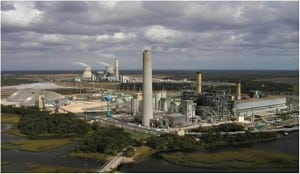
JEA’s Northside Generating Station in Jacksonville, Fla., Units 1 and 2 were built in 1966 and 1972, respectively, although the Unit 2 boiler had not operated since 1983. Both were heavy oil– and natural gas–fired steam units rated at about 300 MW. The utility “repowered” those two units by removing the old boilers and adding new circulating fluidized bed (CFB) boilers (Figure 1) that entered service in 2002. At that time, they were the world’s two largest CFBs, and the plant won POWER’ s Plant of the Year Award.
-
 O&M
O&MApplying Acoustic Pulse Reflectometry in a Geothermal Plant
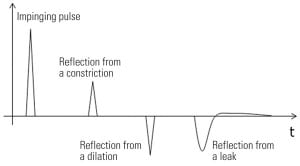
Acoustic pulse reflectometry (APR) is a tube inspection method that has been gradually gaining acceptance as a tool for heat exchanger inspection. Different types of heat exchangers operating in different operating environments have different failure mechanisms, making some of them more suited than others for inspection by APR. Finned tube heat exchangers are a typical example of heat exchangers particularly conducive to APR inspection.
-
Legal & Regulatory
Too Much of a Good Thing Creates Legal Havoc
As last winter’s abundant snowfall in the Pacific Northwest melted, rivers swelled and hydroelectric operators enjoyed substantial increases in generation. That bountiful clean and cheap power generation was a blessing, but it also triggered a host of legal issues.
-
 Coal
CoalTop Plant: Coffeen Energy Center, Montgomery County, Illinois
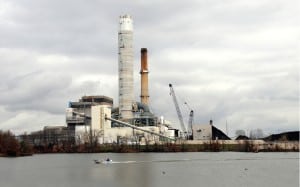
Situated in predominantly rural central Illinois, the 1,000-MW Coffeen Energy Center has installed a number of controls in recent years and achieved significant environmental performance. For example, in 2010 a new scrubber facility was added that reduces SO2 from combustion gases coming from the plant’s two coal-fired boilers. The plant personnel’s continuing commitment to protecting the environment helps to promote a strong relationship between the plant and the local community.
-
 Coal
CoalTop Plant: J.K. Spruce 2, Calaveras Power Station, San Antonio, Texas
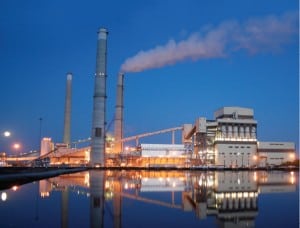
CPS Energy, the largest municipally owned utility in the U.S. providing both natural gas and electric service, implemented an energy plan in 2003 that required energy conservation measures, use of available renewable energy sources such as wind and solar, and additional coal-fired generation. The $1 billion 750-MW Spruce 2 fits into that plan by being one of the cleanest coal-fired plants in the country.
-
 Coal
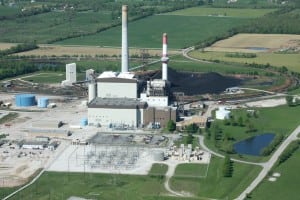
CoalTop Plant: John Twitty Energy Center Unit 2, Springfield, Missouri
Utilities of Springfield elected to add a 300-MW coal-fired plant to its fleet to meet rising demand for electricity. It was the first coal plant constructed by the utility since 1976. An extremely competitive construction market required the utility to adopt new contracting practices to meet a tight project schedule, an approach that proved very successful. The $555 million plant commissioned in January 2011 is expected to cover system growth at least through 2024.
-
 Coal
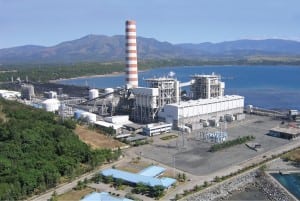
CoalTop Plant: Masinloc Power Plant, Zambales Province, Philippines
In April 2008, AES Philippines purchased the Masinloc coal-fired power plant in Zambales Province in the Luzon region. Originally constructed in 1998 as a two-unit, 600-MW plant, the facility uses coal from a variety of sources in the Pacific Rim. After AES finished overhauling much of its equipment, the expanded 660-MW (gross) plant’s availability increased from 48% to 74%, which enabled net electricity production to jump by 129% by 2010.
-
 Coal
CoalTop Plant: Plum Point Energy Station Mississippi County, Arkansas
The new 665-MW Plum Point Energy Station is energizing the Arkansas Delta, an area that is ready to supplement its farming heritage by promoting new jobs that offer residents a higher standard of living. But first, the plant’s construction team had to overcome a number of significant challenges related to building a facility in the New Madrid fault zone.