
Latest
-
News
NARUC, States Ask Court to Force NRC Action on Yucca Mountain Application
The Yucca Mountain fracas last week became more intense as the National Association of Regulatory Utility Commissioners (NARUC) joined a coalition of state and local governments in a suit against the Nuclear Regulatory Commission (NRC). The petitioners claim the agency is “unreasonably delaying” a decision on the proposed—and now-defunct—permanent spent nuclear fuel repository in Nevada.
-
News
EIA: Coal Power Plunged to Lowest Level in 30 Years in Q1 2011
The share of electricity generated from coal in the U.S. during the first three months of this year was at its lowest first-quarter level in more than three decades—even though the overall total level of generation in the U.S. increased by a little less than 1%, the Energy Information Administration (EIA) reported last week.
-
News
Alberta to Fund In-Situ Coal Gasification Project
Alberta’s provincial government last week signed a final funding agreement for a unique carbon capture and storage (CCS) project that seeks to tap a deep unmineable coalbed and turn the coal into power-generating synthetic gas—or “syngas”—while underground.
-
News
GE-UW Coal Gasification Research Facility Shelved on Federal Energy Policy Uncertainty
Plans have been delayed to build a small-scale coal gasification facility that would have enabled researchers from the University of Wyoming (UW) and GE Energy to understand the conversion of feedstock by gasification into syngas for use in power generation. The delay of at least 18 to 24 months stems from a lack of federal energy policy, Wyoming’s Governor Matt Mead said on Friday.
-
News
DOE to Invest $50M to Boost Domestic Solar Manufacturing
The Department of Energy on Tuesday announced a $50 million investment over two years for the SUNPATH program, an initiative that seeks to help the U.S. reclaim a competitive edge in solar technology manufacturing.
-
News
Fracking Problems
By most estimates, natural gas is likely to become the dominant power generation fuel in the U.S. within perhaps a decade. The rapid growth in natural gas supplies follows advanced drilling techniques that can economically tap large shale gas reserves located deep beneath Earth’s crust. Unfortunately, it only takes one outlaw drilling company to frack it up for the rest of us.
-
 Nuclear
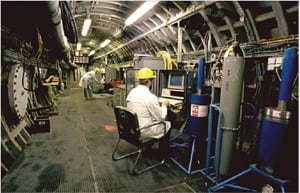
THE BIG PICTURE: Underground Nuclear Waste Disposal
According to the International Atomic Energy Commission, deep disposal in stable geological formations is the only sustainable way to safely manage spent fuel and high-level waste (HLW) from nuclear power reactors. No permanent geological repository has yet been built, but some countries have found a location for a future repository. Others are researching the option…
-
 Smart Grid
Milestones for Flywheel, Lithium Battery Grid-Scale Projects
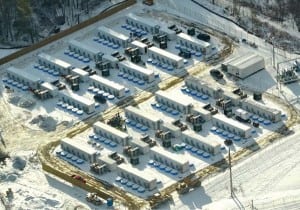
Energy storage developments got a boost as Beacon Power Corp. in June announced that its first flywheel energy storage plant in Stephentown, N.Y., achieved its full 20-MW capacity, and AES Energy Storage said its Los Andes battery storage system in Chile had performed continuously for more than 18 months as a critical reserve unit for the nation’s northern grid.
-
 Gas
GasAlstom Launches Upgraded GT26
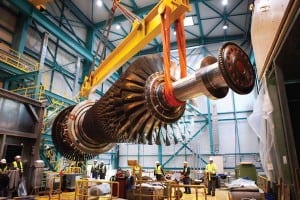
Just as GE Energy, Siemens, and Mitsubishi Heavy Industries (MHI) in May announced gas combustion technology developments—each seeking to push the 60% barrier with new gas turbine designs—Alstom has quietly been upgrading its KA26 combined cycle power plant. (See the July 2011 “Global Monitor” for more information on the GE, Siemens, and MHI turbines.) The firm says that the next generation of the 500-MW power plant, based on the advanced class GT26 gas turbine, features “achievable” efficiencies of over 61%, increased flexibility, and more than 350 MW, which can be delivered in less than 15 minutes to help integrate renewable energy sources (Figure 3).
-
 Coal
CoalLargest CCS Project in Operation
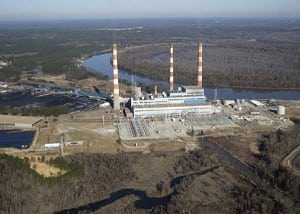
Companies continue to increase the size of carbon capture and sequestration test projects. Mitsubishi Heavy Industries (MHI) has launched operation of what it calls the world’s largest demonstration of carbon capture on a pulverized coal plant.