
Latest
-
 Coal
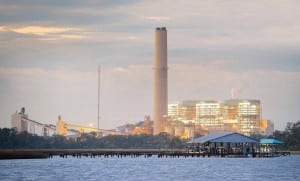
CoalTop Plant: St. Johns River Power Park, Jacksonville, Florida
A recent NOx reduction project added selective catalytic reduction equipment to each of the two 640-MW, mixed coal–fired units at the St. Johns River Power Park. The selection of precisely the right catalyst required extensive long-term testing with “mini” reactors. Once the right catalyst formula was identified, the actual retrofit project was completed in a mere 23 months, an aggressive project schedule that required overcoming many design and construction challenges.
-
 Coal
CoalCWA 316(b) Update: Fish Guidance and Protection
The U.S. Environmental Protection Agency (EPA) has proposed new Clean Water Act section 316(b) regulations for once-through cooling water intake structures. Comments on the proposed rules closed in August, and a final rule is expected mid-2012. The EPA estimates that at least half of the power plants using once-through cooling will be required to implement a best technology available solution in coming years. That typically means barriers and screens, but you may want to consider other options.
-
 Coal
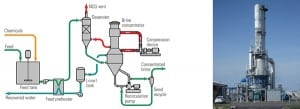
CoalFundamentals of Zero Liquid Discharge System Design
Power plants often produce wastewaters that contain salts, such as those from wet gas scrubbing, coal pile run-off, and leachate from gypsum stacks. Evaporation of those liquid wastes in a modern zero liquid discharge system produces clean water that is recycled into the plant plus a solid product suitable for landfill disposal. Here are the options to consider.
-
Legal & Regulatory
New EPA Rule Calls for Flexibility
Quin Shea, vice president, environment for the Edison Electric Institute, comments on the Utility MACT rule that is expected to be finalized in November.
-
 Coal
CoalAn SCR Can Provide Mercury Removal Co-Benefits
Complying with various state (and expected federal) requirements governing mercury removal from the stack gas of coal-fired power plants has usually been achieved by adding an expensive activated carbon injection system. Now there is another alternative: a catalyst that features higher mercury oxidization activity than conventional catalysts while maintaining the same SO2 to SO3 conversion activity—and all at a lower operating cost. Full-scale installations are under way at several Southern Company plants that burn a variety of coals.
-
 Instrumentation & Controls
Managing Equipment Data Through Asset Virtualization
Asset “virtualization” extends and combines the technologies of 3-D visualization and virtual reality to a new, practical level for the life-cycle management of power industry equipment. All pertinent data for a component, subsystem, or plant is associated with, stored, and accessed through as-built 3-D digital models of the actual plant that are constructed using laser scanning techniques.
-
 Coal
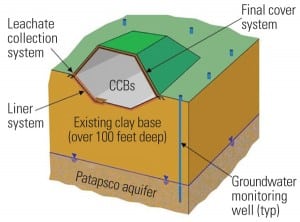
CoalConstructing Maryland’s First Permitted Landfill for Coal Combustion By-products
Constellation Power Source Generation Inc., which owns and operates three coal-fired power plants in Maryland, has contracted with Charah Inc., an ash management company, to build a landfill to strict environmental requirements for the disposal of its plants’ coal combustion by-products that can’t be recycled for other uses.
-
 News
NewsNERC CIP Information and Security E-Learning Series
Global Training Solutions Inc. released an interactive, self-paced, and fully customizable electronic training program to achieve compliance with the North American Electric Reliability Corp.’s (NERC’s) Critical Infrastructure Protection (CIP) security standards. The company designed its NERC CIP Information Security E-Learning Series on open-web standards, sharable content object reference model (SCORM) compliance, and advanced technical concepts. […]
-
 News
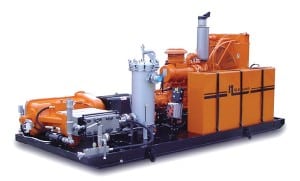
NewsHigh-Horsepower, High-Pressure Water Jet Pumps
The new NLB 605 series of water jet pump units from NLB Corp. gives users a powerful combination of ultra-high pressure and high horsepower in a rugged unit they can convert to a variety of operating pressures. The range of the NLB 605 Series has been expanded to include eight operating pressures from 4,000 psi […]
-
 News
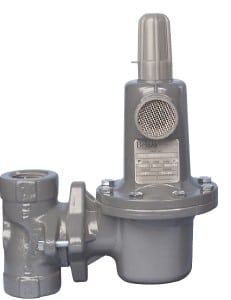
NewsHigh-Flow Gas Regulators for Pipeline Monitoring
The BelGAS division of Marsh Bellofram Corp. introduced Type P627, a high-performance, spring-loaded, direct-operating high-flow gas regulator that is designed to control both low- and high-output pressure in oil and gas applications. Designed for maximum durability, Marsh Bellofram BelGAS Type P627 regulators are compact and offered in multi-position body and spring case configurations. Units offer […]