
Latest
-
 Partner Content
AI Innovations in Renewable Energy: Transforming the Sector
Sponsored by:
Artificial Intelligence (AI) is a game-changer in energy, dominating discussions globally across organizations, investment banks and governments. By analyzing vast amounts of data, AI algorithms can predict, manage and optimize the performance of renewable energy to facilitate the integration of systems into existing grids. AI is already delivering transformative change and revolutionizing the way the […]
-
 Press Releases
Revolve Renewable Power Secures $24 Million from Mexico Bank for Project Financing
Canada-headquartered Revolve Renewable Power Corp., a North American owner, operator and developer of power generation and digital infrastructure projects, announced it has entered into a MXN$450 million ($24 million) project-level, non-recourse-style financing facility with Banco Multiva, S.A., Institución de Banca Múltiple, Grupo Financiero Multiva. The facility is secured by project cash flows and contracted revenues […]
-
 Nuclear
The Janus Five: 20+ Commercial Nuclear Microreactors, Starting in 2028
Five advanced nuclear companies will build, own, and operate more than 20 commercial nuclear microreactors across five U.S. Army installations under the Janus Program, a milestone-based effort designed to place the first project into useful service by September 2028 and establish repeatable commercial products. In exclusive interviews, the selected companies told POWER they intend to use the […]
-
 Military Microreactors
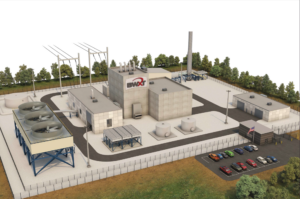
U.S. Army Mobilizes $2.2B Janus Program to Deploy More Than 20 Commercial Microreactors
The U.S. Army has mobilized up to $2.2 billion for a five-year effort to build and operate more than 20 commercial nuclear microreactors across military installations, selecting five reactor developers and five initial sites for a program designed to push advanced nuclear systems beyond federal test programs and into sustained operation by a Sept. 30, […]
-
 Gas
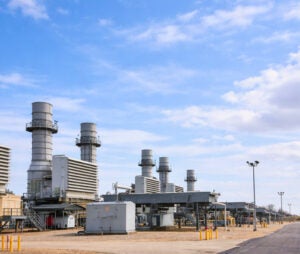
GasHull Street Acquires Two PJM-Based Power Stations from Rockland Capital
Maryland-based investment firm Hull Street Energy announced it has completed its acquisition of two Midwestern power plants that provide electricity in the PJM Interconnection.
-
 Renewables
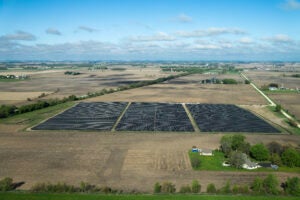
Dimension Energy Secures $857 Million to Support Distributed Solar
A U.S. developer, owner, and operator of distributed energy infrastructure announced it has received an $857-million capital infusion to accelerate growth of its distributed solar energy program.
-
 Legal & Regulatory
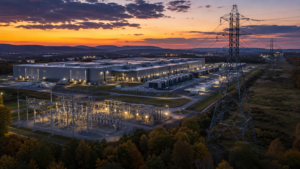
The POWER Interview: How Is Rising Scrutiny Changing the Way Data Centers Secure Power?
A recent flurry of state and federal action points to a marked pivot from treating data center growth as a grid-planning challenge to requiring large-load customers to show who pays for grid upgrades, what capacity supports the load, and how projects will operate during system stress. Morgan Lewis partner Arjun P. Ramadevanahalli spoke with POWER […]
-
 Nuclear
Westinghouse eVinci Reaches Criticality Milestone at Nevada Test Site
Westinghouse’s eVinci microreactor has completed zero-power criticality testing at the National Criticality Experiments Research Center (NCERC), a National Nuclear Security Administration (NNSA) facility at the Nevada National Security Site (NNSS). The company said the milestone, achieved at 10:39 a.m. PT on Aug. 24 in partnership with Los Alamos National Laboratory (LANL) and Idaho National Laboratory […]
-
 advanced nuclear
NRIC Adds 13 Projects to Nuclear Energy Launch Pad, Expanding Advanced Reactor and Fuel-Cycle Pipeline
The Department of Energy’s (DOE’s) National Reactor Innovation Center (NRIC) has selected 13 new projects across 12 companies for its Nuclear Energy Launch Pad initiative in a significant expansion of the DOE-authorization pathway that channels advanced reactor and fuel-cycle developers toward demonstration on federal and non-federal sites. The selections—spanning microreactor developers, enrichment startups, fuel fabrication […]
-
 Data Centers
NVIDIA, Cloverleaf Partnering to Advance Data Center Development
Technology giant NVIDIA is furthering its support of artificial intelligence (AI) and data center construction. Cloverleaf Infrastructure, a group that supports the AI buildout by providing power sources and infrastructure for site development, on August 21 said it has entered into a strategic partnership with NVIDIA to advance the development of digital infrastructure across the […]