
A startup specializing in carbon-negative artificial intelligence (AI) infrastructure powered by renewable energy systems has acquired the idled Buena Vista Biomass Power facility in Ione, California, and plans to convert the legacy wood-burning plant into a 41-MW “carbon-negative AI factory.”
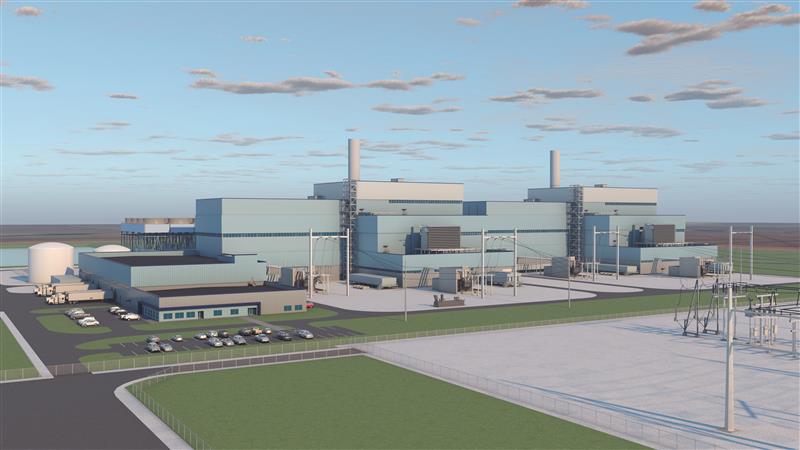
The redevelopment announced on Jan. 14, which New York-based NewYork GreenCloud (NYGC) is executing with biomass-to-pyrolysis engineering firm BucSha Energy, seeks to convert the existing 18-MW biomass facility into a 41-MW plant that will supply renewable baseload power directly to on-site AI training and inference operations.
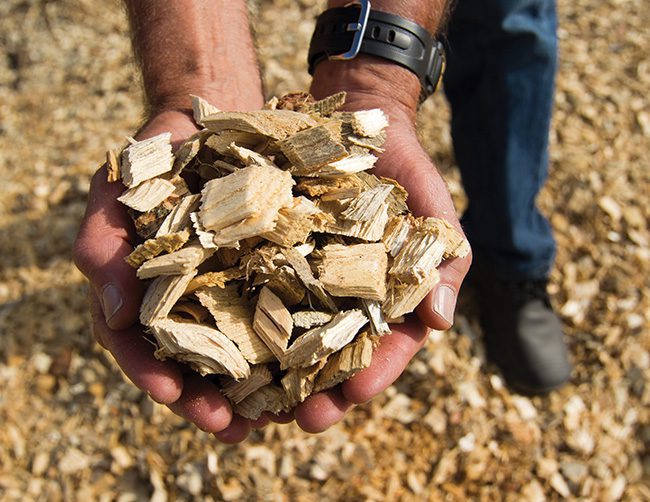
The project is expected to replace Buena Vista’s conventional biomass combustion system with pyrolysis technology—which thermally converts “sustainably sourced” woody biomass into syngas for power generation—while producing biochar and “measurable carbon removal” to support NYGC’s carbon-negative claims, according to the announcement.
The upgraded facility will integrate biomass-to-pyrolysis generation directly with behind-the-meter, liquid-cooled AI GPU compute infrastructure to allow on-site power production, advanced cooling, and high-density workloads. It will operate as a single, tightly coupled system, the companies said.
A Reinvention—From Coal to Biomass to Pyrolysis for Data Center Power
Biomass pyrolysis is the thermal breakdown of organic material in an oxygen-free or oxygen-limited environment, a process that fundamentally differs from direct combustion. Unlike fully burning the feedstock, pyrolysis heats woody biomass (typically to several hundred degrees Celsius) so it decomposes into three primary products: a combustible gas stream (often called syngas), a carbon-rich solid known as biochar, and smaller quantities of condensable liquids. While syngas can be used on-site for power generation (typically used as a fuel for gas turbine combined cycles), the retained solid carbon has been touted as the basis for carbon-removal claims because it is not immediately oxidized and released as carbon dioxide. POWER has asked for more details about BucSha’s specific technology.
The Buena Vista Biomass Power plant in Ione, Northern California, began operating in 1975 as a lignite coal–fired facility but was decommissioned in the mid-1990s, according to federal court records. In the mid-2000s, developers acquired the idle plant with the aim of converting it to biomass, and following an environmental review and retrofit, the site was repowered in 2009 as an 18-MW biomass facility using agricultural waste, urban wood debris, and forest-thinning material under a 20-year renewable power purchase agreement with the Sacramento Municipal Utility District (SMUD). The plant located on a 40-plus acres, featured a circulating fluidized bed boiler and was reportedly repowered in 2012 to accept waste wood.
However, the project struggled financially and operationally almost from the outset, which prompted a complex 2012 tax equity transaction and, eventually, litigation among its owners and financing partners. In a 2019 order, a federal judge in Minnesota detailed how cost overruns, repeated delays in achieving commercial operation, and a 2013 boiler explosion left the plant dependent on additional cash infusions, with its majority owner Otoka Energy advancing millions of dollars to keep it running. By 2016, the court noted, the facility had been idled and was “only worth scrap value,” and it dismissed claims by original developer Strategic Energy Concepts over an unpaid $1.1 million membership interest payment.
Colocated, Fully Integrated, and Carbon Negative
According to a project overview published by Impact Capital Partners, which advised NYGC on capital strategy and financing pathways for the transaction, the Buena Vista project is structured to “provide 100% renewable, carbon-negative pyrolysis power to their co-located AI data center in Northern California.” The project will deliver behind-the-meter electricity to an immersion-cooled facility that already has “long-term off-take hosting agreements from prominent AI / Internet solutions providers,” including Avnet and Atlas Cloud. The investor materials describe the reconfigured site as a “fully integrated, carbon-negative data center powered by on-site green energy” that will target high-performance compute loads that might otherwise strain the bulk power grid.
Under the plan outlined by Impact Capital Partners, which advised NYGC on capital strategy and financing pathways, the Buena Vista project will proceed in two phases: refurbishment and repowering of the existing 18-MW facility, followed by a conversion to carbon-negative pyrolysis. While the initial configuration is sized at 18 MW, project materials indicate the site is “upgradable to 36 MW,” with total capital expenditures estimated at $156 million. Impact Capital Partners notes the facility holds current permits, is interconnected with the California Independent System Operator (CAISO), and is located along existing fiber routes, which bolsters its development as a co-located AI data center while minimizing reliance on the broader grid.
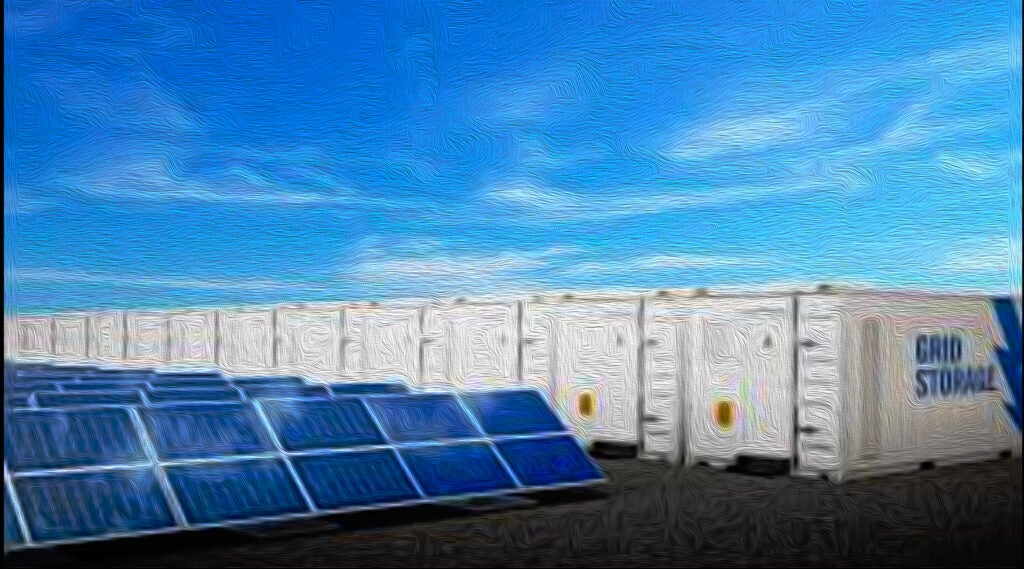
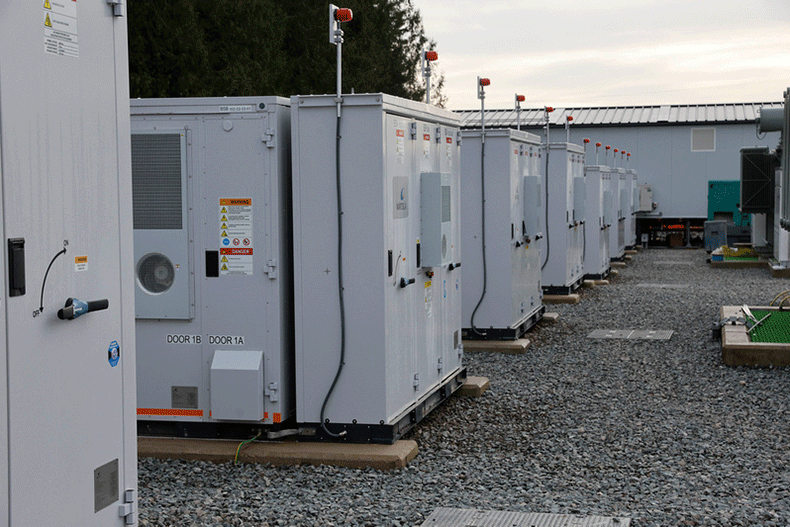
The project’s power generation, notably, will be paired with battery energy storage using Tesla Megapacks for redundancy and peak-hour arbitrage, along with prefabricated on-site solar supplied by SolarFlexes. The co-located data center is designed around immersion-cooled, high-density GPU clusters using U.S.-manufactured server infrastructure from 2CRSi—an NVIDIA Elite Partner—and modular data center “Superpods” from E3NV, with the architecture intended to tightly couple power supply, advanced cooling, and AI workloads within a single facility footprint.
Execution of the power and data center build will be supported by a broader engineering, supply chain, and carbon management framework, Impact’s materials show. Its biomass-to-pyrolysis conversion will rely on U.S.-manufactured calciners from Heyl Patterson, while BucSha Energy is responsible for overall plant repowering and fuel-to-energy conversion. CEG Solutions is slated to serve as design, build, and operations contractor, with feedstock logistics supported by Lignum Support. On the carbon and finance side, lifecycle accounting and compliance will be handled by Offstream, with independent certification through puro.earth and tax credit execution managed via Crux Climate.
‘A National Platform’ for Carbon Negative AI Factories
NYGC suggested the project will serve as a landmark for biomass-powered data center energy. “The Buena Vista Biomass Power facility is the beginning of a national platform of carbon-negative AI Factories,” said Joe Church, NYGC’s CEO. “This facility will let us deliver high-performance compute with a dramatically lower carbon footprint.”
BucSha Energy, which is responsible for the biomass-to-pyrolysis conversion at Buena Vista, argued the project underscores a potential new role for biomass assets that have struggled in traditional, utility-centric procurement regimes and legacy state programs. “By focusing exclusively on regional biomass, we create a clean, stable, and scalable energy source that can power the modern AI infrastructure,” said Dave Shaffer, founder of BucSha Energy.
NYGC, BucSha, and Impact Capital Partners noted they are “evaluating additional sites for similar conversions as part of a 2026–2028 rollout.” Impact Capital Partners’ materials indicate that BucSha already has eight U.S. plants in its development pipeline, which represent about 180 MW of prospective carbon-negative pyrolysis capacity and roughly $1 billion in future capital expenditures. “This acquisition represents the blueprint for scalable, sustainable compute,” said Sandy Goodman, Managing Partner at Impact Capital Partners.
In December 2025, notably, hyperscale GPU infrastructure firm Atlas Cloud AI and NYGC announced a $6 billion partnership to deploy renewable-powered, accelerated computing infrastructure across North America, beginning with a roughly $250 million investment to host 288 HGX B300 systems—representing 2,304 NVIDIA Blackwell graphics processing units—at NewYork GreenCloud’s biomass-powered facility in Ione, California. The four-year agreement calls for full deployment by February 2026.
—Sonal Patel is a national award-winning multimedia journalist and senior editor at POWER magazine with nearly two decades of experience delivering technically rigorous reporting across power generation, transmission, distribution, policy, and infrastructure worldwide (@sonalcpatel, @POWERmagazine).