
Technology
-
 Trends
AI and the Energy Transition: Building a Smarter, Decarbonized Energy System
Solar energy generation from a rooftop panel system can be monitored quickly and easily, an example of how artificial intelligence (AI) and digital tools are empowering businesses to optimize energy use and contribute to a decentralized, decarbonized grid. The energy transition is accelerating. Electrification is surging, renewable power generation is expanding and energy consumption patterns […]
-
 nuclear technology
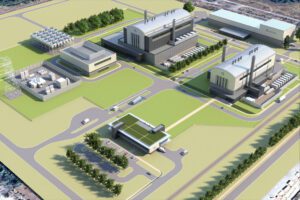
TVA Inks First U.S. Utility PPA for Gen IV Nuclear Power in Landmark Three-Way Deal with Google, Kairos
The Tennessee Valley Authority (TVA) has signed a first-of-its-kind power purchase agreement (PPA) with advanced nuclear technology firm Kairos Power to buy power from the company’s planned Hermes 2, a molten salt nuclear reactor in Oak Ridge, Tennessee. The deal makes TVA the first U.S. utility to contract for electricity from a Gen-IV reactor. Under […]
-
 Instrumentation & Controls
Achieving maximum reliability with drive systems
This white paper explores how using a holistic, application-driven approach can help minimize drivetrain failures, reduce Total Harmonic Distortion (THD), enable predictive maintenance, and deliver long-term cost savings via lower total cost of ownership (TCO). It explains how an integrated approach to drive system design ensures maximum efficiency, reliability, and performance.
-
 Data Centers
Data Centers Can Be a Flexible Power Load-Here’s Why That Matters
Across the U.S., new AI-driven data centers are causing a significant increase in power demand. Carbon Direct projects that data center capacity in the U.S. will grow from roughly 25 GW in 2024 to 120 GW in 2030, a nearly five-fold increase that could make data centers a double-digit percentage of national electricity demand. In […]
-
 Commentary
How Smarter Cooling Choices Can Cut AI’s Energy Use
Artificial intelligence (AI) is evolving, and so is the demand for the infrastructure behind it. However, for those looking to build a sustainably conscious system, this growth raises a crucial question: What does an energy-efficient data center system look like? While rightfully, much of the attention has focused on controlling energy usage of bigger systems […]
-
 Technology
Building ChatGPT for the Power Industry: EPRI Leads the Way
More than 100 of the world’s largest energy companies are betting that artificial intelligence (AI) will revolutionize how electricity gets made, moved, and managed. But they’re not waiting for Silicon Valley to build it for them—they’ve taken matters into their own hands through an EPRI-led consortium. That initiative is the Open Power AI Consortium, which […]
-
 Legal & Regulatory
Trump Administration to Overhaul Drone Rules, Fast-Track Nuclear Reactor Deployment on the Moon
The Trump administration has proposed new drone regulations that will eliminate case-by-case approval processes for beyond visual line of sight (BVLOS) operations, while Acting NASA Administrator Sean Duffy confirmed accelerated plans to deploy a nuclear reactor on the moon by 2030. The Federal Aviation Administration (FAA), Department of Transportation (DOT), Transportation Security Administration (TSA), and […]
-
 Top Plant
Doubling Down on Reliability: Karachi’s Engineered Smart Grid Breakthrough
Faced with soaring demand and limited visibility into upstream grid assets, Karachi-based K-Electric engineered an in-house special protection system that delivers more than 600 MW of secure power imports to
-
 T&D
T&DHow Nation’s Largest Dynamic Line Rating Deployment Unlocked Nearly 50% More Transmission Capacity for Great River Energy
Great River Energy’s dynamic line rating (DLR) project is the largest DLR deployment to date in the U.S. based on the number of sensors installed. Early results identified a 48.92% increase in power carrying
-
 Power
PowerEnergy Storage Project Boosts Efficiency, Provides Savings, Reduces Emissions
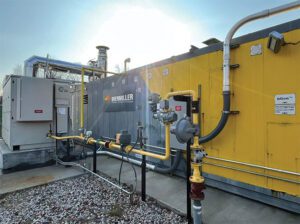
An innovative thermal energy storage system in use at a New York state university campus is an example of the long-term energy vision for the college, and a blueprint for other institutions.
-
 Energy Storage
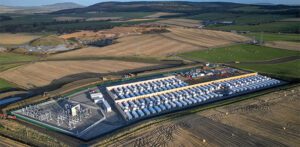
Europe’s Biggest Battery Supports More Renewable Energy on the UK Power Grid
Zenobe, a grid-scale battery storage specialist, and Wartsila Energy Storage have launched a project designed to store excess power from several offshore wind farms in the North Sea.
-
 Data Centers
Luxembourg Group Seeks Sustainability in Powering Data Center Operations
The global buildout of data centers continues to put a spotlight on the energy needs of those facilities. LuxConnect, a Luxembourg-based data center firm, has made sustainability one of its main goals.
-
 O&M
O&MCreating a Living Asset: The Role of AI-Enhanced Digital Twins in Autonomous Operations
The convergence of artificial intelligence and digital twin technology is emerging as a transformative solution, enabling power producers to shift from static control systems to dynamic, self-optimizing
-
 Legal & Regulatory
Nuclear Power: A Critical Pillar for U.S. Economic Growth and National Security
Nuclear power has emerged as a linchpin for U.S. goals for energy and national security. The nuclear sector has a long history of bipartisan support in the federal government.
-
 Technology
How Digital Tools Are Transforming Safety Compliance in Power Generation
Ensuring compliance in power generation projects is non-negotiable—and it’s no longer a box to tick at the end of a project. It now demands continuous oversight, code alignment, and documentation from the very first planning meeting to final handover. For project teams in the energy sector, this shift comes at a time of tighter National […]
-
 Cybersecurity
Power Grid Security in the AI Era: Why Energy Dominance and Cybersecurity Can’t Be Separated
In a special edition of The POWER Podcast, released in collaboration with the McCrary Institute’s Cyber Focus podcast, POWER’s executive editor, Aaron Larson, and Frank Cilluffo, director of the McCrary Institute for Cyber and Critical Infrastructure Security and Professor of Practice at Auburn University, discuss the evolving power grid and cybersecurity challenges. Specifically, they highlight […]
-
 Commentary
Beyond Co-Location: The Emerging Opportunity for Vertically Integrated Utilities in the Data Center Boom
The explosive growth of hyperscale data centers is reshaping the power sector at unprecedented speed. In just a few short years, load requests from data center operators have gone from occasional filings to a full-on wave of gigawatt-scale development across North America. While much attention has been paid to the trend of co-locating data centers […]
-
 Press Releases
Pavegen Chosen for Cyberport 5 Smart City Expansion in Hong Kong
Pavegen, a UK-based clean technology company pioneering energy and data generation, on July 29 announced it has been selected to deliver a flagship installation at Cyberport 5, part of the HK$3.7 billion ($472 million) expansion of Cyberport, Hong Kong’s government-owned Innovation & Technology (I&T) hub. Installation is scheduled for September, ahead of the site’s full […]
-
 Electric Vehicles
Enhancing Grid Resilience and EV Charging Efficiency Through Advanced Technology
XCharge North America (XCharge NA) is a provider of high-power electric vehicle (EV) charging and battery-integrated solutions designed to strengthen the North American electrical grid. Since its inception in 2022, XCharge NA has developed a suite of products designed to enhance the efficiency and accessibility of EV charging, most recently launching its GridLink product in […]
-
 Energy Storage
Making Battery Degradation Measurable: Why Cost-Aware Operation Is Essential
As renewable energy becomes the foundation of electricity systems around the world, the importance of stationary battery storage is no longer in question. Lithium-ion batteries are being deployed at unprecedented rates to support grid reliability, integrate variable generation, defer infrastructure upgrades, and provide flexible capacity across multiple electricity markets. These systems are now considered critical […]
-
 Smart Grid
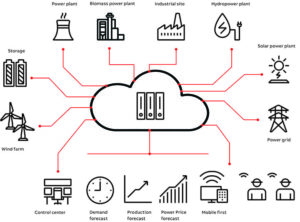
At a Time of Accelerating Change, Utilities Need to Build Flexibility into Their Strategy for Load Growth
The past few years have brought decades worth of change to electric utilities. An increasing fraction of supply is coming from intermittent sources like solar and wind. Energy storage technology has become economically viable and has seen widespread deployment. And the industry as a whole is grappling with what seems like insatiable new demand from […]
-
 Hydrogen
Black & Veatch Completes FEED Study for UK Hydrogen Project
Infrastructure developer Black & Veatch announced the company has completed execution of a front-end engineering design (FEED) study for the Whitelee Green Hydrogen Project near Glasgow, Scotland. Whitelee is a proposed development by owner ScottishPower Energy Retail Limited. The contract was awarded to Black & Veatch in October 2024. The first phase of the project, […]
-
 Commentary
Virtual Power Plants: How to Power the Energy Economy by Stretching Today’s Grid
The challenge posed by surging demand for electricity from data centers and high-performance computing facilities presents an ideal time for innovative energy solutions that efficiently improve grid reliability and increase the availability of clean, affordable electricity. Not only does the U.S. risk missing more than $100 billion of artificial intelligence (AI) market growth over the […]
-
 Trends
GM, Redwood Materials Pursue Use of Vehicle Batteries for Energy Storage
General Motors (GM) has signed a non-binding memorandum of understanding with Redwood Materials, an agreement meant to accelerate deployment of energy storage systems using both new U.S.-manufactured batteries from GM, and second-life battery packs from GM electric vehicles (EVs). This collaboration, announced July 16, marks a significant step toward taking GM’s advanced battery technology beyond […]
-
 Cybersecurity
OT Under Siege: Why Grid Control Systems Need a New Kind of Cyber Defense
At a remote substation in the Midwest, I watched recently as a team of cybersecurity specialists gathered not to fix a breach but to simulate one. The substation—a medium-impact test site built by one of the nation’s largest utilities—has become a proving ground for the future of grid security. Before the North American Electric Reliability […]
-
 Cybersecurity
Securing the Power Grid: Cybersecurity Strategies for Smart Energy Systems
As the backbone of modern energy systems, smart grids and digital substations promise efficiency and sustainability—but they also open the door to escalating cyberthreats. This article dives into a layered cybersecurity strategy that blends integrated vulnerability assessments, robust protocols, and defense-in-depth tactics. Packed with practical insights and a look at breakthrough technologies, it empowers utilities […]
-
 gas turbines
“We’re Writing a New Chapter”: Mitsubishi Power CEO Bill Newsom on AI, Gas Turbines, and the Path to Decarbonization
The U.S. power sector seems to be increasingly pulled in two directions. While trundling toward rapid electrification, it is seeking to hold its ground on recent decarbonization triumphs. And while utilities and power companies are racing to add generation capacity, their prospects are limited by aging infrastructure and upended by supply chain constraints that have […]
-
 O&M
O&MTransforming Mission-Critical Utility Operations with Field Service Management Technology
Utilities operate in high-stakes environments where operational resilience, infrastructure reliability, and workforce efficiency are essential for maintaining uninterrupted service. Cutting-edge field service management technology enhances field operations, improves safety, and streamlines emergency response with scalable automation, seamless geographic information system (GIS) integration, and predictive field service intelligence, ensuring efficiency and reliability in even the most […]
-
 Gas
GasGE Vernova Brings First 1.3-GW Block of Taiwan Gas-Fired Plant Online
GE Vernova said the first of three blocks of a major natural gas-fired power plant in Taiwan is now online. The company on July 7 said the first 1.3-GW unit of the Hsinta power station is operating, part of the facility’s transition from burning coal to using natural gas.
-
 Plant of the Year
A Transformative Dawn: South Fork Wind Leads America’s Offshore Reboot
Winning POWER’s highest honor, South Fork Wind—the first commercial-scale offshore wind farm in U.S. federal waters—stands as a beacon for the power sector’s ambition to forge new industries in the