
T&D
-
 Business
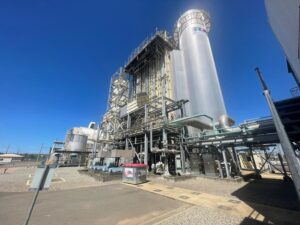
The Queensland SuperGrid Marries the Old and the New
The Australian state of Queensland is in the midst of a rapid changeover from coal to renewables. From 70% coal generation today, it is switching to 70% renewables by 2032. This means phasing out 8.1 GW of coal and some of its 3 GW of gas generation, while simultaneously building at least 25 GW of […]
-
 Business
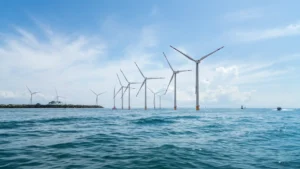
Offshore Wind Growth and HVDC Developments in the North Sea: Key Trends and Future Outlook
Europe is pursuing an ambitious energy transition to become the world’s first climate-neutral continent by 2050. To reach this goal, the region has set stringent targets to decrease reliance on Russian fossil fuels and increase the adoption of renewable energy across the power and transportation sectors. Significant strides are being made in developing solar and […]
-
 Commentary
The Renewables Revolution: Overcoming New Roadblocks
Singapore stands at a pivotal juncture in its journey toward sustainability, with renewable energy (RE) emerging as a beacon of hope in the fight against climate change. Post-COP 28, many countries, including
-
 Sustainability
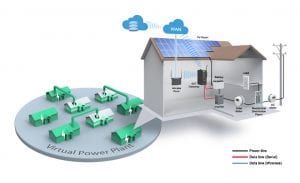
Virtual Power Plants: An Untapped Resource for Improving Grid Reliability
Utilities are in a tricky spot. While reliability is one of three key focus areas for utilities as they navigate the clean energy transition, along with decarbonization and affordability, it’s become an increasingly hard pillar to deliver on, especially as growing peak demand becomes a year-round consideration. This past summer we’ve already seen large portions […]
-
 Hydro
HydroDOE Group Awards $34.5 Million For PG&E Hydropower Projects in California
The Dept. of Energy’s (DOE’s) Grid Deployment Office has awarded $34.5 million to California utility Pacific Gas & Electric (PG&E). The funding will support 19 hydropower projects across PG&E’s territory. The utility on September 24 said the money is part of the DOE’s Maintaining and Enhancing Hydroelectricity Incentive program. The Grid Deployment Office in early […]
-
 News
NewsData Centers Might Be Catalyst for Modernizing U.S. Power Grid
Rapid growth in the U.S. data center market is ushering in a new era of power demand and testing the ability of electric utilities to keep pace with this surging growth. Data center energy use has doubled over the past three years and is expected to continue climbing as more hyperscale data centers leveraging power-hungry […]
-
 Commentary
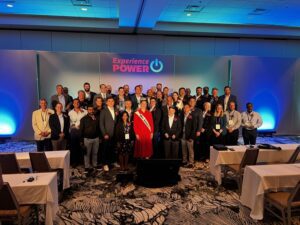
Gearing Up for Experience POWER Week
Every year, I look forward to attending several power industry events. Among my favorites is the big event POWER hosts, known as Experience POWER Week. The conference will be held this year at the Renaissance
-
 Sustainability
Navigating the Transition to Sustainable MV Switchgear Amidst Decarbonization Initiatives
The push for decarbonization in Europe is reshaping the power sector. Stringent environmental regulations and ambitious renewable energy targets have necessitated the expansion and upgradation of the electricity distribution network. This is to accommodate the increased adoption of distributed energy resources (DERs) and electrification across sectors. These factors are expected to significantly drive the demand […]
-
 Legal & Regulatory
New FERC Has Golden Opportunity to Pass Interregional Transmission Planning Rule
Our electric system was designed to experience service interruptions once per decade. That time is long gone. In the past three years, the U.S. South has sustained two debilitating winter storms, forcing utilities to cut power when their customers needed it the most. In 2023 alone, the U.S. was hit with more than 28 separate […]
-
 Commentary
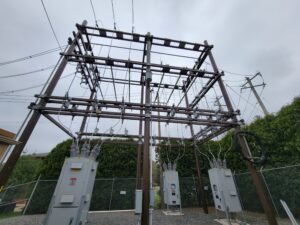
Energizing the Grid: Insights into the DOE’s GRIP Program
To secure federal funding, developers must navigate various financing and investment options related to grid resiliency and modernization, transmission deployment, and critical electric generation facilities. Responding to funding demands, however, can pose significant challenges. Balancing early-stage project commitments with application requirements blurs the line between speculating about long-term project details, being non-responsive, and making costly […]
-
 T&D
T&DFRP Delivers Resiliency for Power Plants
The chemicals and water present in power generation plants can have a corrosive effect on metal. Integrating fiber-reinforced polymer (FRP) into power plants can help reduce downtime due to maintenance. Power generation plants almost have “too much of a good thing.” The demand for power in the U.S. alone has skyrocketed in the last few […]
-
 Interview
How Trump or Harris Would Alter the U.S.’s Energy and Power Landscape
A new U.S. president will be inaugurated in less than five months. Polls show the race between Donald Trump and Kamala Harris to be very close, with potentially only a few swing states deciding the election. While energy policy may not be a deciding factor for many Americans in choosing who they will vote for, […]
-
 T&D
T&DComposite Pole Manufacturer Grows Through Acquisition, Boosting Grid Hardening Capabilities for Utilities
Creative Composites Group (CCG), a leading manufacturer of fiber-reinforced polymer (FRP) composites, announced that the group has acquired the assets of Schaumburg, Illinois-based Trident Industries (Trident), a manufacturer of ultra-resilient single- and multi-layer composite poles (Figure 1). This marks CCG’s third acquisition in less than two years. Power demand and storm frequencies are increasing, severely […]
-
 T&D
T&D$2.2B for 13 GW of New Transmission Capacity: DOE Unveils Latest Boost for U.S. Grid Modernization
The Biden administration will invest $2.2 billion in eight projects under its Grid Resilience and Innovation Partnership (GRIP) program to bolster the nation’s power grid with nearly 13 GW of new transmission capacity across 18 states. The funding, announced on Aug. 6, marks the second round under the Department of Energy’s (DOE’s) GRIP program, a […]
-
T&D
NYISO Announces Interconnection Enhancements and Improvements
The New York Independent System Operator (NYISO) has launched a new interconnection process with significant improvements and enhancements, crucial for integrating a high volume of new generation facilities onto the grid. NYISO’s “Cluster Study” process and other improvements were developed in collaboration with stakeholders through the NYISO’s governance process in recent years. Collectively, these enhancements […]
-
 Connected Plant
Vietnamese Distribution Grid Automation System a Winning Project
Vietnam Electricity Group’s Ho Chi Minh City Power Corp. (EVNHCMC) deployed a distribution automation system that facilitates automatic—and very quick—fault detection and handling with a success rate of
-
 T&D
T&DViking Link: The Epic Build of the World’s Longest Onshore and Subsea HVDC Interconnector
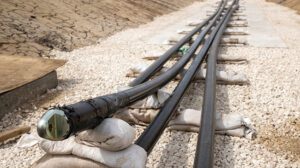
A marvel of modern engineering, Viking Link—the world’s longest onshore and subsea interconnector—began commercial operations in December 2023. The project garners POWER’s inaugural Transmission and
-
 T&D
T&DAchieving Operational Flexibility with Voltage Control
Using voltage data down to the consumer level is essential for grid optimisation and operational flexibility in the new era of intermittent generation and fast-changing user demand. Power grids were designed
-
 Commentary
Connecting Infrastructure’s Dots to Solve Today’s Urban Management Issues
Connected infrastructure offers a holistic approach to creating a smarter, greener, and more livable world. More people are moving to urban areas than ever before, even as the impacts of climate change are
-
 Commentary
Let’s Get the Lights Back On, Then Act on Beryl’s Lessons to Harden Houston’s Power Grid
After Hurricane Beryl laid a path of destruction through the greater Houston area, the storm’s impact on the local power grid is having an outsized effect on the ongoing debate about the future of Texas’ energy and electrical infrastructure. The lessons we take from this incident, which left 2.5 million people without power at the height […]
-
 Energy Security
Risks Associated with Geomagnetic Storms
In May 2024, stargazers and smartphone photographers witnessed a spectacular moment in time over the course of two nights. Social media and news outlets were dazzled by incandescent light plays from around the world—magenta skies gleamed over the city of Vienna, rainbow hues illuminated a lighthouse in England, emerald displays lit up the lakes of […]
-
 T&D
T&DAI and Storm Resilience: How Utilities Can Optimize Storm Solutions and Mitigate Risks
As climate change accelerates, rising humidity is causing an increase in the number and severity of storms occurring in the northern hemisphere. An academic study found that the frequency of unstable atmospheric conditions increased by 8% to 32% over most land areas from 1979 to 2020. “Storm intensity is increasing much faster than the average […]
-
 Trends
Industry Giants, German TSOs Team to Revolutionize HVDC Grid With Multi-Terminal Hubs
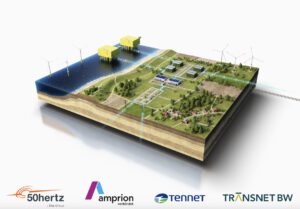
Three major high-voltage direct current (HVDC) technology giants—GE Vernova, Siemens Energy, and Hitachi Energy—will join forces with four German transmission system operators—50Hertz, Amprion, TenneT and TransnetBW—to develop multiterminal hubs with direct current circuit breakers. The initiative is the latest development in ongoing European collaboration to enhance the interoperability of HVDC systems, facilitate the integration of […]
-
 Connected Plant
Logical Data Management for the Energy and Utility Industries
By now, with the most devastating effects of the pandemic behind us, it’s important to remember the key takeaway—there’s no such thing as “business as usual.” As a result, companies have learned that to be able to thrive are those that quickly adapt to sudden, unforeseen changes is essential. This is especially true for energy and […]
-
 Renewables
GOP-Held Congressional Districts Cash in on Clean Energy Projects
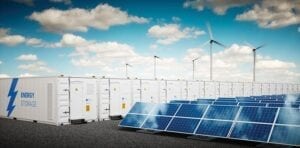
More than $106.5 billion in large-scale clean energy project investments have been announced in Republican-held congressional districts in the U.S. during the period from August 2022 through June 2024. The figure was released by E2, a national, nonpartisan group of business leaders, investors, and professionals from every sector of the economy who advocate for “smart […]
-
 Hydrogen
POWER Digest [July 2024]
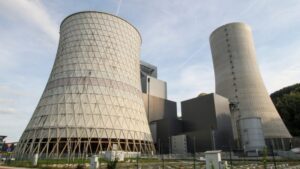
Economics Could Bring Early Closure for Slovenia Coal-Fired Plant. Slovenian Prime Minister Robert Golob in May said the Termoelektrana Šoštanj (TEŠ) facility, the country’s only remaining coal-fired
-
 Legal & Regulatory
FERC Adopts Transmission Reform; Commissioner Cries Foul
There has been a growing consensus in recent years that the transmission planning process must be reformed to ensure reliability in the face of a rapidly changing grid. Despite the need for new transmission to
-
 O&M
O&MNext-Gen Geospatial, AI, and Other Tech Is Critical for Utilities to Mitigate Wildfires
The danger of wildfires has risen dramatically over the past two decades as more extreme temperatures and more volatile weather patterns have increased the frequency and intensity of fires. The most prominent examples of this have been in the western U.S. and Canada, but wildfire risks are rising in every geographic area of North America. […]
-
 O&M
O&MRugged Mobile Devices Enhance OPPD Operations
Many power companies have turned to digital technology to streamline operations and improve worker efficiency. One example is Omaha Public Power District (OPPD), the 12th-largest public power utility in the U.S. OPPD recently decided to deploy hundreds of semi-rugged TOUGHBOOK 55 devices across multiple units, including meter technicians, troubleshooters, line crews, and system protection and […]
-
 T&D
T&DStrengthening America’s Electric Power Grid: How the Government and Industry Are Improving T&D Systems
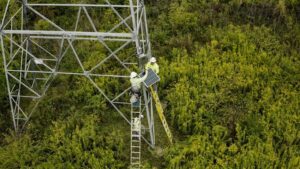
The U.S. transmission and distribution (T&D) network is reliable and well-maintained, but as renewable energy continues being added to the grid, and demand increases due to growing data center needs and the electrification of transportation and manufacturing processes, work is necessary to keep up with the changing times. The U.S. government understands the need for […]