
Smart Grid
-
 Connected Plant
How Mobile Solutions Are Transforming Utility Network Operations
The electric power sector is undergoing a digital transformation with mobile applications playing a crucial role by enabling real-time data sharing and more efficient grid management. Innovative technology is
-
 Trends
Digitizing Distribution Substations Is Key to America’s Smart Grid Journey
The future of clean electricity is dependent on modernizing America’s electric grid. At the heart of the U.S. grid are 75,000 substations that have not been updated to meet the standards of a truly smart grid. Electric utilities are grappling to control and monitor bilateral energy flows with their current substations. This is a result […]
-
 Connected Plant
Digital Sensor Provides Greater Asset Management Capability for Transformers
ABB Electrification Service recently launched a digital monitoring solution for power and distribution transformers that it says will enhance performance, reliability, and availability of equipment. The transformer sensor is reportedly quick and easy to fit, requiring no screws or tooling for installation. Instead, the sensor, called TRAFCOM, can be mounted magnetically to the transformer within […]
-
 Sustainability
3 Steps for Utility Companies to Get Started with Undergrounding
The U.S. electric grid is under more strain than ever to support exponential electricity demand due to artificial intelligence (AI), data centers, electric vehicles, and hotter temperatures. Its infrastructure is made up of 180 million power poles spread out over 5.5 million miles that are frequently bombarded with increasingly severe storms and weather. Worsening SAIDI […]
-
 Business
The Queensland SuperGrid Marries the Old and the New
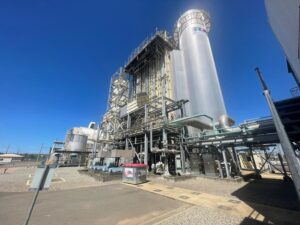
The Australian state of Queensland is in the midst of a rapid changeover from coal to renewables. From 70% coal generation today, it is switching to 70% renewables by 2032. This means phasing out 8.1 GW of coal and some of its 3 GW of gas generation, while simultaneously building at least 25 GW of […]
-
 Sustainability
How Battery Energy Storage System Testing Is Making the Grid More Sustainable
U.S. energy needs have changed dramatically over the last few decades, and questions are growing as to whether our grid can manage these new demands. Aside from rising temperatures—the National Oceanic and Atmospheric Administration declared 2023 the hottest year on record—the energy sector is managing a trio of additional challenges: City populations are growing, creating […]
-
 Interview
The POWER Interview: How Unified Endpoint Management Can Help Secure the Power Grid
Digital technology poses critical challenges for the power sector. As the backbone of modern society, any disruption to power infrastructure can have far-reaching consequences. To learn steps leading power companies can take to protect their systems, POWER interviewed Apu Pavithran, founder and CEO of Hexnode. Hexnode’s award-winning Unified Endpoint Management (UEM) platform has empowered organizations […]
-
 Commentary
Energizing the Grid: Insights into the DOE’s GRIP Program
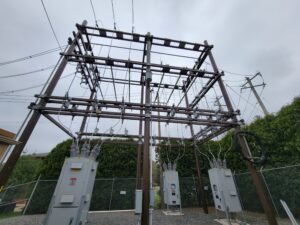
To secure federal funding, developers must navigate various financing and investment options related to grid resiliency and modernization, transmission deployment, and critical electric generation facilities. Responding to funding demands, however, can pose significant challenges. Balancing early-stage project commitments with application requirements blurs the line between speculating about long-term project details, being non-responsive, and making costly […]
-
 Solar
SolarBiggest Mistakes Homeowners Make While Trying to Optimize Solar Energy
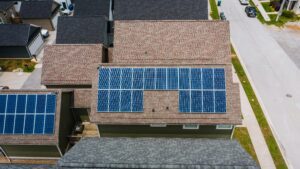
Solar energy is one of the main ways to curb greenhouse gas emissions and take action against the impact of climate change. Solar power offers security that homeowners can continue to generate their own electricity and potentially store it, especially in areas prone to natural disasters and power outages. There’s been a surge in adoption […]
-
 Connected Plant
Vietnamese Distribution Grid Automation System a Winning Project
Vietnam Electricity Group’s Ho Chi Minh City Power Corp. (EVNHCMC) deployed a distribution automation system that facilitates automatic—and very quick—fault detection and handling with a success rate of
-
 Hybrid Power
Applying Photovoltaic Charging and Storage Systems: Challenging the Limits of PV Technology
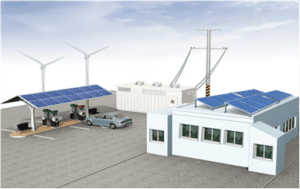
To achieve net-zero goals and accelerate the global energy transition, the International Energy Agency (IEA) stated that countries need to triple renewable energy capacity from that of 2022 by 2030, with the development of solar photovoltaics (PV) playing a crucial role. Additionally, the comprehensive electrification of combustion engine vehicles is an indispensable measure for reducing […]
-
 T&D
T&DAchieving Operational Flexibility with Voltage Control
Using voltage data down to the consumer level is essential for grid optimisation and operational flexibility in the new era of intermittent generation and fast-changing user demand. Power grids were designed
-
 T&D
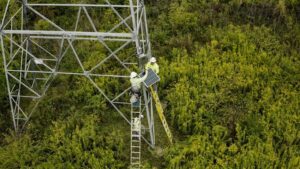
T&DStrengthening America’s Electric Power Grid: How the Government and Industry Are Improving T&D Systems
The U.S. transmission and distribution (T&D) network is reliable and well-maintained, but as renewable energy continues being added to the grid, and demand increases due to growing data center needs and the electrification of transportation and manufacturing processes, work is necessary to keep up with the changing times. The U.S. government understands the need for […]
-
 Energy Security
Mitigating EMP and GMD Risks for Power Grid Resilience
Risks posed by geomagnetic disturbance (GMD) and electromagnetic pulse (EMP) events add challenges to an already complex power system environment. But they remain crucial to address. How prepared is the power grid to withstand these powerful natural and man-made disturbances? On the evening of May 10, grid operator PJM Interconnection activated a rare geomagnetic disturbance […]
-
 T&D
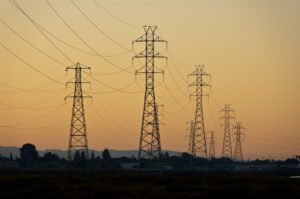
T&DBuilding a Better Grid—Infrastructure Upgrades Require Ingenuity, Innovation, and Investment
The need for more reliability and resilience of power delivery, both in the U.S. and worldwide, has utilities and grid operators looking for solutions to the challenge of bolstering the electricity supply. Electric grid infrastructure, both in the U.S. and other parts of the world, needs an upgrade. Increased power demand from energy-intensive industries such […]
-
 T&D
T&DThe Transformer Crisis: An Industry on the Brink
Facing unprecedented lead times and skyrocketing costs, the transformer supply chain crisis threatens the backbone of the electric power industry, driving urgent calls for increased manufacturing capacity and innovative solutions. Can the industry rise to the challenge? For several years now, the power sector has frantically raised the alarm about an impending transformer supply chain […]
-
 Distributed Energy
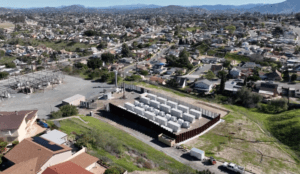
Microgrids Take Major Role for Reliability, Resiliency
An array of technologies, both thermal and renewable, are being used in the design of microgrids, supporting distributed power generation across several sectors. The use of microgrids to provide reliable power for critical infrastructure is growing, and these off-grid installations also are becoming more prevalent as part of commercial and industrial (C&I) enterprises and residential […]
-
 T&D
T&DHigh-Voltage Power Transmission Projects Are Booming Around the World
High-voltage power transmission systems are more important today than ever before because power generated at renewable energy sites in remote locations must often be transmitted to distant load centers. Several state-of-the-art projects being done around the world are reviewed below. The majority of major electric power transmission lines in the U.S. are 115-kV, 230-kV, or […]
-
 T&D
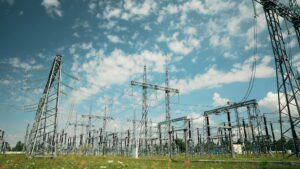
T&DPlanning for a Reliable and Resilient Electric Power Grid
In the U.S., regional transmission organizations (RTOs) and independent system operators (ISOs) are responsible for overseeing the reliable operation of the high-voltage transmission system within their respective regions. In other countries, transmission system operators (TSOs) perform similar roles. In most cases, the primary objectives of these entities are to ensure the reliable and efficient operation […]
-
 T&D
T&DWhat Does It Take to Bring Stability to a Renewable-Focused Grid?
As coal, gas, and nuclear plants are retired, and wind and solar resources are added to the power grid, stability can become a problem. Understanding the solutions that are available to help manage potential issues is important for decision-makers so they can select the best options for their system. Grid stability and system strength have […]
-
 T&D
T&DNVIDIA CEO: AI Will Impact the Future of Energy
The future of energy may depend on technology with roots in the video game industry, by a company founded more than 30 years ago that wanted to use accelerated computing to improve the look and feel of the gaming experience. Jensen Huang, NVIDIA’s CEO and president since co-founding the Santa Clara, California-based company in 1993, […]
-
 Commentary
It’s Time for Utilities to Back Smart Grid Optimization with the Right Tech
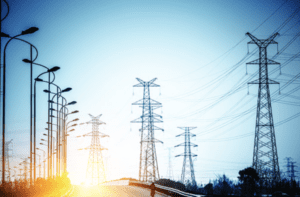
The utility industry is an unsung hero for nearly every community—until the power falters. A prime example is the extreme weather that passed through much of the central U.S. this spring. In Houston, where my company is based, we recently experienced severe storms that left around a million businesses and homes without power. These acts […]
-
 T&D
T&DU.S. Power Distribution System Reliability Has Declined Over the Past Decade: How to Make It Better
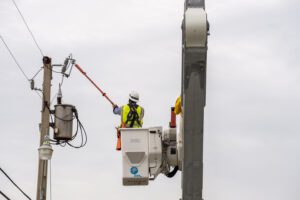
SAIDI (System Average Interruption Duration Index) and SAIFI (System Average Interruption Frequency Index) are widely used reliability indices that measure the performance of power distribution systems. SAIDI represents the total duration of interruptions for an average customer over a given time period, typically a year. It is calculated by taking the sum of all customer […]
-
 Press Releases
CORE Electric Cooperative and Technosylva Announce Partnership to Reduce Wildfire Risk Across Colorado’s Front Range
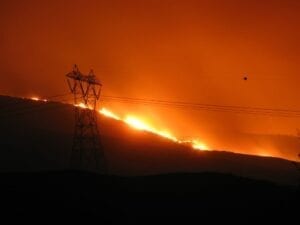
CORE Electric Cooperative to Deploy Technosylva’s Wildfire Risk Mitigation Solutions LA JOLLA, CA, and SEDALIA, CO, May 30, 2024 – Technosylva, the leading provider of wildfire mitigation technology solutions, and CORE Electric Cooperative (CORE), the largest electric distribution cooperative in Colorado, today announced a new partnership and collaboration to reduce the impacts of wildfire to […]
-
 Sustainability
PG&E Recognized for Remote Grid Program
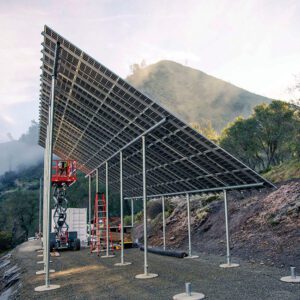
Pacific Gas and Electric Co. (PG&E) and its remote grid program received an honorable mention in the Energy category of Fast Company’s 2024 World Changing Ideas Awards. Winners were announced on May 14, highlighting fresh sustainability initiatives, cutting-edge artificial intelligence (AI) developments, and other creative projects that are helping mold the world. PG&E is one […]
-
 Commentary
Navigating the Future of Energy: How Utilities Can Modernize Their Grid Operations to Meet Increasing Energy Demands
In an era defined by rapid electrification, the widespread adoption of renewable energy sources, and sweeping digital transformation, the energy sector stands on the brink of profound change. As we cast our sights on 2050, utilities grapple with the colossal task of scaling up to meet burgeoning energy demands and reshaping their operations to be […]
-
 T&D
T&DHow Grid Enhancing Technologies Are Expanding Electric Power Transmission System Capabilities
It’s no secret that power grids around the world need to expand to accommodate more renewable energy and the so-called “electrification of everything.” The latter, of course, refers to the growing trend of using electricity to power various sectors and applications that have traditionally relied on fossil fuels, such as natural gas or petroleum-based products. […]
-
Legal & Regulatory
Perfect Storm for the Grid: Convergence of Energy Growth and Policy
There are numerous articles and studies warning of the fragile nature of America’s electric grid. The vulnerabilities will only become more apparent as we continue to undergo a fundamental shift in how
-
 Smart Grid
Edge Computing May Be the Future of Power Distribution
A more distributed power distribution network will help utilities better navigate the wave of changes resulting from the smart grid. Very few industries will experience the rapid change that power distribution
-
 Solar
SolarVirtual Power Plant Network Supports the Grid and Compensates Customers
Sunnova Energy International Inc., an adaptive energy services company, announced continued investments and expansion to its virtual power plant (VPP) network, providing increased reliability, reduced emissions, and lower costs. With its VPP investments, Sunnova is boosting accessibility in California, Connecticut, Massachusetts, New York, Puerto Rico, Rhode Island, and Texas to enable customers to rapidly access […]