
Smart Grid
-
 Renewables
DOE to Open $4B More in Loan Guarantees for Renewables, Energy Efficiency Projects
The Department of Energy (DOE) plans to make an additional $4 billion in loan guarantees available to help commercialize U.S. renewable energy and energy efficiency technologies that avoid, reduce, or sequester greenhouse gases. The DOE on Wednesday issued a draft loan guarantee solicitation under Title XVII of the Energy Policy Act of 2005 (through Section […]
-
 T&D
T&DOIG: Grid Threats Should Have Stayed Classified
The Federal Energy Regulatory Commission (FERC) should have classified and protected a sensitive grid-related document created by its staff, the Department of Energy’s Office of Inspector General (OIG) said in a memorandum on Wednesday. Sens. Mary Landrieu (D-La.) and Lisa Murkowski (R-Alaska) requested that the inspector general investigate sensitive information leaks suspected to have originated […]
-
 Smart Grid
Using Spent EV Batteries for Grid Storage
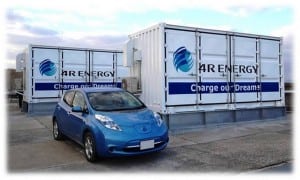
One of the world’s first power storage systems employing used electric vehicle (EV) batteries began operating on Japan’s Yumeshima Island in Osaka this February. The 600 kW/400 kWh system developed by Tokyo-based Sumitomo Corp. consists of 16 EV batteries that were recovered and inspected by the Sumitomo and Nissan Motor Co. joint venture 4R Energy […]
-
T&D
Federal Cybersecurity Framework Calls for Increased Vigilance
The energy industry, already familiar with the latest iteration of the North American Electric Reliability Corp. (NERC) Critical Infrastructure Protection (CIP) reliability standards, should take note: Meeting
-
 Smart Grid
Earth Dodged Grid-Destroying Solar Storm in 2012, Says Study
A massive coronal mass ejection (CME)—commonly known as a solar storm—in July 2012 could have rivaled the worst recorded event from 1859 had it hit the Earth, according to a study published Mar. 18 in Nature Communications. Research at the University of California, Berkeley, and by Chinese scientists into a magnetic storm on July 23, […]
-
 Smart Grid
AES Uses Synchronous Condensers for Grid Balancing
The future is looking bright for AES Huntington Beach Power Generating Station. Renderings of a proposed new look for the power plant—located steps from the beach on the Pacific Coast Highway—include
-
Smart Grid
Let There Be (LED) Light
You’ve no doubt heard that U.S. power plant emissions have been dropping overall and that one of the reasons has been decreased thermal generation resulting from essentially flat demand. As of Jan. 1 this
-
 Legal & Regulatory
Speeding Forward with Integrating Plug-in EVs
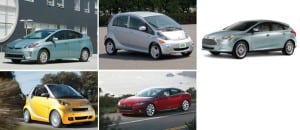
Approximately 150,000 plug-in electric vehicles (PEVs) are already on the road in the United States, according to various reports. These vehicles include relatively wallet-friendly PEV options like the
-
 Smart Grid
FERC Seeks Comments on Proposed Geomagnetic Disturbance Standard
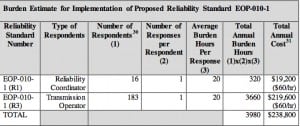
The Federal Energy Regulatory Commission (FERC)—which notes that geomagnetic disturbances (GMD) can have potentially severe, widespread impact on the bulk electric power system—has issued a notice of proposed rulemaking (NOPR) to approve its first reliability standard concerning GMD operations. The NOPR issued on Jan. 16 concerning Reliability Standard EOP-010-1 is designed to mitigate the effects […]
-
 Legal & Regulatory
A Rising Tide of Regulation and the “Kick-the-Can” Gambit
A tidal wave of pent-up federal regulations could surge across much of the electricity industry in 2014. In recent years, Congress has been unable to enact new laws in energy, which has led a frustrated
-
 Commentary
How U.S. Power Generators Are Preparing for 2014
The business environment for generating companies worldwide continues to become increasingly complex, and not just as a result of regulations. Even in the U.S., the concerns and constraints faced by generators
-
Commentary
“Smart Grid” or “Strong Grid”? Words Matter
The Obama administration recently changed its nomenclature on a topic of much interest to readers of this publication and those in the power industry. The administration has said it prefers to talk about its policies advancing a “resilient grid” as opposed to its previous emphasis on developing a “smart grid.” The new policy thrust, for […]
-
 Smart Grid
Impact of Electric Vehicle Charging on Grid May Be Far Less Than Feared
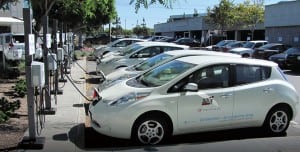
In recent years, the potential popularity of electric vehicles (EVs) and plug-in hybrid-electric vehicles has had utility executives up nights worrying about spikes in demand at the end of every workday as EV owners all began charging their cars upon returning home. Now, a new study from Austin, Texas–based Pecan Street Research (PSR) suggests that […]
-
T&D
Potential Solutions for ERCOT’s Challenges
P at Wood III —former head of the Federal Energy Regulatory Commission and the Texas Public Utility Commission, and current consultant and non-executive chairman of Dynegy—addressed a packed house at the
-
Smart Grid
Industry-Backed Bipartisan Cybersecurity Bill Passes Senate Committee
The Senate Committee on Commerce, Science, and Transportation on Tuesday unanimously approved a bipartisan bill that bolsters efforts by the National Institute of Standards and Technology (NIST) to craft a cybersecurity framework.
-
 Smart Grid
Vehicle-to-Grid Aggregated Project Sells Electricity to the Grid
A technology developed by the University of Delaware (UD) and NRG Energy that provides a two-way interface between electric vehicles and the power grid earlier this year became an official paid resource on PJM Interconnection’s regional grid (Figure 4). One of the first of its kind, the project proves the so-called “vehicle-to-grid” (V2G) concept can sell electricity from electric vehicles.
-
 Smart Grid
EPB Chattanooga Uses Smart Grid to Future-Proof Its Business Model
A municipal utility in the South may not be where you’d expect to find an exemplary smart grid implementation, but that’s just fine with EPB Chattanooga. Its leaders are raking in the kudos—including POWER’s 2013 Smart Grid Award—and their community is attracting new businesses in response to a fiber-optic-based system that has helped raise the profile of their city and bolster the sustainability of their utility.
-
Coal
Comprehensive Diagram Charts Nation’s Energy Use and Waste
An updated energy flow chart released by the Lawrence Livermore National Laboratory (LLNL) that visually depicts the relative size of primary energy resources and end uses in the U.S., with fuels compared on a common energy unit basis, shows the nation consumed more natural gas and renewables but less coal in 2012.
-
Smart Grid
New FERC Rule Creates New Opportunities for Energy Storage
A final rule issued last week by the Federal Energy Regulatory Commission (FERC) to foster competition and transparency in ancillary services markets creates new opportunities for energy storage technologies to help transmission customers self-supply their own Regulation and Frequency Response service requirements while opening up certain ancillary services markets to all generators selling at market-based rates.
-
Smart Grid
Calif., Texas Tie for States with Most Smart Grid Progress
California and Texas equally show the most progress in modernizing their electric systems with smart grid technologies compared to other U.S. states, a new evaluation of the nation’s grid modernization efforts shows.
-
 Water
WaterEnergy Storage Developments and Demand Ramp Up
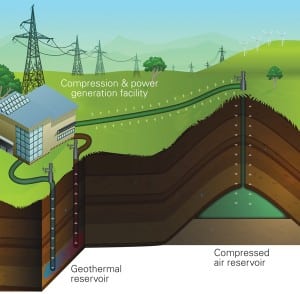
Despite technical and financial hurdles, annual global demand for grid-scale energy storage is expected to soar to 185.4 GWh by 2017, which means a possible 231% average year-on-year demand growth between 2012 and 2015, according to Lux Research.
-
 Smart Grid
EMP: The Biggest Unaddressed Threat to the Grid
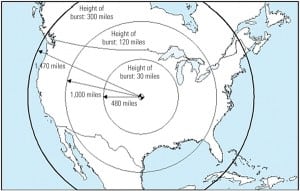
The electricity grid has been characterized as the world’s largest and most complicated machine. The grid, like all machines, requires periodic upgrades and maintenance to prevent outages during the normal course of business, and it can be brought down by various outside forces. Solar flares and cyber attacks have temporarily crippled the machine, but an electromagnetic pulse event would be the “ultimate cyber security catastrophe.”
-
 Smart Grid
Beacon Power Makes a Comeback
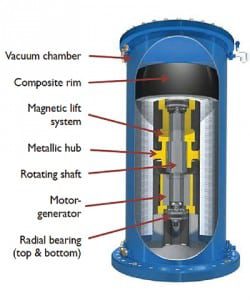
Beacon Power Corp. was founded in 1997 to develop flywheel-based energy storage technology. By 2007, the 100-kW/25-kWh Gen 4 flywheel system was commercialized and deployed in several projects. However, market conditions pushed the company into bankruptcy in late 2011. The company has since emerged, reinvigorated with new investment and a new name: Beacon Power LLC.
-
Instrumentation & Controls
Quantum Cryptography Promises Un-Hackable Industrial Communications
What if you could send a control message between two points on the electricity grid—say between a control room operator and a turbine or between a system operator and a generating plant—and know that there’s no way that message can be intercepted, altered, or spoofed to effect malicious ends? That possibility may be only a couple of years away.
-
Smart Grid
Hudson River 660-MW Transmission Line Begins Service
A 660-MW underground and underwater transmission project linking Ridgefield, N.J., and Manhattan in New York City began operations on Monday.
-
Smart Grid
LANL Developing Quantum Encryption to Secure Communications Networks
A promising new approach to securing communications networks from cyber crime uses quantum cryptography. Researchers at Los Alamos National Laboratory (LANL) have developed a system that could be used for critical infrastructure control systems, including those at power plants.
-
Instrumentation & Controls
House Holds Cyber Threat Hearing as NIST Begins Preliminary Work on Cybersecurity Framework
Panelists at a House hearing on Tuesday held to examine steps the federal government and private sector are taking to bolster the nation’s critical infrastructure security shed light on the extent and variety of possible cyberattacks and called for flexible solutions. The hearing was held days after the National Institute of Standards and Technology (NIST) released its initial analysis of hundreds of comments submitted in response to President Obama’s February 2013 cybersecurity executive order.
-
Instrumentation & Controls
Newly Developed Software Isolates Cyber Attacks on Networked Control Systems
A software algorithm developed by researchers from North Carolina State University promises to detect and isolate cyber attacks on networked control systems.
-
Smart Grid
ComEd Says Smart Grid Efforts Reduced Power Interruptions
ComEd’s smart grid program finally has some good news to share. In a progress report to the Illinois Commerce Commission (ICC) this week, the utility said that 479 distribution automation (DA) devices installed in the first year of the program resulted in 82,000 fewer customer power interruptions in 2012.
-
 Coal
CoalOntario Goes Coal-Free in a Decade
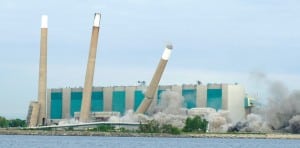
By the end of 2013, one year ahead of its goal, the province of Ontario will be virtually coal-free—a first for a North American jurisdiction. How did the most populous part of Canada go from 25% to 0% coal-fired generation in just a decade, and what does this phaseout mean for the rest of the world?