
Nuclear
-
 O&M
O&MBenchmarking Nuclear Plant Operating Costs
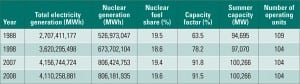
In an exclusive agreement with the EUCG Nuclear Committee, POWER was provided access to some key, high-level performance and operational data from the group’s nuclear industry benchmarking database. All U.S., and many international, nuclear power plants are members of the committee and have contributed to its database for many years. This month we introduce you to the EUCG Nuclear Committee and share sample nuclear operating costs. Look for future reports on other key performance benchmarking metrics during 2010.
-
Nuclear
New Nuclear Plants Are on the Horizon
Most of the big utilities, with an eye to ensuring a good mix of future generation resources, have a new nuclear plant in development. Even though federal loan guarantees are slow to materialize and financing these multi-billion-dollar projects has become a bet-the-company investment, the NRC has more than 40 applications from generators that continue to believe in the future of nuclear power.
-
 Nuclear
Plant Vogtle Leads the Next Nuclear Generation
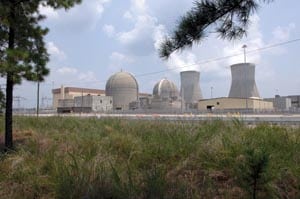
In August 2009, the Nuclear Regulatory Commission (NRC) issued its fourth Early Site Permit for two new units at Southern Nuclear’s Vogtle site and its first for the Westinghouse AP1000 pressurized water reactor design. The two new units planned for Vogtle also became the reference plant for the AP1000 under NuStart in June 2009. This means Vogtle Units 3 and 4 will be the first licensed installations of the new AP1000 reactor design in the U.S. Plant Vogtle is expected to get the NRC’s approval to begin construction in 2011.
-
 Nuclear
Using the Sterling Engine for Solar and Lunar Power
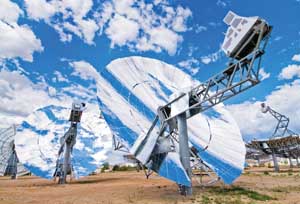
Since Robert Stirling invented the Stirling engine in 1816, it has been used in an array of specialized applications. That trend continues today. Its compatibility with clean energy sources is becoming apparent: It is an external combustion engine that can utilize almost any heat source, it encloses a fixed amount of a gaseous working fluid, and it doesn’t require any water — unlike a steam engine.
-
 Nuclear
Africa Looks to Nuclear for Future Generation
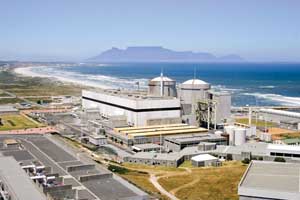
Africa is emerging as a prominent voice in calling for a global nuclear renaissance. Driven by chronic shortages from population explosions, decades of drought, and dependence on hydropower — and spurred by discoveries of significant uranium reserves on the continent — several countries are considering nuclear power as a viable option.
-
 Nuclear
Nuclear Developments in Europe
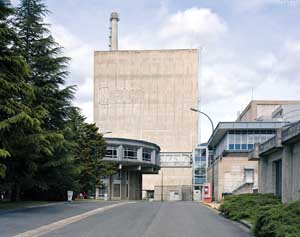
Recent months brought several developments in Europe’s much-touted "nuclear renaissance." Spain Extends Life of Nation’s Oldest Reactor Spain’s government on July 2 granted a four-year extension to the operating permit of the 466-MW Santa María de Garoña nuclear power plant (Figure 3). The decision follows a nonbinding recommendation by Spain’s nuclear regulator in June to […]
-
 Nuclear
Sweden Selects Site of First Permanent Spent Nuclear Fuel Repository
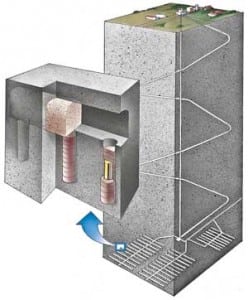
In early June, as U.S. Energy Secretary Steven Chu confirmed to a House Subcommittee that Yucca Mountain repository was, without doubt, "off the table" and that a blue ribbon panel would further advise the government on what it should do with its high-level nuclear waste, Sweden announced the site of what could be the world’s first permanent spent fuel repository.
-
 O&M
O&MTurkey Opens Electricity Markets as Demand Grows
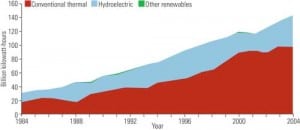
Turkey’s growing power market has attracted investors and project developers for over a decade, yet their plans have been dashed by unexpected political or financial crises or, worse, obstructed by a lengthy bureaucratic approval process. Now, with a more transparent retail electricity market, government regulators and investors are bullish on Turkey. Is Turkey ready to turn the power on?
-
 Coal
CoalRecession Reduces Demand for Electricity
When roving Contributing Editor Mark Axford attended several recent energy conferences, he found the same questions asked at each one about new U.S. generation sources and consumption patterns. Unfortunately, the experts had few good answers to those questions.
-
Commentary
U.S. Being Passed by Other Nuclear Nations
The U.S. may have created the roadmap for the next generation of nuclear reactors, but other countries are farther down the road to development. The U.S. Department of Energy initiated the Generation IV Roadmap development project in January 2000. Soon, nine other countries joined, including some of the largest commercial nuclear powers, such as France, […]