
Legislative
-
 News
NewsDecarbonization, Electrification Key Among 8 Priorities for U.S. Investor-Owned Power Companies
In line with customer preferences, U.S. investor-owned electric companies are heavily invested in decarbonization and electrification, the Edison Electric Institute (EEI) told Wall Street analysts and bankers on Feb. 6. In its annual presentation to potential investors and industry observers, the trade association that represents U.S. investor-owned electric companies lamented a number of uncertainties affecting […]
-
 IIOT
IIOTDOE and FERC Mull Incentivizing Cybersecurity, Physical Security of Power and Gas Infrastructure
The U.S. Department of Energy (DOE) and Federal Energy Regulatory Commission (FERC) want to explore how federal and state authorities could incentivize cybersecurity and physical security in the power and natural gas sectors. The agencies issued a notice on Feb. 4 announcing they would jointly hold a technical conference on Thursday, March 28, 2019, from […]
-
 News
NewsCOP24’s Hefty Impact on the Power Sector
Two weeks of intense negotiations at the 24th meeting of the United Nations Framework Convention on Climate Change (UNFCCC) Conference of the Parties (COP) in Katowice, Poland, last December culminated in
-
 News
NewsColstrip Power Plant Threatened by Westmoreland Bankruptcy
The Colstrip Power Plant, a four-unit, 2,094-MW coal-fired station located about 100 miles east of Billings, Montana, could see its coal supply contract nullified as a result of Westmoreland Coal Co.’s Chapter 11 bankruptcy reorganization. Westmoreland operates the 25,000-acre Rosebud coal mine, among others. Rosebud is adjacent to the Colstrip plant and supplies almost all […]
-
 News
NewsPG&E Stock Rises After Agency Says No Role in 2017 Fire
Shares of beleaguered California utility Pacific Gas & Electric (PG&E) soared on Jan. 24 after a state agency said the company bore no responsibility for a 2017 wildfire in the state. A statement from the California Department of Forestry and Fire Protection (Cal Fire) on Thursday said, “After an extensive and thorough investigation, Cal Fire […]
-
 News
NewsPG&E: Judge’s Proposal Could Cost Utility $150 Billion
Pacific Gas & Electric (PG&E) on Jan. 23 said a federal judge’s proposal that the utility mitigate fire danger in its service territory by trimming trees, along with inspecting and repairing thousands of miles of power lines, could cost the company as much as $150 billion this year. William Alsup, a judge in the U.S. […]
-
 Press Releases
New Jersey BPU Approves Community Solar Pilot Program
Community solar will begin serving NJ renters, low-income families, businesses within two years January 17, 2019 (Trenton, N.J.) – Today the New Jersey Board of Public Utilities (BPU) approved rules for a new community solar pilot program that will give many renters, low-income families, businesses, and others an easy and affordable way to go solar […]
-
 News
NewsNew York Latest State to Set 100% Carbon-Free Goal, with Increased Renewables
New York Gov. Andrew Cuomo (D) is continuing his push for renewable energy in the state, as the governor on Jan. 15 announced an initiative for New York to achieve 100% carbon-free power generation by 2040. Cuomo’s “Green New Deal,” part of his 2019 Justice Agenda and as part of the state budget, calls for […]
-
 News
NewsGovernor to TVA: Keep Paradise Coal Unit Open
In a letter addressed to Tennessee Valley Authority (TVA) CEO Bill Johnson, Kentucky Gov. Matthew G. Bevin said it “would be a huge mistake” to permanently shut down Paradise Unit 3—the last operating coal unit at the Paradise site in Muhlenburg County, Kentucky. According to the governor, “the impact on our economy and our region’s […]
-
 News
NewsClean Air Act Issues Congress Could Grapple With in New Session
While the Republican-led U.S. House and Senate in the 115th Congress was mainly focused on reviewing, for modification or repeal, several environmental rules issued under the Clean Air Act (CAA), the new Democrat majority in the House could focus on a slew of different measures, a new report from the Congressional Research Service (CRS) suggests. […]
-
 News
NewsBipartisan Nuclear Modernization Bill Clears Congress
A bipartisan bill to modernize regulation of the nation’s nuclear power fleet passed in the U.S. Senate on Dec. 20 and the House on Dec. 21 without much opposition. It now heads to President Trump. S.512, better known as the Nuclear Energy Innovation and Modernization Act (NEIMA), seeks to provide a program to develop […]
-
 Commentary
Bailing Out Coal and Nuclear Plants Is Misguided
For decades the U.S. has relied on coal for much of its energy supply. States with abundant coal—Pennsylvania, West Virginia, Kentucky, and others—have towns and cities whose economies are driven by the coal industry. Now, as the coal industry declines and those areas struggle, the Trump administration wants to use taxpayer money to save coal […]
-
 News
NewsKey Power Industry Conferences and Trade Shows to Think About in 2019
Conferences and exhibitions are a valuable way for power professionals to share ideas and network, gain up-to-date training, further education, understand regulatory or policy changes, and access the latest products and technologies. POWER‘s editors compiled this helpful list of events in 2019 that cater to the power industry. FEBRUARY ARC Industry Forum February 4-7 Orlando, […]
-
 News
NewsRegulators Back Dominion Takeover of SCANA
Dominion Energy’s bid to purchase SCANA Corp. and its South Carolina Electric & Gas (SCE&G) utility, approved by South Carolina regulators on Dec. 14, could bring some stability to SCANA. Shareholders hope that’s the case; they’re excited about swapping their devalued SCANA shares for more valuable Dominion stock. Workers, though, remain uncertain about their futures, […]
-
 News
NewsSenate Confirms McNamee as FERC Commissioner
The U.S. Senate on a 50-49 party-line vote December 6 confirmed Bernard McNamee to a seat on the five-member Federal Energy and Regulatory Commission (FERC), despite questions about his independence from the Trump administration and his previous comments in support of a bailout of coal and nuclear U.S. power plants at the expense of renewable […]
-
 News
NewsXcel’s Latest Plan: Carbon-Free by 2050
Xcel Energy has announced its plan to move to 100% carbon-free power generation by 2050, with the utility also saying it will reduce carbon emissions by 80% by 2030, from 2005 levels. Xcel, headquartered in Minneapolis, Minnesota, serves customers in eight states and over the past two years has announced a significant number of renewable […]
-
 News
NewsMidterms a Mixed Bag for State Energy Ballot Measures
The midterm elections yielded mixed results for power-related matters across the U.S. Voters in Arizona shot down a measure that would have expanded the state’s renewable portfolio standard (RPS) to 50% by 2030, but voters in Nevada overwhelmingly backed a similar measure, adding it to a growing list of states that have sought 50% RPS […]
-
 Commentary
Tax Reform Legislation Drives Increased Focus on Cash Flows
In the wake of the implementation of the 2017 Tax Cuts and Jobs Act (TCJA), many utilities and their holding companies are experiencing increasing pressure on cash flow due to the elimination of bonus
-
 O&M
O&MHydropower Bill Overwhelmingly Clears Senate, Heads to President’s Desk
The U.S. Senate has cleared a major water infrastructure bill that contains several provisions promoting hydropower development, sending it to the president’s desk. The Senate passed S. 3021, “America’s Water Infrastructure Act of 2018,” on October 10 through a bipartisan vote of 99–1. Because the House of Representatives unanimously passed the bill in a voice […]
-
 Legal & Regulatory
Can Coal and Nuclear Power Plants Be Saved?
It’s no secret that U.S. nuclear and coal-fired power plants are struggling to remain viable in competitive markets. Many plants have been retired for economic reasons long before the facilities reached the
-
 Legal & Regulatory
Federal Appeals Court Upholds New York’s Nuclear Subsidies
New York’s subsidies of nuclear power are legally sound, the U.S. Court of Appeals for the Second Circuit has concluded. The decision comes two weeks after the Seventh Circuit upheld a similar measure in Illinois. The development marks a victory for the nuclear industry, which has been financially crippled by the rise of cheap gas […]
-
 Legal & Regulatory
Oglethorpe Agrees to Continue Vogtle Nuclear Project with Conditions; Final Vote Still to Come
Owners of the beleaguered Plant Vogtle nuclear expansion project have voted—at least for now—to continue construction of two new AP1000 reactors at the site near Waynesboro, Georgia. Directors of the Municipal Electric Authority of Georgia (MEAG Power) and Oglethorpe Power on September 24 each agreed the oft-delayed and increasingly over-budget project should move forward, although […]
-
 Legal & Regulatory
Appeals Court Backs Illinois’ Nuclear Subsidies
The U.S. Court of Appeals for the Seventh Circuit on September 13 upheld subsidies offered by Illinois to help struggling nuclear power plants. The court rejected arguments from power producers and some Illinois energy consumers that so-called zero-emission credits (ZEC) are preempted by the Federal Power Act. Opponents argued the program violates the Commerce Clause […]
-
 Legal & Regulatory
EPA Schedules One Hearing on Proposed ACE Rule
The U.S. Environmental Protection Agency (EPA) on September 10 announced it will hold one hearing to get input from the public and stakeholders on its Affordable Clean Energy (ACE) rule, the Trump administration’s replacement for the Obama-era Clean Power Plan (CPP). The EPA said it has scheduled an all-day hearing October 1 at the Ralph […]
-
 Legal & Regulatory
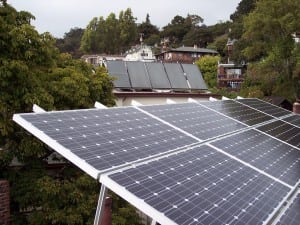
California Mandates 100% Renewable Energy
California Gov. Jerry Brown on September 10 signed into law a measure requiring the state to produce all its electricity from renewable sources by 2045. It’s a goal that also has been set by Hawaii and is being discussed by other states. Environmental groups and renewable energy advocates immediately praised Brown’s action. Utilities operating in […]
-
 Legal & Regulatory
Plans Move Forward for Privately Funded Storage of Nuclear Waste
The Trump administration has revived the discussion of using Yucca Mountain in Nevada as a repository for the nation’s nuclear waste. Nevada officials remain opposed to the idea of putting spent nuclear fuel in long-term storage at a site about 100 miles from Las Vegas. But while a bill to resurrect Yucca Mountain as a […]
-
 Commentary
Power Struggle: Cannabis Growers Face High Energy Costs in New Jersey
New Jersey is yet another state expanding public access to cannabis for medical purposes and is poised to legalize access for recreational use. This means energy service providers and public utilities will
-
 T&D
T&DA Wind Experiment: The Hornsdale Wind Farm
Along with producing power from 99 turbines, the 309-MW Hornsdale Wind Farm in South Australia has helped trial new technologies that could ramp up power system security and reliability. At first glance, the
-
 Renewables
Australia Braces for Power System Transformation, Disruptions
The inaugural integrated system plan (ISP) released by Australia’s Energy Market Operator (AEMO) in mid-July warns that the country is in the midst of a “transformative and unprecedented” rate of change
-
 Renewables
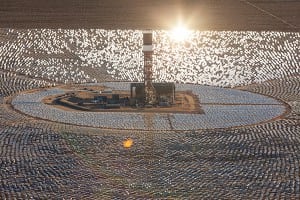
California Assembly Passes 100% Renewables Mandate
Lawmakers in California’s Assembly on August 28 cleared a key vote on a bill that would require the state to obtain 100% of all retail electricity sales from renewable and zero-emissions resources by 2045. The state’s Assembly voted 43–32 in favor of SB 100. The bill, which now heads to the state Senate for a […]