
Legal & Regulatory
-
Legal & Regulatory
Gridlock Continues for Grid Policy
Early last year, there were promising signs that electric transmission line construction would be facilitated by the convergence of the new administration’s emphasis on developing remote renewable generation resources, proposed legislative provisions expanding federal siting authority, and the granting by the Federal Energy Regulatory Commission (FERC) of generous cost-of-service returns on such investments. However, the stars did not align for transmission policy in 2009 as had been hoped, and the forecast is cloudy.
-
 Legal & Regulatory
Power Owners in Strong Position to Collect Liquidated Damages
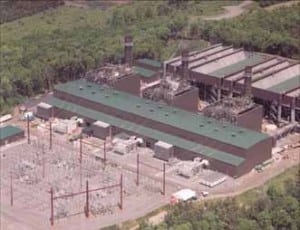
Although law varies by jurisdiction, a recent case demonstrates arbitration panels’ willingness to uphold liquidated damages clauses in power plant engineering, procurement, and construction contracts.
-
Legal & Regulatory
Electric Vehicles: The Uncertain Road Ahead
"Diversify, diversify, diversify." That has long been the mantra of many Wall Street pundits when advising investors on how to weather the risks of the stock market. Now advocates of electric vehicles (EVs) are using this same logic to champion plug-in hybrid electric vehicles (PHEVs).
-
Legal & Regulatory
Computing in the Clouds, Part II: It’s About Security
What do Gmail, YouTube, Twitter, and Facebook have in common? All are examples of cloud computing. All present serious data security challenges.
-
Legal & Regulatory
Renewable Realities
"It’s anti-renewables" is becoming a familiar refrain voiced before public utility commissions, air quality management districts, and other public agencies with jurisdiction over the siting and operation of new fossil-fueled electric generation projects. The survival — and, in some cases, expansion — of legislatively mandated renewable energy requirements, tax incentives, and outright subsidies through the recent economic downturn has further encouraged opponents of new fossil-fueled generation to cloak themselves in the environmental flag, irrespective of their underlying motives and goals.
-
Legal & Regulatory
The U.S. Has a New Dash for Gas
Natural gas has reemerged as the choice for new electric generation, according to the North American Electric Reliability Corp. Does this raise new reliability issues?
-
Legal & Regulatory
GHG Emissions Reporting Begins Jan. 1
Last fall, the U.S. Environmental Protection Agency (EPA) issued a rule creating a mandatory national system for reporting greenhouse gas (GHG) emissions. The agency requires regulated entities to begin monitoring GHG emissions January 1, 2010, and to submit their first annual emissions reports March 31, 2011. This is a key step toward federal regulation of GHG emissions (a step that may have major implications regarding "major sources" and permitting requirements for new sources). It’s also an opportunity for power producers to implement their inventory management plans.
-
Legal & Regulatory
An Economist Looks at Climate Policy
An economist scratches his head in consternation as he looks at the discussion about climate change and energy conservation. Take his quiz to learn why commonly accepted assumptions make poor economic sense.
-
Legal & Regulatory
Where Are the New Engineers?
The U.S. isn’t producing the workforce it needs for the future of energy generation. And forget about “green jobs,” an undefined concept.
-
Legal & Regulatory
When It Comes to Nukes, Little Things Mean a Lot
It’s the little stuff that can lead to big stuff, the Nuclear Regulatory Commission tells FirstEnergy in relation to its Perry Nuclear Power Plant in Ohio.
-
Legal & Regulatory
Addressing the Intraday Trading Position Conundrum
Power traders need to get faster, more accurate information on how markets are working and how they are swinging. They should look to telecommunications and manufacturing markets for solutions.
-
Legal & Regulatory
A Flood of Climate Change Tort Cases
On October 16, the Fifth Circuit Court of Appeals revived a lawsuit filed by residents along the Mississippi Gulf coast against several corporations in the energy, fossil fuels, and chemicals industries alleging that the defendants were responsible for property damage caused by Hurricane Katrina — Comer v. Murphy Oil USA, et al., No. 07-60756 (5th Cir. Oct. 16, 2009).
-
Legal & Regulatory
TREND: Coal in a Hole
While pundits opine that the U.S. economy is in recovery, that doesn’t show up in the world of coal-fired electric power plants (perhaps lagging economic indicators). For proof, see these recent stories.
-
Legal & Regulatory
Talking Smart Grid Talk
What is the smart grid all about? A new book—a dictionary—attempts to define and demystify the jargon and bafflegab surrounding the buzzing smart grid. It’s a somewhat flawed but worthwhile first attempt at unraveling the often bizarre and sometimes baloney-filled smart grid nomenclature.
-
Legal & Regulatory
Pushmepullyou: Disputes and Discussions on Grid Politics
While industry interests were trying to get on board the smart grid gravy train last fall in Washington, D.C., in rural West Virginia folks were dealing with the force of a political locomotive pushing a high-voltage interstate grid, with property owners opposed and labor in favor.
-
 Legal & Regulatory
The Natural Gas Glut and the Doctrine According to Hefner
Natural gas is back, says gas guru Bobby Hefner, and in a big way. New technologies, new discoveries, low prices, and new optimism characterize a natural gas industry that just three years ago was bemoaning its future and looking to foreign LNG imports as the industry’s salvation. Today, the gloom is gone, and the gas folks are clicking their gaseous heels in glee.
-
Legal & Regulatory
NRC Withholds “Waste Confidence” Finding, Citing Yucca Decision
In a series of ironies, the U.S. Nuclear Regulatory Commission has voted to reject an early finding that the U.S. can adequately manage nuclear reactor spent fuel, in the wake of the Obama administration’s decision to pull the radioactive plug on Nevada’s Yucca Mountain. The vote by the majority Republicans on the commission effectively puts a temporary ban on new nuclear reactor construction in the U.S.
-
Legal & Regulatory
Conn. v. AEP: Call for Congressional Action
In September, the Second Circuit Court of Appeals reversed the district court ruling in Connecticut v. American Electric Power ("Decision"), a lawsuit initiated by eight states, New York City, and environmental organizations against six power-generating utilities. The plaintiffs allege that carbon dioxide emissions from the defendants’ fossil fuel – fired power plants in 20 states are contributing to a public nuisance — climate change and global warming.
-
Legal & Regulatory
Feds Must Deliver on Climate Change Legislation
For several years there has been widespread doubt about Washington’s ability to move forward with a national program to address climate change and reduce greenhouse gas (GHG) emissions. At various times during the Bush administration, it appeared that legislation might be possible, but it always collapsed under the weight of partisan politics and competing special […]
-
Legal & Regulatory
Flipping the Switch: Why Utilities Need to Shed Light Now on Carbon Risk
Carbon is poised to become an auditable and verifiable reporting requirement for American business. Because utilities are among the organizations with the most at stake in a carbon-constrained economy, they should proactively tackle carbon management and carbon accounting in spite of uncertainties about the precise formulation of the final regulatory framework. In short, whether a carbon accounting requirement is legislative, administrative, or driven by business partners and consumers, now is the time for utilities to act.
-
Legal & Regulatory
Appeals Court: EPA Rule Oversteps on NOx Allowance Purchases
The Appeals Court in D.C. has struck down a Bush administration 2007 ozone rule, sending the issue back to the Environmental Protection Agency for a mulligan. What will this mean in the future?
-
Legal & Regulatory
DOE Mission Support
The National Academy of Public Administration faults the U.S. Department of Energy on human resource management, contract controls, and financial management.
-
-
Legal & Regulatory
Falling Demand Leads TVA to Trim New Reactor Plans
TVA scales back plans to revitalize new nuclear construction at its Bellefonte plant, suggesting that it will scrap plans for new units at the site and perhaps focus on its unbuilt unit that has been mothballed for 25 years.
-
Legal & Regulatory
SWEPCO’s Construction Conundrum
"If you build it, they will come" — the litigants, that is. The lawsuit involving the construction of Southwestern Electric Power Co.’s (SWEPCO) John W. Turk Jr. ultrasupercritical coal-fired power plant in Arkansas gives new meaning to that popular quote from the movie Field of Dreams.
-
Legal & Regulatory
Old Challenges Persist in Impeding Renewable Energy Goals
In June, California issued yet another report on renewable energy. This one, a joint effort of the California Public Utilities Commission (CPUC) and the California Energy Commission (CEC), analyzes implementation issues related to increasing the state’s renewables portfolio standard (RPS) to 33% by 2020. The report is the latest in an increasingly growing number of assessments, policy pronouncements, and administrative decisions examining renewable energy and climate change issues.
-
Legal & Regulatory
Heritage Foundation: Nuclear Supply Chains Key to Revival
If a nuclear revival is to happen, it will depend on understanding the global nature of the supply chains that support it, argues a U.S. conservative think tank.
-
Commentary
The 100-Nukes Solution
Does the House Republicans’ alternative to the Democratic energy plan—with the GOP’s proposal for 100 new nuclear plants in the next 20 years—pass the straight-faced test? Not even close, and the GOP knows it.
-
Legal & Regulatory
House OKs Grid-Siting Reform, but Only in the West
The bill that the U.S. House passed 219-212 in late June to establish a cap-and-trade regime for control of global warming gases also includes new authority for overriding states on siting power lines. But the new authority only applies to the West.
-
 Legal & Regulatory
Uranium: A Strange and Fascinating Story
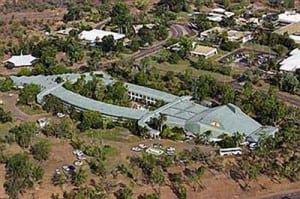
Everything you want to, or should, know about uranium mining and processing is in a new book by Tom Zoellner, not including the terrifying threat of crocodiles in northern Australia.