
Legal & Regulatory
-
 Legal & Regulatory
Environmental Group Alleges TVA Coal Ash Pollution Is Leaking Into River
The Southern Environmental Law Center (SELC) informed the Tennessee Valley Authority (TVA) on Nov. 10 that it intends to bring suit under the Clean Water Act to stop the release of coal ash pollutants it says are leaking from the TVA’s Gallatin coal ash ponds into the Cumberland River. Gallatin Fossil Plant is a four-unit […]
-
 Legal & Regulatory
Oncor Wants to Spend $5.2 Billion on Energy Storage
Texas utility Oncor announced this week that it will seek regulatory approval to spend up to $5.2 billion on 5 GW of energy storage resources to firm up its grid and improve reliability. Oncor owns the state’s largest electrical grid, and it hopes to deploy distributed storage batteries across its entire system beginning in 2018. […]
-
 Legal & Regulatory
Nuclear Plants on the Edge Could Benefit from Clean Power Plan
A couple of recently released reports offer some hope for the future of nuclear power plants operating on the fringe of profitability. Moody’s Investors Service suggests that the U.S. Environmental Protection Agency’s (EPA’s) Clean Power Plan “could increase the value of nuclear power as a non-carbon emitting generation source.” In its report, “Environmental Mandates and […]
-
 Legal & Regulatory
Federal Court Tosses Antitrust Suit Against Chinese Solar Companies
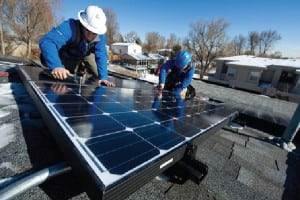
A federal court in Michigan on Oct. 31 dismissed the $950 million antitrust suit filed against three Chinese solar photovoltaic (PV) panel manufacturers by bankrupt firm Energy Conversion Devices (ECD). ECD, which at one time was the world’s largest manufacturer of thin-film solar panels, was forced into Chapter 7 liquidation in 2012 after Chinese firms […]
-
 Legal & Regulatory
ERCOT Concerned, Faces Power Shortages in Lower Rio Grande Valley
The Electric Reliability Council of Texas (ERCOT) completed an evaluation of a plan to export power to Mexico from the Frontera Generation Station, located in Mission, Texas. Although the results indicated that the power system could operate effectively during normal conditions without Frontera’s capacity, ERCOT says it has concerns with power supply sufficiency and transmission […]
-
Legal & Regulatory
Reevaluating the Wholesale Market Power Analysis
The Federal Energy Regulatory Commission (FERC) serves as the gatekeeper to wholesale power markets in interstate commerce. The process to obtain and retain authority to sell into these markets at market-based rates (MBR) can be onerous. Any failure to fully comply with FERC’s regulations could result in participation restrictions and civil penalties of up to […]
-
 Legal & Regulatory
China’s War on Air Pollution
China has been battling—and losing—a “war” on air pollution for years. Stepping up its efforts, the country recently issued new policy measures, tougher even than those in the U.S. and European Union, that could have big implications for its coal power sector. Reports that heavy smog has blanketed large swathes of China’s provinces have become […]
-
 Commentary
William D. Magwood, IV on Nuclear Power’s Present and Future
William D. Magwood, IV, formerly head of the U.S. Department of Energy’s Office of Nuclear Energy and commissioner at the U.S. Nuclear Regulatory Commission and current director-general of the Organisation for Economic Co-operation and Development (OECD) Nuclear Energy Agency (NEA), spoke with POWER Editor Gail Reitenbach on October 16 at the World Nuclear Exhibition outside […]
-
 Legal & Regulatory
EPA Releases Additional Information on Clean Power Plan
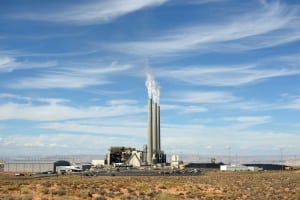
The U.S. Environmental Protection Agency (EPA) has released a notice of data availability (NODA)—making additional information and ideas available for public comment—and it has also proposed carbon goals for areas in Indian Country and U.S. territories. Janet McCabe, acting assistant administrator for the EPA’s Office of Air and Radiation, explained the two actions related to […]
-
 Legal & Regulatory
States Challenge NRC’s Spent Nuclear Fuel Storage Rule
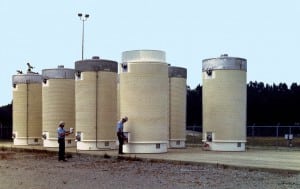
The Nuclear Regulatory Commission’s (NRC’s) final rule governing long-term spent nuclear fuel storage onsite at U.S. power plants is illegal and should be overturned, the attorneys general of New York, Connecticut, and Vermont claim in a legal challenge filed on Monday. In a petition filed with the U.S. Court of Appeals for the D.C. […]
-
 Legal & Regulatory
D.C. Circuit Greenlights CSAPR
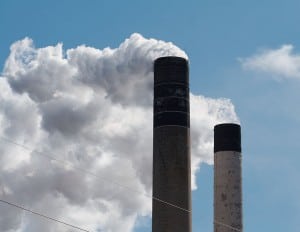
The U.S. Court of Appeals for the District of Columbia Circuit ruled on Oct. 23 that the EPA can move forward with implementation of the Cross-State Air Pollution Rule (CSAPR) following the April ruling from the Supreme Court upholding most of the rule. The D.C. Circuit had previously voided the rule in December 2011, but […]
-
 Legal & Regulatory
EC Agrees on 2030 Climate and Energy Policy Framework
Meeting in Brussels, Belgium, Oct. 23–24, the European Council (EC) agreed on the 2030 climate and energy policy framework for the European Union (EU), calling on all countries to come forward with ambitious targets and policies. The EC endorsed a binding EU target of at least a 40% reduction in domestic greenhouse gas emissions by […]
-
 Legal & Regulatory
Collusion Alleged Between EPA and NRDC
Republicans on the Senate Environment and Public Works (EPW) Committee released emails between top officials at the U.S. Environmental Protection Agency (EPA) and the Natural Resources Defense Council (NRDC), which they say demonstrate a “very close working relationship” between the two organizations. The emails are associated with the development of the EPA’s proposed carbon rule, […]
-
 Legal & Regulatory
Supreme Court Rejects Review of EPA’s Ozone NAAQS
The U.S. Supreme Court on Monday declined to take up industry’s challenge to a federal court ruling that upheld the Bush administration’s air quality standard for ozone. The high court’s denial leaves intact the D.C. Circuit’s July 2013 decision upholding the Environmental Protection Agency’s (EPA’s) last revision of its National Ambient Air Quality Standards (NAAQS) […]
-
 Legal & Regulatory
World’s First Post-Combustion CCS Coal Unit Online in Canada
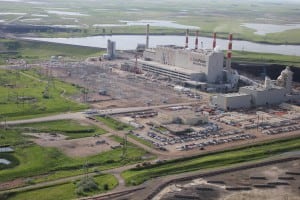
The first full-scale commercial post-combustion carbon capture and sequestration (CCS) project at an operating coal-fired power plant is now online in Estevan, Saskatchewan, roughly 10 miles north of the U.S. border. The heart of the $1.4 billion project at Boundary Dam Power Station is the rebuilt 110-MW Unit 3, originally commissioned in 1970. The project, […]
-
 Legal & Regulatory
FERC Approves Cove Point LNG Export Terminal Project
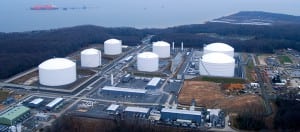
After more than a year of deliberation, the Federal Energy Regulatory Commission (FERC) approved Dominion’s proposal to construct and operate liquefaction and export facilities at its existing Cove Point liquefied natural gas (LNG) import terminal located in Lusby, Md. The proposed export facility will be contained within the existing footprint of the 131-acre import terminal […]
-
 Legal & Regulatory
A U.S. Power Industry Regulatory Update
The U.S. power sector has seen a number of developments on the regulatory front in recent months. Here’s where major federal rules stand today. (For a more dynamic and graphic version of this article, see http://powermag.com/long-form-stories/bw-power/ .) GHG Rules New Power Plants. The Environmental Protection Agency (EPA) in September 2013 revised a 2012 proposal to […]
-
Legal & Regulatory
Unbundled Renewable Energy Credits and the Benefits of Standardization
Unbundled Renewable Energy Credits and the Benefits of Standardization Unbundled renewable energy credits and certificates (RECs) separate the renewable, or green, component of energy from the actual
-
 Legal & Regulatory
Four CPUC, PG&E Executives Fired Over Improper Emails
Three top vice presidents with Pacific Gas & Electric (PG&E) and the chief of staff of California Public Utilities Commission (CPUC) President Michael Peevey were all fired Sept. 15 over improper communications between the company and the CPUC. Though the emails concerned a pending Gas Transmission and Storage rate case, the dispute has become tied […]
-
 Legal & Regulatory
EPA: Malfunctions Will No Longer Shield Plants from Emissions Penalties
Affirmative defense provisions can no longer insulate generators from monetary penalties for Clean Air Act violations that result from facility startup, shutdown, and equipment malfunction, the Environmental Protection Agency (EPA) has proposed. In a supplemental notice of proposed rulemaking (SNPR) published on Sept. 17 in the Federal Register, the agency proposes to revise its February […]
-
Legal & Regulatory
Seven Coal-Fired Units to Be Retired as Result of Settlement
Consumers Energy—Michigan’s largest utility—reached an agreement with the U.S. Environmental Protection Agency (EPA) and the U.S. Department of Justice that will result in more than $2 billion being spent on upgrades at its power plants and the closure of seven coal-fired units, according to the company. The settlement resolves claims that Consumers Energy violated the […]
-
 Legal & Regulatory
Congressional Watchdog Foresees Greater Coal Retirements, Fewer Retrofits Through 2025
Power companies will retire more coal-fired generating capacity and retrofit much fewer units with environmental controls than estimated just two years ago, the Government Accountability Office (GAO) reveals in a new report. The report released on Tuesday finds that in response to shifting market conditions and four Environmental Protection Agency (EPA) rules (not including the […]
-
 Legal & Regulatory
EPA Extends Clean Power Plan Public Comment Period
The Environmental Protection Agency (EPA) has extended the public comment period for its proposed rule to limit carbon dioxide emissions from existing power plants by 45 days. Janet McCabe, acting assistant administrator for the EPA’s Office of Air and Radiation, today told reporters in a press call that the EPA’s comment period for its Clean […]
-
 Legal & Regulatory
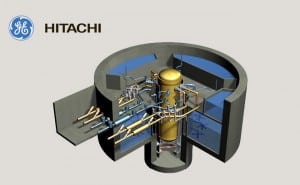
NRC Certifies GE Hitachi ESBWR Design
The U.S. Nuclear Regulatory Commission (NRC) on Sept. 16 issued design certification for GE Hitachi’s Economic Simplified Boiling Water Reactor (ESBWR), the company announced. The ESBWR is a Gen-III+ advanced boiling water reactor (BWR) that employs true passive safety systems and a simplified design utilizing natural circulation. These attributes allow the reactor to cool itself […]
-
 Legal & Regulatory
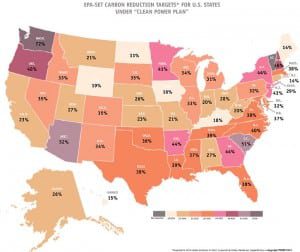
Six States Sound Off on EPA’s Clean Power Rule
Regulators from six states shared starkly different views on the Environmental Protection Agency’s (EPA’s) proposed carbon rules for existing power plants at a House hearing on Tuesday. Some state-level officials said the EPA’s overall emission targets and suggested means to achieve them are based on unworkable and unrealistic assumptions about how state and regional power […]
-
 Legal & Regulatory
Fracking Fissures: Will Politics Impede Production?
They call themselves “Fractivists.” Environmental and community activists fearful of relatively new natural gas and oil drilling technologies that have transformed the U.S. energy economy have launched a high-profile, highly hyped campaign to shut down new natural gas production. But their prospects of success look dodgy. Ground Zero in the debate over fracking—shorthand for the […]
-
 Legal & Regulatory
EPA Approves Nation’s First Underground Injection Permits for Carbon Sequestration
The Environmental Protection Agency (EPA) on Tuesday granted the nation’s first four Class VI underground injection permits for carbon sequestration to the federally backed FutureGen 2.0 carbon-capture-and-storage (CCS) project. The Department of Energy formally committed $1 billion to the $1.68 billion project being developed by the FutureGen Industrial Alliance, a coalition of coal producers, users, […]
-
 Legal & Regulatory
Stricter EPA Ozone Pollution Standards May Be Forthcoming
Revised national ambient air quality standards (NAAQS) for ozone that are expected from the Environmental Protection Agency (EPA) this December will likely be stricter. Agency staff from the Office of Air Quality Planning and Standards in a 597-page final policy assessment released on Aug. 29 recommend revising the standard to within a range of 60 […]
-
 Legal & Regulatory
PG&E Slapped with $1.4 Billion Fine for San Bruno Blast
Nearly four years to the day after eight people were killed in a natural gas pipeline explosion in San Bruno, two judges of the California Public Utilities Commission (CPUC) ruled on Sept. 2 that Pacific Gas & Electric (PG&E) must pay a record $1.4 billion in fines and penalties for its role in the disaster. […]
-
Legal & Regulatory
What Went Wrong with SMRs?
At the graveyard wherein resides the “nuclear renaissance” of the 2000s, a new occupant appears to be moving in: the small modular reactor (SMR). This is a statement that might have appeared nonsensical even a year ago. SMRs looked to be the Next Big Thing in nuclear, a way to circumvent the biggest obstacle to […]