Legal & Regulatory
-
 Legal & Regulatory
FirstEnergy Wants Out of Competitive Power Markets
FirstEnergy Corp.—one of the nation’s largest investor-owned electric utilities, serving customers in Ohio, Pennsylvania, West Virginia, Maryland, New Jersey, and New York—has made the strategic decision to exit the competitive power business. “We have made our decision that over the next 12 to 18 months we’re going to exit competitive generation and become a fully […]
-
 Legal & Regulatory
Election Roundup: What Trump’s Win Means for Energy and Environment
Donald Trump’s stunning victory in the U.S. presidential election portends enormous changes in U.S. energy and environmental policy, and a nearly complete turnover of the men and women who will administer that policy for the next four years.
-
 Legal & Regulatory
New England’s Drive to Boost Gas Supplies Hits Roadblock
For several years, states in the northeastern U.S. have been in the midst of a major shift away from coal and nuclear power toward natural gas. As aging coal plants shut down on environmental concerns, and several of the region’s nuclear plants have been prematurely retired or faced with challenging economics, developers of natural gas–fired […]
-
 Legal & Regulatory
Germany Puts the Brakes on Rapid Renewables Expansion
In July 2016, the German parliament approved three major pieces of legislation specifically laying out the future of the celebrated Energiewende: the 2017 revision of the Renewable Energy Sources Act, the Electricity Market Act, and the Act on the Digitization of the Energy Transition. “These three pieces of legislation will ensure that the transition of […]
-
Legal & Regulatory
More Regulators Rely on Risk-Based Decision-Making
The dangers of the U.S.’s failing infrastructure have united both major political parties in calling for substantial capital investments to shore up safety and reliability. In California, the tragic explosion of the gas pipeline in San Bruno and the massive methane leak from the gas storage wells at Aliso Canyon have highlighted the potential for […]
-
 Legal & Regulatory
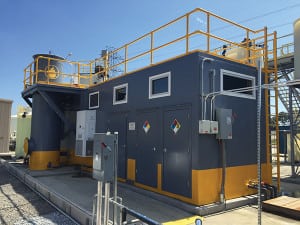
Next-Generation FGD Wastewater Bioreactor Technology Introduced for ELG Compliance
Compliance with one of the latest federal environmental regulations, the Effluent Limitations Guidelines (ELG), can be both costly and complicated. A newly available option offers features and capabilities that may make it a more attractive alternative than conventional approaches. In September 2015, the U.S. Environmental Protection Agency (EPA) finalized a new rule affecting flue gas […]
-
 Legal & Regulatory
The State of Solar: New Tech, Outdated Rate Designs
As installed capacity in the U.S. continues its breakneck growth, the solar photovoltaic sector is poised for another leap forward with a variety of new technologies—if increasingly ill-suited regulations and rate designs can be updated to keep pace. The global solar market has moved beyond its early, uncertain days. The luxury of behaving like start-ups […]
-
 Legal & Regulatory
Generators Sue to Block Lifeline for New York Nuclear Plants
A group of generators including Dynegy and NRG Energy filed suit in federal court on October 19 seeking to block an incentive program that would help three New York nuclear power plants remain economic over the next decade. An August decision by the New York Public Service Commission (PSC) approving New York’s Clean Energy Standard included a provision requiring […]
-
 Legal & Regulatory
H.F. Lee Coal Ash Spill Puts Duke Energy Under the Spotlight Again
Although Duke Energy maintains that “only very minor erosion of material” migrated from an inactive coal ash basin on the H.F. Lee Power Plant site, several environmental advocacy groups are concerned that the spill has dirtied North Carolina’s Neuse River. “This spill is easily visible to anyone in a boat. The area looks like a […]
-
 Legal & Regulatory
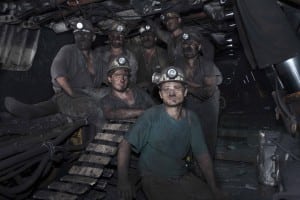
Court Orders EPA to Evaluate Coal Industry Job Losses Related to Air Pollution Rules
A federal court has ordered the Environmental Protection Agency (EPA) to file a plan and schedule to evaluate the consequences of its air pollution rules on jobs, finding for a giant coal company that is suing the agency for an alleged “war on coal” waged over the past five years. In an October 17 summary […]
-
 Legal & Regulatory
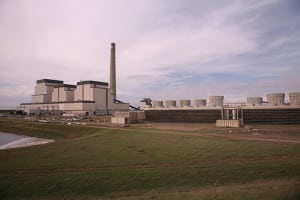
MPUC Decision Spells End for Two Coal Units at Xcel’s Largest Plant
The Minnesota Public Utilities Commission (MPUC) voted unanimously to support Xcel Energy’s latest long-range plan, which will transform the company’s energy fleet. Xcel expects to more than double its renewable energy portfolio as a result, delivering greater than 60% carbon-free energy to its Upper Midwest (Michigan, Minnesota, North Dakota, South Dakota, and Wisconsin) customers by […]
-
 Legal & Regulatory
Northeastern States File Suit to Force EPA Action on Ozone Transport Region Expansion
Six northeastern states are suing the Environmental Protection Agency (EPA) to force it to act on controlling air pollution blowing in from coal-fired power plants located in nine Midwestern and southern states. New York, Connecticut, Massachusetts, New Hampshire, Rhode Island, and Vermont on October 7 filed a lawsuit in the U.S. District Court for the […]
-
 Legal & Regulatory
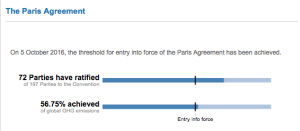
Paris Agreement Meets Final Requirement to Enter into Force
As of October 5, the Paris Agreement—the first global agreement on efforts to limit and mitigate the effects of climate change—had been ratified by a sufficient number of countries, representing at least 55% of global greenhouse gas (GHG) emissions, to bring the agreement into force.
-
Legal & Regulatory
Birds Continue to Muddy Permitting for Renewables
The push for clean energy notwithstanding, no silver bullet can cure the challenges that our continued use of carbon engenders. Every form of energy production, green or black, clean or dirty, presents downsides. Siting an energy facility—whether clean energy, hydro, natural gas, coal or nuclear—inherently imposes some form of environmental harm. For renewables, one of […]
-
 Legal & Regulatory
Is an Automated Compliance Tracking Solution Right for You?
Like so many other power plant functions these days, regulatory and standards compliance can be automated. Know what you want an automated system to do before you make a vendor decision. As North American Electric Reliability Corp. (NERC) Critical Infrastructure Protection (CIP) enforcement deadlines and audit dates loom—notably, CIP-003-6 in April 2017, which addresses the […]
-
Commentary
The Surprising Ground Zero for Electricity Market Fights
Look to the East and you’ll see a major initiative to transform New York’s electric grid into a cleaner, more efficient system. Look to the West and you’ll find ambitious clean energy legislation in California. Yet utility executives and federal regulators recently gathered in the Midwest to highlight how this region is ground zero for […]
-
 Legal & Regulatory
Dutch Parliament Vote Could End Coal Power Generation in the Netherlands
The Dutch parliament’s vote in favor of a motion to cut carbon emissions 55% by 2030 could spell the end of coal-fired power generation in the European nation. Although nonbinding, the measure would bring the Netherlands in line with agreements negotiated during the Paris climate talks that took place late last year. What it means […]
-
 Legal & Regulatory
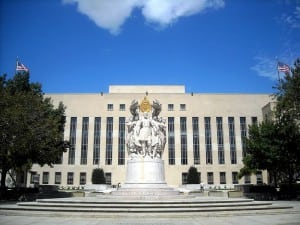
LIVE UPDATES: The Clean Power Plan at the D.C. Circuit
Oral arguments on the merits of the Environmental Protection Agency’s (EPA’s) Clean Power Plan were concluded before an en banc panel (10 judges, rather than the anticipated three) at the D.C. Circuit Court of Appeals on September 27. West Virginia v. Environmental Protection Agency (No. 15-1363) is arguably the most important environmental case in nearly […]
-
 Legal & Regulatory
FERC Adopts GMD Rule and Says Farewell to Tony Clark
The Federal Energy Regulatory Commission (FERC) last week unanimously adopted a final rule on reliability standards to address the threat to the grid from geomagnetic disturbances (GMD).
-
 Legal & Regulatory
Western Region Power Grid: Coming Soon?
Panelists debating the pros and cons of a regionalized western power grid seemed to agree that the development of such a system is inevitable, but they disagreed on how fast the evolution should occur. The panel discussion took place during the California Independent System Operator (ISO) Stakeholder Symposium held on September 7 in Sacramento. At […]
-
Legal & Regulatory
EPA Issues Updated CSAPR Rule in Push for Compliance with More Stringent 2008 Ozone NAAQS
Updates finalized by the Environmental Protection Agency (EPA) to its Cross-State Air Pollution Rule (CSAPR) identify nitrogen oxide emission (NOx) reductions from power plants in 22 states to help states address transported pollution under the agency’s more stringent 2008 ozone air quality standards. It marks the first time the EPA has updated an existing program […]
-
 Legal & Regulatory
Can Anything Save Merchant Nuclear?
In an industry as slow-moving as power generation, where planning horizons are measured in decades and assets can remain in operation for the better part of a century, it’s rare that things happen fast enough to catch anyone by surprise. But that’s exactly what’s happened to the U.S. merchant nuclear business over the past four […]
-
 Legal & Regulatory
Coal Power Plant Post-Retirement Options
Deciding to retire a coal-fired unit is often a tough call, but even tougher decisions follow. The next steps taken by a generation owner have multiple economic, environmental, and stakeholder consequences. Since 2000, U.S. generating companies (Gencos) have announced the closure of more than 200 coal-fired power plants, totaling 102 GW of generating capacity. Closures […]
-
 Legal & Regulatory
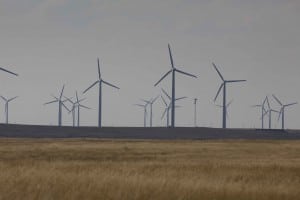
Huge Iowa Wind Farm Gets Go-Ahead
MidAmerican Energy’s Wind XI project in Iowa, which will comprise up to 2 GW of total generation, has received approval from state regulators to proceed with construction, the company said. The $3.6 billion project will place 1,000 turbines at several sites still to be finalized. Plans were announced in April 2016, and the Iowa Utilities […]
-
 Legal & Regulatory
U.S. and Canada Follow Different Climate Policy Paths—Does One Offer a Competitive Advantage?
Although the U.S. and Canada are both aiming for similar greenhouse gas (GHG) emissions reductions, the two countries are embarking on decidedly different approaches to reaching their goals, according to a report released on August 23. IHS Markit—a company that provides information, analytics, and solutions to customers in business, finance, and government—developed the report, titled […]
-
 Legal & Regulatory
Texas Coal Plant Wins Tax Appraisal Case, Property Value Cut 60%
The Sandy Creek coal-fired power plant—a 900-MW facility in Riesel, Texas—won a major victory in court on August 19 when a McLennan County jury agreed that the plant was appraised at a much higher value than justified by market conditions. The appraisal district had suggested the plant be valued at $900 million in 2014 and […]
-
 Legal & Regulatory
New Mexico Clears Hurdle to Provide Power to Facebook Facility
A unanimous vote by New Mexico’s Public Regulation Commission (PRC) today determined that Public Service Co. of New Mexico (PNM) will be allowed to provide new renewable capacity to a proposed Facebook facility through a special service agreement.
-
 Legal & Regulatory
Republican Tony Clark to Leave FERC in September
Tony Clark, the only Republican on the Federal Energy Regulatory Commission, announced Aug. 4 that the agency’s September meeting will be his last.
-
 Legal & Regulatory
Despite Policy Shifts, China Faces Huge Coal-Fired Overcapacity
China’s once-booming coal power sector is facing an existential challenge as continued breakneck expansion of new capacity is colliding with flattened growth in power demand, despite increasingly strenuous government efforts to put the brakes on new construction. According to a pair of new studies, China’s overcapacity in coal-fired generation could reach a staggering 400 GW […]