
Gas
-
 O&M
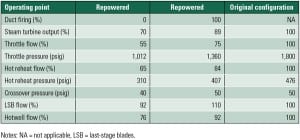
O&MRepower or Build a New Combined Cycle Unit?
URS recently performed a combined cycle repowering study to determine the feasibility and economics of repowering an existing steam turbine that went into service in the 1950s. The competing option was building a new combined cycle unit. The results of the study provide insight for others considering the same alternatives.
-
 Gas
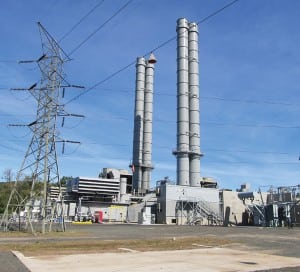
GasNew England Struggles with Gas Supply Bottlenecks
New England’s big push toward gas-fired power collided hard with its historical pipeline constraints this past winter, leaving multiple generators unable to respond to start-up requests from ISO-New England during a major storm. In the wake of the episode, the region is looking for some long-term solutions.
-
Gas
DOE Authorizes Second LNG Export Facility (Update)
Freeport LNG Expansion LP and FLNG Liquefaction LLC received conditional authorization on May 17 to export U.S. liquefied natural gas (LNG) from the Freeport LNG Terminal on Quintana Island, Texas, making it the second project to receive federal approval. Meanwhile, Canada is considering a proposed LNG export terminal in British Columbia.
-
Gas
BLM Releases Updated Fracking Rule for Public Lands
An updated fracking rule proposed by the U.S. Department of the Interior’s Bureau of Land Management (BLM) last week maintains a number of requirements from a previous draft—including that well operators should disclose all chemicals used in fracturing activities on public lands—but it will improve integration with state and tribal standards and increase compliance flexibility, the agency said.
-
Gas
NERC Calls for Gas Availability to Be Incorporated into Reliability Assessments
The North American Electric Reliability Corp. (NERC), in a special reliability assessment released on Wednesday, called for a number of changes to address the increased reliance on natural gas for power generation, among them incorporating gas availability and gas supply issues into electric reliability assessments.
-
Gas
AMP Freezes 873-MW Gas Peaking Facility on Financial Uncertainties
Plans to build an 873-MW natural gas peaking facility at FirstEnergy’s Eastlake Plant in Ohio have been frozen on uncertainties that affect project financing—including the federal "sequester"—its developers FirstEnergy and American Municipal Power (AMP) said last week.
-
Gas
FERC Announces Meeting on Coordination of Natural Gas and Electricity Markets
The Federal Energy Regulatory Commission (FERC) announced on May 9 that it will hold a commission meeting on May 16 to address the difficulties posed by inadequate alignment between how natural gas and electricity markets operate.
-
Gas
White House Signals Support for Natural Gas Exports
President Barack Obama said in a speech that the U.S. is likely to be a net exporter of natural gas by 2020, the Financial Times newspaper reported May 6. The newspaper said the president’s remarks, which were made in Costa Rica, are the strongest signal yet that the administration is leaning toward supporting export ventures.
-
Coal
Hearing Panelists Assess Grid Reliability Challenges Posed by Nat. Gas, Renewables
Panelists at a House hearing today refuted varied claims concerning if and how increased natural gas and renewables generation pose widespread challenges to the reliability of the electric grid. Some pointed to ineffective rules in the restructured wholesale power market and the failure of conventional power plants as being more of a threat to grid reliability.
-
Gas
ISO-NE: Possible Summer Nat. Gas Constraints, but Supply Will Be Reliable
Natural gas pipeline maintenance this summer could affect natural gas supplies to some power plants in the six-state New England region, but forecasts suggest that summer electricity supplies will adequately meet consumer demand under normal weather conditions, ISO New England (ISO-NE) said on Monday.
-
Gas
FERC’s Moeller to Address Natural Gas Issues at ELECTRIC POWER 2013
Federal Energy Regulatory Commission (FERC) hearings on issues related to natural gas and its use for electric power generation continue this month. The next hearing is set for May 16, two days after Commissioner Philip D. Moeller addresses the natural gas/electric power generation nexus in keynote remarks delivered to the 15th annual ELECTRIC POWER Conference in Chicago. POWER is a media affiliate of the conference.
-
 Coal
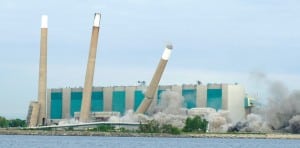
CoalOntario Goes Coal-Free in a Decade
By the end of 2013, one year ahead of its goal, the province of Ontario will be virtually coal-free—a first for a North American jurisdiction. How did the most populous part of Canada go from 25% to 0% coal-fired generation in just a decade, and what does this phaseout mean for the rest of the world?
-
 Coal
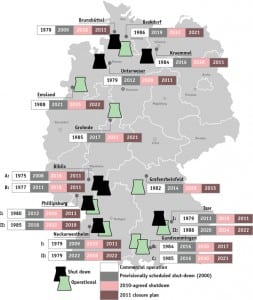
CoalGermany’s Energy Transition Experiment
Germany has chosen to transform its energy system within a few decades—an ambition that has evoked equal admiration and confusion. Has Europe’s largest economy embarked on a rational path to an energy future that will make it the bellwether for global acceptance of renewables, or will the complex array of current challenges encumber its grand transformation?
-
Gas
New York State PSC Approves $2B Transmission Line from Canada
The New York State Public Service Commission (PSC) last week approved the construction and operation of a 1-GW transmission line that could stretch 330 miles from the Canadian border to Astoria, Queens, through Lake Champlain and the Hudson River.
-
Coal
Lawmakers Push for Financing Parity for Renewable Projects
Bipartisan legislation introduced on Wednesday by a bicameral group of lawmakers seeks to give renewable energy project investors access to an existing corporate structure whose tax benefits are now only available to investors in fossil fuel–based energy projects.
-
Gas
NRG Buying Texas Cogen Plant
On Monday, NRG Energy Inc. announced that it has entered into an agreement to acquire the Gregory cogeneration plant in Corpus Christi, Texas. The transaction with a consortium of affiliates of Atlantic Power Corp., John Hancock Life Insurance Co. (U.S.A.), and Rockland Capital LLC is expected to close in the third quarter.
-
Coal
EIA Projects Coal Generation Gains Due to Increasing Gas Prices
The increasing cost of natural gas relative to coal is expected to increase coal’s share of total generation from 37.4% in 2012 to 39.9% in 2013, according to the U.S. Energy Information Administration (EIA) April release of its Short-Term Energy Outlook (STEO). Though that would leave coal’s percentage below its 42.3% share in 2011, it indicates that gas may not be on an inevitable path to overtake a significantly greater share of the generation pie.
-
Coal
DOE Nominee Moniz Gets Bipartisan Support in Senate Hearing
Dr. Ernest Moniz, President Obama’s nominee for the next Secretary of Energy, appears poised for easy confirmation after responding to questions from the Senate Energy & Natural Resources Committee on April 9. His remarks indicated support for, among other things, small modular reactors, carbon capture technology research, and moving forward with the recommendations of the Blue Ribbon Commission on America’s Nuclear Future.
-
Coal
Proposed 2014 Budget: More Funds for the DOE, Less for the EPA
The proposed 2014 federal budget that President Obama submitted to Congress on Wednesday includes increases for the Department of Energy in general and for DOE-sponsored research and development (R&D) in particular. It also shows a slight decrease in funding for the Environmental Protection Agency (EPA).
-
Coal
Shifting Sands
The United Arab Emirates (UAE) is made up of seven emirates, yet two dominate the demographic, economic, and geopolitical landscape. Download the report.
-
 Gas
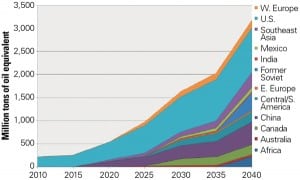
GasEurope Embraces Shale Gas
Several European governments have so far this year bucked a reluctance to extract shale gas via hydraulic fracking even as the practice continues to be strongly opposed in countries like France and Bulgaria.
-
Gas
The Second Anniversary of Fukushima: Daiichi, Japan, and the World’s Nuclear Sector
On the second anniversary of the 9.0-magnitude Great Tohuku Earthquake that killed more than 25,000 people and set off the worst nuclear disaster in 25 years, Tokyo Electric Power Co.’s (TEPCO’s) devastated Fukushima Daiichi Units 1 through 4 were in cold shutdown and set to be abolished. All Japan’s nuclear reactors remain shuttered for safety inspections, and the rattled nation has yet to finalize a future energy roadmap. Meanwhile, as panelists at the IHS CERAWeek noted, the world’s global nuclear sector seems to have made a slow but determined recovery.
-
Coal
Four Major EPA Air and Water Rules Forthcoming Through May, Agency Schedule Shows
The Environmental Protection Agency (EPA) estimates final regulations curbing greenhouse gas (GHG), mercury, and air toxics emissions from new sources could appear in the Federal Register over the next six weeks. Also forthcoming are final cooling water intake rules and proposed effluent guidelines. The coal ash rule, which has no target date for a final rule, may not be issued this year, the agency said.
-
Renewables
The Spotlight on a Mexican Success Story
Energy demand in Mexico, according to the Secretary of Energy (SENER), will increase by approximately 4% each year for the next ten years, and with it the potential for private sector growth in the industry. Download the report.
-
 Gas
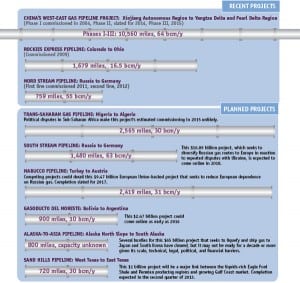
GasTHE BIG PICTURE: Stretching the Pipeline
Here are some of the longest pipelines recently built as well as noteworthy ones in the pipeline.
-
Legal & Regulatory
Align Generation Reliability and Fuel Supply Firmness
More and more electricity is generated by natural gas. This trend is likely to persist. Hydraulic fracturing technology is increasing domestic supplies and enabling natural gas prices to remain at historic lows.
-
 Gas
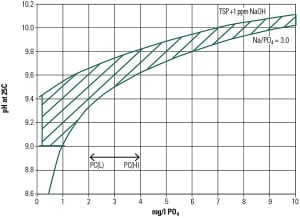
GasSelecting a Combined Cycle Water Chemistry Program
The lifeblood of the combined cycle plant is its water chemistry program. This is particularly true for plants designed for high pressures and temperatures as well as fast starts and cycling. Even though such plants are increasingly common, no universal chemistry program can be used for all of them.
-
 O&M
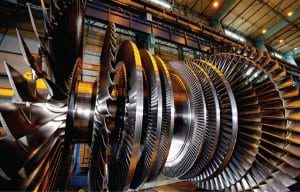
O&MSteam Turbine Blade Reverse Engineering, Upgrade, and Structural Design
Steam turbine blade cracking often suggests the need for an upgraded blade design. Follow the process of reversing engineering a failed blade to produce a more reliable and efficient design.
-
Commentary
Biogas: An Alternative Energy Source
Most professionals in the energy industry know about biomass; fewer of us are conversant with biogas. This commentary explains the basics of biogas, with a focus on its current use and future potential as a source of electrical power.
-
Gas
Japan Banks on LNG
Japan’s scramble to replace generation lost from nuclear power plants that were shuttered after the March 2011 Fukushima Daiichi nuclear accident has forced it to rely on pricey imports of fossil fuels—and soaring energy costs are hammering the world’s third-largest economy.