
Full Coverage
-
 Hydrogen
Can Utility-Scale Power Boilers Safely Fire Hydrogen?
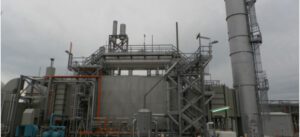
There is plenty of enthusiasm around hydrogen as a possible alternative fuel to natural gas in combustion processes. Some hope it can eventually replace natural gas in applications such as utility boilers. However, any transition to 100% hydrogen has plenty of challenges to overcome due to it having such fundamentally different combustion characteristics. This gives […]
-
 Gas
GasOriginal Approach to Fogging Regains Popularity
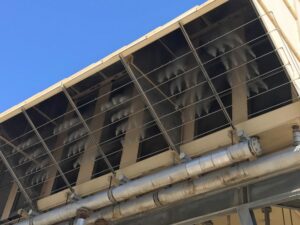
MeeFog’s very first installation of inlet air fogging was done at Harbor Cogen in Southern California in 1991 on a GE 7EA turbine where it continues to be used for power augmentation to this day (Figure 1). When it was installed, the fogging arrays were placed upstream of the air filters. Since that time, more […]
-
 Sustainability
Navigating the Transition to Sustainable MV Switchgear Amidst Decarbonization Initiatives
The push for decarbonization in Europe is reshaping the power sector. Stringent environmental regulations and ambitious renewable energy targets have necessitated the expansion and upgradation of the electricity distribution network. This is to accommodate the increased adoption of distributed energy resources (DERs) and electrification across sectors. These factors are expected to significantly drive the demand […]
-
 Connected Plant
Data Mobility Will Define the Future of Power Operations
As the power industry becomes more complex, the ability to move contextualized data will be a catalyst for more successful, efficient operations. Power producers and distributors face a unique set of
-
 Connected Plant
Enhancing the Potential of Condition Monitoring Using Vibration Information
Condition monitoring can transform how power plants operate and maintain their assets. This article argues that to exploit the full potential of condition monitoring, it’s necessary to use data to acquire
-
 Commentary
How Energy Services Businesses Can Adapt and Win in a Changing Market
Energy services businesses are poised to benefit from an unprecedented amount of government support for energy infrastructure. However, choppy waters lie ahead as business models and market conditions evolve
-
 Commentary
Energizing the Grid: Insights into the DOE’s GRIP Program
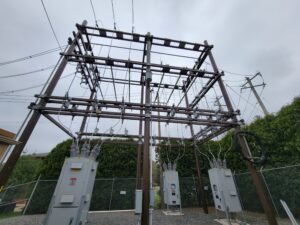
To secure federal funding, developers must navigate various financing and investment options related to grid resiliency and modernization, transmission deployment, and critical electric generation facilities. Responding to funding demands, however, can pose significant challenges. Balancing early-stage project commitments with application requirements blurs the line between speculating about long-term project details, being non-responsive, and making costly […]
-
 T&D
T&DFRP Delivers Resiliency for Power Plants
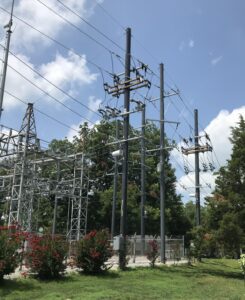
The chemicals and water present in power generation plants can have a corrosive effect on metal. Integrating fiber-reinforced polymer (FRP) into power plants can help reduce downtime due to maintenance. Power generation plants almost have “too much of a good thing.” The demand for power in the U.S. alone has skyrocketed in the last few […]
-
 Energy Security
Texas Moves Forward with $5.38B in Loans for 10 GW of New Dispatchable Power Projects
The Public Utility Commission of Texas (PUCT) has shortlisted 17 gas-fired “dispatchable” generation projects—a combined 9,781 MW—that will advance to receive $5.38 billion in loaned funds under the Texas Energy Fund (TEF) In-ERCOT Loan Program. The 17 proposed new projects in the PUCT’s loan portfolio, chosen from 72 applications, now proceed to a “due diligence” […]
-
 Interview
How Trump or Harris Would Alter the U.S.’s Energy and Power Landscape
A new U.S. president will be inaugurated in less than five months. Polls show the race between Donald Trump and Kamala Harris to be very close, with potentially only a few swing states deciding the election. While energy policy may not be a deciding factor for many Americans in choosing who they will vote for, […]
-
 Nuclear
BWXT Secures Contract to Advance Domestic Uranium Enrichment Pilot Plant
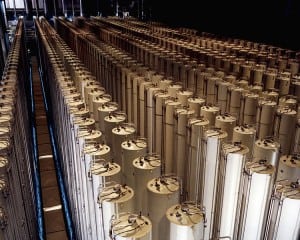
BWXT Technologies has won a contract from the National Nuclear Security Administration (NNSA) to evaluate options for deploying a centrifuge pilot plant that could establish a new domestic uranium enrichment capability suitable for national security purposes. The Lynchburg, Virginia–based company on Aug. 26 said the NNSA contract would kick off a yearlong engineering study as […]
-
 Nuclear
TVA Boosts Nuclear Funding with $150M for SMR Development at Clinch River
The Tennessee Valley Authority (TVA’s) board of directors has approved an additional $150 million for the public power utility’s $200 million New Nuclear Program to boost continued design work and development of potential small modular reactors (SMRs) at TVA’s Clinch River site near Oak Ridge, Tennessee. The combined $350 million funding for the project will […]
-
 Trends
IAEA: Aging Nuclear Fleet Warrants Reactor Life Extensions, Much More New Capacity
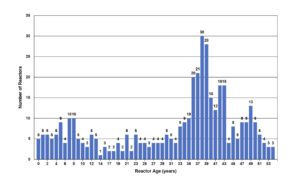
While global nuclear power capacity has remained at a consistent level over the past decade, newly released data from the International Atomic Energy Agency (IAEA) suggests that more than two-thirds of the world’s nuclear reactors are more than 30 years old, and nearly a third have been in operation for 40 years. According to the […]
-
 Commentary
The Energy Transition Requires a Holistic Approach
Over the last few years, the energy industry has moved down a path of massive change, disruption, and uncertainty. In the U.S., growth projections over the next 15 years include 2,000 GW of PV solar and wind, 1,100 GW of storage, all seemingly coming from nowhere, driving grid interconnection requests at the end of 2023 […]
-
 Connected Plant
3 Major Cybersecurity Challenges Facing Critical Infrastructure and OT
Let’s be honest. Operational technology (OT) security issues are expected. Traditional OT systems were designed for specific functional—operational—purposes. Plus, they were designed to last for many decades. The power grid, the water supply, the manufacturing plant floor, these ubiquitous 24/7/365 operations fuel daily activities—and they power as much business as they do hospitals that care […]
-
 T&D
T&D$2.2B for 13 GW of New Transmission Capacity: DOE Unveils Latest Boost for U.S. Grid Modernization
The Biden administration will invest $2.2 billion in eight projects under its Grid Resilience and Innovation Partnership (GRIP) program to bolster the nation’s power grid with nearly 13 GW of new transmission capacity across 18 states. The funding, announced on Aug. 6, marks the second round under the Department of Energy’s (DOE’s) GRIP program, a […]
-
 Sustainability
Fuel Cells: What They Are, How They Work, and Why They’re Important
Fuel cells are not some novel new technology. In fact, most history books credit the invention of the fuel cell to Welsh chemist and physicist William Grove, who, in the late 1830s and early 1840s, conducted experiments proving that electric current could be produced from an electrochemical reaction between hydrogen and oxygen over a platinum […]
-
 Distributed Energy
Peak Performance: APS’s Virtual Power Plant Saves Big During Brutal Heatwave
Through its innovative virtual power plant (VPP), Arizona Public Service (APS) harnessed smart home devices to save 138 MW during a historic heatwave, shifting peak demand and proving critical for grid
-
 Connected Plant
Vietnamese Distribution Grid Automation System a Winning Project
Vietnam Electricity Group’s Ho Chi Minh City Power Corp. (EVNHCMC) deployed a distribution automation system that facilitates automatic—and very quick—fault detection and handling with a success rate of
-
 T&D
T&DViking Link: The Epic Build of the World’s Longest Onshore and Subsea HVDC Interconnector
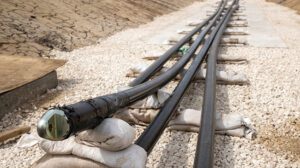
A marvel of modern engineering, Viking Link—the world’s longest onshore and subsea interconnector—began commercial operations in December 2023. The project garners POWER’s inaugural Transmission and
-
 Commentary
It’s the End of the World as We Know It — Do You Feel Fine?
I thought the title from R.E.M.’s 1987 song was a fitting headline for this article. I contemplated using Bob Dylan’s “The Times They Are A-Changin’,” but I thought R.E.M.’s “stream of
-
 O&M
O&MTips for Improving Power Plant Valve Performance
Managers know that valves are important to plant operation. That’s why keeping them in top condition is a priority. Upgrading to advanced valve designs and reducing stress on valve materials are just a
-
 O&M
O&MForced Outage Parametric Insurance Solutions for CCGTs
Combined cycle gas turbine (CCGT) power plants started appearing on a larger scale in the late 1990s and have since then been a very efficient supplier of baseload and lately peaking capacity to the power grids. The U.S. Energy Information Administration (EIA) recently reported that natural gas–fired capacity additions are increasing in the U.S. again […]
-
 Legal & Regulatory
EU Mandates Biodiversity Restoration, Setting Up New ‘Green’ Requirements Alongside ‘Clean’ Ones for Power Sector
This June, the European Council formally adopted a first-of-its-kind regulation that sets out to restore at least 20% of the European Union’s (EU’s) land and sea areas by 2030 and all ecosystems in need of
-
 Hybrid Power
Applying Photovoltaic Charging and Storage Systems: Challenging the Limits of PV Technology
To achieve net-zero goals and accelerate the global energy transition, the International Energy Agency (IEA) stated that countries need to triple renewable energy capacity from that of 2022 by 2030, with the development of solar photovoltaics (PV) playing a crucial role. Additionally, the comprehensive electrification of combustion engine vehicles is an indispensable measure for reducing […]
-
 Commentary
Looking Through ‘Green-Colored’ Glasses: Hydrogen in the Energy Transition
Transitioning the world towards cleaner and greener energy is proving to be more challenging than we once all hoped. There are real concerns about what impact the slower speed of uptake is having on our
-
 Waste to Energy
Empowering Waste-to-Energy Solutions with Steam Turbines
Sustainable municipal waste management solutions often involve waste-to-energy plants that can produce electricity while also providing steam to district heating systems. Efficient steam turbines are important
-
 Sustainability
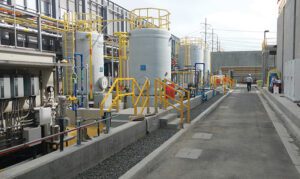
The Role of FRP Structures in Mitigating Workplace Hazards
Power companies understand the importance of safety and incorporate many safeguards into plant designs. Yet, the materials used in these defenses also matter, and fiberglass-reinforced polymer (FRP) is an
-
 T&D
T&DAchieving Operational Flexibility with Voltage Control
Using voltage data down to the consumer level is essential for grid optimisation and operational flexibility in the new era of intermittent generation and fast-changing user demand. Power grids were designed
-
 Connected Plant
Unseen Heroes: Cutting-Edge Sensors Combatting Air Pollution
There is an urgent need for accurate and efficient emissions monitoring technologies to ensure air pollution is adequately controlled. Infrared spectroscopy and precision infrared filters play a critical role