
Cybersecurity
-
Cybersecurity
Don’t Ignore Cyber Threats to Power Infrastructure
Over the last few years, it has become increasingly clear that a massive cyber-attack on the North American electric grid represents a serious threat to U.S. national security. Over time, a string of senior
-
 Legal & Regulatory
How U.S. Power Generators Are Preparing for 2015
In mid-November, members of the POWER Generating Company Advisory Team responded via email to the following set of questions. Their comments have been edited for style. POWER: What changes in your fleet’s
-
 Nuclear
Korea Hydro and Nuclear Power Co. Hacked
Computer systems at Korea Hydro and Nuclear Power Co. (KHNP)—the operator of South Korea’s 23 commercial nuclear reactors—were hacked and information divulged via blog posts and posts on Twitter, according to the company. The first leaks on Dec. 15 were of personal information obtained from some of the 10,799 employees of the company, but later […]
-
 Cybersecurity
Congressional Passage of Cybersecurity Bill Is a Triumph for Automation, Groups Say
The Cybersecurity Enhancement Act of 2014 that cleared Congress last week and was presented to President Obama on Monday has the backing of automation organizations. The bill was one of four cybersecurity measures passed—without much debate and by voice vote—by Congress before the 113th session came to a close on Tuesday, Dec. 16. Sen. John […]
-
 Cybersecurity
Industrial Cybersecurity Expert: Industry Culture Must Change to Prevent Highly Destructive Cyberattack on Critical Infrastructure
Inadequate training and a culture of complacency among many owners and operators of critical infrastructure are significantly raising the risks of highly damaging cyberattack throughout the world, according to Steve Mustard, an industrial cybersecurity subject-matter expert of the International Society of Automation (ISA). The ISA reports that Mustard, who recently delivered a presentation on industrial […]
-
Cybersecurity
DHS Issues New Alert on ICS Malware
The U.S. Department of Homeland Security (DHS) has issued another alert warning of an “ongoing sophisticated malware campaign” targeting human-machine interface (HMI) software that is used for grid control and other energy systems. The alert, released on Oct. 29, warned that DHS’s Industrial Control Systems Cyber Emergency Response Team (ICS-CERT) has identified a strain of […]
-
 Legal & Regulatory
A U.S. Power Industry Regulatory Update
The U.S. power sector has seen a number of developments on the regulatory front in recent months. Here’s where major federal rules stand today. (For a more dynamic and graphic version of this article, see http://powermag.com/long-form-stories/bw-power/ .) GHG Rules New Power Plants. The Environmental Protection Agency (EPA) in September 2013 revised a 2012 proposal to […]
-
 Instrumentation & Controls
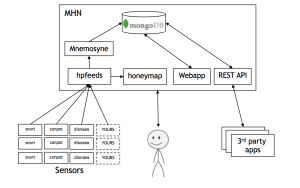
How to Use “Honeypots” to Overcome Cybersecurity Shortcomings
Cybersecurity threats facing the power industry have escalated dramatically in the past few years, as state-sponsored, organized crime, and hacktivist groups all seek to infiltrate U.S. energy infrastructure for cyber-espionage and sabotage purposes. A recent example of the severity of this threat can be seen in operation “Energetic Bear”—a Russian campaign to infect U.S. and […]
-
 Cybersecurity
NRC Computers Were Hacked Repeatedly, Report Says
U.S. Nuclear Regulatory Commission (NRC) employees fell victim to email “phishing” attempts three times in the past few years, allowing intruders into the agency’s email system, according to an internal report by the Office of Inspector General obtained by news site Nextgov.com. The internal NRC investigation revealed that twelve employees clicked on a link in […]
-
 Cybersecurity
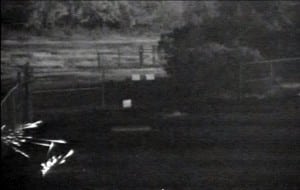
Grid Security Gets Physical
The attack began at 12:58 a.m. on April 16, 2013. Between then and 1:07 a.m., attackers cut telephone and telecommunications cables to Pacific Gas & Electric’s (PG&E’s) Metcalf substation near San
-
 Legal & Regulatory
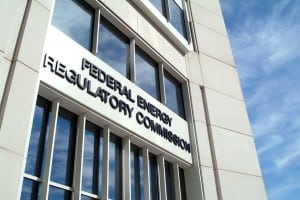
FERC Proposes to Approve NERC Physical Security Standards with Modifications
A standard to enhance physical security at critical power system facilities submitted by the North American Electric Reliability Corp. (NERC) will need modifications before it can be approved, the Federal Energy Regulatory Commission (FERC) said last week. FERC ordered NERC on March 7 to develop and submitnew reliability standards requiring owners and operators of the […]
-
 Renewables
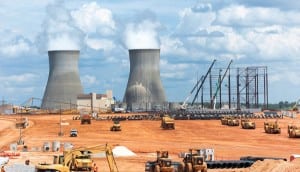
Southern Co. Considering New Nuclear Plant, But That’s Not All
Speaking at the Energy Innovation Symposium in Washington D.C. on July 23, Southern Co. CEO Tom Fanning said that he would love “to announce another nuclear plant” later this year. But Fanning made it clear during his keynote address to attendees at the Bipartisan Policy Center’s American Energy Innovation Council–sponsored event that he favors an […]
-
 Coal
CoalIEA Chief: U.S. Energy Security “Golden Age” Is an Illusion
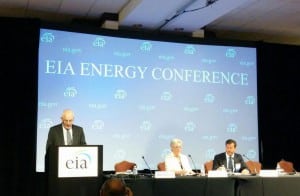
Optimism about U.S. energy security, which is rooted in the abundant supply of fossil fuels alone, is misplaced, Maria van der Hoeven, head of the International Energy Agency (IEA) told attendees at an energy conference in Washington, D.C., on Monday. The U.S. has seen a dramatic reversal in its energy fortunes over the past seven […]
-
Cybersecurity
Survey: Two-Thirds of Energy and Manufacturing Firms Hit By Cyberattacks
A report released July 10 finds alarming gaps in the security of the world’s critical infrastructure. The study—sponsored by Unisys and conducted by Michigan-based security research firm Ponemon Institute—was based on an Internet survey of 599 respondents from 13 countries in the oil and gas, utilities, alternative energy, and manufacturing industries conducted in April and […]
-
Cybersecurity
Russian Hackers Targeting Energy Sector, Says Report
A group of hackers apparently based in Moscow has been conducting an “ongoing cyberespionage campaign” against energy sector companies in the U.S. and Western Europe, according to a report released June 30 by computer security firm Symantec. The targets included “energy grid operators, major electricity generation firms, petroleum pipeline operators, and energy industry industrial equipment […]
-
 Renewables
The EEI’s Campaign for Electric Utility Industry Supremacy
At the Edison Electric Institute (EEI) annual meeting this week in Las Vegas, the tone was one of collaboration with partners from Washington to distributed generation companies. Those partnerships will be needed as the investor-owned utility (IOU) industry fights not so much a war on coal as a war for mindshare and wallet share in […]
-
 Solar
SolarMilitary Microgrids: Wanted and Needed but Tough to Deploy
Anyone who follows either the energy industry or the military knows that all branches of the U.S. military have aggressive goals for renewable energy and for improving energy security and independence. Microgrids are a key part of that plan. When I wrote about military microgrids in “The Military Gets Smart Grid” back in January 2012, […]
-
 Solar
SolarInterest Growing in Commercial and Community Microgrids
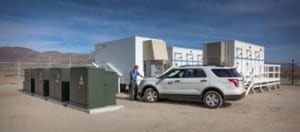
Aside from places where microgrids have a track record—educational, industrial, and commercial campuses—commercial and community microgrids are still the domain of early adopters, but the number of people wanting to travel the trail they are blazing is increasing. A microgrid is any collection of interconnected loads and distributed energy resources within clearly defined electrical boundaries […]
-
 Solar
SolarIslands Are the Low-Hanging Fruit for Microgrids
If you’re looking for the easiest place to deploy microgrid technology, look at islands. That was the general consensus of presenters at the 4th Military & Commercial Microgrids Summit in Washington, D.C., held June 17-19. In addition to a presentation about a microgrid being developed for Necker Island—owned by Sir Richard Branson, founder of the […]
-
 Cybersecurity
Homemade Bomb Found at Ariz. Power Plant
A make-shift explosive device found last week at a power plant south of Tucson, Ariz., caused a small, temporary fuel leak in a 50,000-gallon distillate oil tank—not a large explosion as previously reported in initial accounts. However, the incident has triggered investigations by the FBI, the U.S. Bureau of Alcohol, Tobacco, Firearms, and Explosives, and […]
-
Cybersecurity
Introduction to NERC CIP Version 5
The North American Electric Reliability Corp. Critical Infrastructure Protection (NERC CIP) standards Version 5 represents the first major change in requirements and approach since its predecessor, Urgent
-
Cybersecurity
Identifying CIP Version 5 Assets in Generation
Generators of electric power face a big effort to comply with the upcoming North American Electric Reliability Corp. Critical Infrastructure Protection (NERC CIP) Version 5 (V5) cybersecurity standards
-
Cybersecurity
When Old Systems Meet New Realities: Adding Security Controls to Generating Plants
On August 14, 2003, large parts of the Northeast and Midwest of the U.S. and the Canadian province of Ontario experienced one of the largest blackouts in history: 61,000 MW of electric load were lost
-
 Cybersecurity
Just Hop on the Bus, Gus: 13 Ways to Hack a Power Plant
Forty years ago, musical genius Paul Simon outlined “50 Ways to Leave Your Lover.” In New Orleans in early April at the ELECTRIC POWER Conference, Mike Firstenberg of Waterfall Security Solutions laid out
-
Cybersecurity
DHS Reports Cyber Attacks on Power Plant Control Systems
Despite relatively low interest in cybersecurity issues among power industry professionals, the threat of cyber attacks on generation systems is real, as the latest report by a U.S. Department of Homeland Security (DHS) group reveals. The January–April report from the Industrial Control Systems Cyber Emergency Response Team (ICS-CERT) notes that the DHS group recently received […]
-
 Nuclear
U.S. Charges Chinese Hackers for Attacks on Nuclear and Solar Firms
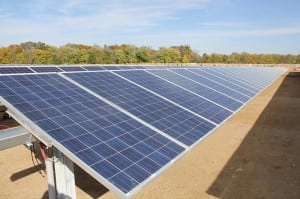
For the first time ever, the U.S. has filed criminal charges against known state actors for hacking U.S. interests. A grand jury in the Western District of Pennsylvania indicted five Chinese military hackers for computer hacking, economic espionage, and other offenses directed at six American victims in the U.S. nuclear power, metals, and solar products […]
-
 Legal & Regulatory
Industry Leaders, Experts Testify on How to Keep the Lights On
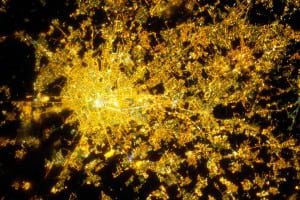
Ten witnesses from federal and state regulatory agencies, a public power entity, environmental groups, and power companies today outlined a number of threats to the bulk power system’s reliability in a Senate hearing to assess whether enough was being done to keep the lights on. General measures to address day-to-day issues affecting reliability—such as tree […]
-
T&D
Federal Cybersecurity Framework Calls for Increased Vigilance
The energy industry, already familiar with the latest iteration of the North American Electric Reliability Corp. (NERC) Critical Infrastructure Protection (CIP) reliability standards, should take note: Meeting
-
 Nuclear
EPRI and Luminant Collaborate to Create Common Understanding of Cybersecurity Requirements
Nuclear utilities are facing stringent cybersecurity requirements for plant digital assets that fulfill safety-related, important-to-safety, security, and emergency preparedness functions or that are
-
 Cybersecurity
New House, Senate Bills Allow FERC To Protect Grid From Threats
Lawmakers in the House and Senate on Wednesday introduced identical bills that would give the Federal Energy Regulatory Commission (FERC) the authority to issue emergency orders to protect the grid from physical, cyber, electromagnetic pulse and other threats and vulnerabilities. The Grid Reliability and Infrastructure Defense (GRID) Act was introduced separately by Rep. Henry A. […]