
Commentary
-
 Commentary
The Missing Intelligence Layer of the Smart Grid
Over the past two decades, utilities have invested billions of dollars building a smarter grid—deploying sensors, automated substations, and advanced analytics platforms capable of monitoring system performance in real time.
-
 Legal & Regulatory
Solar Power Satellites and Orbital Data Centers—International Space Law Implications
In 2011, I published an article in the Boston University Journal of Science & Technology Law examining space-based solar power (SBSP) and the issue of property rights in space, and more specifically, in geostationary orbit (GEO), under the current regime of international treaties and policies. Today, as the demand for computing power grows, that question […]
-
 Commentary
Tri-State’s Vision for Lower Cost, Greater Efficiency About to Become Reality
Tri-State Generation and Transmission Association and its members constantly look for ways to build long-term reliability and lower costs. On April 1, 2026, Tri-State will take an important step toward these goals by joining the western expansion of the Southwest Power Pool Regional Transmission Organization (SPP RTO West).
-
 Commentary
AI’s Energy Problem Was Here Before the War. It Will Stay After.
The conflict in Iran has rekindled a debate that was already building quietly for 24 months in technology circles: energy. Not as a footnote to the artificial intelligence (AI) story, but as a structural constraint at its center. There is an important structural fact about current AI pricing that rarely surfaces in business conversations: the […]
-
 Data Centers
Google Signs Deal for Demand Response Capacity for Data Centers
Tech giant Google has announced what the company calls “A new milestone for smart, affordable electricity growth.” Here’s the text of a blog post from Michael Terrell, Head of Advanced Energy for the company.
-
 Commentary
Speed-to-Power: Energy Strategy in the Age of AI
As we move further into 2026, the global energy landscape is increasingly defined by divergence. Oil and natural gas fundamentals are separating, geopolitical volatility remains elevated, and across the industrial economy, execution speed is becoming the defining competitive variable.
-
 Commentary
Resource Plans Drive Clean Energy Value Creation for Investors
Electric utilities have a significant opportunity to create long‑term value by building new clean energy infrastructure—an approach Warren Buffett’s Berkshire Hathaway utilities have followed quietly but effectively for decades. Xcel Energy calls its version of this strategy “Steel for Fuel.”
-
 Commentary
Why Nuclear Power Is Most Viable Option for Data Centers
The first data center to run entirely on self-generated nuclear power will shatter a long-held assumption that computing infrastructure must wait for the grid. A large-scale facility will operate around the clock while controlled fission reactions take place 1,000 feet from its server racks. When that happens, every data center operator still waiting for grid […]
-
 Nuclear
Aerospace Offers an Unlikely Playbook for the Nuclear Energy Industry in 2026
The energy industry, specifically the nuclear sector, is staring down a challenging 2026 with a combination of mounting pressure: tech giants shaking hands on purchasing agreements before facilities are fully built, innovative solutions reinventing the methods of long-established leaders, and mounting demands to deliver efficiency faster. Does that sound familiar? COMMENTARY If you’ve had an […]
-
 Legal & Regulatory
IRS Releases Guidance on Restrictions on Use of Foreign Equipment in Clean Energy Projects
The Internal Revenue Service recently issued its long-awaited guidance on how to determine whether a clean energy project uses too much equipment from Chinese or other prohibited foreign entities to qualify for valuable federal clean energy tax.
-
 Legal & Regulatory
FERC: Small QFs Lose FPA Exemptions When Certifications Become Inaccurate
The Federal Energy Regulatory Commission (FERC or the Commission) on February 19 of this year issued an Order on Rehearing and Clarification ruling that qualifying facilities (QFs) that are 20 MW or smaller cannot rely on their exemption from Federal Power Act (FPA) Sections 205 and 206 during periods when their Form No. 556 certifications are outdated due to any material changes from the original certification, such as changes in upstream ownership.
-
 Nuclear
Building Now For What Comes Later: How Nuclear Fits Into the Grid’s Next Decade
Ten years ago, utilities could plan for new 100-megawatt (MW) load requests. That size of energy load fit inside existing forecasts: it could be absorbed, modeled and planned around. Today, load requests have increased to one, two even three gigawatts (GW) at a time. This results in utilities fielding individual load requests that rival full […]
-
Commentary
Reimagining the U.S. Grid: Why VPPs Could Be the Bridge to a More Reliable Future
America’s power grid is aging into obsolescence. Much of the infrastructure that keeps the lights on today was constructed in the 1960s and 1970s, long before the digital and electrified demands of the 21st century took shape. The consequences are increasingly visible: mounting reliability issues, rising costs, and a growing need to modernize a system never designed for the challenges of climate volatility or the surge in load from data centers and electric vehicles.
-
 Commentary
The Magnet Blind Spot in America’s Industrial Strategy
Washington, D.C., has spent the past five years fixating on rare earths—where they’re mined, how they’re processed, and who controls the magnet supply chain. That attention is overdue. But the national conversation still stops one link too soon. The real compounding bottleneck isn’t just the magnets, it’s the motors and drives that use those magnets—traction […]
-
 Commentary
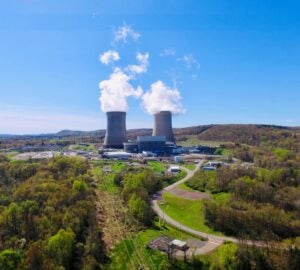
Beyond Reactors: The Full Fuel Cycle Investment Needed for a Nuclear Future
A resurgent nuclear industry cannot succeed unless the U.S. invests in the entire nuclear fuel cycle—from uranium mining to long‑term waste storage. Without strengthening this industrial backbone, nuclear power’s potential may remain more aspiration than reality.
-
 Commentary
America’s Once-in-a-Generation Energy Opportunity
America has a once-in-a-generation opportunity to rebuild its energy backbone. For the first time in decades, capital investment, technological innovation, and bipartisan political will are aligning to
-
 Commentary
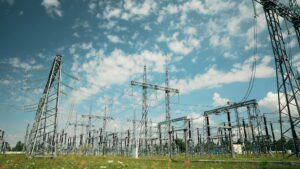
From Bottleneck to Breakthrough: Why Procurement Is the Utility Industry’s Critical Capacity Builder
With electricity demand projected to rise 25% by 2030 and 78% by 2050 from 2023 levels, utilities are facing a perfect storm—aging infrastructure, climate-driven disruptions, and escalating expectations for reliability and resilience. Meeting this moment will require more than incremental improvement; it demands entirely new sources of capacity, and a fundamental rethink of how the […]
-
 Commentary
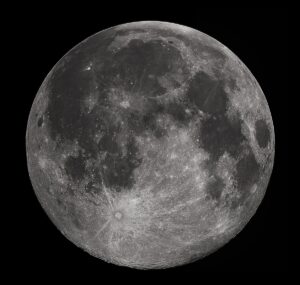
A New Space Race—The U.S. Looks to Lunar Nuclear Power
Nuclear power is emerging as a key, enabling technology for sustained human presence on the moon. With multiple countries and companies announcing ambitious lunar programs—from space research to mineral development to hotels—there is increasing global competition to establish long-term power supply and other infrastructure on the lunar surface.
-
 Commentary
Water Strategy Is Power Strategy in the New Economy
New research reveals artificial intelligence (AI)-driven water demand is set to surge nearly 130% over the next 25 years. Power generation consumes about half of that, turning water into a potential constraint on future capacity—and a catalyst for achieving a lasting transition to greater water security. Power producers are facing a new challenge: deliver more […]
-
 Commentary
Why AI Pilots Stall Without Operating Discipline
Artificial intelligence (AI) has moved quickly from the margins to the mainstream in electric utilities. Control room vendors promote AI-driven insights, asset platforms promise predictive intelligence, and most major utilities are running at least one pilot or proof of concept. More than 80% of North American utilities already report using AI in some form.
-
 Commentary
Substation-Sited Generation: A New Frontier for Utility Resilience and Flexibility
For decades, utilities have deployed distributed generation along distribution circuits primarily for single-circuit capacity support and voltage regulation. While these applications remain valuable, a broader opportunity is emerging: siting generators directly at substations to unlock system-level benefits that extend far beyond any single feeder. For rural electric cooperatives, municipal power systems, and even investor-owned utilities […]
-
Trends
Empowering the Grid: How Utilities Can Harness AI Safely and Effectively
When it comes to the latest technologies, utilities aren’t exactly early adopters—with good reason. Silicon Valley’s motto of “move fast and break things” can have disastrous consequences when applied to an industry tasked with keeping the lights on around the clock for millions of Americans.
-
 Commentary
U.S. Renewables Outlook 2026: Key Risks and Strategies for Sustainable Growth
Smart adaptation strategies will keep U.S. renewables on track in 2026 amid turbulent landscape. In 2025, the U.S. renewable energy market demonstrated its resilience. Despite setbacks ranging from weather and climate disasters, global trade tensions, and the termination of tax credit eligibility, 92% of new power capacity added to the grid in 2025 came from […]
-
 Commentary
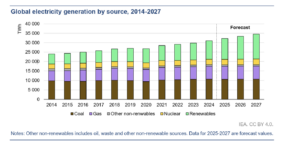
AI’s Power Crunch: Six Trends That Will Decide Who Wins the Next Decade
For the U.S., keeping up with AI’s insatiable appetite is the biggest systemic risk of the next decade. America needs a massive expansion of power plants, transmission lines, and advanced hardware, while using AI itself to drive grid progress and optimize power distribution.
-
 Trends
How Utilities Can Prepare for the AI-Driven Energy Surge
After more than two decades of relative stasis, electricity demand in the U.S. is expected to increase by 25% by 2030 and by more than 75% by 2050, compared to 2023—a transformation largely driven by the surge in new data centers needed to power the artificial intelligence (AI) boom.
-
 Commentary
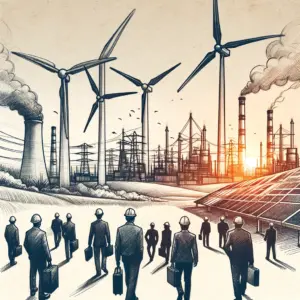
Why 2026 Is the Year the Energy Transition Finally Accelerates
This year will be a pivotal period for the global energy transition. The International Energy Agency’s recent revision to its net-zero roadmap reveals a changing narrative: we are no longer waiting on breakthrough technologies. Sixty-five percent of the emissions reductions we need are achievable with tools sitting on the shelf today. So, the debate is no […]
-
 Commentary
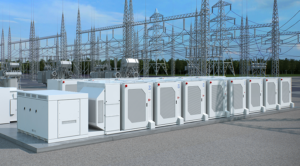
Evolving Technologies, Outdated Regulations Impact Mid-Atlantic Generation Permitting
Energy-generation permitting in the Mid-Atlantic continues to evolve in 2026 not through wholesale deregulation or uniform acceleration, but through procedural and permitting reform and the potential allocation of generation development authority to public utilities. States are enacting these changes to meet the reality of reliability concerns, transmission constraints, large load-growth, and to address frequent obstruction of energy projects by local government.
-
 Commentary
How AI’s Energy Challenge Is Becoming Its Innovation Engine
As artificial intelligence (AI) models and workloads continue to scale in size and sophistication, their hunger for processing power—and the energy that fuels it—is accelerating faster than any previous wave of digital innovation.
-
 Commentary
Why America’s Nuclear Future Depends on Its Fuel Supply Chain
For much of the 20th century, the U.S. set the global standard for civilian nuclear energy. American innovation shaped reactor design, safety culture, and regulatory practice worldwide. Yet today, as nuclear power regains prominence amid concerns over climate, energy security, and industrial competitiveness, America faces a quieter but more consequential challenge: the erosion of its nuclear fuel supply chain.
-
 Commentary
The Next Blackout Won’t Be Caused by a Storm—It Will Be Sparked by a Talent War
Imagine a city going dark, not from a hurricane or a cyberattack, but because there weren’t enough skilled workers to restore power after a routine failure. While utilities scramble to fill critical roles, hyperscale data centers are hiring the same talent at premium salaries. The grid’s biggest vulnerability isn’t hardware; it’s a talent war that utilities are losing.