
Coal
-
Coal
Proposed 2014 Budget: More Funds for the DOE, Less for the EPA
The proposed 2014 federal budget that President Obama submitted to Congress on Wednesday includes increases for the Department of Energy in general and for DOE-sponsored research and development (R&D) in particular. It also shows a slight decrease in funding for the Environmental Protection Agency (EPA).
-
Coal
EIA Projects Coal Generation Gains Due to Increasing Gas Prices
The increasing cost of natural gas relative to coal is expected to increase coal’s share of total generation from 37.4% in 2012 to 39.9% in 2013, according to the U.S. Energy Information Administration (EIA) April release of its Short-Term Energy Outlook (STEO). Though that would leave coal’s percentage below its 42.3% share in 2011, it indicates that gas may not be on an inevitable path to overtake a significantly greater share of the generation pie.
-
Coal
EPA, DOJ Settle with Dominion Energy on CAA Violations
The U.S. Department of Justice (DOJ) and the Environmental Protection Agency (EPA) announced on Monday that Dominion Energy has agreed to pay a $3.4 million civil penalty and spend approximately $9.8 million on environmental mitigation projects to resolve Clean Air Act (CAA) violations.
-
Coal
Wyoming Coal Power Project Granted Extension
The Wyoming state Industrial Siting Council has approved an amended permit for the $800 million, 300-MW Two Elk coal-fired power plant, which was first proposed in 1996 but has yet to break ground.
-
Coal
Fire Knocks Out Ukrainian Coal Plant
The 3,600-MW Vuhlehirska Thermal Power Plant in Svitlodarske, Ukraine, was heavily damaged on Mar. 29 by a fire that killed one worker and seriously injured at least eight others. Four units at the seven-unit coal-fired plant were destroyed, and the region was temporarily without power and heating.
-
Coal
EPA Updates MATS for Power Plants
The U.S. Environmental Protection Agency (EPA) on March 28 finalized updates to emission limits for new power plants under the Mercury and Air Toxics Standards (MATS). The rule includes emission limits for mercury, particulate matter (PM), sulfur dioxide (SO2), acid gases, and certain individual metals.
-
Coal
IGCC Power Plant Will Not Seek DOE Loan Help
Southern Co. has withdrawn plans to seek a $1.5 billion federal loan guarantee for the 582-MW lignite-fired integrated gasification combined cycle (IGCC) power plant its Mississippi Power Co. unit is building in Kemper County.
-
Coal
NV Energy Proposes to Exit Coal Power Generation Early
Nevada power company NV Energy Inc. has proposed a plan to accelerate the retirement of its coal-fired generating facilities and the construction of natural gas and renewable power plants.
-
Coal
Shifting Sands
The United Arab Emirates (UAE) is made up of seven emirates, yet two dominate the demographic, economic, and geopolitical landscape. Download the report.
-
 O&M
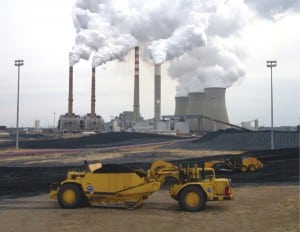
O&MTVA’s Paradise Unit 2 Sets New Continuous Operations Record
Paradise Fossil Plant Unit 2’s record-setting performance of 259+ days of continuous operation for a cyclone-fired boiler is attributed to excellence in plant operations and maintenance processes, a diligent and well-trained staff, and leadership that places high value on both. The Paradise experience proves that plants can’t help getting older, but they don’t have to get old.
-
 O&M
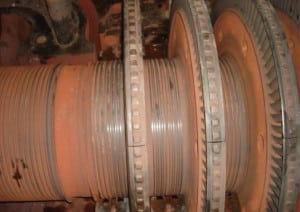
O&MSteam Turbine Rotor Vibration Failures: Causes and Solutions
Steam turbine rotors bend during operation, but the bearing and supports are designed to keep the static and dynamic forces under control. However, bending can cause impact between stationary and rotating parts—often cascading impacts. An operator of many utility-scale steam turbines shares its extensive field experience identifying the root cause of failures as well as […]
-
Coal
EPA Directs 36 States to Revise SIPs for Emissions During Plant Startup, Shutdown, Malfunction
A rule proposed by the Environmental Protection Agency (EPA) directs 36 states to revise their Clean Air Act State Implementation Plans (SIPs) to eliminate exemptions for excess emissions of air pollutants at power plants during startup, shutdown, or when the plant malfunctions.
-
Coal
EIA: U.S. Power Sector SO2, NOx Emissions Lowest Since 1990
Power plant emissions of sulfur dioxide (SO2) and nitrogen oxides (NOx) in the U.S. declined to their lowest level since 1990, the Energy Information Administration (EIA) said in early March.
-
Coal
Four Major EPA Air and Water Rules Forthcoming Through May, Agency Schedule Shows
The Environmental Protection Agency (EPA) estimates final regulations curbing greenhouse gas (GHG), mercury, and air toxics emissions from new sources could appear in the Federal Register by the end of April. Also forthcoming are final cooling water intake rules and proposed effluent guidelines. The coal ash rule, which has no target date for a final rule, may not be issued this year, the agency said.
-
Coal
Kemper County IGCC Project Update
The integrated gasification combined cycle (IGCC) plant located in Kemper County, Mississippi, is a 2 x 1 plant that will produce 582 MW at peak and 524 MW fired on syngas, with ammonia, sulfuric acid, and carbon dioxide as by-products. The carbon dioxide will be used for enhanced oil recovery (EOR). Engineering was completed in Q3 2012, and the facility’s commercial operation date is planned for May 2014.
-
Coal
Project Planning Key to Smooth J.T. Deely 2 SCR Retrofit
Recent experience on the Deely 2 SCR retrofit project reminds us that the time spent in thoroughly planning a project prior to the start of construction is usually repaid with avoided construction delays.
-
O&M
SNL Energy Predicts Continued Gas Switching in 2013
Dispatch competition between U.S. coal and natural gas plants has been a prominent feature of power markets since 2009. Gas prices have strengthened significantly over early 2012 levels, working to take pressure off coal plants for the upcoming year, according to a new analysis by SNL Energy.
-
Coal
Senate Democrats Urge Obama to Amend EPA’s GHG Rules for New Coal Plants
In a letter to President Obama last week, four Senate Democrats expressed "continued concern" about the Environmental Protection Agency’s (EPA’s) plans to issue greenhouse gas (GHG) new source performance standard (NSPS) rules for new fossil fuel-fired power plants. The proposed rules could ban "new state-of-the-art" plants from being built and hamper advancements that could benefit the nation’s coal power sector, the senators argued.
-
Coal
Four Major EPA Air and Water Rules Forthcoming Through May, Agency Schedule Shows
The Environmental Protection Agency (EPA) estimates final regulations curbing greenhouse gas (GHG), mercury, and air toxics emissions from new sources could appear in the Federal Register over the next six weeks. Also forthcoming are final cooling water intake rules and proposed effluent guidelines. The coal ash rule, which has no target date for a final rule, may not be issued this year, the agency said.
-
Coal
Gates Calls for Increased Spending on Energy Research, Renewed Focus on Nuclear
Bill Gates didn’t mince words last night when sharing with the IHS CERAWeek crowd his thoughts about public support for basic scientific research in the United States.
-
Coal
China Looks to Curb Carbon Emissions by Diversifying Power Portfolio
China will reduce the nation’s carbon emissions and energy use per unit of gross domestic product (GDP) by at least 3.7% this year and perform trials for a carbon-trading program, China’s National Development and Reform Commission (NDRC), said in a report on Tuesday. The country would also make "greater efforts to conserve energy" and "reduce the discharge of major pollutants," it’s top economic planner said.
-
Renewables
The Spotlight on a Mexican Success Story
Energy demand in Mexico, according to the Secretary of Energy (SENER), will increase by approximately 4% each year for the next ten years, and with it the potential for private sector growth in the industry. Download the report.
-
 Coal
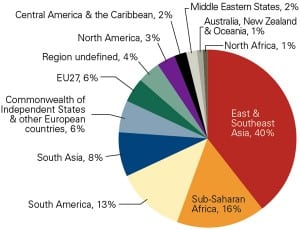
CoalNations Agree to Legally Binding Instrument to Curb World’s Mercury Emissions
Mercury emissions from power plants in 137 United Nations member countries could be subject to strict controls and reductions if an international treaty is signed by participating nations this October.
-
 Coal
CoalDespite Pollution-Curbing Efforts, Dense Smog Covers Wide Swath of China
Four bouts of dense smog described as the worst air pollution in recent memory enveloped more than half of China in January, from the Beijing-Tianjin-Hebei triangle in the north of the country to Nanjing in the south, via the central city of Wuhan.
-
 O&M
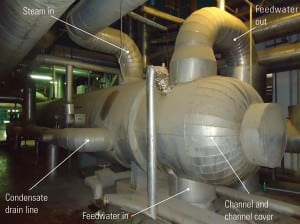
O&MHow to Avoid Feedwater Heater Drain Design Pitfalls
Feedwater heaters are used to preheat boiler feedwater by condensing steam extracted from several stages of the steam turbine. Feedwater heaters enhance the thermal efficiency of the power plant by reducing the amount of fuel burned in the boiler to produce a specified power. At the same time, the steam energy extracted from the turbine by the feedwater heater helps to reduce the rate of energy rejection to the environment via the condenser.
-
 Coal
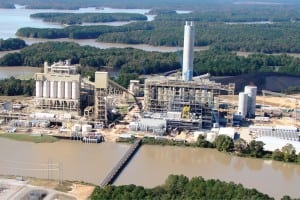
CoalTechno-Economic Considerations When Using Low-Grade Coal for Power Generation
The use of low-grade coal is becoming synonymous with circulating fluidized bed (CFB) power plants. Although CFB technology may often be a better choice than pulverized coal technology, that is not always the case. Owners and developers need to consider several technical and economic factors before making this decision.
-
 O&M
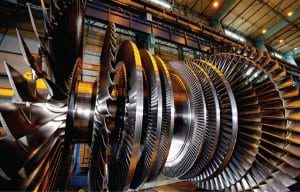
O&MSteam Turbine Blade Reverse Engineering, Upgrade, and Structural Design
Steam turbine blade cracking often suggests the need for an upgraded blade design. Follow the process of reversing engineering a failed blade to produce a more reliable and efficient design.
-
Coal
AEP to Shutter or Refuel 2 GW of Coal Power in Return for Cheaper SO2 Control Option
A modified settlement reached between American Electric Power (AEP), a coalition of citizen groups, and the Environmental Protection Agency (EPA) on Monday will allow the utility to install less expensive pollution controls on a coal-fired power plant if it ceases coal combustion by 2015 at three aging power plants in Indiana, Ohio, and Kentucky.
-
Coal
ARPA-E Plays Matchmaker for Innovative Energy Research Projects
The Advanced Research Projects Agency-Energy (ARPA-E) may be the most important federal agency many in the power industry have never heard of. Whatever generation technology you are associated with, ARPA-E’s work will affect its future.
-
Coal
EPA Directs 36 States to Revise SIPs for Emissions during Plant Startup, Shutdown, Malfunction
A rule proposed by the Environmental Protection Agency (EPA) directs 36 states to revise their Clean Air Act State Implementation Plans (SIPs) to eliminate exemptions for excess emissions of air pollutants at power plants during startup, shutdown, or when the plant malfunctions.