
Coal
-
 Coal
CoalOhio Nixes Duke Energy Proposal to Guarantee Income from Coal Plants
As it decided in a February case involving American Electric Power (AEP), the Public Utilities Commission of Ohio (PUCO) has denied Duke Energy Ohio’s request to charge ratepayers for power from two aging coal plants owned by the Ohio Valley Electric Corp. (OVEC). In an April 2 order, the state regulator approved the Duke Energy […]
-
 Coal
CoalPoll: Americans Are Not Too Worried About Climate Change, Still Favor Solar, Wind, and Nuclear
A Gallup poll completed last month found that only 32% of adults in the U.S. worry a “great deal” about global warming or climate change, while 45% worry “only a little” or “not at all.” The survey was taken via telephone interviews conducted during the first week of March using a random sample of 1,025 […]
-
 Coal
CoalWhite House Formally Submits Climate Pledge to Slash GHGs
The U.S. will seek to cut its greenhouse gas (GHG) emissions by 26% to 28% from 2005 levels by 2025, the White House said on March 31 in a target submitted to the United Nations Framework Convention on Climate Change (UNFCCC). The submission—otherwise referred to as an Intended Nationally Determined Contribution (INDC)—is a formal statement […]
-
 Renewables
Leveraging Generation Synergies with Hybrid Plants
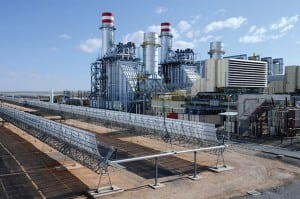
Everyone loves efficiencies. Combining generation technologies can create a plant that’s more than the sum of its parts, but engineering challenges mean these projects are not for the faint of heart. When you think of “hybrids” these days, your first thought is probably of automobiles. But hybrids—hybrid power plants, that is—are starting to emerge in […]
-
 Coal
CoalIndustry in Turmoil: Coal Plants Shutting Down Around the World
Numerous announcements of plant closures during the past week are painting a grim picture for the future of the coal industry. On March 20, several news outlets reported that American Electric Power (AEP) had sent Worker Adjustment and Retraining Notification Act, or WARN, notices to workers at half a dozen coal-fired plants. Employees at the […]
-
 Coal
CoalExperts: EPA Clean Power Plan’s Legal Uncertainty May Have Lasting Impact
The Environmental Protection Agency’s (EPA’s) Clean Power Plan will certainly be challenged in court, but states and power companies must expend enormous resources developing and complying with state plans regardless of the outcome, witnesses testified on March 17 at a House hearing on the proposal’s legal and cost issues. The three-hour-long hearing at the House […]
-
 Coal
CoalWind, Natural Gas, and Solar Continue to Nudge Coal to the Curb
The U.S. Energy Information Administration (EIA) released 2015 scheduled capacity additions and retirements on Mar. 10, and the news was not good for the coal industry. As has been the trend for several years, coal-fired generation accounts for the majority of expected retirements (12.9 GW of the nearly 16 GW total). However, most of the […]
-
 Coal
CoalTVA’s Draft Strategy Hints at Future Energy Efficiency Boosts, Coal Retirements
The Tennessee Valley Authority (TVA) may further reduce its coal-fired capacity and scrap its unfinished Bellefonte nuclear power plant, the utility’s long-awaited draft power generation strategy unveiled on March 9 shows. The federally owned corporation has been developing its 2015 Integrated Resource Plan (IRP), essentially a power planning roadmap to 2033, since fall 2013. The […]
-
 Coal
CoalFPL Seeks to Acquire and Phase Out Coal-Fired Power Plant
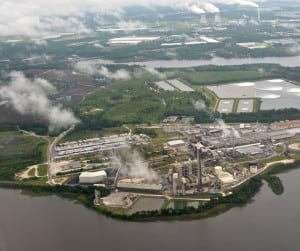
Florida Power and Light (FPL) wants to buy a 250-MW coal-fired facility in Florida to shut it down. The Juno Beach, Fla.–based company filed a petition with the Florida Public Service Commission (PSC) on Friday requesting approval to acquire the Cedar Bay Generating Plant for $520.5 million. FPL has had a long-term power purchase agreement […]
-
 Coal
CoalAustralia Puts Huge Chinese-Backed Coal Mine Project on Hold
Plans for a massive coal mine in New South Wales, Australia, which is being developed by Chinese coal mining giant Shenhua Group, were thrown into doubt as the federal environmental minister opted to delay a decision on its final approval. The Watermark mine, which could cost $1.2 billion and produce more than 250 million metric […]
-
Legal & Regulatory
Illinois Mulls Low Carbon Portfolio Standard
A bipartisan group of Illinois legislators have introduced bills that propose a market-based solution to curb carbon emissions and ensure continued operation of the state’s nuclear power plants. The bills SB 1585 and HB 3293 introduced in the state Senate and House would enact the Illinois Low Carbon Portfolio Standard. That measure, like a renewable […]
-
Legal & Regulatory
FERC’s Work on the Clean Power Plan
Cheryl A. LaFleur One of the most controversial issues facing the energy world today is how our electric sector will respond to the U.S. Environmental Protection Agency’s (EPA’s) proposed Clean Power Plan
-
 Coal
CoalPower Shortages Challenge Eskom, Force Load Shedding in South Africa
The South African power system is severely constrained and will remain tight until at least the end of April, according to Eskom. The company generates approximately 95% of the electricity used in South Africa
-
Renewables
POWER Digest (March 2015)
TIC to Build First U.S. J-series GT Plant. The Industrial Co. (TIC), a wholly owned subsidiary of Kiewit Corp. ,was recently awarded an engineering, procurement, and construction contract to build a gas
-
 Coal
CoalSCR Reheat Burners Keep NOx in Spec at Low Loads
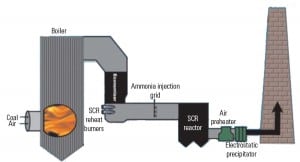
Selective catalytic reduction (SCR) systems installed in steam generators for NOx reduction are ordinarily designed for full boiler load conditions, when SCR inlet temperatures normally exceed unit-specific
-
 Legal & Regulatory
Ohio Regulators Deny AEP’s Coal Plant Cost Recovery Plan
The Public Utilities Commission of Ohio (PUCO) approved an electric security plan (ESP) for AEP Ohio—a unit of American Electric Power—on Feb. 25, but declined to adopt the company’s proposed power purchase agreement (PPA) as it relates to the Ohio Valley Electric Corp. (OVEC). The PPA rider was a point of contention with several groups […]
-
 Legal & Regulatory
Duke Fined $102.2 Million for Mishandling Coal Ash
Duke Energy has been charged by federal authorities with nine misdemeanor counts of violating the Clean Water Act and other federal regulations stemming from improper disposal of coal ash at multiple sites in North Carolina. Duke said in a statement on Feb. 20 that it had entered a plea agreement with federal prosecutors to settle […]
-
 Legal & Regulatory
Ameren Comments on Suggested Revisions to the EPA’s Clean Power Plan
Although there has been plenty of discussion in the U.S. power industry about the challenges posed by the Environmental Protection Agency’s (EPA’s) proposed Clean Power Plan (CPP), Missouri-based Ameren Corp. is the first generating company to go public with a specific set of proposed revisions. On Feb. 11, Ameren released a white paper that proposed […]
-
 Coal
CoalWest Virginia Combined Cycle Plant Will Be First to Burn Ethane and Natural Gas
On Monday, the West Virginia Public Service Commission (PSC) approved the siting certificate for Moundsville Power LLC to construct a 549-MW combined cycle natural gas power plant in Marshall County. It will be the first to also burn ethane. The company is also touting the project’s role in helping to offset the effect of area […]
-
 Legal & Regulatory
Mississippi Supreme Court Strikes Down Kemper County IGCC Rate Increase
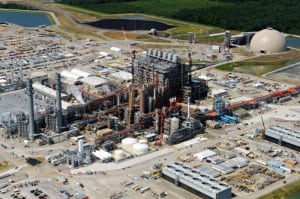
In yet another black eye for the long-delayed and hugely over-budget Kemper County integrated gasification combined cycle plant (IGCC), the Mississippi Supreme Court ruled on Feb. 12 that the Mississippi Public Service Commission (MPSC) erred in granting plant owner Mississippi Power rate increases in 2013 and 2014, and ordered that the increases be refunded to […]
-
 Coal
CoalJ.E. Corette Coal-Fired Power Plant to Be Retired
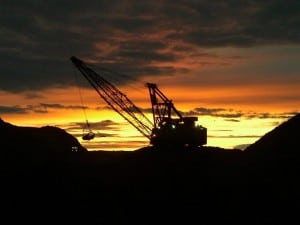
PPL Montana, a subsidiary of PPL Corp., announced on Feb. 10 that it will permanently shut down its J.E. Corette coal-fired power plant located near Billings. The 153-MW plant began operation in 1968. In 2012, the company decided to mothball the plant, retaining the option to restart it if wholesale power market conditions in the […]
-
 Renewables
10 Quotes Concerning Energy Transformation from the ARPA-E Summit
The sixth annual ARPA-E Summit wrapped up on Wednesday, and though there were too many sessions to cover in depth, here is a mini-summary by way of selected interesting comments. Speaker photos (where available) follow the comment. “Any disruptive technology will not fit an existing market.” —Brian Janous, Director of Energy Strategy, Microsoft “[The energy […]
-
 Renewables
ARPA-E Summit Takes the Pulse of Energy Technology Innovation
“The coolest thing on Earth” is, according to its new director, a young federal agency that has a unique focus on pushing technology frontiers and an “unblinking attention” to market realities. One thing you can say for sure about the energy world, said Dr. Ellen Williams (Figure 1), incoming director of ARPA-E (Advanced Research Projects […]
-
 Legal & Regulatory
States Can “Just Say No” to the EPA’s Carbon Rule, Expert Says
According to Peter S. Glaser, partner with Troutman Sanders LLP, who practices in the energy and environmental law fields, saying “no” is an option that states have in response to the Environmental Protection Agency’s (EPA’s) Clean Power Plan proposal. Speaking during a panel discussion at George Mason University’s Law and Economics Center on Feb. 4, […]
-
 Legal & Regulatory
Activists Show Up in Droves for EPA Ozone Hearing
The Byron Sher Auditorium in Sacramento, Calif., was filled at times with students, parents, and other concerned citizens as the Environmental Protection Agency (EPA) held the last of three public hearings on proposed updates to the national air quality standards for ground-level ozone on Feb. 2. The hearings were scheduled as part of the policymaking […]
-
 Coal
CoalDOE Pulls the Plug on FutureGen
The Department of Energy (DOE) announced on Feb. 3 that it was ending its involvement with the troubled FutureGen 2.0 clean coal project, concluding that it had run out of time to finish development before federal funding expires in September. First proposed under the Bush administration in 2003, suspended in 2008, then revived and allocated […]
-
 Coal
CoalScrubbing Coal Plant NOx Emissions with Electron Beams
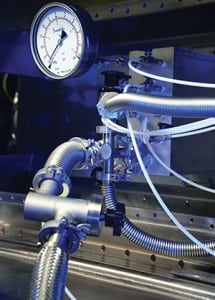
An unnamed power company and the U.S. Naval Research Laboratory (NRL) have partnered to test a concept proven to work at a small scale that applies pulsed electron beam technology to slash coal plant nitric oxide and nitrogen dioxide (NOx) emissions. The concept (Figure 3) essentially involves directing electron beams from a cathode into the […]
-
 Renewables
Global CHP Still Struggling to Break Out of Its Niche
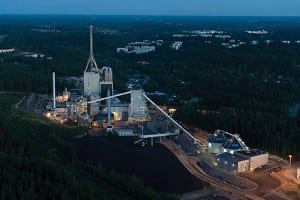
Despite its efficiency and environmental benefits, combined heat and power (CHP) generation has languished at around 10% of worldwide capacity for more than a decade. But a global review shows growth in some sectors and promising new technology on the way. The statistics are both eye-opening and somewhat depressing. Globally, according to the International Energy […]
-
 Coal
CoalOptimizing Combined Heat and Power in China
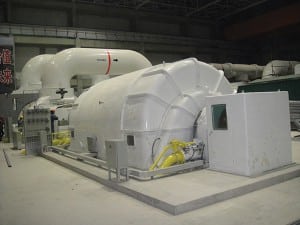
As it struggles to grow its economy while improving air quality in urban areas, China is updating its energy delivery infrastructure. A key part of that plan is switching from coal-fired to gas-fired combined heat and power plants. To push efficiency even further, some plants are turning to synchronous clutches. The developed world has done […]
-
 Coal
CoalAmerican Electric Power: A Coal Powerhouse Repositions Itself
American Electric Power, one of the premier generating utilities in the U.S., is caught between a deregulated rock—wholesale competitive capacity markets that don’t, in the company’s opinion, value solid equipment over ephemeral demand response—and a regulatory hard place of increasing federal government rules that devalue on-the-ground coal-fired generation. Add the competitive challenge of cheap natural […]