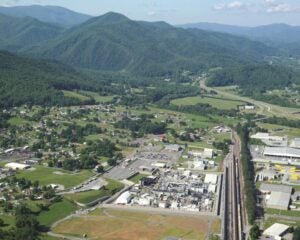
BWX Technologies (BWXT) has formally notified the U.S. Nuclear Regulatory Commission (NRC) of its intent to seek a uranium enrichment license for a new production facility in Erwin, Tennessee, as a concrete step toward restoring a domestic supply of highly enriched uranium (HEU) for naval nuclear propulsion.
The Erwin facility will be a centerpiece of BWXT’s $1.5 billion contract, awarded by the Department of Energy’s (DOE’s) National Nuclear Security Administration (NNSA) in September 2025, as the sole-source to rebuild a domestic uranium enrichment capability for defense fuel needs.
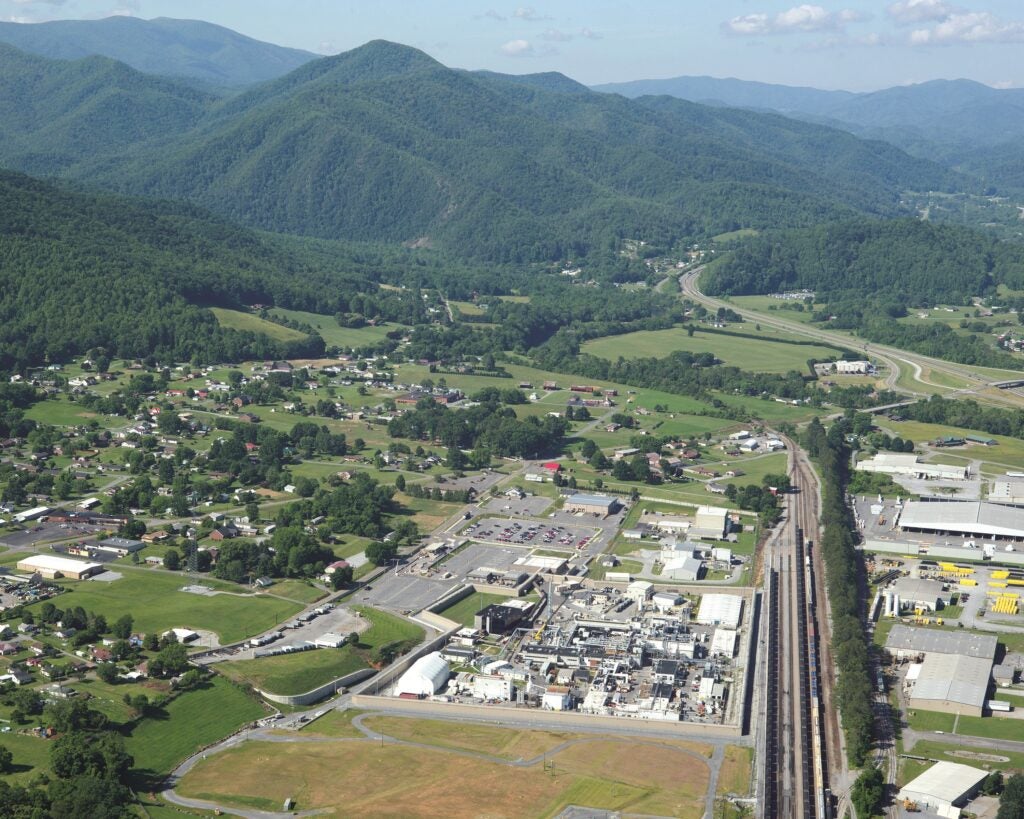
Once operational around 2035, the new Erwin Enrichment facility will produce HEU for the NNSA’s Naval Reactors program. BWXT plans to site the facility next to its Nuclear Fuel Services (NFS) facility, which manufactures fuel material for naval nuclear reactors used in U.S. submarines and aircraft carriers, as well as converts Cold War-era government stockpiles of HEU into material suitable for processing into commercial nuclear reactor fuel.
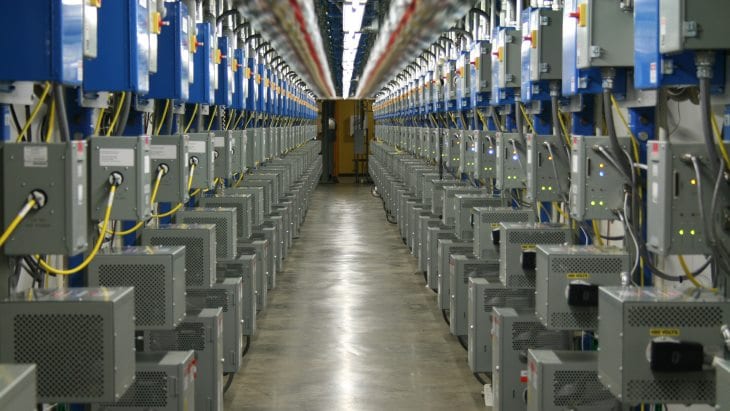
In January, as another key facet of the contract, BWXT opened its Centrifuge Manufacturing Development Facility (CMDF) in Oak Ridge, Tennessee. That facility “serves as BWXT’s primary hub for the design, engineering, fabrication and testing of advanced gas centrifuge machines,” the company noted. “The facility features precision manufacturing space, in-house quality assurance and testing capabilities and specialized infrastructure to support future centrifuge production. It will accelerate the transition of centrifuge technology from development to production readiness and aligns with national priorities for energy security, defense readiness, and advanced manufacturing.”
“BWXT selected the Erwin site because of its proximity to NFS and its ability to leverage existing NRC regulated nuclear operations, security and safety infrastructure, and a skilled local workforce,” the company said on Tuesday..
While Lynchburg, Virginia–based BWXT expects to submit the formal license application for the new Erwin facility in the first quarter of 2027, it said on April 7, the pre-application notification should enable “the NRC to plan resources to support its review of the license application,” it said.
Restoring Lost Enrichment Capability
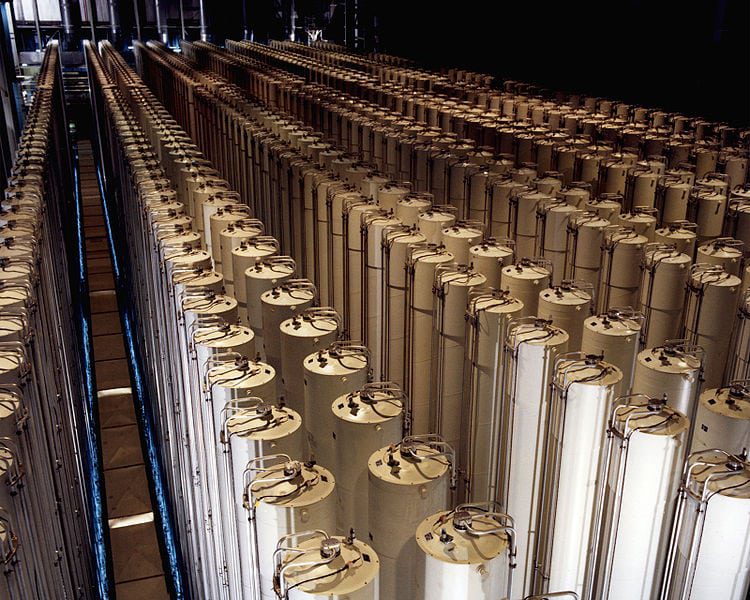
The U.S. lost its only remaining uranium enrichment capability to support defense missions in May 2013, when USEC—a publicly held company that had leased the Paducah Gaseous Diffusion Plant from the DOE—ceased enrichment operations at the Kentucky facility. In 2016, NNSA responded by establishing the Domestic Uranium Enrichment (DUE) program, which is part of the tritium and DUE Program Office within the DOE and NNSA. DUE has funded research and development of small centrifuge technology under the Domestic Uranium Enrichment Centrifuge Experiment (DUECE) project at Oak Ridge National Laboratory (ORNL), leveraging the lab’s historic uranium enrichment expertise dating back to the Manhattan Project. ORNL serves as the design authority on that program.
“The DUECE pilot plant is required to reach key technological readiness milestones in support of NNSA’s strategy to establish a reliable and economic supply of unobligated enriched uranium for defense purposes, specifically low-enriched uranium (LEU) for tritium production, and highly enriched uranium (HEU) for naval nuclear propulsion,” the DOE explains. “Partnering with the commercial industry for this pilot plant helps to establish critical supply chains for enduring defense enrichment requirements and ensures capabilities are ready on time to support mission need dates.”
In March, BWXT and ORNL signed a memorandum of understanding to advance DUECE to bolster the DOE’s priority to reestablish “a reliable domestic supply of unobligated enriched uranium for national defense missions.” ORNL said BWXT will bring “classified manufacturing and operational capabilities to the project. The company’s new Centrifuge Manufacturing Development Facility will support enrichment plant activities in Erwin, Tennessee. The collaboration will now focus on deployment of DUECE technology.”
BWXT’s Expanding Nuclear Fuel Chain
In addition to the CMDF in Oak Ridge and the Erwin Enrichment Facility, BWXT noted it is “exploring options to further support the NNSA’s defense fuels program.” The company has told investors that defense fuels and high-purity depleted uranium now account for more than half of its expected 2026 growth in government operations.
However, the company has also been making progress across multiple programs. At its Specialty Fuels Fabrication facility in Lynchburg, Virginia, the company manufactures tri-structural isotropic (TRISO) particle fuel—a ceramic-coated advanced fuel form designed for high-temperature gas-cooled reactors.
In December 2025, BWXT’s Specialty Fuels Fabrication Group completed fabrication and shipment of 40,000 TRISO fuel compacts to Idaho National Laboratory for Project Pele, the Department of War’s first-of-its-kind transportable military microreactor prototype. Formal system testing at INL is targeted for 2027, with electricity production as early as 2028. For full details, see POWER’s in-depth report: A First for Military Nuclear Power: TRISO Fuel Arrives at Project Pele.
BWXT has since expanded its TRISO production into a second active program, indicating its development of an integrated advanced fuel and enrichment business. Notably, BWXT launched BWXT Advanced Fuels LLC in August 2025—a subsidiary dedicated to commercializing advanced nuclear fuel—and is exploring a greenfield TRISO fabrication facility to meet growing market demand.
In February, the company announced significant progress in fabricating TRISO fuel compacts for Antares Nuclear, an advanced reactor developer targeting criticality by July 4, 2026, in line with Executive Order 14301, which directs DOE to establish a pilot program to test three advanced reactor designs by that date. Fuel fabrication for Antares began in October 2025 and is on track for timely completion, BWXT said. The company also produced the high-assay low-enriched uranium (HALEU) used in the Antares TRISO compacts. The DOE last year began allocating HALEU produced by BWXT to advanced reactor developers.
In addition to that work, BWXT has contracted with NNSA to process thousands of kilograms of government-owned scrap material containing enriched uranium, and in December it shipped over 100 kilograms of purified HALEU oxide under DOE’s HALEU availability program to support a second reactor developer targeting a July 4 criticality test. BWXT also shipped TRISO compacts to Los Alamos National Laboratory’s National Criticality Experiments Research Center in Nevada, where, as the company noted, the fuel was manufactured to a variety of specifications to meet different customer requirements for reactor demonstration programs.
During its latest earnings call in February, BWXT executives described TRISO as a platform that could span multiple end markets rather than a single demonstration fuel line. They pointed to near-term government demand from microreactor programs such as Janus—the Department of the Army’s flagship program—which they suggested may become a follow-on to Project Pele, noting that most emerging microreactor concepts are being designed around TRISO fuel. Beyond defense, executives also flagged potential commercial uses in what they called “sub‑grid or below‑grid” applications and remote, high‑density power markets, and noted the company is “looking pretty hard” at a larger-scale TRISO investment to meet that prospective demand.
BWXT’s TRISO work is unfolding alongside a growing commercial ecosystem. As POWER reported in February 2026, TRISO-X, a subsidiary of X-energy, received the first-ever NRC Category II license for commercial TRISO fuel fabrication at its facility under construction in Oak Ridge, Tennessee, and Standard Nuclear has also begun HALEU TRISO production at its Oak Ridge facility under a DOE Other Transaction Agreement.
—Sonal Patel is a POWER senior editor (@sonalcpatel, @POWERmagazine).