
Articles By

-
Legal & Regulatory
Regulators Face Worst of Times
It’s not easy being a regulator as the nation faces several daunting energy challenges—integrating renewables, carbon constraints, reliability, and security into an elderly grid that is barely able to keep up with its current mission of moving power from generator to load.
-
 Smart Grid
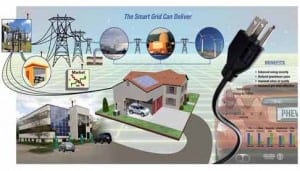
Is "Smart Grid" in the Eye of the Beholder?
Congress looks at what “smart grid” means and comes up with mixed definitions. The one thing everyone agrees on: The smart grid is going to be expensive.
-
Commentary
The Communications Failures Lessons of Three Mile Island
The most lasting effect the Three Mile Island nuclear accident had on me was what it taught me about crisis communications—lessons that served me well over the 25-plus years that followed and especially after the September 11 terrorist attack on the United States.
-
Commentary
NIMBY or Concerned Citizen?
Opponents of locating new energy facilities near where they work and live are often painted with a broad brush as activists or called some other pejorative term. How do you differentiate the professional opponents of any new development from those who have valid reasons to stand up and be heard?
-
 Commentary
Let’s Stop Bailing Out on Alternative Energy
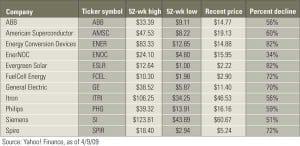
Investors are continuing to bail out of alternative energy stocks—good, promising companies such as ABB, American Superconductor, Evergreen Solar, and Itron. These companies and many like them were Wall Street darlings not that long ago. Not anymore.
-
 Commentary
Remembering Three Mile Island
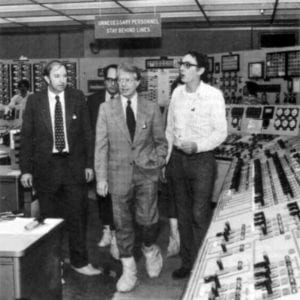
The 30-year anniversary of the Three Mile Island accident passed with little fanfare because our nuclear plant fleet today operates with high reliability and struts an excellent safety record. That wasn’t always the case.
-
Legal & Regulatory
Nuclear Loan Guarantees Have Failed
Nuclear loan guarantees in the 2005 Energy Policy Act have proven to be a failure: not just too little, but far too late.
-
News
Shutting Off Power to Prevent Wildfires Unpopular in Southern Calif.
In recognition that downed power lines can cause catastrophic wildfires when winds and temperatures are high, San Diego Gas & Electric (SDG&E) has proposed to shut off power to a mountainous backcountry area in northeastern San Diego County when conditions warrant the emergency measure. If the proposal is approved by the California Public Utilities Commission (CPUC), it would be the first such attempt to prevent fires by shutting off power to an at-risk area.
-
News
Unidentified Cause of Worker Irritation at Craig Station
Officials of Tri-State Generation and Transmission still don’t know what caused symptoms that sent a total of 19 contract workers to the hospital on Friday night. Those affected were among 600 workers who are engaged in a six-week outage to upgrade boiler, turbine-generator, and scrubber systems of northwest Colorado’s Craig Station Unit 3.
-
News
DOE Secretary’s Earth Day Editorial
An op-ed by Secretary of Energy Steven Chu and Secretary of Labor Hilda Solis titled “Building the American Clean Energy Economy” ran in six city papers yesterday and today. Selected excerpts follow.
-
News
EPA Finds Greenhouse Gases Pose Threat to Public Health, Welfare
After a thorough scientific review ordered in 2007 by the U.S. Supreme Court, the Environmental Protection Agency (EPA) issued a proposed finding on Friday that greenhouse gases contribute to air pollution that may endanger public health or welfare.
-
News
Constellation Nuclear Sale to EDF Approved
The New York State Public Service Commission (PSC) on Tuesday approved the $4.5 billion acquisition of nearly half of Constellation Nuclear, the indirect owner of three nuclear power plants in upstate New York, to a wholly owned subsidiary of Électricité de France S.A. (EDF), the world’s largest nuclear power plant owner.
-
News
U.S. Component of GNEP Pronounced Dead
After 14 hearings and 15,000 comments, the Department of Energy has decided to pull the plug on any domestic involvement in the three-year-old Global Nuclear Energy Partnership (GNEP), which the U.S. initiated to focus on reprocessing spent commercial nuclear fuel.
-
Smart Grid
VP Biden Announces Nearly $4 Billion for Smart Grid
On Thursday, while visiting Jefferson City, Mo., with Commerce Secretary Gary Locke, Vice President Joe Biden announced that, as part of the American Recovery and Reinvestment Act, more than $3.3 billion in smart grid technology development grants and an additional $615 million for smart grid storage, monitoring, and technology viability were being made available.
-
News
Largest U.S. Single-Build Wind Farm Enters Commercial Operation
On tax day, Dominion and BP Wind Energy announced full commercial operation of Phase I of the Fowler Ridge Wind Farm in Benton County, Ind. Of the 400-MW facility, BP and Dominion are partners on approximately 300 MW. The two companies could expand the facility to a total of 750 MW in the future.
-
General
EPA CO2 poposal is anti-life and anti-science
By Kennedy Maize The Obama administration’s Environmental Protection Agency is declaring that carbon dioxide, a life-giving and ubiquitous atmospheric chemical, is a threat to public health. That’s a completely illogical determination, but also completely expected. The notion that carbon dioxide is a pollutant has nothing to do with chemistry or physics or biology or climatology, […]
-
Smart Grid
Cyberspies Have Hacked into U.S. Grid, Officials Say
Experts assert that the U.S. grid—already proven by federal agencies to be vulnerable to cyber attacks—has been compromised by spies who tried to map the system and left bugs that could be used to disrupt networks at a time of war or crisis.
-
News
FERC, MMS Settle Outer Continental Shelf Turf War
A memorandum of understanding last week signed by Secretary of the Interior Ken Salazar and Federal Energy Regulatory Commission (FERC) Chair Jon Wellinghoff clarifies jurisdictional responsibilities and establishes a process through which the two federal agencies will lease, license, and regulate all renewable energy development activities on the Outer Continental Shelf.
-
News
NRC OKs Oyster Creek 20-Year License Extension
The Nuclear Regulatory Commission (NRC) last week approved a 20-year license extension for Exelon Corp.’s Oyster Creek Generating Station in Ocean Country, N.J.—the nation’s oldest operating nuclear power reactor.
-
News
Westinghouse, Shaw to Break Ground on Georgia Nuclear Units 3 and 4
Southern Co. has notified the Shaw Group and Westinghouse Electric Co. to proceed fully on their engineering, procurement, and construction (EPC) contract for two new Westinghouse AP1000 reactors planned for an expansion of the Vogtle Electric Generating Plant near Augusta, Ga.—one of the first new U.S. nuclear construction projects in more than three decades.
-
Smart Grid
EPRI Contracted to Develop Smart Grid Interim Standards
The National Institute of Standards and Technology (NIST), an agency of the U.S. Department of Commerce, has contracted the Electric Power Research Institute (EPRI) to help it develop an interim road map to harmonize interoperability standards for the smart grid.
-
News
Texas, Iowa Led States in Installed Wind Capacity in 2008
Wind power projects installed through the end of 2008 now generate 1.25% of the nation’s electricity, the American Wind Energy Association (AWEA) annual wind industry report shows. Texas again installed the most capacity, but Iowa surged into second place, beating California—the state where almost all wind power capacity in the U.S. was once installed.
-
News
FERC OKs Incentives for Midwest “Green†Transmission Superhighway
The Federal Energy Regulatory Commission (FERC) on Monday approved transmission infrastructure investment rate incentives for the Green Power Express, a proposed 3,000-mile transmission superhighway designed to deliver wind-powered renewable energy from the upper Midwest to Midwestern and Eastern states.
-
General
Is a smart grid stupid?
By Kennedy Maize A report in the Wall Street Journal that Russian and Chinese spy hackers have penetrated the U.S. electric power grid, and left malware and root kits, cyber time bombs, to explode in the future strikes me as bogus. The story had no named sources, and the details were sketchy at best. Where […]
-
General
Will nano-bio-batteries save plug-in bhbrids?
By Kennedy Maize Is biology the key to improved battery performance? Researchers in a recent issue of Science magazine describe how genetically-engineered viruses could boost the power of lithium ion batteries, expected to be the batteries of choice for plug-in hybrid vehicles. A research team led by scientists at the Massachusetts Institute of Technology used […]
-
General
Sparkling future for carbon capture?
One of my favorite folk songs from the Great Depression is “The Big Rock Candy Mountain,” which I remember hearing sung by Burl Ives, the bearded and burley tenor who, among other gigs, performed with Pete Seeger and the Weavers in the 1950s (boy, does that date me). One of the lines in the song […]
-
News
Report: U.S. Power Plant Carbon Emissions Dipped 3.1% in 2008
Carbon dioxide emissions from power plants in the U.S. dropped 3.1% in 2008—a departure from the steadily increasing trend in preceding years, according to a new document from Environment Integrity Project (EIP), a nonpartisan and nonprofit organization.
-
News
Maryland Senate Approves Reregulation Bill as Session Deadline Looms
The Maryland Senate last week approved a bill that reverses a failed 1999 energy deregulation policy and gives state regulators the authority to order utilities to build new power plants in the state. The future of the bill is unclear, however—the state’s annual 90-day legislative session is scheduled to end on April 13.
-
News
First U.S. Large-Scale CO2 Storage Project Advances
Drilling nears completion for the first large-scale carbon dioxide (CO2) injection well in the U.S. for CO2 sequestration, the Department of Energy (DOE) reported Tuesday. This project will be used to demonstrate that CO2 emitted from industrial sources—such as coal-fired power plants—can be stored in deep geological formations to mitigate the release of large quantities of greenhouse gas emissions to the atmosphere.
-
News
Supreme Court Backs Power Plants on Cooling Water Question
The U.S. Supreme Court sided with power companies in a landmark decision last week, ruling that the Environmental Protection Agency (EPA) is not prohibited from considering a cost-benefit analysis when regulating the design of cooling water intake structures. This ruling affects power plants use cooling water from the nation’s rivers, lakes, and oceans.